 flip
flipMélikraton — milk and honey libation for the Ancient Powers
Mélikraton — milk and honey libation for the Ancient Powers
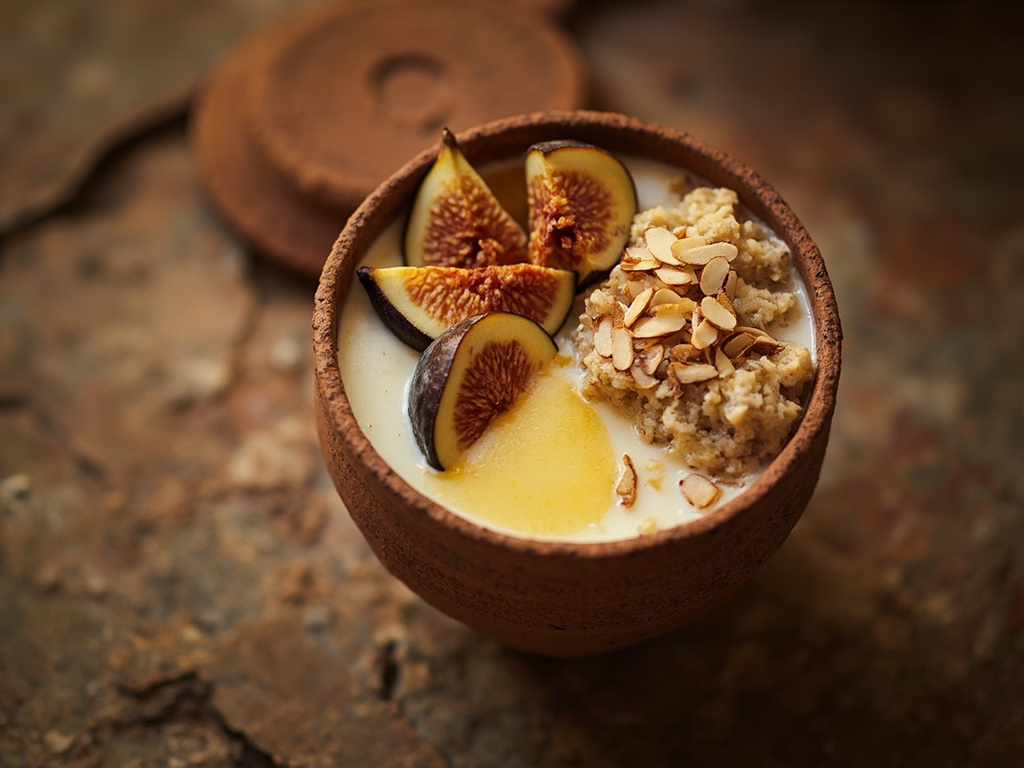
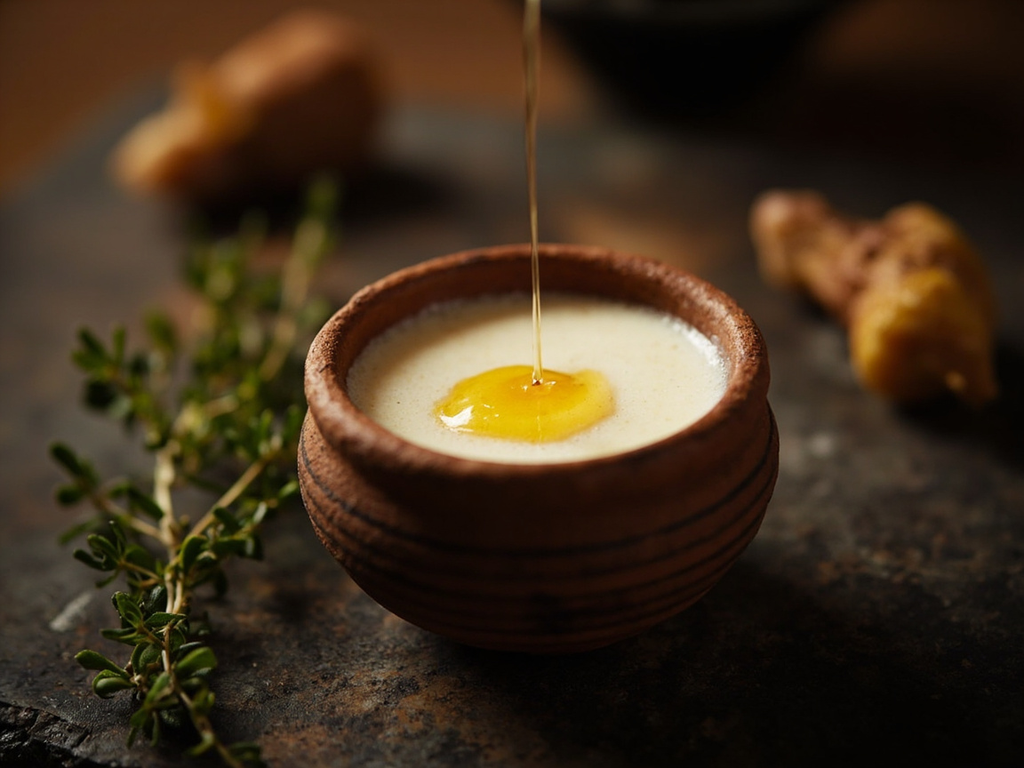
Why this dish? Coeus, a Titan swallowed into Tartarus with his brothers, belongs to the primordial and subterranean divinities. To the ancient powers and the dead, the Greeks offered mélikraton — a mixture of milk and honey without wine — poured directly onto the earth. This is the drink tipped toward the ground for him who dwells beneath the world.
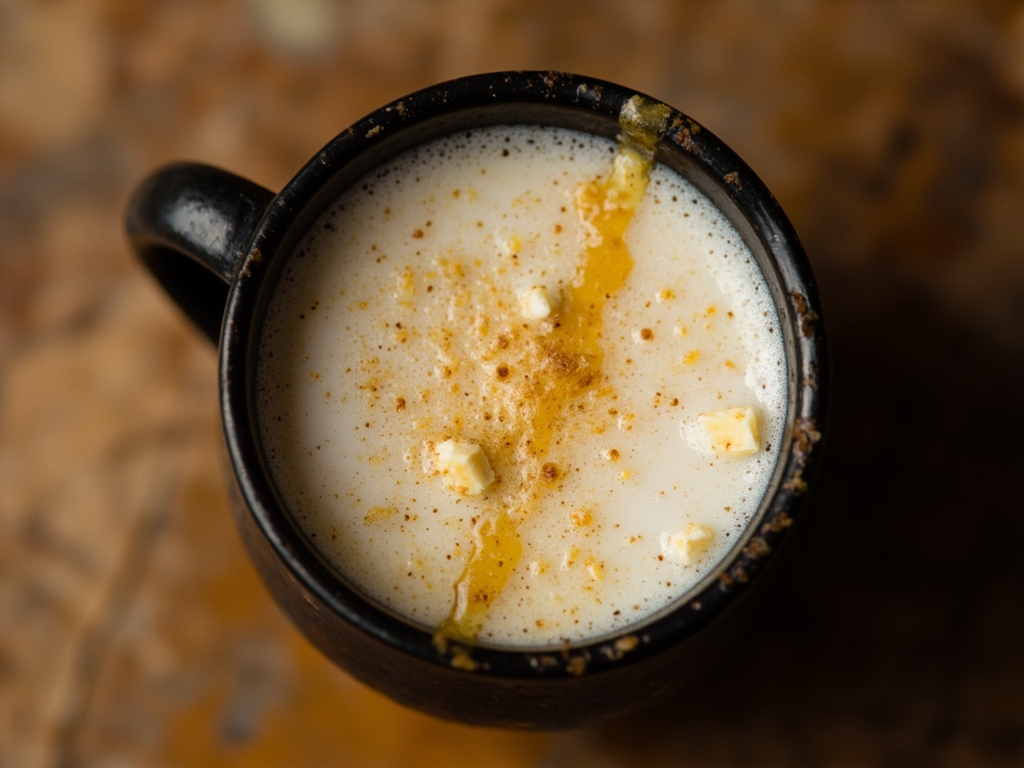
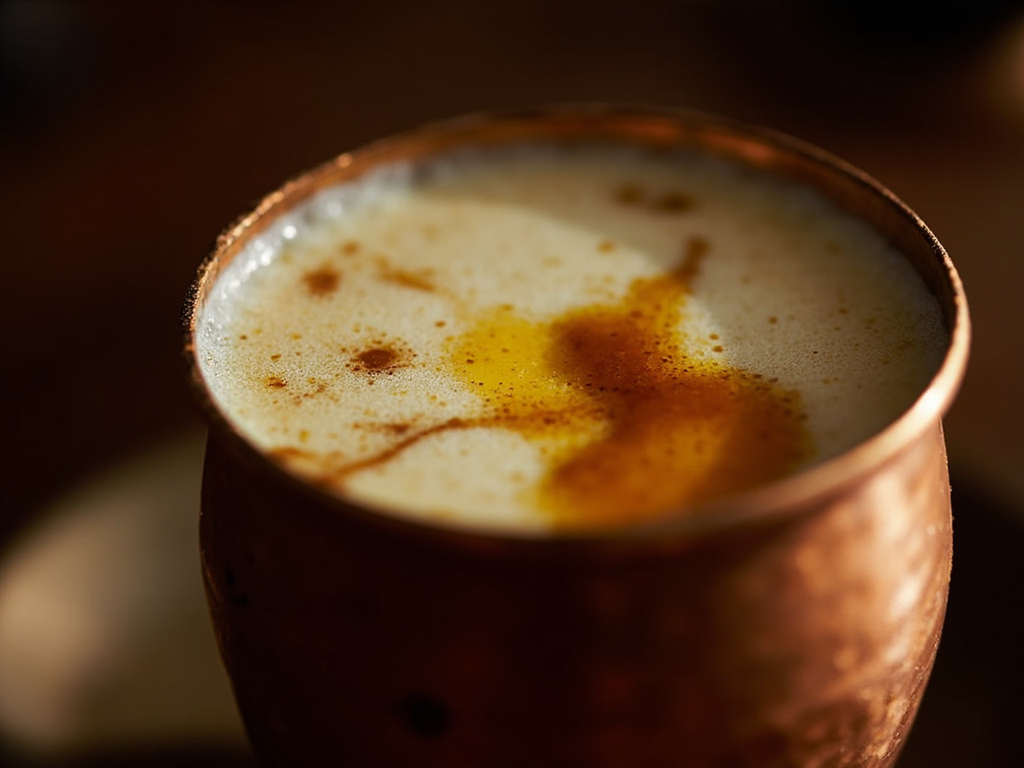
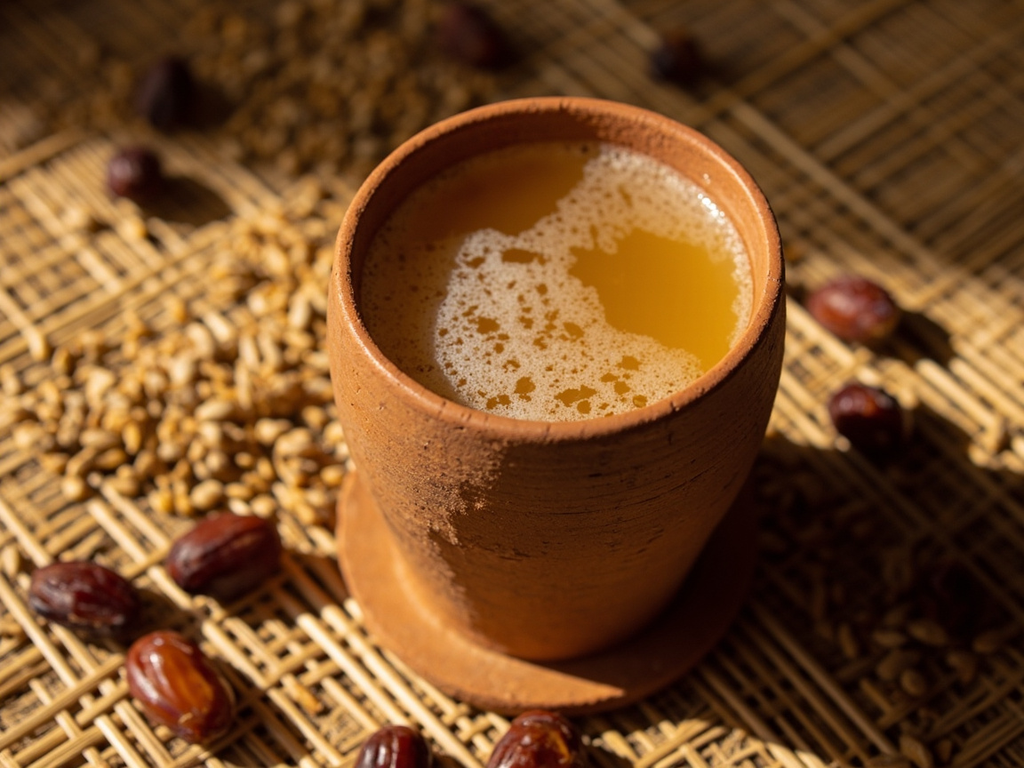
A warm, sweet drink, milk thickened with honey, sometimes scented with a sprig of thyme. It was drunk sparingly: it was above all the offering poured, drop by drop, for those below.
I am under your feet, mortal, bound with adamant where no light descends. Do not pour me the wine of joyful feasts: to those who dwell in the deep, one owes pure milk and honey, without the bite of the vine. Tilt your cup toward the earth, slowly, and let the white stream sink into the ground like a word returned. Thus you nourish me, I who was the pivot of the sky before becoming its prisoner.
- •Fresh goat's milk — one cup (base)
- •Honey — enough to dissolve (sweetness and offering)
- •Fresh thyme or oregano — one sprig (flavor (optional))
Mélikraton — milk and honey libation for the Ancient Powers
A warm, sweet drink, milk thickened with honey, sometimes scented with a sprig of thyme. It was drunk sparingly: it was above all the offering poured, drop by drop, for those below.
Why this dish? Coeus, a Titan swallowed into Tartarus with his brothers, belongs to the primordial and subterranean divinities. To the ancient powers and the dead, the Greeks offered mélikraton — a mixture of milk and honey without wine — poured directly onto the earth. This is the drink tipped toward the ground for him who dwells beneath the world.
I am under your feet, mortal, bound with adamant where no light descends. Do not pour me the wine of joyful feasts: to those who dwell in the deep, one owes pure milk and honey, without the bite of the vine. Tilt your cup toward the earth, slowly, and let the white stream sink into the ground like a word returned. Thus you nourish me, I who was the pivot of the sky before becoming its prisoner.
Ingredients (period version)
- Fresh goat's milk — one cup (base)
- Honey — enough to dissolve (sweetness and offering)
- Fresh thyme or oregano — one sprig (flavor (optional))
Ingredients
- Goat's milk (or whole cow's milk) — 250 ml (base)
- Flavored honey — 2 tsp (sweetness)
- Fresh thyme — 1 small sprig (infusion)
- Spring water — 2 tbsp (lightening (optional))
Method
- Warm the milk over low heat without boiling, with the sprig of thyme.
- Remove from heat, take out the thyme, and dissolve the honey by stirring.
- Optionally dilute with a little spring water for a lighter texture.
- Serve warm in a small clay cup. To respect the spirit of the gesture, one may pour a part onto the garden soil before drinking — without reproducing any sacred rite, simply as a nod to tradition.
How it was made : Mélikraton (milk + honey, without wine) is documented as a libation to the dead and chthonic divinities, as opposed to the wine mixed with water of ordinary banquets. It was poured into a pit (bóthros) or onto the ground. The choice to exclude wine marked that the offering was addressed to the world below — a register fitting for the Tartarean Titan.
The contemporary twist : Served cold and whisked with an ice cube, it becomes an ancient "golden milk" to sip on a terrace.
Sources : Homère, Odyssée (libations de lait, miel et eau aux morts, chant XI) · M. Detienne & J.-P. Vernant, La cuisine du sacrifice en pays grec
Coeus · Charactorium