 flip
flipPélanos of Coeus — barley and honey cake for the oracle
Pélanos of Coeus — barley and honey cake for the oracle
Why this dish? Coeus is the grandfather of Apollo and the father of Leto: his lineage rules the oracles of Delos, Delphi, and Dodona. At Delphi and Dodona, they offered not only blood: they placed pélanoi, barley and honey cakes, on the altar before consulting the god. This cake is the one that would be set down for the Titan of celestial intelligence, ancestor of the prophetic voice.
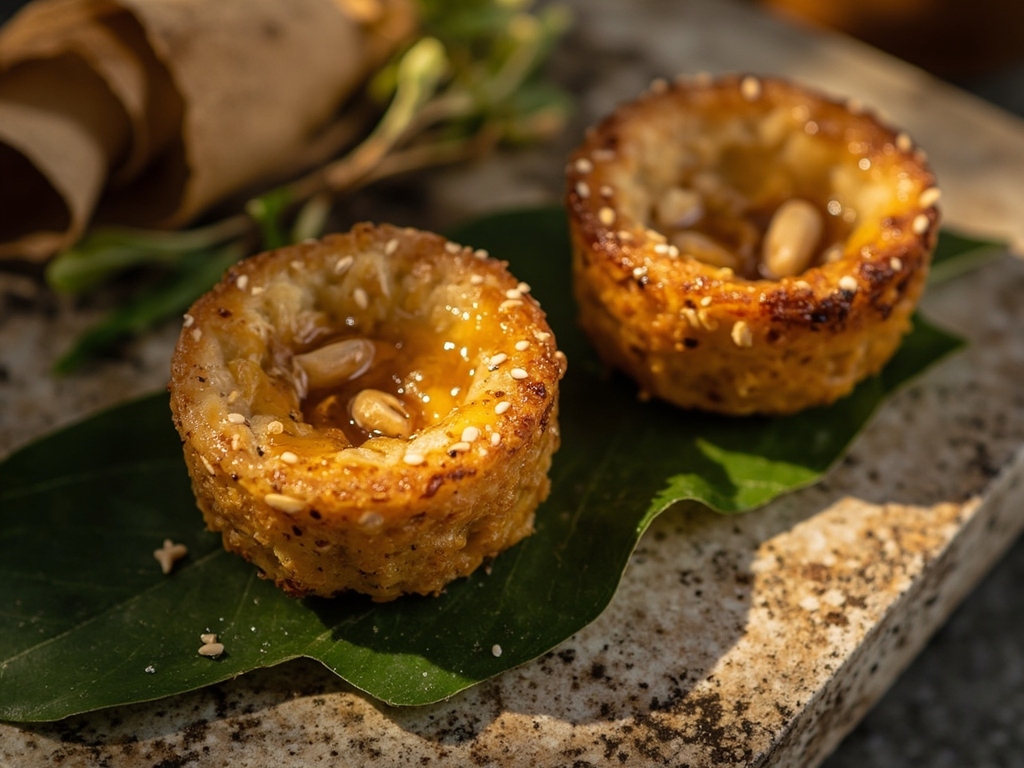
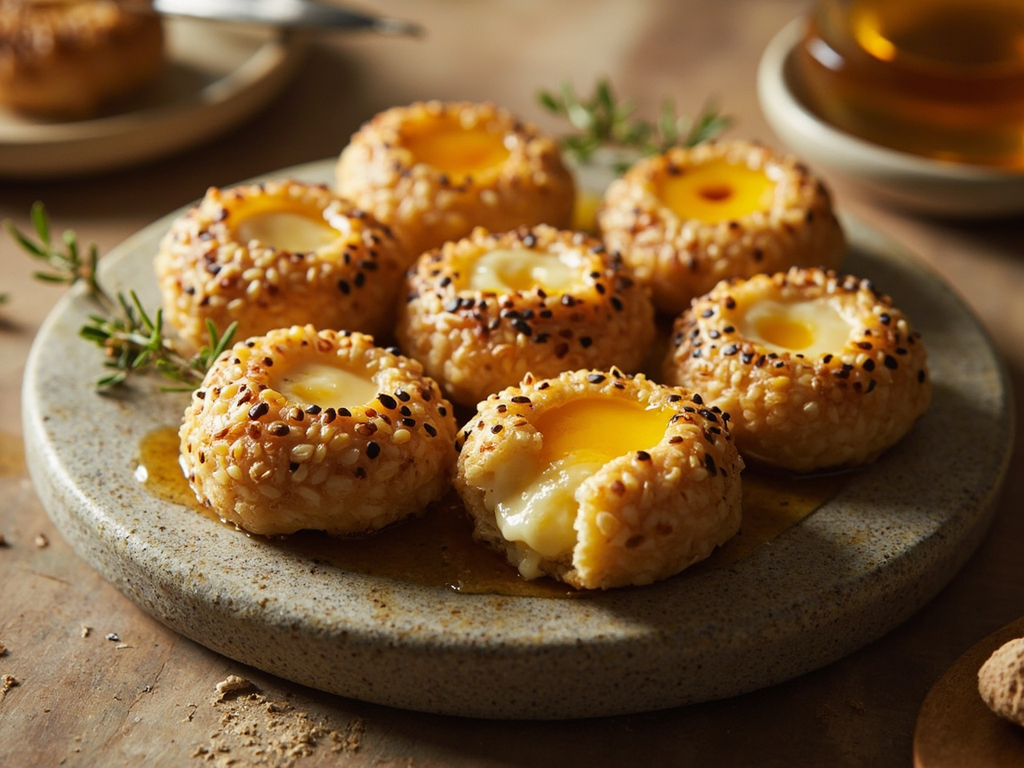
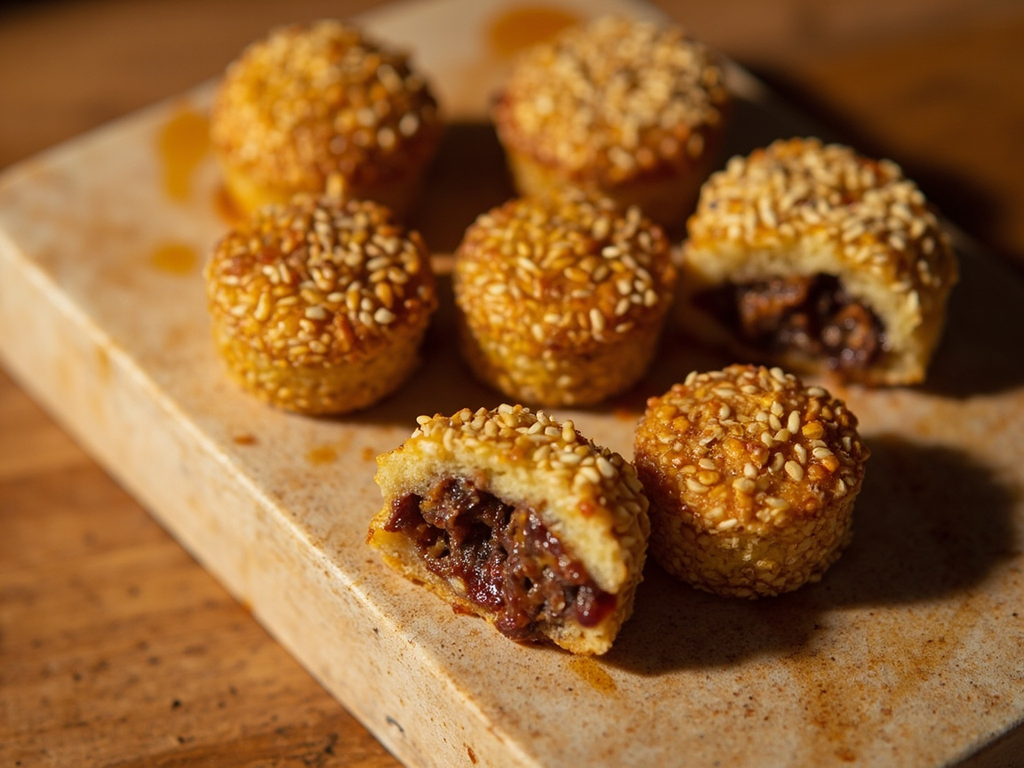
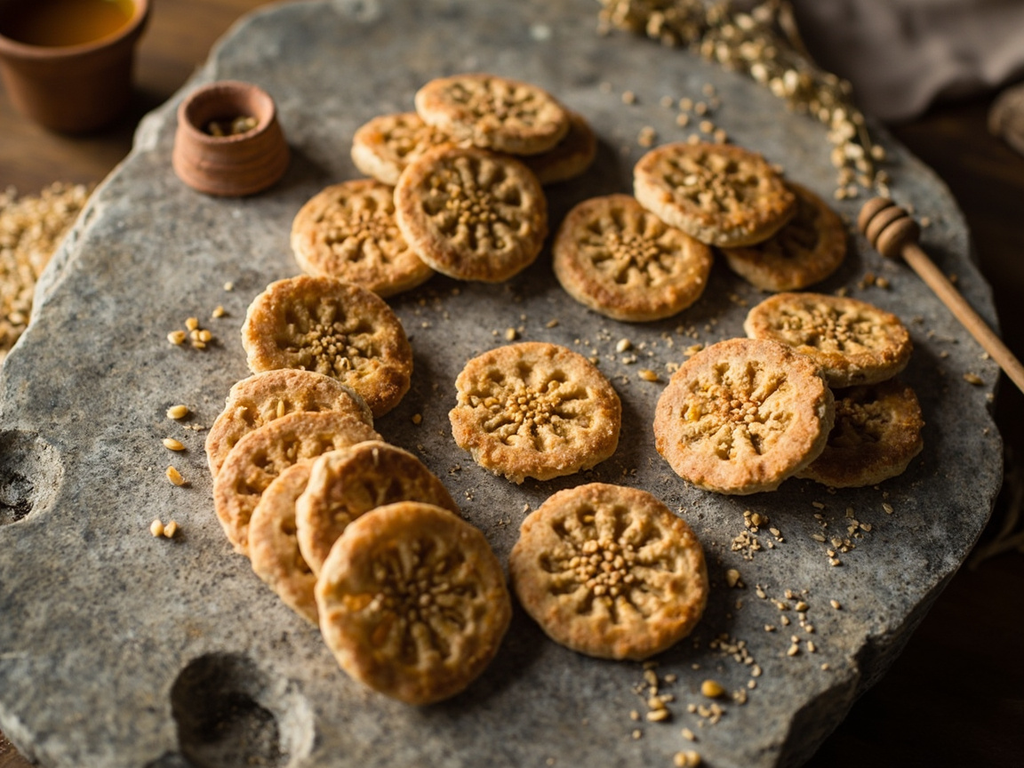
A small dense cake of ground barley, bound with honey and olive oil, sometimes marked with a sign by a knife. Neither quite bread nor cake: a modest offering, sweet and earthy, baked on hot stone or under ashes.
Mortal, listen to him who already turned on the axis of the world when your cities were not even dreamed of. Before my daughter Leto gave birth to the voice of Delphi, it was known that one does not approach the Powers empty-handed. Take the barley from the earth, grind it fine, bind it with honey that never corrupts — for such is ambrosia for those who are not immortal. Place it on the stone, trace upon it the sign of the sky, and only then speak: the cake opens the mouth of the god.
- •Roasted barley flour — two full handfuls (sacred base (oulaí))
- •Thyme or heather honey — enough to bind (binder and celestial part)
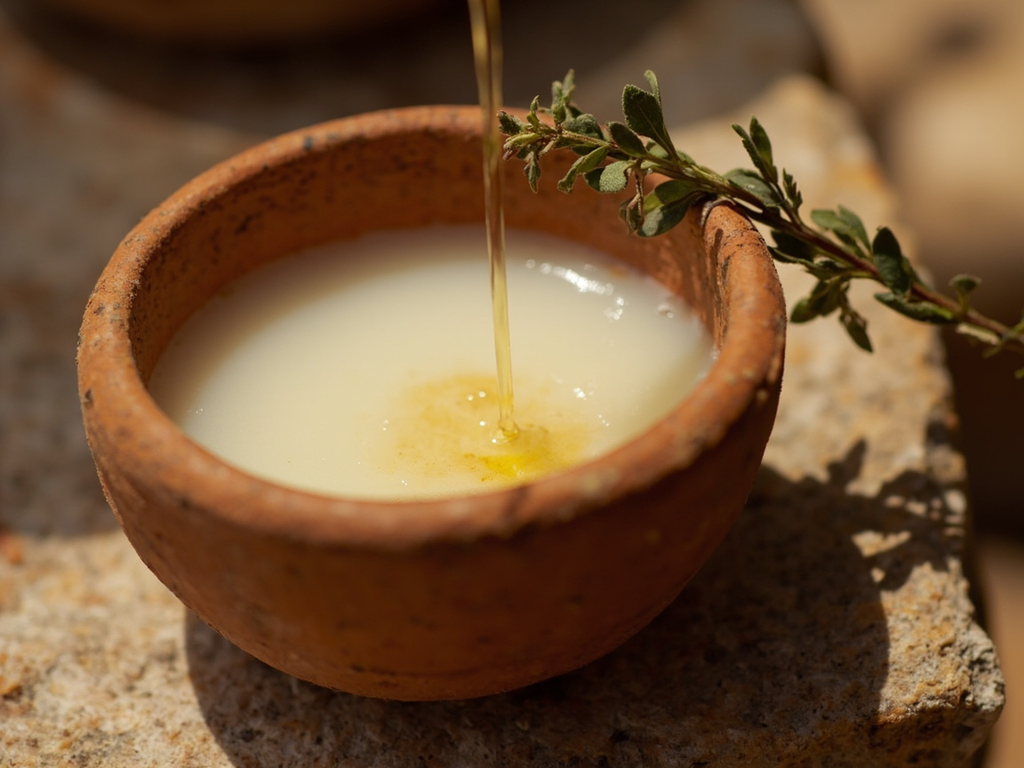
- •Olive oil — a drizzle (softness)
- •Spring water — as needed for the dough (hydration)
- •Sesame seeds — a handful (decoration and flavor (optional))
Pélanos of Coeus — barley and honey cake for the oracle
A small dense cake of ground barley, bound with honey and olive oil, sometimes marked with a sign by a knife. Neither quite bread nor cake: a modest offering, sweet and earthy, baked on hot stone or under ashes.
Why this dish? Coeus is the grandfather of Apollo and the father of Leto: his lineage rules the oracles of Delos, Delphi, and Dodona. At Delphi and Dodona, they offered not only blood: they placed pélanoi, barley and honey cakes, on the altar before consulting the god. This cake is the one that would be set down for the Titan of celestial intelligence, ancestor of the prophetic voice.
Mortal, listen to him who already turned on the axis of the world when your cities were not even dreamed of. Before my daughter Leto gave birth to the voice of Delphi, it was known that one does not approach the Powers empty-handed. Take the barley from the earth, grind it fine, bind it with honey that never corrupts — for such is ambrosia for those who are not immortal. Place it on the stone, trace upon it the sign of the sky, and only then speak: the cake opens the mouth of the god.
Ingredients (period version)
- Roasted barley flour — two full handfuls (sacred base (oulaí))
- Thyme or heather honey — enough to bind (binder and celestial part)
- Olive oil — a drizzle (softness)
- Spring water — as needed for the dough (hydration)
- Sesame seeds — a handful (decoration and flavor (optional))
Ingredients
- Barley flour — 200 g (base)
- Liquid honey — 3 tbsp (sweetener and binder)
- Olive oil — 2 tbsp (softness)
- Warm water — 60 to 80 ml (hydration)
- Sesame seeds — 1 tbsp (decoration)
- Salt — 1 pinch (balance)
Method
- Mix the barley flour with the salt in a bowl.
- Add the honey and olive oil, then the warm water little by little, until you get a firm, non-sticky dough.
- Form small flat cakes with the palm of your hand, about one centimeter thick.
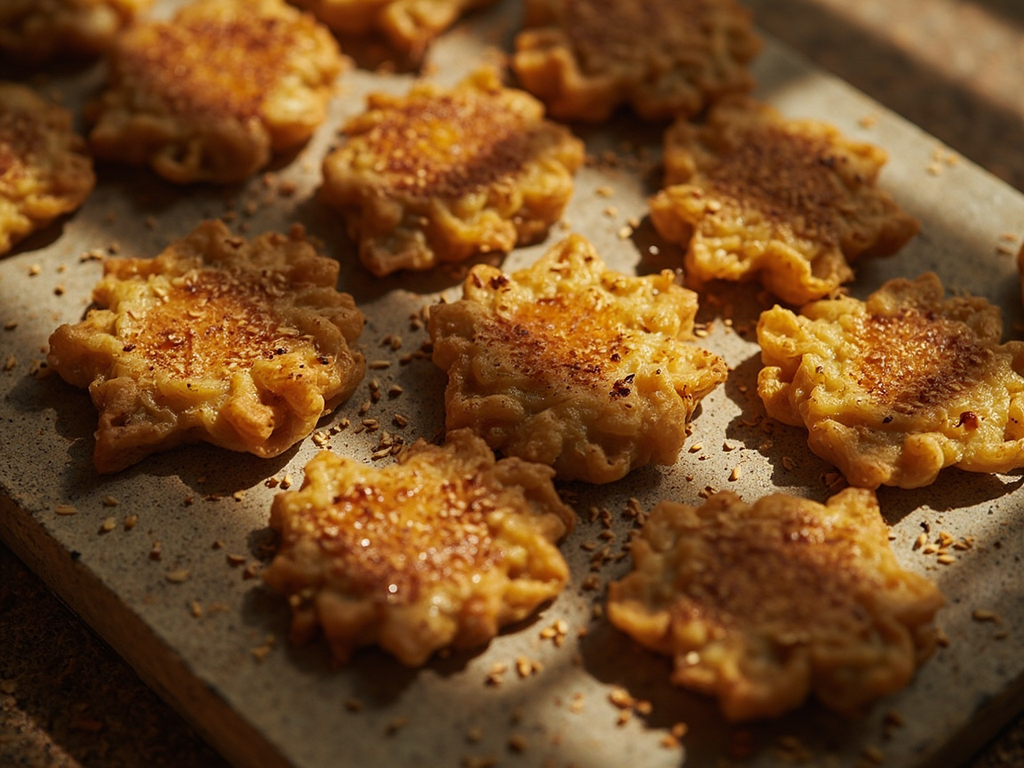
- Trace a cross or a radiating circle on top with a knife, and sprinkle with sesame seeds, pressing lightly.
- Bake for 18 to 22 minutes at 180°C, or on a hot griddle/cast-iron pan over low heat until the cake is golden and dry to the touch.
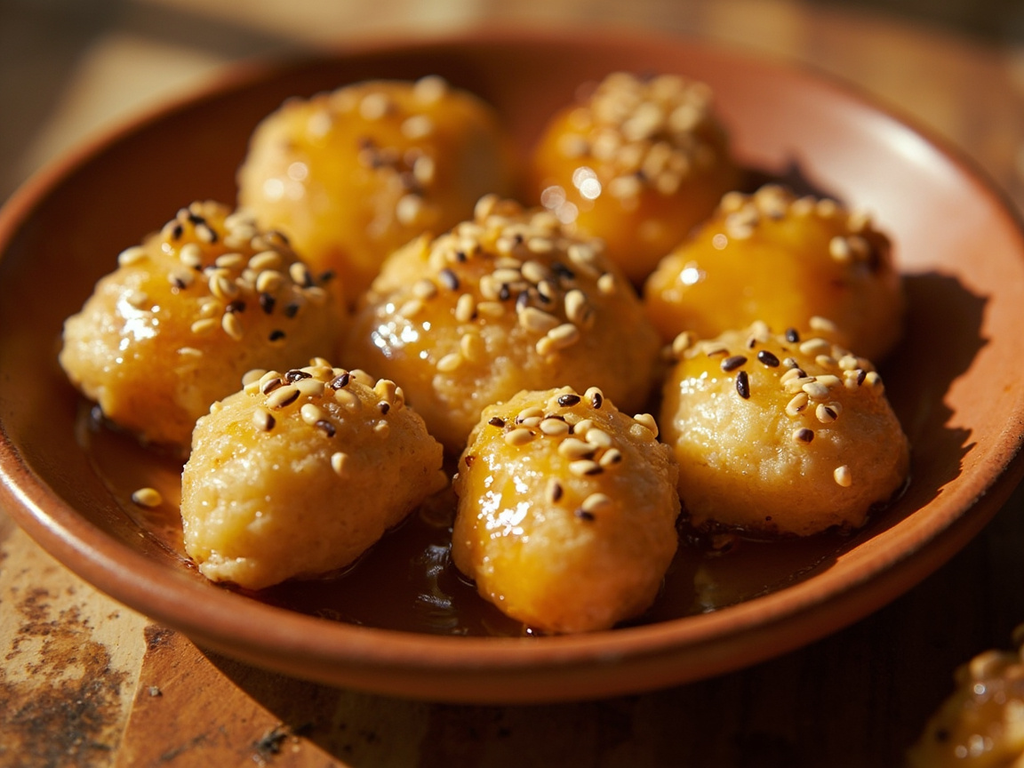
- Let cool slightly: it firms up as it cools. Serve plain or drizzled with a touch of honey.
How it was made : Pélanoi and pópana are attested as vegetable offerings in many Greek sanctuaries, sometimes required by regulation before oracular consultation. Barley preceded the blood sacrifice: grains (oulochýtai) were thrown on the victim and the altar. Honey, considered incorruptible, was especially associated with ancient and chthonic powers — a fitting choice for a Titan.
The contemporary twist : Serve them as "oracle cakes": slip a small paper question under each before biting, like a Greek fortune cookie.
Sources : Hésiode, Théogonie (généalogie des Titans, Coéos) · M. Detienne & J.-P. Vernant, La cuisine du sacrifice en pays grec · A. Dalby, Siren Feasts: A History of Food and Gastronomy in Greece
Coeus · Charactorium