 flip
flipBarley Mâza with Figs, Fresh Cheese, and Olives
Barley Mâza with Figs, Fresh Cheese, and Olives
Why this dish? Beneath the cosmic grandeur of Coeus lies the earth: the same barley that serves as offering feeds the Greeks every day. The mâza, a cold-kneaded barley paste, was the daily bread of the ancient Greek world — the humble matter from Gaia, mother of the Titan, set beside cheese, figs, and olives.
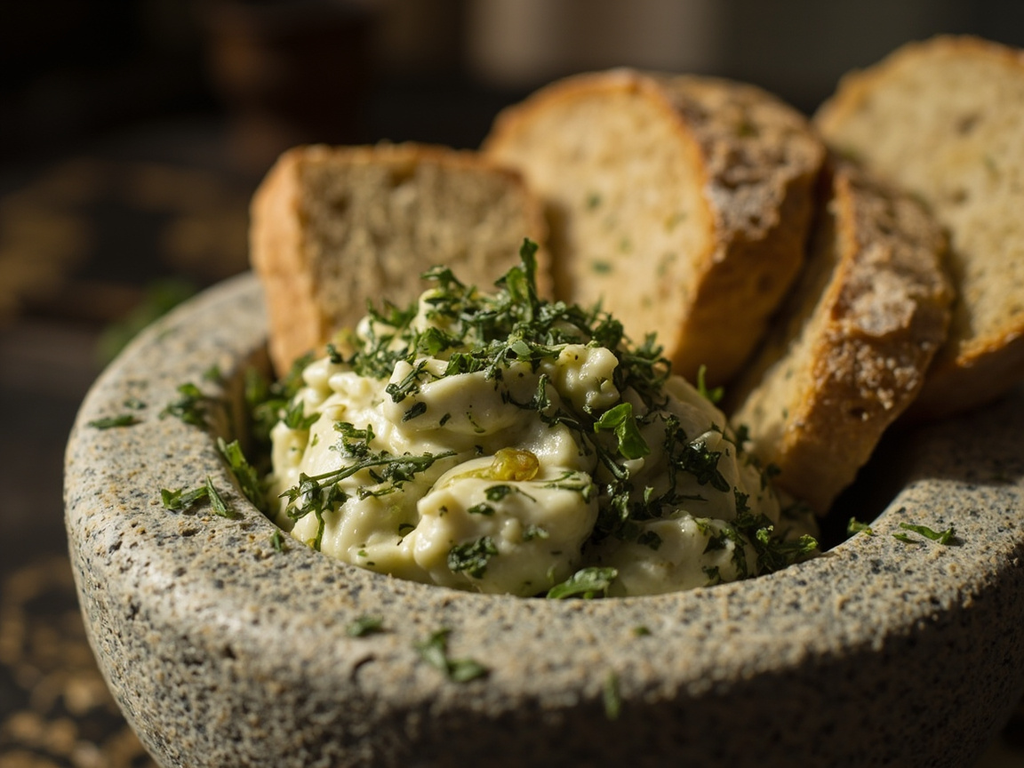
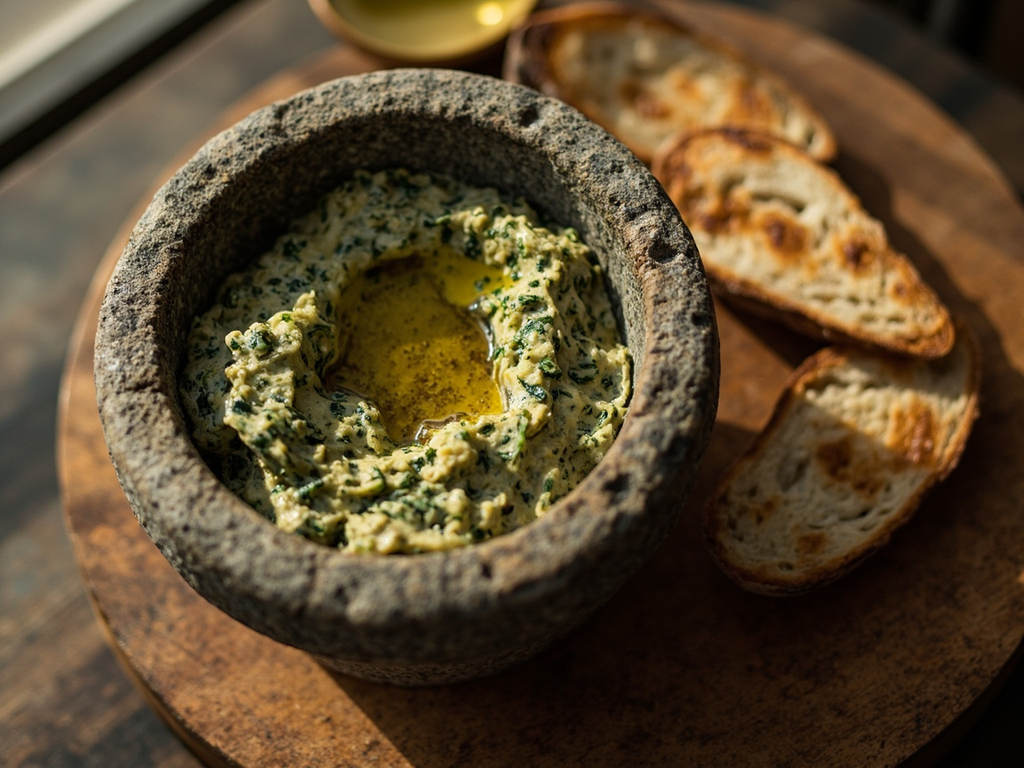
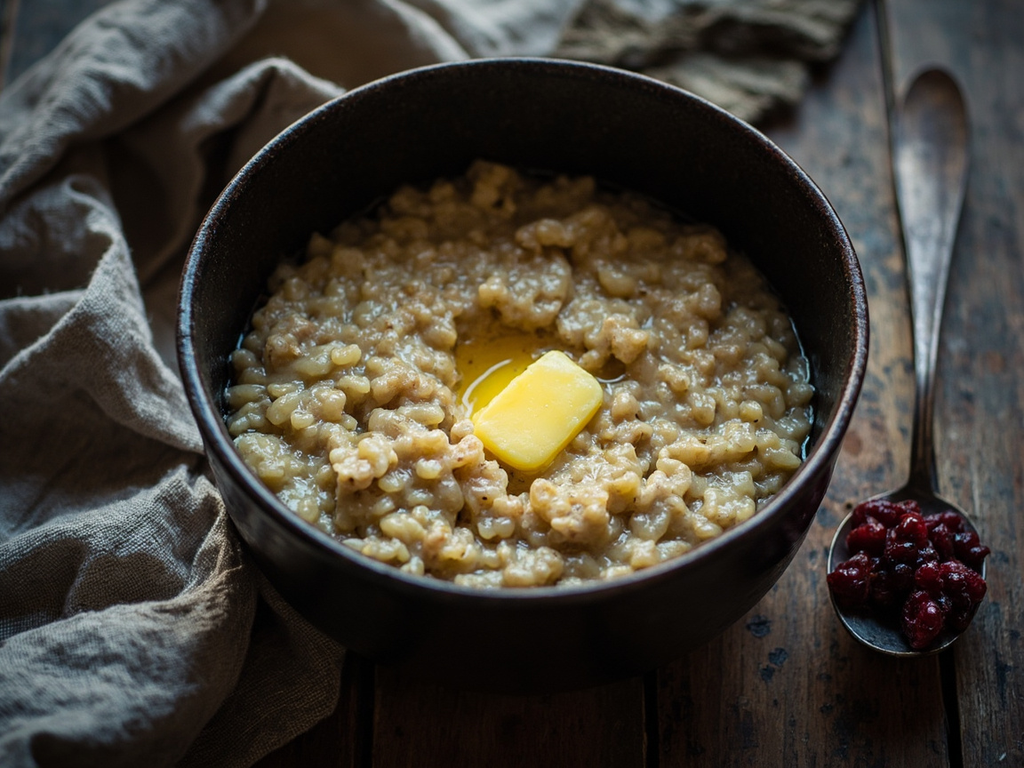
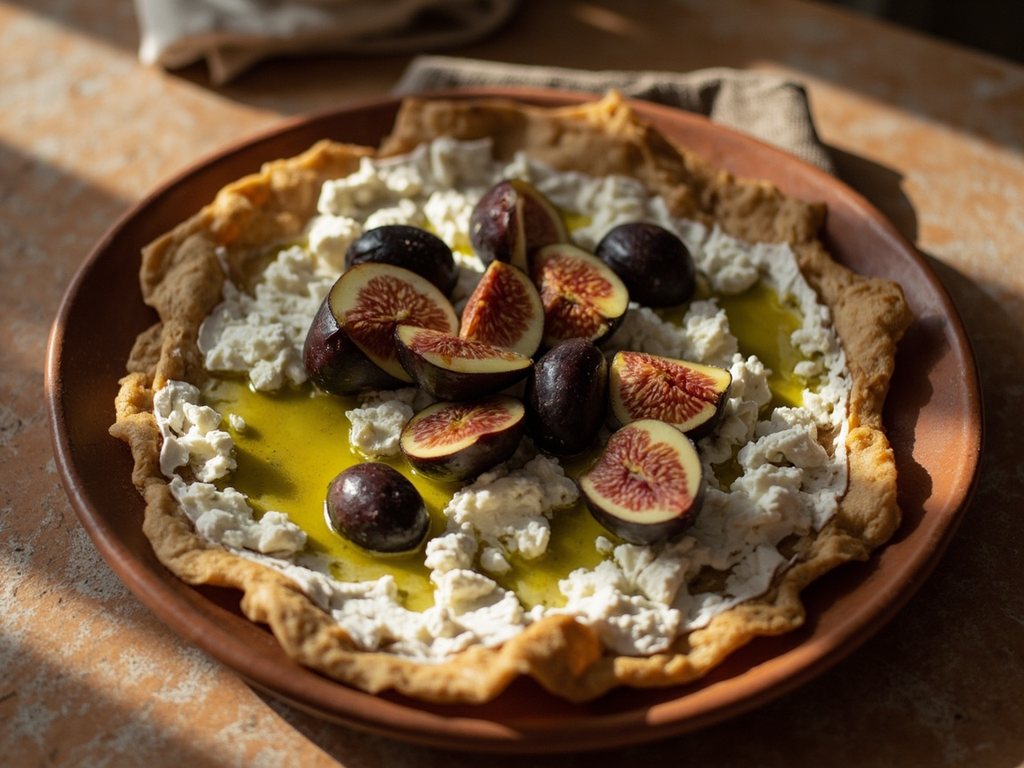
A flat cake or ball of roasted barley flour kneaded with water and oil, eaten without cooking or barely dried, accompanied by fresh cheese, olives, and figs. The simple, salty-tangy meal of fields and cities.
You imagine me all in chains and constellations — but know that my mother is Gaia, the Earth herself, and from her soil comes the humblest barley. Mix the roasted flour with water and a little oil, press it between your hands without even cooking it, and break it with fresh cheese, olive, and fig. This is what man has always eaten: what grows above me while I watch, below, upon the plumb of the world.
- •Roasted barley flour — two handfuls (base (mâza))
- •Spring water — as needed for the dough (binder)
- •Olive oil — a drizzle (softness)
- •Fresh goat cheese — a portion (accompaniment)
- •Brined olives — a handful (salt and acidity)
- •Fresh or dried figs — a few (sweetness)
Barley Mâza with Figs, Fresh Cheese, and Olives
A flat cake or ball of roasted barley flour kneaded with water and oil, eaten without cooking or barely dried, accompanied by fresh cheese, olives, and figs. The simple, salty-tangy meal of fields and cities.
Why this dish? Beneath the cosmic grandeur of Coeus lies the earth: the same barley that serves as offering feeds the Greeks every day. The mâza, a cold-kneaded barley paste, was the daily bread of the ancient Greek world — the humble matter from Gaia, mother of the Titan, set beside cheese, figs, and olives.
You imagine me all in chains and constellations — but know that my mother is Gaia, the Earth herself, and from her soil comes the humblest barley. Mix the roasted flour with water and a little oil, press it between your hands without even cooking it, and break it with fresh cheese, olive, and fig. This is what man has always eaten: what grows above me while I watch, below, upon the plumb of the world.
Ingredients (period version)
- Roasted barley flour — two handfuls (base (mâza))
- Spring water — as needed for the dough (binder)
- Olive oil — a drizzle (softness)
- Fresh goat cheese — a portion (accompaniment)
- Brined olives — a handful (salt and acidity)
- Fresh or dried figs — a few (sweetness)
Ingredients
- Barley flour — 200 g (base)
- Warm water — 100 to 120 ml (binder)
- Olive oil — 2 tbsp + for serving (softness and seasoning)
- Salt — 1/2 tsp (seasoning)
- Fresh goat cheese (or feta) — 150 g (savory garnish)
- Black brined olives — 1 handful (salt and acidity)
- Fresh or dried figs — 4 to 6 (sweetness)
Method
- If starting from raw barley flour, toast it in a dry pan over low heat for 5 minutes to awaken its flavor, then let cool.
- Mix the flour and salt, add the oil then the water little by little until a supple dough that holds together in a ball.
- Shape into thick small cakes. You can eat them as is (raw mâza style) or sear them for 4 to 5 minutes per side in a pan to firm them up.
- Arrange with crumbled fresh cheese, olives, and cut figs.
- Drizzle with olive oil and, if desired, a little oregano. Eat by hand, breaking off pieces of the cake.
How it was made : Mâza — an unleavened barley paste, often consumed without actual cooking — was the staple food of the ordinary Greek, more common than wheat bread (ártos), reserved for festive days or the wealthier. It was accompanied by ópson: anything that "relished" the cake — cheese, olives, onion, figs, salted fish. Figs, olives, and cheese are documented constants of the Greek daily diet.
The contemporary twist : Arrange as a "Titan bowl": golden mâza, feta, olives, honey-roasted figs, and bright green olive oil, modern mezzé style.
Sources : A. Dalby, Siren Feasts: A History of Food and Gastronomy in Greece · J. Wilkins & S. Hill, Food in the Ancient World
Coeus · Charactorium