 flip
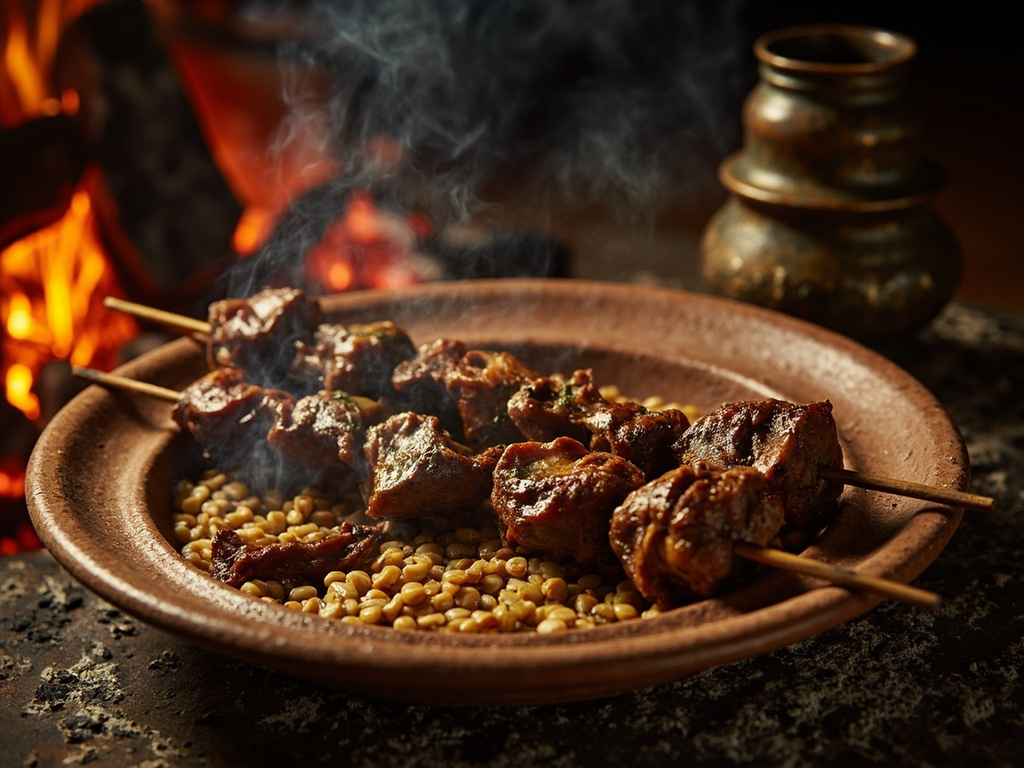
flipGrilled Splánchna and Barley — the human share at the feast
Grilled Splánchna and Barley — the human share at the feast
Why this dish? Coeus belongs to the generation that instituted, in myth, the sharing between gods and men. The great Greek feast is the sacrifice itself: the smoke rises to the Immortals, and the guests share the splánchna — heart, liver, kidneys — roasted on skewers around the altar. This is the banquet where the Titan's celestial lineage is honored.
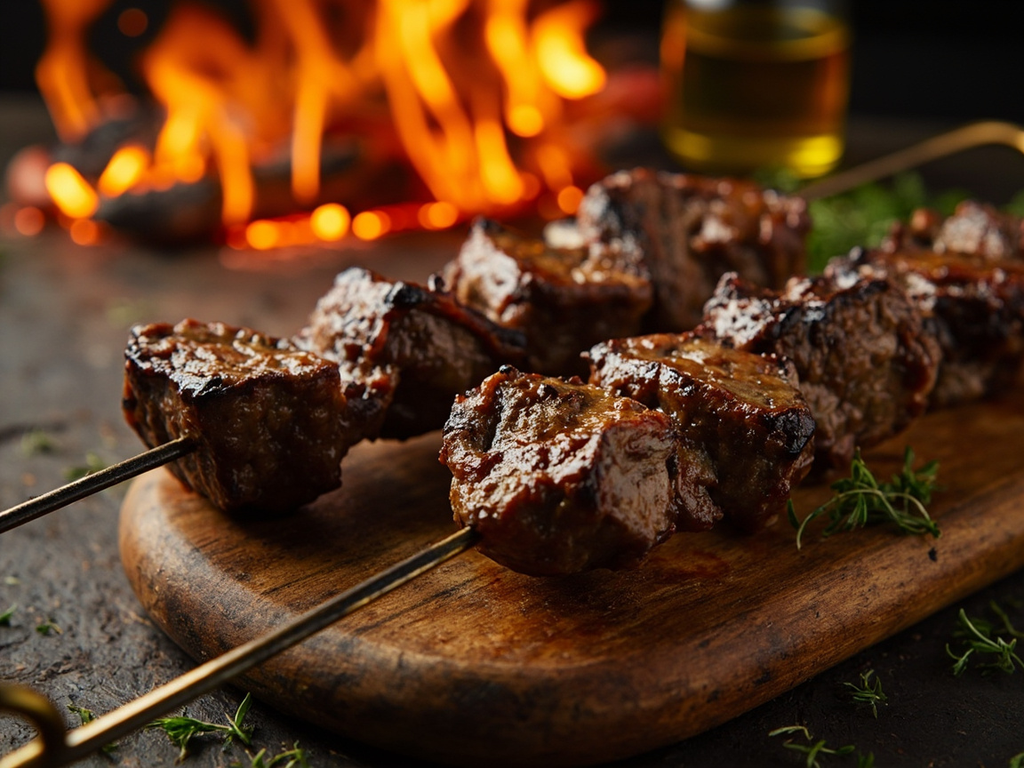
Sheep or goat offal skewered, rubbed with salt and oil, grilled over the flame, and eaten piping hot with a handful of boiled barley grains. The dish of great days, smoky and intense, shared standing up.
In the time when I held the axis between Earth and Sky, mortals were taught how to share: to us the fragrant smoke that rises, to you the flesh that satisfies. Skewer the heart and liver, rub them with salt and the oil of the olive, and hold them over the embers until they sing. Eat them standing, burning hot, even before the thighs finish smoking for us. And do not forget the barley on the fire: for with it everything begins.
- •Sheep or goat offal (heart, liver, kidneys) — to share (centerpiece (splánchna))
- •Sea salt — for rubbing (seasoning)
- •Olive oil — for brushing (cooking and binder)
- •Dried thyme and oregano — a pinch (flavor)
- •Barley grains — one bowl (accompaniment (boiled oulaí))
Grilled Splánchna and Barley — the human share at the feast
Sheep or goat offal skewered, rubbed with salt and oil, grilled over the flame, and eaten piping hot with a handful of boiled barley grains. The dish of great days, smoky and intense, shared standing up.
Why this dish? Coeus belongs to the generation that instituted, in myth, the sharing between gods and men. The great Greek feast is the sacrifice itself: the smoke rises to the Immortals, and the guests share the splánchna — heart, liver, kidneys — roasted on skewers around the altar. This is the banquet where the Titan's celestial lineage is honored.
In the time when I held the axis between Earth and Sky, mortals were taught how to share: to us the fragrant smoke that rises, to you the flesh that satisfies. Skewer the heart and liver, rub them with salt and the oil of the olive, and hold them over the embers until they sing. Eat them standing, burning hot, even before the thighs finish smoking for us. And do not forget the barley on the fire: for with it everything begins.
Ingredients (period version)
- Sheep or goat offal (heart, liver, kidneys) — to share (centerpiece (splánchna))
- Sea salt — for rubbing (seasoning)
- Olive oil — for brushing (cooking and binder)
- Dried thyme and oregano — a pinch (flavor)
- Barley grains — one bowl (accompaniment (boiled oulaí))
Ingredients
- Lamb liver (and heart if possible) — 400 g (main item)
- Pearl barley — 150 g (accompaniment)
- Olive oil — 3 tbsp (marinade and cooking)
- Sea salt — to taste (seasoning)
- Dried thyme and oregano — 1 tsp (flavor)
- Lemon (zest and juice) — 1/2 (brightness (to serve))
Method
- Rinse the pearl barley and cook it in salted water for 30 to 35 minutes until tender; drain and drizzle with a little oil.
- Cut the liver (and heart) into regular cubes; pat them dry well.
- Mix oil, thyme, oregano, and a little salt; coat the offal and let rest for 15 minutes.
- Thread onto skewers (soaked if wooden) and grill over high heat, 2 to 3 minutes per side: the outside should be seared, the inside pink and tender.
- Salt at the end of cooking, squeeze a little lemon and zest over the top.
- Serve piping hot on the bed of barley, to be shared directly from the dish, as around the altar.
How it was made : During the thysía, the thigh bones wrapped in fat were burned for the gods (the smoke portion), while the splánchna — noble viscera — were roasted on skewers (obeloí) and consumed on the spot by participants. Everyday meat almost always came from such sacrifices: eating meat meant celebrating and honoring the gods.
The contemporary twist : For tables without offal, replace with lamb skewers with thyme: same gesture, same skewers, spirit of sharing intact.
Sources : M. Detienne & J.-P. Vernant, La cuisine du sacrifice en pays grec · Homère, Iliade (description des sacrifices et des broches) · A. Dalby, Siren Feasts
Coeus · Charactorium