 Flip the card
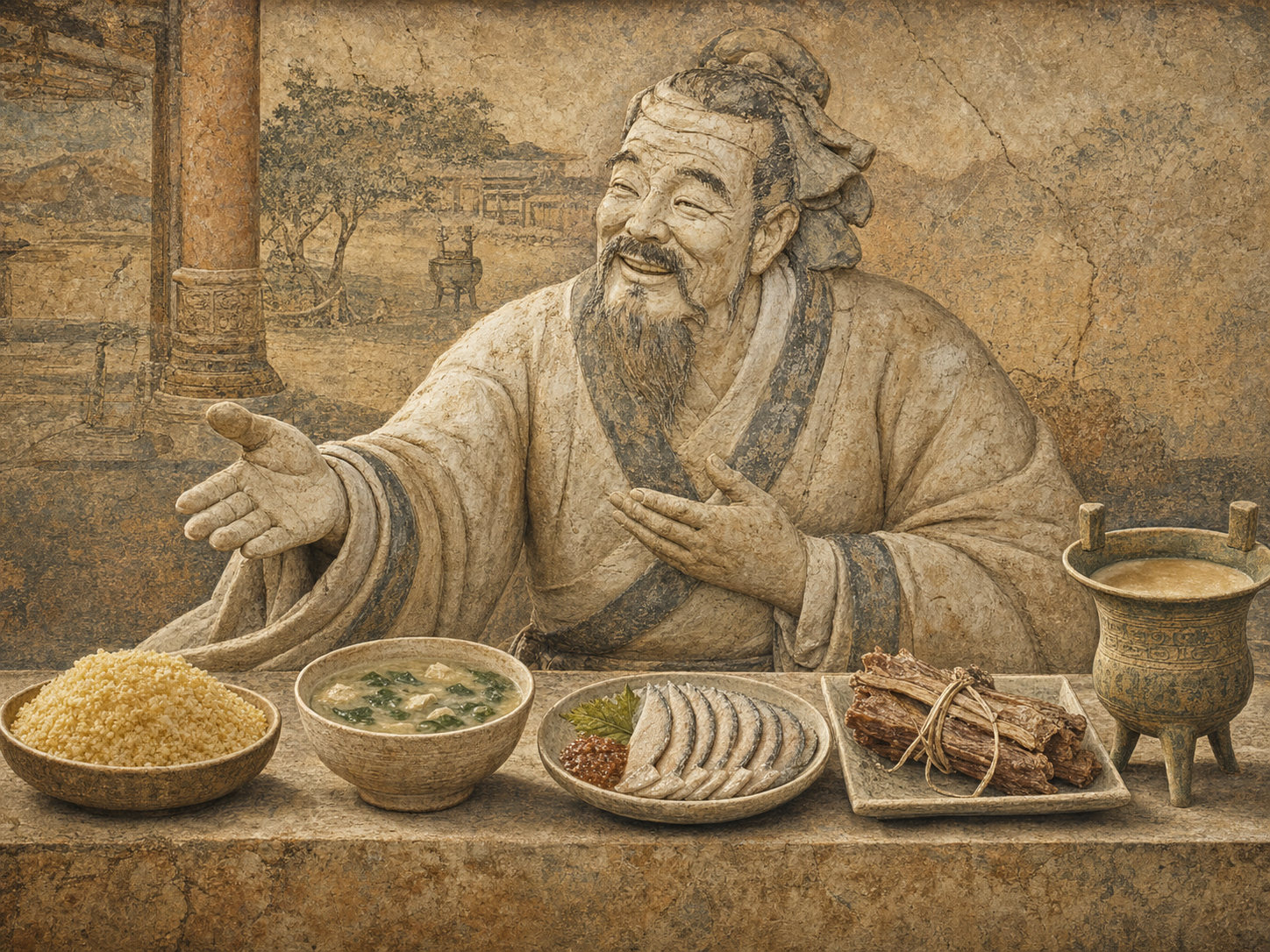
Confucius at the table
550 av. J.-C. — 478 av. J.-C.
On the menu
The Zhou Ritual Meal: fàn and cài
At the table of ancient China, one does not think in terms of starter-main course-dessert but rather a base of steamed grain, the fàn (黍 millet, 稻 rice), surrounded by side dishes, the cài: thick soups (羹 geng), finely sliced meats, vegetables, and always a paired fermented sauce (醬 jiang). Added to these are the xiū (羞), delicate morsels and preserves, and the yǐn (飲), fermented drinks poured especially for offerings to the ancestors. Each food has its place, its season, and its cutting: eating, for Confucius, is an act of ritual (禮) as much as of sustenance.
Signature : Jiang (醬), the Paired Fermented Sauce
A fermented paste of grain or meat, at once salty, umami, and tangy. Confucius made it a rule of life: 'without the proper sauce, he would not eat' (Analects, X). Each dish called for its precise jiang; serving the wrong sauce was to break the harmony of the meal.
click to flip back
Confucius at the table
550 av. J.-C. — 478 av. J.-C.
5 period recipes
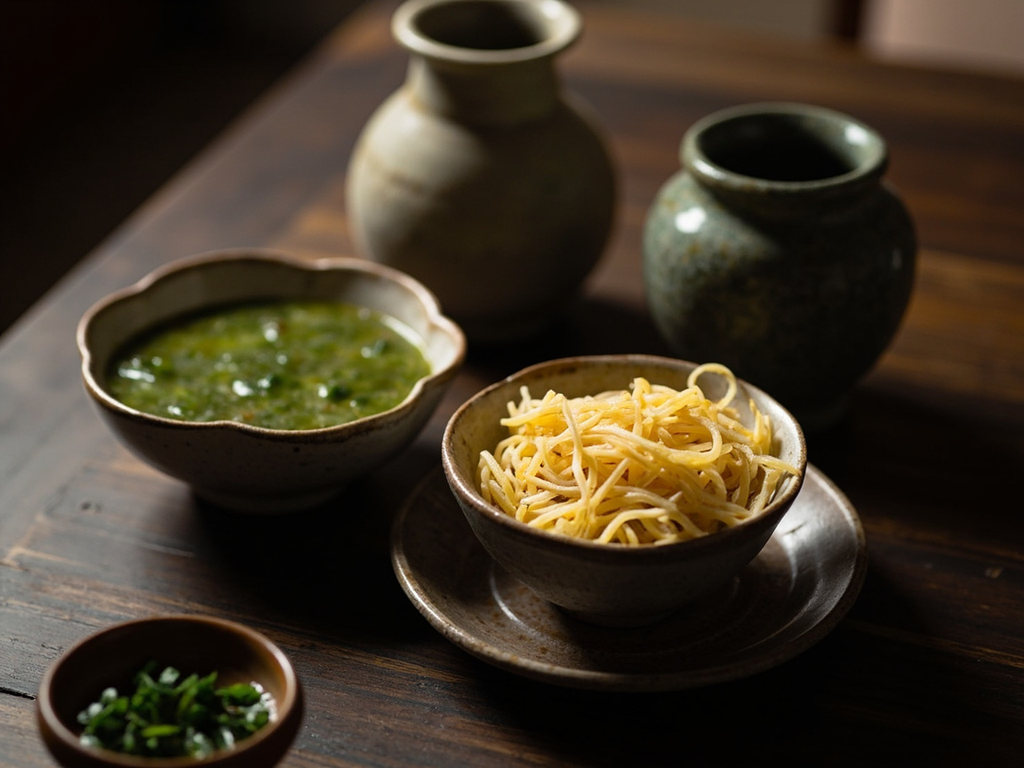 Everyday
Jì shí: Steamed Millet and Mallow Soup
fàn (grain base) accompanied by a 羹 geng (thick soup)
🧂 🍄· 45 min
View the recipe
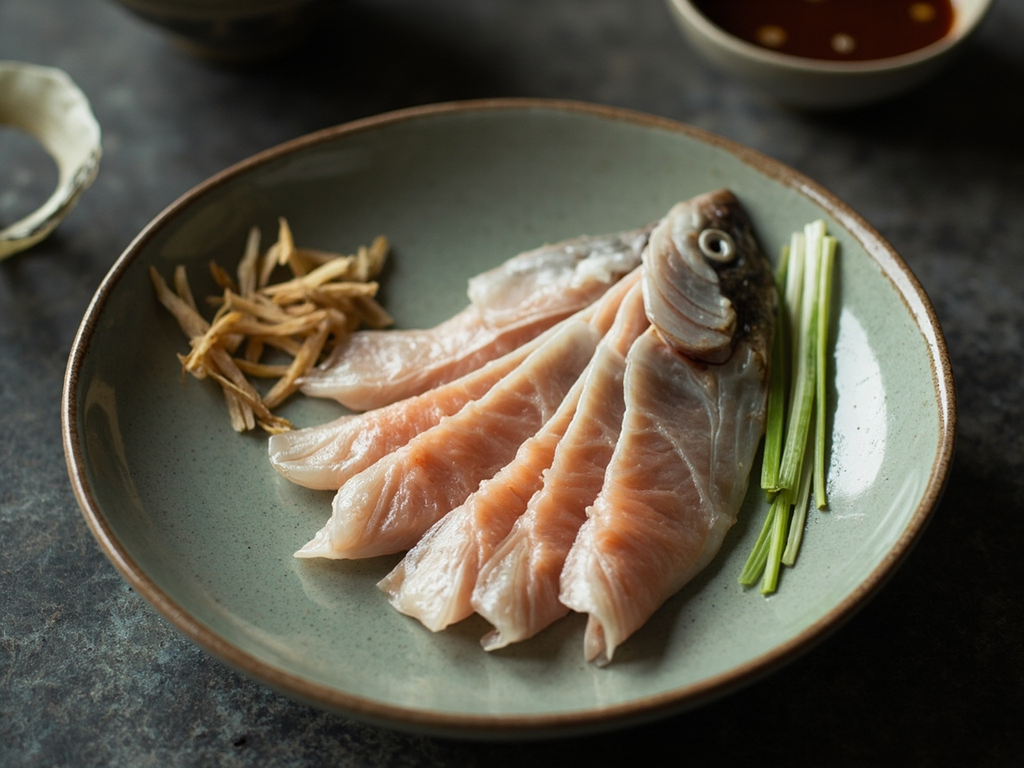 Festive
Kuài with Jiang: Thin Slices of Fish and Their Fermented Sauce
膳 shàn (meat dish) served with its 醢 hǎi, paired fermented sauce
🫙 🍄 🧂· 30 min
View the recipe
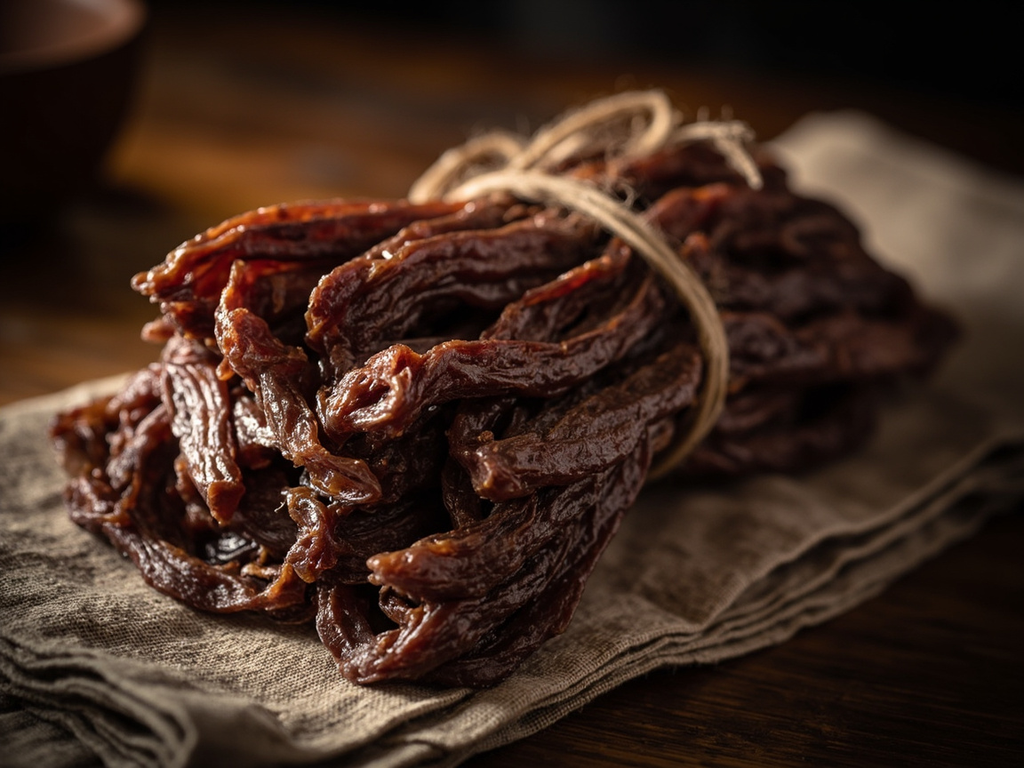 Preserving
Shù xiū: The Disciple's Bundle of Dried Meat
脯 fǔ / 羞 xiū — preserved meat, dried delicacy offered as a gift
🧂 🍄· 4 h drying (+ marination)
View the recipe
 Offering
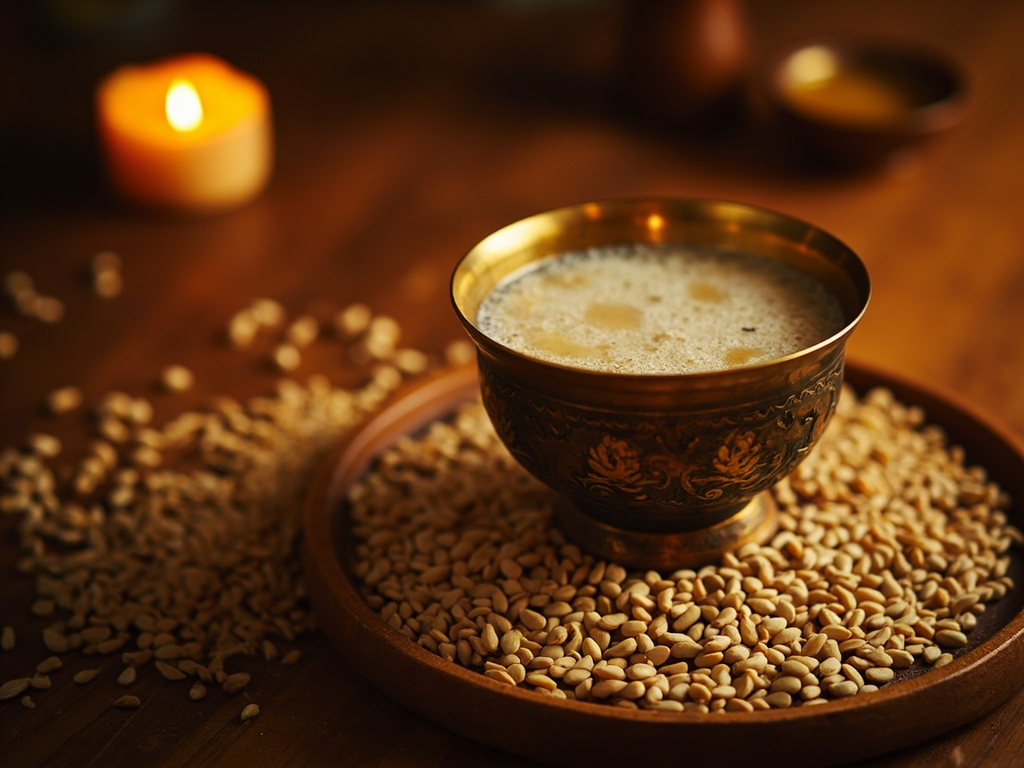
Lǐ: Sweet Millet Ale for the Offering
飲 yǐn — fermented drink for libations and ancestral rites
🍯 🫙· 1 to 2 days (fermentation) or 25 min (non-alcoholic version)
View the recipe
 Remedy
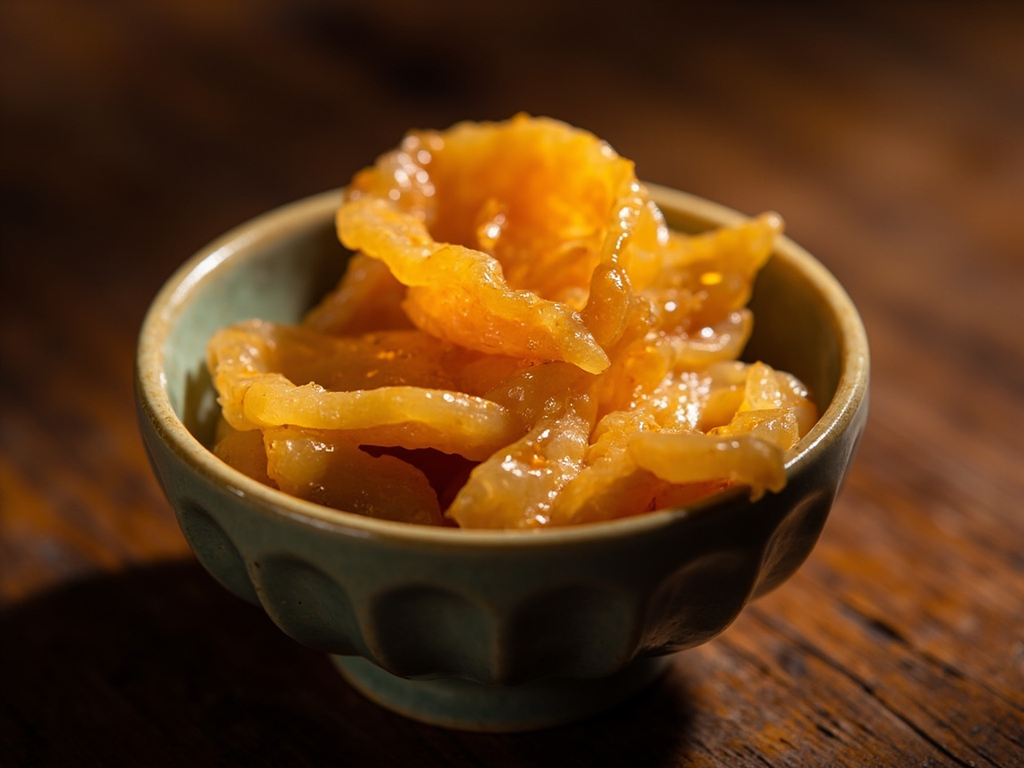
Jiāng: Honey-Candied Ginger, the Condiment That Never Left His Table
羞 xiū — small palate cleanser, purifying condiment served at meal's end
🌶️ 🍯· 40 min
View the recipe