 flip
flipJiāng: Honey-Candied Ginger, the Condiment That Never Left His Table
Jiāng: Honey-Candied Ginger, the Condiment That Never Left His Table
Why this dish? 'He never did without ginger, yet he did not eat much of it' (Analects, X). This habit of Confucius is one of the most precisely reported: ginger, believed to purify the breath and clear the mind, accompanied each of his meals in moderation. An intimate detail that became emblematic.
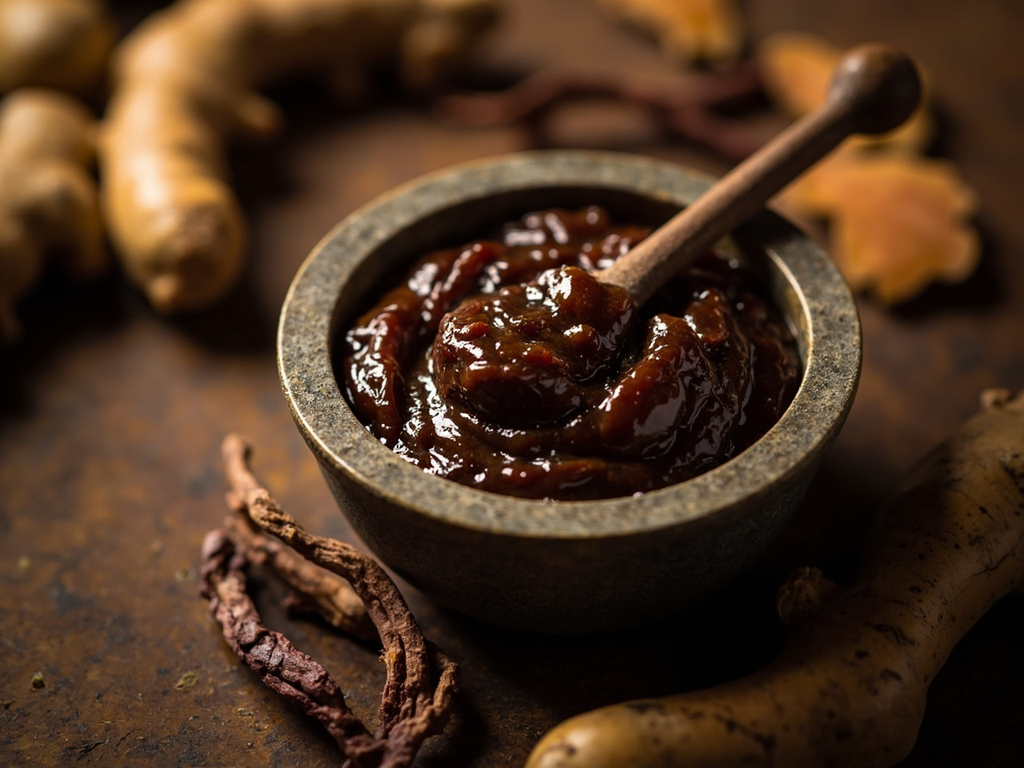
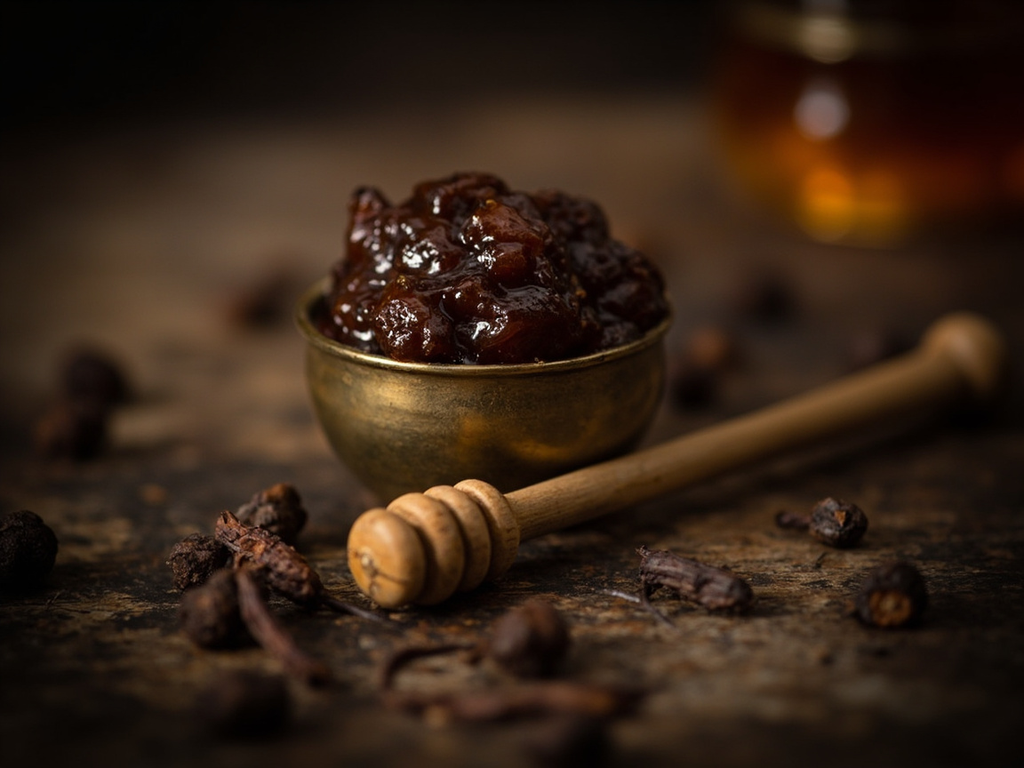
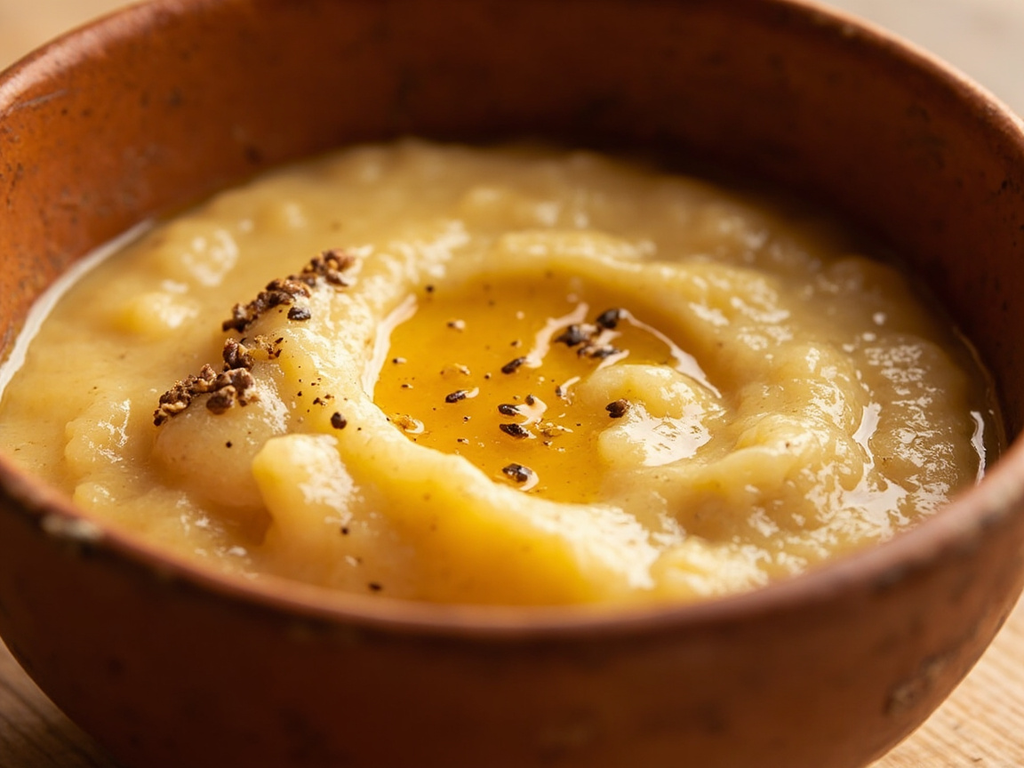
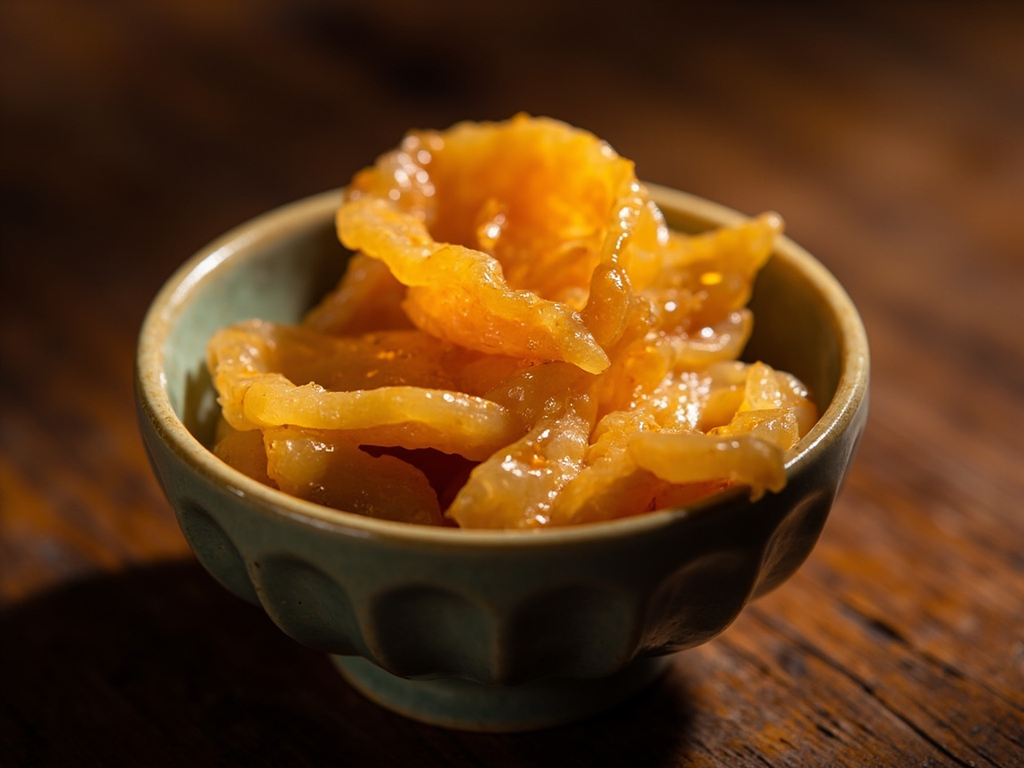
Fine slices of fresh ginger, mellowed then candied in honey: pungent and sweet at once, you crunch a piece at the end of a meal to cleanse the mouth and warm the belly. The Master's condiment-remedy, to be taken—like him—with measure.
Ginger, I never set it aside from my table—but beware of overindulgence. One sliver suffices: it purifies the breath, clears the spirit, and drives away troubled humors after the meal. Cut it fine, soften its fire, and preserve it in honey for the cold seasons. Take everything in its just measure: this is the rule of ginger as it is the rule of life.
- •Fresh ginger (薑) — one root (condiment-remedy)
- •Wild honey — to cover (candying and sweetness)
Jiāng: Honey-Candied Ginger, the Condiment That Never Left His Table
Fine slices of fresh ginger, mellowed then candied in honey: pungent and sweet at once, you crunch a piece at the end of a meal to cleanse the mouth and warm the belly. The Master's condiment-remedy, to be taken—like him—with measure.
Why this dish? 'He never did without ginger, yet he did not eat much of it' (Analects, X). This habit of Confucius is one of the most precisely reported: ginger, believed to purify the breath and clear the mind, accompanied each of his meals in moderation. An intimate detail that became emblematic.
Ginger, I never set it aside from my table—but beware of overindulgence. One sliver suffices: it purifies the breath, clears the spirit, and drives away troubled humors after the meal. Cut it fine, soften its fire, and preserve it in honey for the cold seasons. Take everything in its just measure: this is the rule of ginger as it is the rule of life.
Ingredients (period version)
- Fresh ginger (薑) — one root (condiment-remedy)
- Wild honey — to cover (candying and sweetness)
Ingredients
- Fresh ginger — 150 g (condiment)
- Honey — 150 g (candying syrup)
- Water — 100 ml (first blanching)
- Pinch of salt — 1 pinch (balance)
Method
- Peel the ginger and slice it into very thin rounds.
- Blanch the slices in boiling water for 2 minutes to mellow the pungency, then drain.
- In a small saucepan, gently warm the honey with a pinch of salt and a splash of water.
- Add the ginger slices and candy over very low heat for 20 to 25 minutes, until translucent and syrupy.
- Let cool in the honey; store in a jar. Crunch one or two pieces at the end of a meal.
- Tip: the leftover ginger-infused honey can be diluted in hot water for a soothing tea.
How it was made : In ancient China, ginger belonged as much to the kitchen as to the pharmacopoeia: it was believed to 'dispel cold,' purify the breath, and sharpen the mind—hence the scholarly habit of consuming a little at every meal. Honey, gathered wild, was one of the few sweetening and preserving agents before the spread of cane sugar. Confucius's moderation ('without eating much of it') illustrates his doctrine of the Golden Mean applied even to the plate.
The contemporary twist : Roll the drained candied slices in a dusting of sugar, like 'crystallized ginger' from a teahouse: ancient wisdom in a mignardise.
Sources : Entretiens de Confucius (Lunyu), book X 'Xiang Dang' · Frederick J. Simoons, Food in China: A Cultural and Historical Inquiry, CRC Press, 1991
Confucius · Charactorium