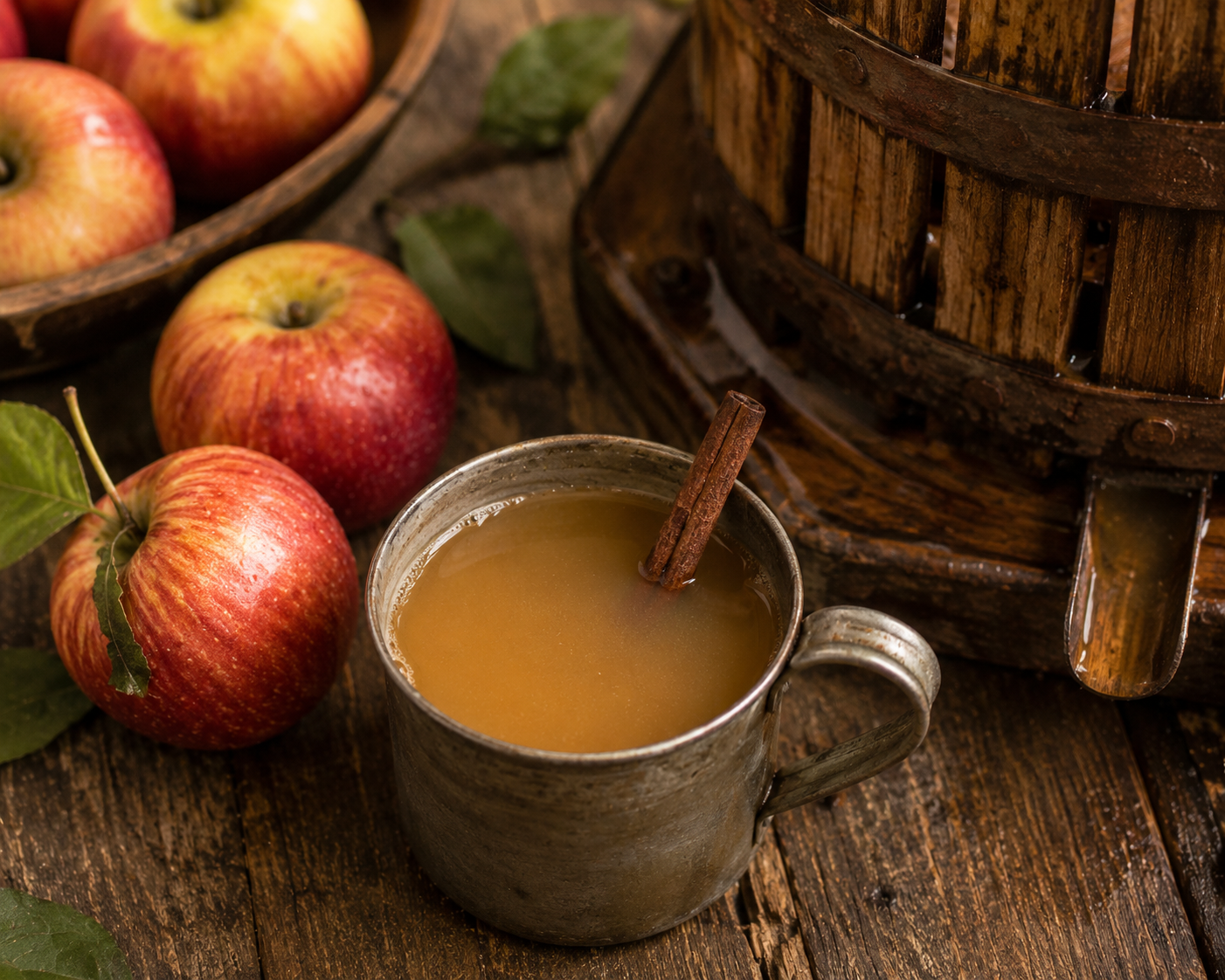
Fermented Millet Wine (jiǔ of the Royal Pond)
A sweet, milky millet alcohol, fermented using qū starter, both nourishing and intoxicating. Cloudy, slightly tangy, it is the ancestor of Chinese rice wine — the sacred drink poured at the foot of altars before being brought to the lips.
A sweet, milky millet alcohol, fermented using qū starter, both nourishing and intoxicating. Cloudy, slightly tangy, it is the ancestor of Chinese rice wine — the sacred drink poured at the foot of altars before being brought to the lips.
Lean over the jar and breathe: this is the soul of the kingdom. We cook the millet, unite it with the ferment, and wait for the grain to awaken and bubble on its own — magic that men believe they hold from the ancestors. We first offer it to the dead, as is proper; then the king and I dip our bronze cups into it. My king made it a pond where our boats glided — madness, you say? I call it ruling.
- •Cooked glutinous millet — one large jar (fermentable base)
- •Qū ferment (mold cake) — according to jar size (fermentation agent)
- •Spring water — to cover (fermentation medium)
Fermented Millet Wine (jiǔ of the Royal Pond)
A sweet, milky millet alcohol, fermented using qū starter, both nourishing and intoxicating. Cloudy, slightly tangy, it is the ancestor of Chinese rice wine — the sacred drink poured at the foot of altars before being brought to the lips.
Why this dish? The 'pond of wine' (jiǔ chí) from the legend of Daji and King Zhou is one of the most famous excesses in Chinese mythology. This cloudy millet wine, first offered to ancestors in bronze jue vessels, is the heart of every Shang rite — and the very symbol of the dynasty drowned in intoxication.
Lean over the jar and breathe: this is the soul of the kingdom. We cook the millet, unite it with the ferment, and wait for the grain to awaken and bubble on its own — magic that men believe they hold from the ancestors. We first offer it to the dead, as is proper; then the king and I dip our bronze cups into it. My king made it a pond where our boats glided — madness, you say? I call it ruling.
Ingredients (period version)
- Cooked glutinous millet — one large jar (fermentable base)
- Qū ferment (mold cake) — according to jar size (fermentation agent)
- Spring water — to cover (fermentation medium)
Ingredients
- Glutinous millet (or glutinous rice) — 500 g (fermentable base)
- Rice wine fermentation starter (jiuqu / koji) — according to package (fermentation agent)
- Filtered water — 800 ml (medium)
Method
- Steam the millet until tender, then let it cool to body temperature (about 30°C).
- Crumble the ferment and mix it thoroughly into the cooled millet.
- Pack into a clean jar, make a well in the center, cover with a cloth.
- Let ferment at 25-30°C: in 2-3 days, a sweet, cloudy liquid accumulates in the well.
- Add the water, close without sealing airtight, and leave for 1 to 2 weeks. Strain before serving, chilled, in a small cup.
- Warning: alcoholic product, for adults only — at school, present the recipe without tasting.
How it was made : Fermentation with qū (molds that saccharify starch) is a very ancient Chinese invention, attested as early as the Shang by the numerous bronze wine vessels found at Anyang. Millet jiǔ was central to ancestor worship; oracle bone inscriptions abundantly mention wine offerings.
The contemporary twist : Served chilled and strained, it is the direct ancestor of the sweet jiuniang still enjoyed today — a drinkable bridge between the Shang dynasty and our tables.
Daji · Charactorium