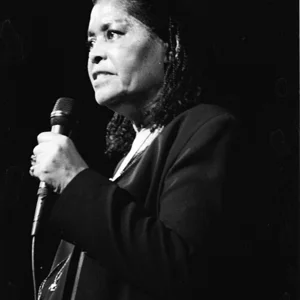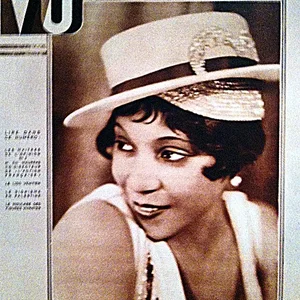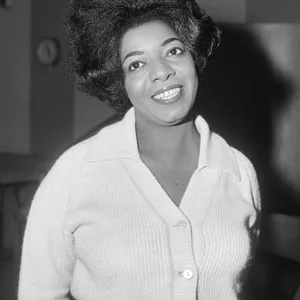

Dakota Staton (1930-2007) was an American jazz and blues singer. She rose to fame in the late 1950s and enjoyed huge success with her album The Late, Late Show in 1957.
Dakota Staton(1930 — 2007)
Dakota Staton
États-Unis
6 min read
Frequently asked questions
Key Facts
- Born on June 3, 1930, in Pittsburgh (Pennsylvania), United States
- Signed with Capitol Records in the mid-1950s
- Released her landmark album The Late, Late Show in 1957, a major commercial success
- Voted best vocal newcomer by Down Beat magazine in 1955
- Died on April 10, 2007, in New York
Works & Achievements
The singer's first album and biggest success, which reached No. 4 on the U.S. sales chart; the title track became her signature song.
An album of ballads with carefully crafted arrangements that confirmed her status as a star of jazz singing.
An energetic record that showcases her vocal power and her grounding in swing.
A collection of romantic standards illustrating her mastery of the ballad and of intimate interpretation.
An album geared toward rhythmic jazz, in which she trades phrases with an orchestra in a livelier vein.
A live recording in a renowned club that captures her onstage energy in front of a real audience.
Anecdotes
Born in Pittsburgh in 1930, Dakota Staton sang from a very young age in the clubs and churches of her hometown. It was while performing at the Flame Show Bar in Detroit that she was spotted by Dave Cavanaugh, a producer for the Capitol label, who signed her in the late 1950s.
In 1955, the famous jazz magazine DownBeat awarded her the title of “most promising newcomer” of the year. This honor, decided by a vote of critics, truly launched her national career in the United States.
In 1957, her first album The Late, Late Show climbed to number 4 on the American sales charts. The title track became her signature song, the one audiences would request at every concert for decades.
In the 1950s, Dakota Staton converted to Islam and married the trumpeter Talib Ahmad Dawud. The couple publicly opposed Elijah Muhammad's Nation of Islam, which placed them at the heart of the religious debates then stirring the African American community.
Starting in the 1960s, she settled in London for several years and toured Europe and the Middle East. This exile reflects the path of many Black American jazz musicians, who were better received on European stages than in a still-segregated America.
Primary Sources
Dakota Staton is named by the magazine's critics as the most promising singer of the year, a distinction that comes shortly before she signs with Capitol.
The singer's first LP, bringing together standards and ballads arranged for orchestra; the title track becomes her signature tune.
The Late, Late Show ranks among the best-selling albums, reaching No. 4 on the national chart.
A 1953 composition that evokes the late-night atmosphere of the clubs and becomes, in its 1957 version, the singer's signature piece.
Key Places
Industrial city where Dakota Staton was born in 1930 and cut her teeth in local clubs and choirs.
Famous African American nightclub where the singer performed and was spotted by Capitol. A key venue on the jazz and rhythm and blues circuit.
The studios of the Capitol Records label where she recorded her late-1950s albums, including The Late, Late Show.
City where she settled in the 1960s, the base for her European tours at a time when Europe gave American jazz musicians a warm welcome.
City where Dakota Staton continued her career after returning to the United States and where she died in 2007.
Typical Objects

An essential tool for the cabaret and studio singer in the 1950s, it captures the nuances of her powerful, warm voice. Dakota Staton uses it to move from an intimate whisper to full radiance.

An LP album released by Capitol in 1957 that made her famous. Its cover and commercial success turned her into a national star.

An elegant outfit worn by jazz singers during concerts in clubs or halls. It contributes to the glamorous image the public expected of a star of the era.

The leading American jazz magazine, which crowned Dakota Staton the “revelation” of 1955. A good review in its pages could launch a career.

The central instrument of the small ensembles that backed the singer on stage and in the studio. The dialogue between voice and piano shapes her interpretations of standards.

A garment she adopted after her conversion to Islam, publicly marking her religious commitment. It reflects the spiritual path she followed in the late 1950s.
School Curriculum
Vocabulary & Tags
Key Vocabulary
Tags
Daily Life
Morning
On tour, Dakota Staton wakes up late, since concerts end in the middle of the night. The morning is for recovering, sparing her voice, and arranging travel to the next city.
Afternoon
The afternoon is devoted to rehearsals with the musicians, choosing the songs and, during recording periods, to long studio sessions. She works on the arrangements with her accompanists.
Evening
In the evening, she takes the stage in clubs or concert halls, sometimes for two performances in the same night. This is the central moment of her day, where she unfolds her entire repertoire.
Food
Life on tour means meals eaten at irregular hours, often in the restaurants of clubs or hotels. Singers take care to spare their throats by avoiding overly cold drinks before singing.
Clothing
On stage, she wears elegant, carefully chosen long gowns, matching the glamorous image expected of jazz stars. After her conversion to Islam, she also adopts more modest dress and the headscarf.
Housing
Her life alternates between hotel rooms during tours and apartments in the city, notably in New York and later London. Housing remains above all a place to rest between two engagements.