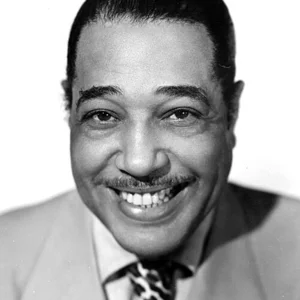

Duke Ellington (1899-1974) was an American pianist, composer, and bandleader, a central figure in jazz. For nearly half a century, he led his big band and composed thousands of works that elevated jazz to the status of a major art form.
Duke Ellington(1899 — 1974)
Duke Ellington
États-Unis
5 min read
Frequently asked questions
Famous Quotes
« There are only two kinds of music: good music and bad music.»
Key Facts
- Born on April 29, 1899, in Washington, D.C., he learned the piano as a child and was nicknamed “Duke” for his elegance.
- From 1927 to 1931, his orchestra was in residence at Harlem's Cotton Club; radio broadcasts made him famous across America.
- In 1931, he recorded “It Don't Mean a Thing (If It Ain't Got That Swing),” which heralded the swing era.
- In 1943, he gave a historic concert at Carnegie Hall, where he premiered his suite “Black, Brown and Beige.”
- He died on May 24, 1974, in New York, leaving behind a body of work numbering several thousand compositions.
Works & Achievements
One of his most famous ballads, with a soft, melancholy sound, which became a jazz standard.
A piece that popularized the word “swing” and heralded an entire era of dance music.
An elegant ballad showcasing his gift for melody, covered by countless musicians.
Written by Billy Strayhorn, this piece became the orchestra's signature tune and its most recognizable theme.
A sweeping suite premiered at Carnegie Hall recounting the history of African Americans, a rare ambition for the jazz of the time.
A legendary performance that revived his career and landed him on the cover of Time.
A series of concerts blending jazz, gospel, and sacred music, which Ellington considered his most important work.
His autobiography, in which he looks back on nearly half a century of his career and life on the road.
Anecdotes
His real first name is Edward, but a childhood friend nicknamed him “Duke” because of his refined manners and his elegant way of dressing. The nickname would stay with him all his life and become a true brand.
Starting in 1927, his orchestra became famous at Harlem's Cotton Club, whose concerts were broadcast on the radio all across America. Yet this club reserved its room for a white clientele: Black musicians played there, but Black audiences were not admitted, at the height of the segregation era.
At the Newport Festival in 1956, saxophonist Paul Gonsalves played 27 choruses (improvised refrains) in a row in “Diminuendo and Crescendo in Blue.” The audience rose and danced, reviving Ellington's career—he would appear on the cover of Time magazine shortly afterward.
In 1965, the Pulitzer Prize jury refused to grant him a special citation. Ellington, then 66 years old, responded with humor: “Fate is being kind to me. Fate doesn't want me to be too famous too young.”
His most famous song, “Take the 'A' Train,” was composed by his collaborator Billy Strayhorn from the subway directions Ellington had given him to get to his home in Harlem: you had to “take the A train.”
Primary Sources
Music is my mistress, and she plays second fiddle to no one.
Fate is being kind to me. Fate doesn't want me to be too famous too young.
It don't mean a thing if it ain't got that swing.
There are only two kinds of music: good music, and the other kind.
Key Places
Ellington's birthplace, where he grew up in a middle-class Black family and learned the piano.
Famous club where his orchestra performed from 1927 onward and rose to national fame thanks to radio broadcasts.
Prestigious venue where Ellington premiered his great suite “Black, Brown and Beige” in 1943, elevating jazz to the rank of serious art.
Site of the 1956 jazz festival where a memorable concert revived his career.
A stop on his European tours beginning in 1933, where audiences welcomed American jazz with enthusiasm.
City where Ellington lived for much of his life and where he died in 1974.
Typical Objects

Ellington's instrument of choice, from which he led his orchestra while playing and composed the bulk of his works.

His always impeccable and refined attire earned him the nickname “Duke”; elegance was part of his stage image.

Ellington composed thousands of pieces, often written on trains or in hotels during his long tours.

Radio broadcasts from the Cotton Club made his orchestra known throughout America.

The format on which his recordings were released, spreading his music far beyond the New York clubs.

The highest American civilian honor, awarded to Ellington in 1969 on his 70th birthday.
School Curriculum
Vocabulary & Tags
Key Vocabulary
Tags
Daily Life
Morning
After concerts that ended late into the night, Ellington often slept through much of the morning. Once awake, he handled his orchestra's business affairs and the details of upcoming tours over the phone.
Afternoon
His afternoons were largely spent on the move, traveling from one city to another by train or bus with his musicians. It was also the time for rehearsals and studio recording sessions.
Evening
The evening was the heart of his profession: he played in clubs, theaters, and ballrooms, leading his big band from his piano. When night fell, he often composed new pieces.
Food
A hearty eater, Ellington was especially fond of steaks and ice cream. Mindful of his health, he had eating habits that were sometimes surprising and ever-changing.
Clothing
Always impeccably dressed, he wore refined suits and elegant tuxedos. This extreme care for his appearance earned him the nickname “Duke” very early on.
Housing
Spending most of his life on the road, he stayed in hotels and the sleeping cars of trains. He nevertheless kept a home base in Harlem, in New York.