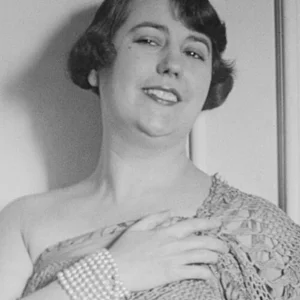

Spanish coloratura soprano, one of the great bel canto voices of the early 20th century. Having become a teacher, she was Maria Callas's singing instructor in Athens, passing on to her the art of bel canto.
Elvira de Hidalgo(1891 — 1980)
Elvira de Hidalgo
Espagne
5 min read
Frequently asked questions
Key Facts
- Born in 1891 in Aspe (Spain), she began an international career as a coloratura soprano at a very young age.
- She performed on the greatest opera stages, notably at the Metropolitan Opera in New York and La Scala in Milan.
- Settled in Athens, she taught at the National Conservatory from the 1930s onward.
- She trained Maria Callas, her most famous pupil, passing on to her the secrets of bel canto.
- She died in 1980 in Milan.
Works & Achievements
The iconic role of her early career, a pinnacle of the coloratura soprano repertoire where she revealed her vocal agility.
A remarkably early international breakthrough on one of the greatest opera stages in the world.
Tours and appearances in European theaters, where she established herself among the great voices of bel canto.
A major teaching role: it was here that she trained Maria Callas and passed on the bel canto tradition.
Her most enduring achievement: having shaped the technique and style of the most famous soprano of the 20th century.
The continuation of her work as a teacher, passing bel canto on to new generations of singers.
Anecdotes
Elvira de Hidalgo began very young and sang the role of Rosina in Rossini's The Barber of Seville as early as 1908, one of the pinnacles of the coloratura soprano repertoire. She was barely fifteen and immediately made her mark through the agility of her voice.
In 1910, having only just left adolescence behind, she made her debut at the Metropolitan Opera in New York, one of the most prestigious opera stages in the world, sharing the bill with the great stars of the era.
Having become a singing teacher at the Athens Conservatory, in the 1930s and 1940s she noticed a teenage pupil named Maria Kalogeropoulos — the future Maria Callas. She passed on to her the art of bel canto and remained her foremost vocal reference for the rest of her life.
Maria Callas said of her that she had taught her everything: not only technique, but the love of nuance and expression. Elvira de Hidalgo, in return, regarded Callas as the crowning achievement of her teaching.
After the war, Elvira de Hidalgo continued her career as a teacher in Ankara and then in Milan, passing on to new generations a bel canto tradition inherited from the 19th century that she had herself sung on stage.
Primary Sources
Everything I know, everything I have learned about music and interpretation, I owe to Elvira de Hidalgo.
Elvira de Hidalgo appears in coloratura soprano roles, notably Rosina in *Il Barbiere di Siviglia*.
Elvira de Hidalgo is registered there as a singing teacher, counting among her students the young Maria Kalogeropoulos.
Key Places
Region in northeastern Spain where Elvira de Hidalgo was born in 1891.
Prestigious American opera house where she made her debut in 1910 in the coloratura repertoire.
Greek institution where she taught singing and trained the young Maria Callas in the late 1930s.
Temple of Italian bel canto, in the city where Elvira de Hidalgo settled and ended her career as a teacher.
City where Elvira de Hidalgo spent her final years and died in 1980.