 Flip the card
Euclid at the table
333 av. J.-C. — 284 av. J.-C.
On the menu
Sîtos & ópson, then sympósion
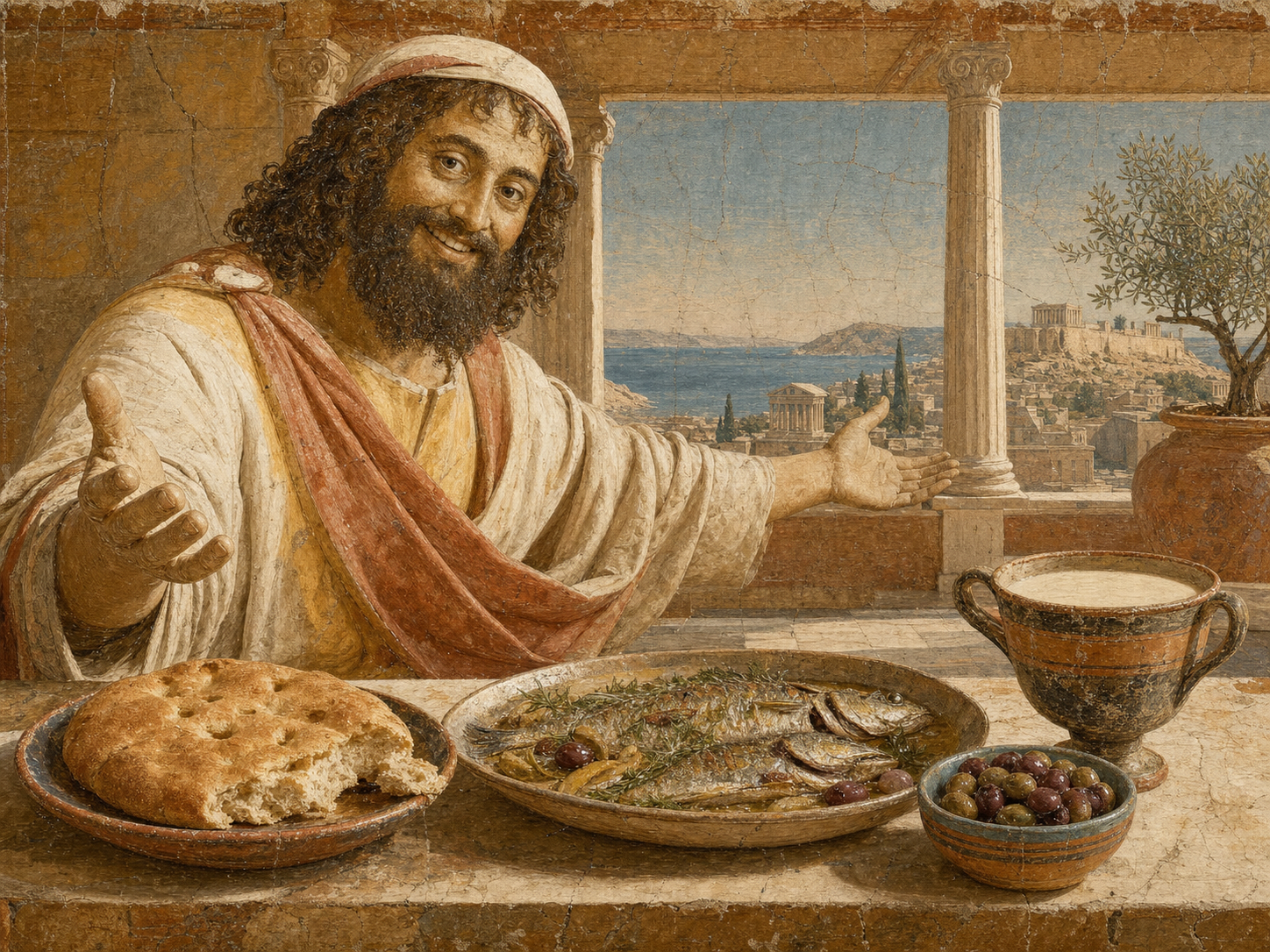
The Hellenistic Greek meal is divided into two halves: the sîtos, the cereal base (barley flatbread maza, wheat bread), and the ópson, everything eaten "with" it — fish, vegetables, olives, sauces. The evening meal (deîpnon) ends with the sympósion, a moment of wine mixed with water accompanied by tragémata, small treats of figs, honey, and dried fruits. In cosmopolitan Alexandria, this Greek framework is enhanced with products from the Nile and spices arriving from the East through the port.
Signature : Gáron (Greek garum)
A brine of small fish fermented in the sun, ancestor of Roman garum. A few salty, umami drops enhance fish, vegetables, and even maza. It is the king of seasonings in the Hellenistic Mediterranean, produced in large quantities along the Egyptian and Greek coasts.
click to flip back
Euclid at the table
333 av. J.-C. — 284 av. J.-C.
5 period recipes
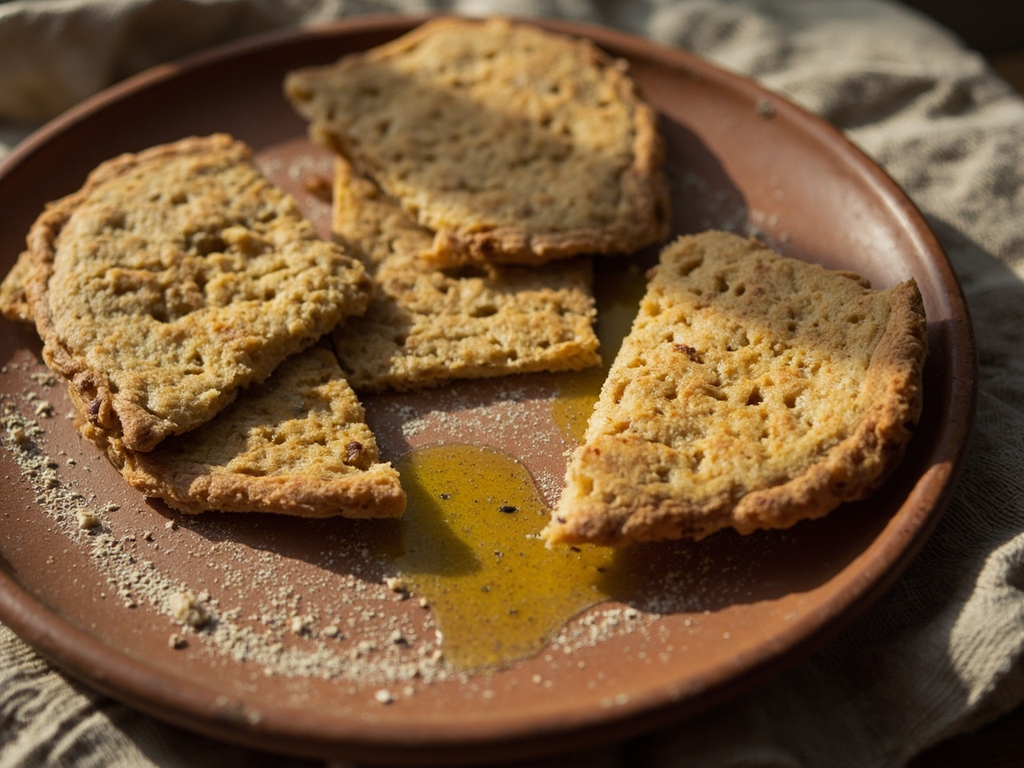 Everyday
Maza, the Scholar's Barley Flatbread
Sîtos (cereal base of the meal)
🧂 ☕· 25 min
View the recipe
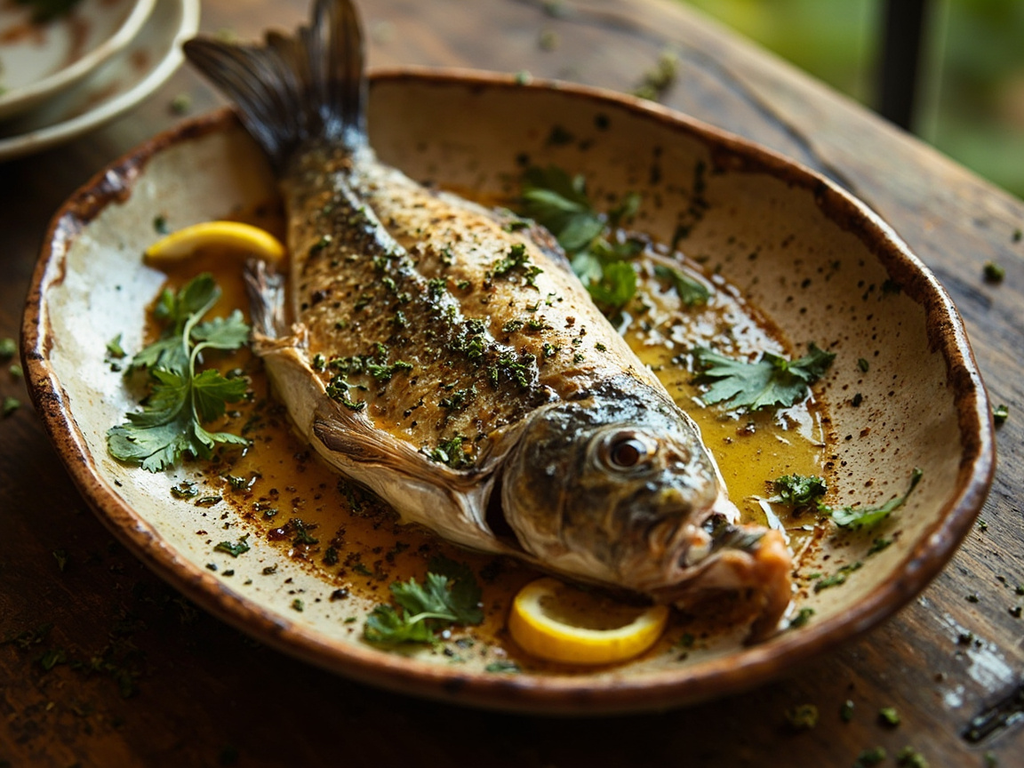 Festive
Alexandrian Port Fish with Gáron
Ópson (the noble accompaniment to sîtos)
🧂 🍄· 30 min
View the recipe
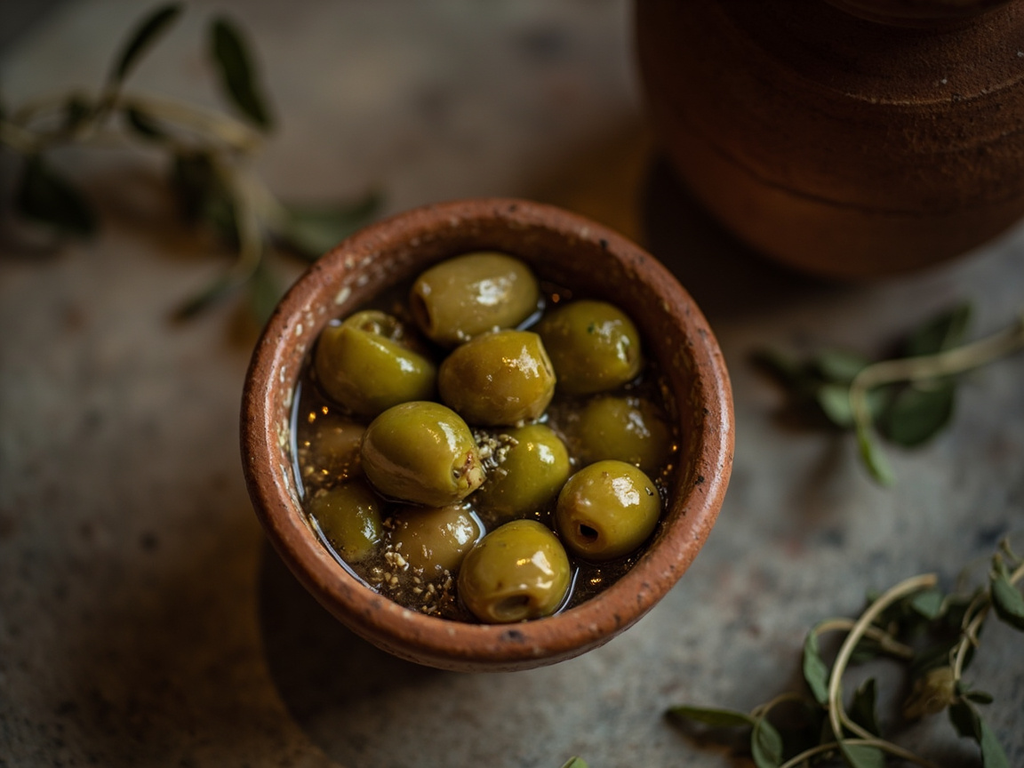 Preserving
Crushed Olives in Alexandrian Brine
Salty trágema / pantry reserve
☕ 🧂 🍋· 20 min (+ 2 to 3 weeks maturation)
View the recipe
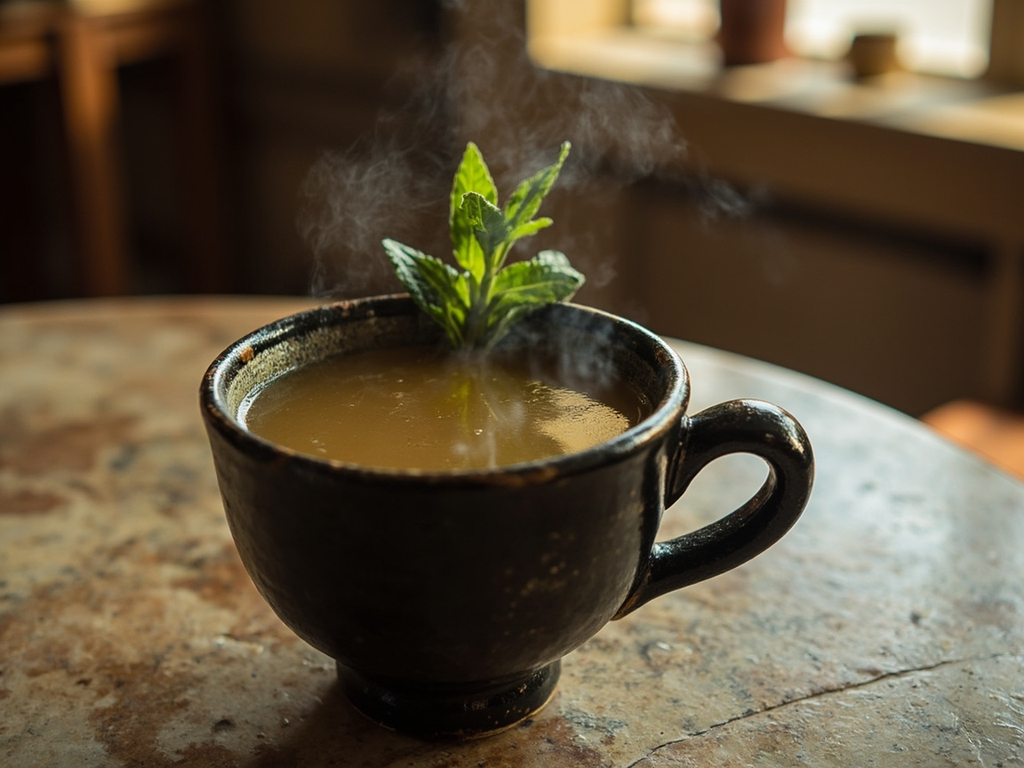 Travel
Student's Kykeon, Herbed Barley Drink
Drink-meal (travel and study food-drink)
🍋 🫙· 15 min
View the recipe
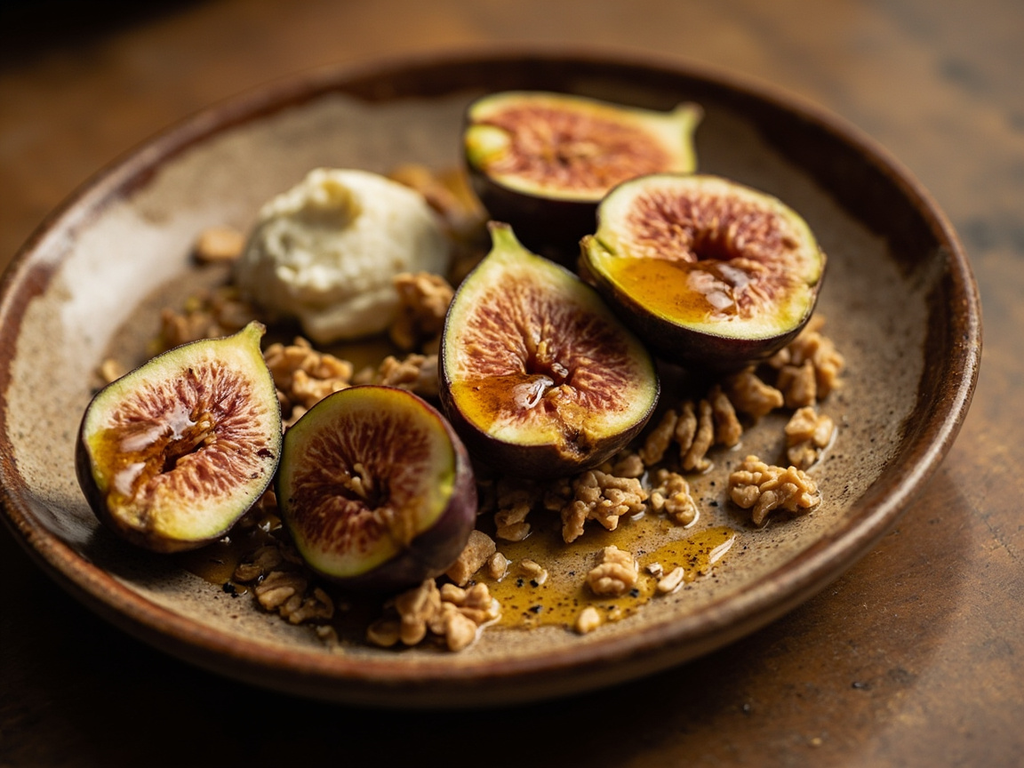 Festive
Figs with Honey and Fresh Cheese from the Sympósion
Tragémata (end-of-meal sweets, during the wine)
🍯 🍋· 15 min
View the recipe