 flip
flipCrushed Olives in Alexandrian Brine
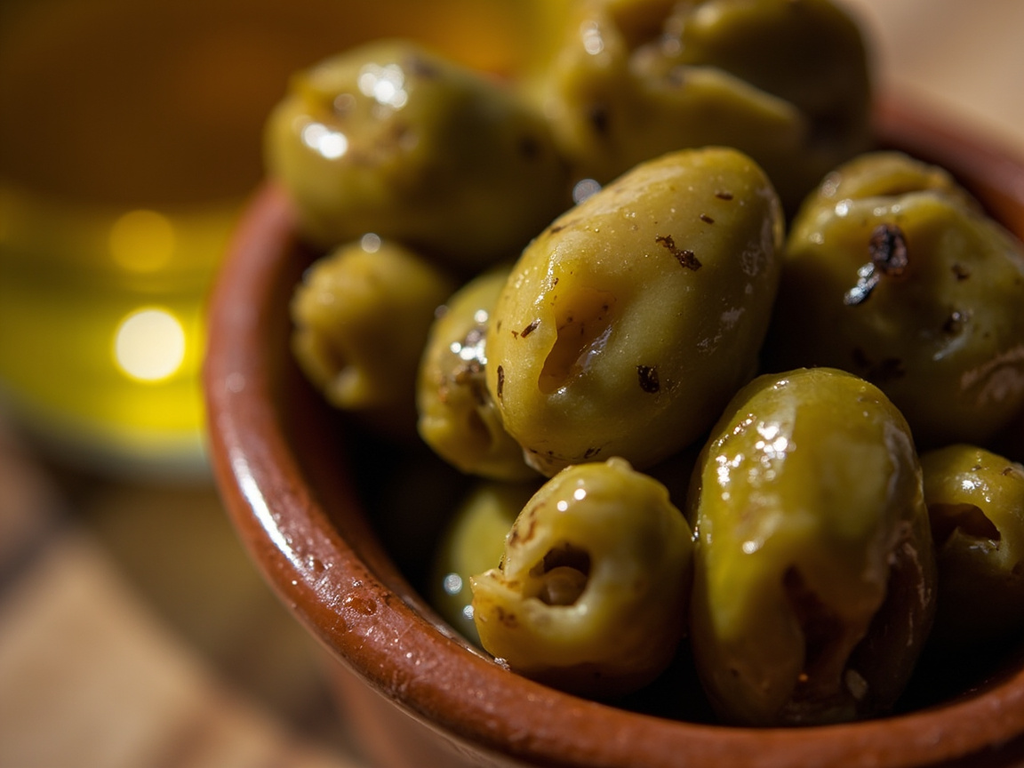
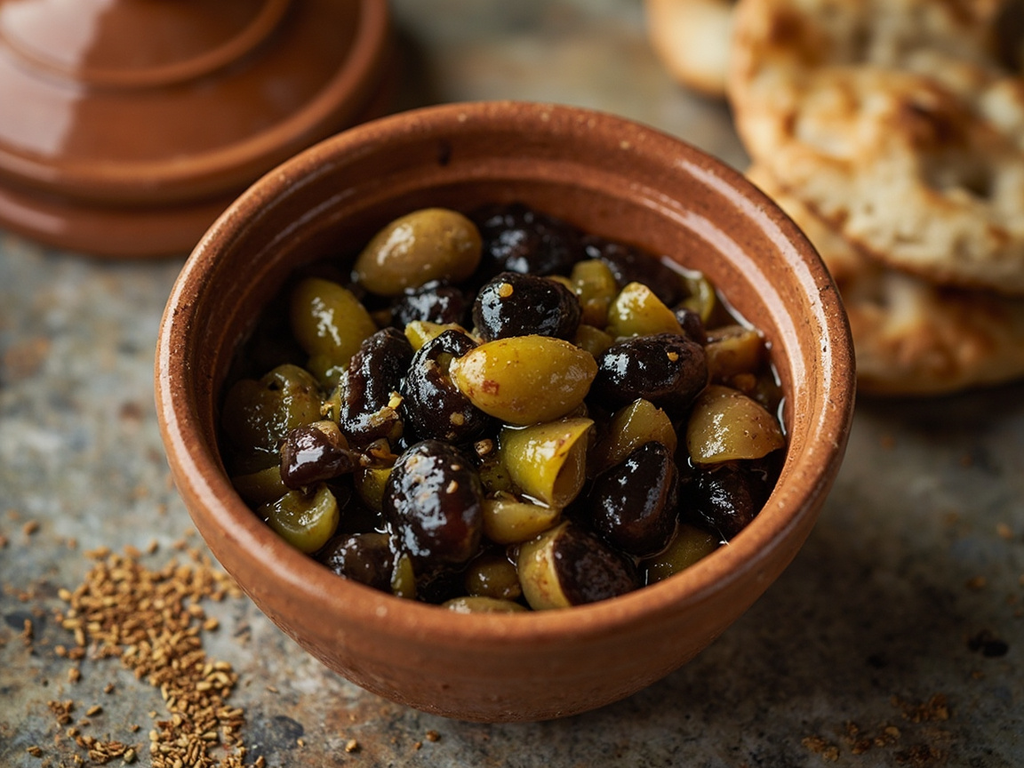
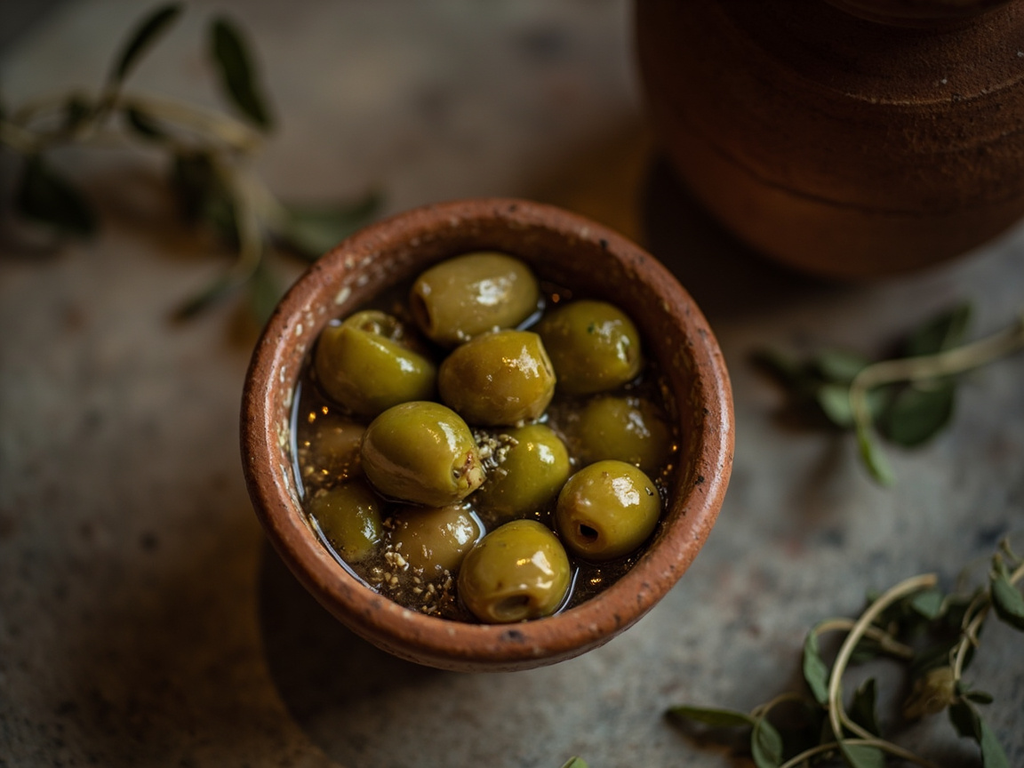
Crushed Olives in Alexandrian Brine
Why this dish? The olive is the Greek's constant companion: preserved in brine, it keeps for months and accompanies every maza. For a studious man who eats frugally and often alone, a jar of crushed olives is the ideal reserve, always ready.
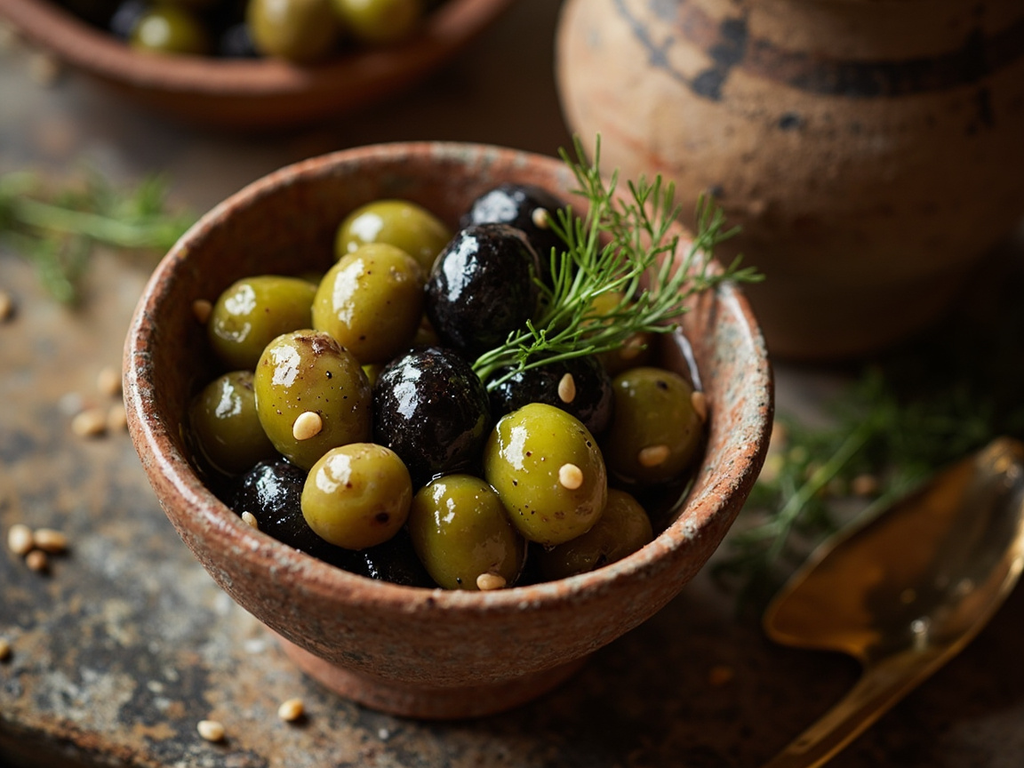
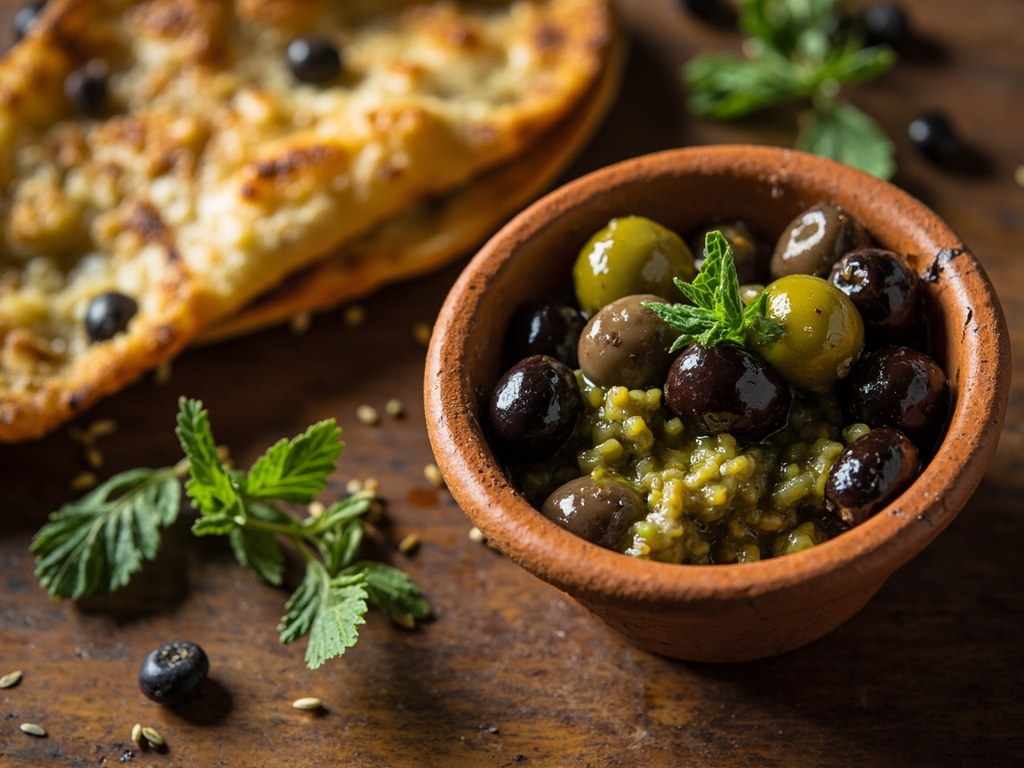
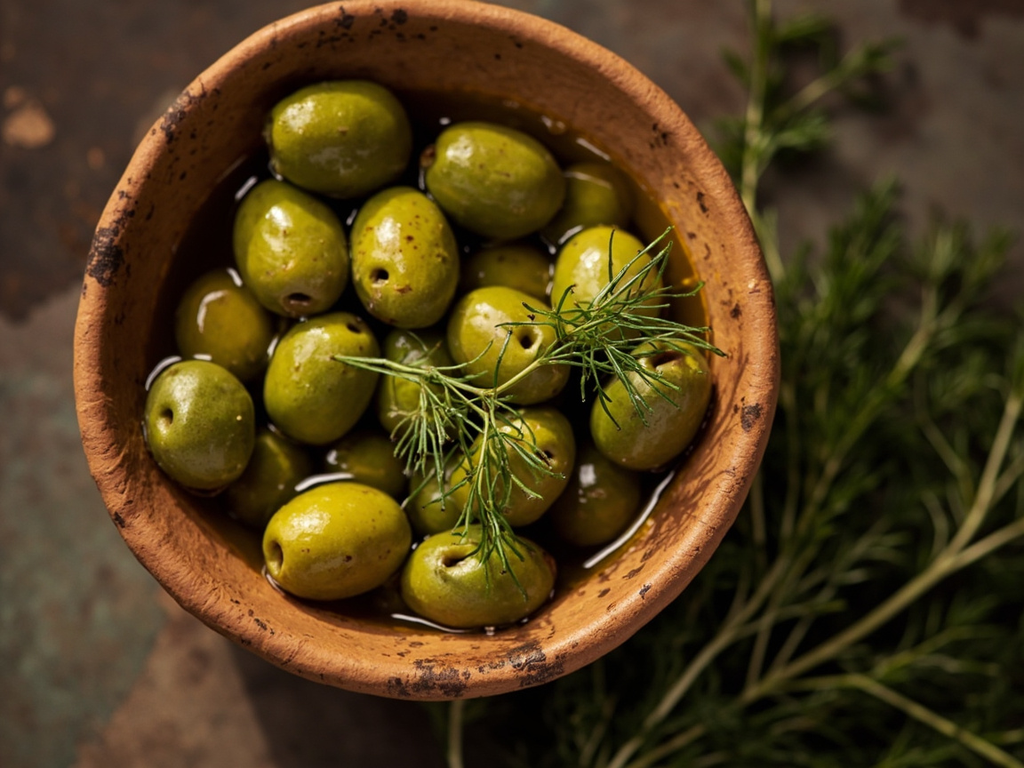
Green olives, split, purged, then preserved in a brine perfumed with fennel, coriander, and zest. A condiment-reserve, bitter and sharp, that keeps well and elevates the daily barley flatbread.
A raw olive is undrinkably bitter: it must be corrected step by step, like unraveling a difficult problem. I split each fruit with a stone blow, then bathe it in water for several days, changing the water to drive out the gall. Then comes the brine, the fennel and coriander, and patience — for time completes what the hand begins. A jar thus filled kept me company many an evening, beside my scrolls and my lamp.
- •Fresh green olives — a full jar (main ingredient)
- •Water — for purging (debittering)
- •Sea salt — to saturation (preserving brine)
- •Fennel seeds and coriander seeds — a handful (aromatics)
- •Wine vinegar — a drizzle (acidity, preservation)
Crushed Olives in Alexandrian Brine
Green olives, split, purged, then preserved in a brine perfumed with fennel, coriander, and zest. A condiment-reserve, bitter and sharp, that keeps well and elevates the daily barley flatbread.
Why this dish? The olive is the Greek's constant companion: preserved in brine, it keeps for months and accompanies every maza. For a studious man who eats frugally and often alone, a jar of crushed olives is the ideal reserve, always ready.
A raw olive is undrinkably bitter: it must be corrected step by step, like unraveling a difficult problem. I split each fruit with a stone blow, then bathe it in water for several days, changing the water to drive out the gall. Then comes the brine, the fennel and coriander, and patience — for time completes what the hand begins. A jar thus filled kept me company many an evening, beside my scrolls and my lamp.
Ingredients (period version)
- Fresh green olives — a full jar (main ingredient)
- Water — for purging (debittering)
- Sea salt — to saturation (preserving brine)
- Fennel seeds and coriander seeds — a handful (aromatics)
- Wine vinegar — a drizzle (acidity, preservation)
Ingredients
- Fresh green untreated olives — 500 g (main ingredient)
- Water — to cover, renewed (debittering)
- Salt — 100 g per litre of brine (brine)
- Fennel seeds + coriander seeds — 1 tsp each (aromatics)
- Zest of untreated lemon (or a sprig of rue/laurel) — 1 (fragrance)
- White wine vinegar — 2 tbsp (acidity)
Method
- Split or lightly crush each olive without removing the pit.
- Cover with cold water and let purge for 7 to 10 days, changing the water daily to remove bitterness.
- Prepare a brine (100 g salt per litre of water, boiled then cooled).
- Drain the olives, place them in a jar with fennel, coriander, zest, vinegar, then cover with brine.
- Let mature in a cool place for 2 to 3 weeks before tasting; keeps for several months.
How it was made : Debittering in water then preserving in brine is described as early as antiquity (Cato, later Columella for the Roman world; practices inherited from the Greek world). Table olives were a dietary staple and a major trade product in the Mediterranean.
The contemporary twist : Serve warm, just heated in oil with a little fresh fennel, as a "geometric" meze arranged in concentric circles.
Sources : Cato the Elder, De agri cultura (olive preservation methods, ancient world) · Andrew Dalby, Food in the Ancient World from A to Z
Euclid · Charactorium