 flip
flipAlexandrian Port Fish with Gáron
Alexandrian Port Fish with Gáron
Why this dish? Alexandria is a sea city: its port brings fresh fish every morning, a choice dish for a careful meal or for guests. For a man settled near the Library, a fine grilled fish with gáron was the festive dish par excellence.
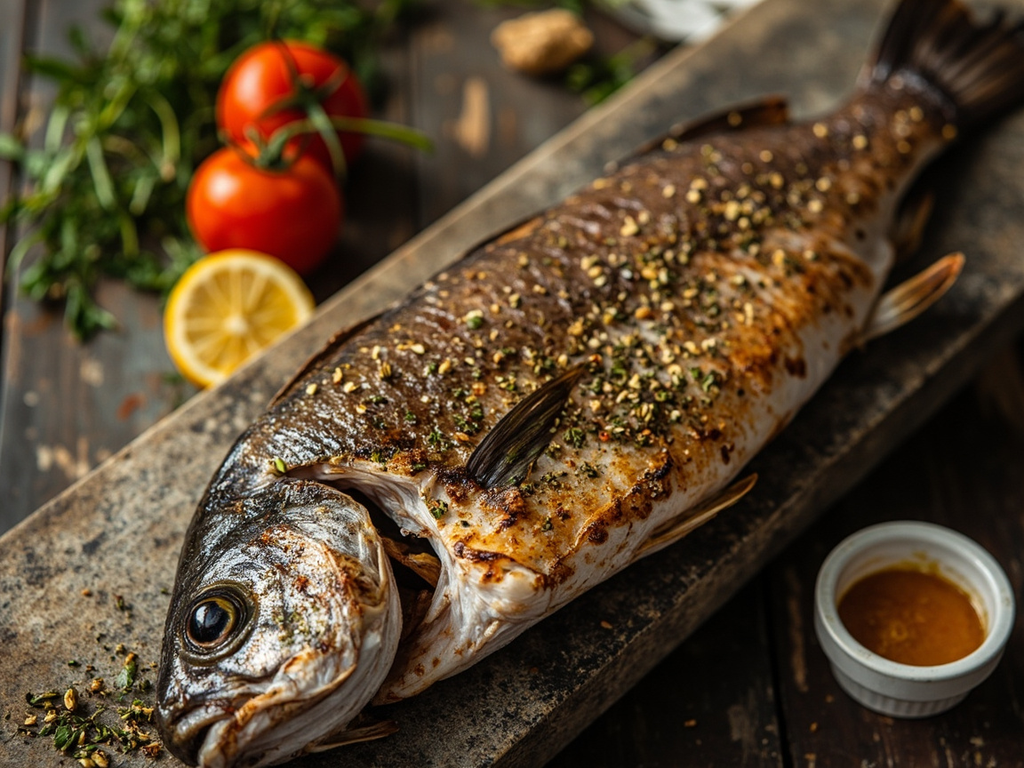
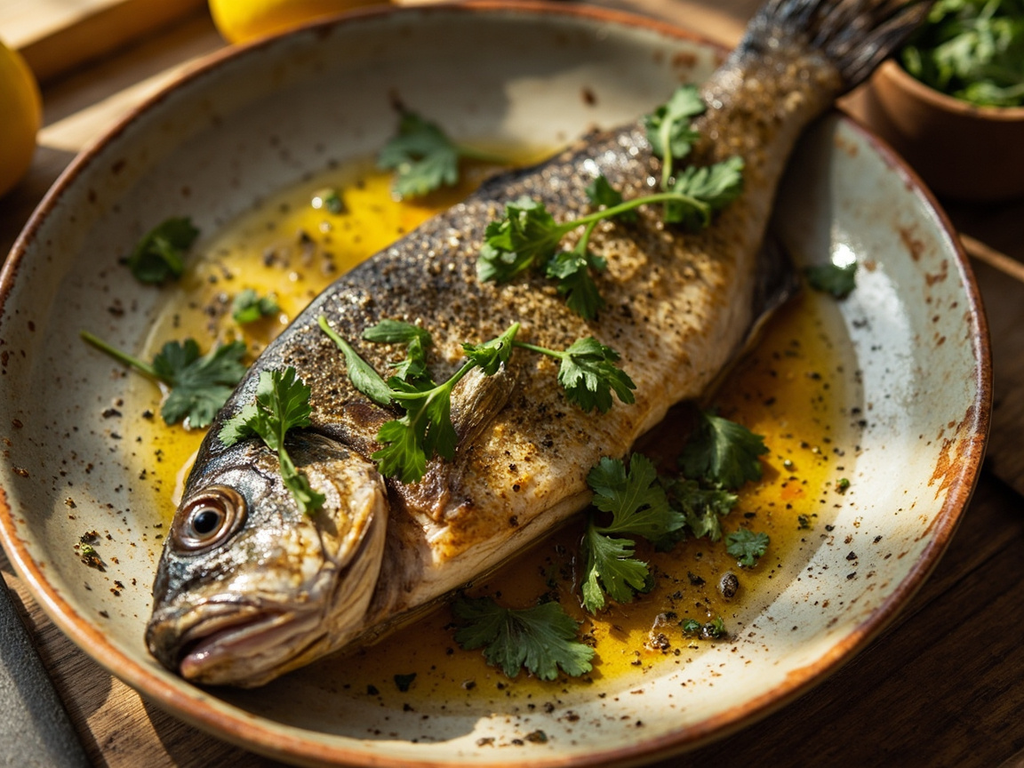
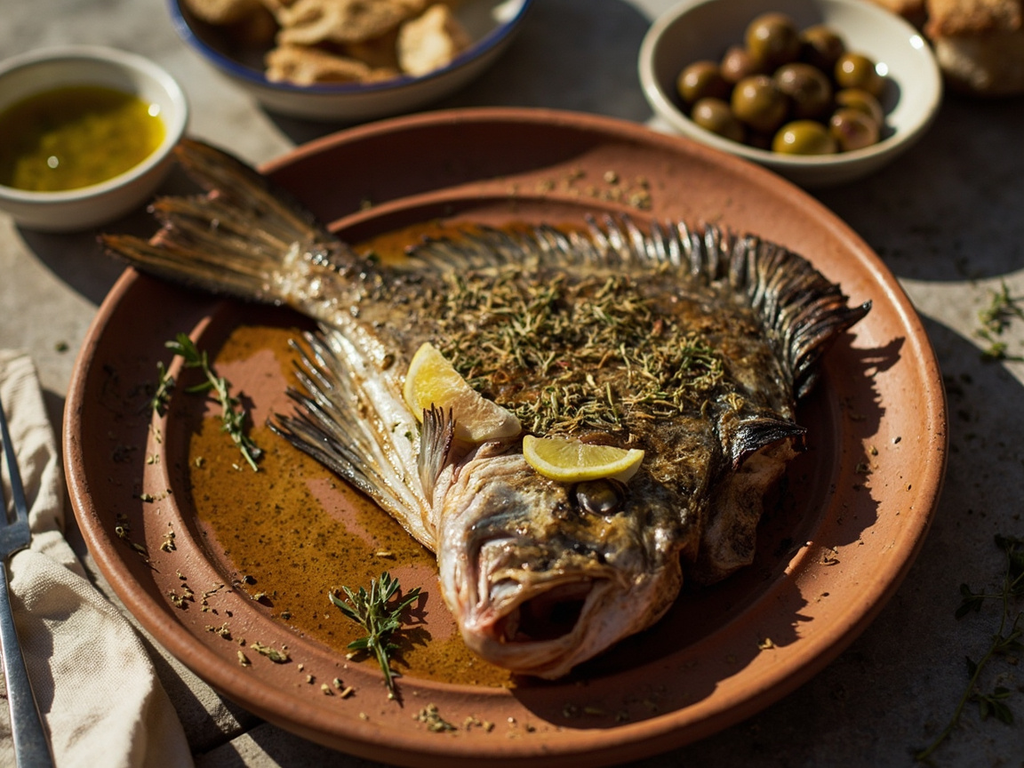
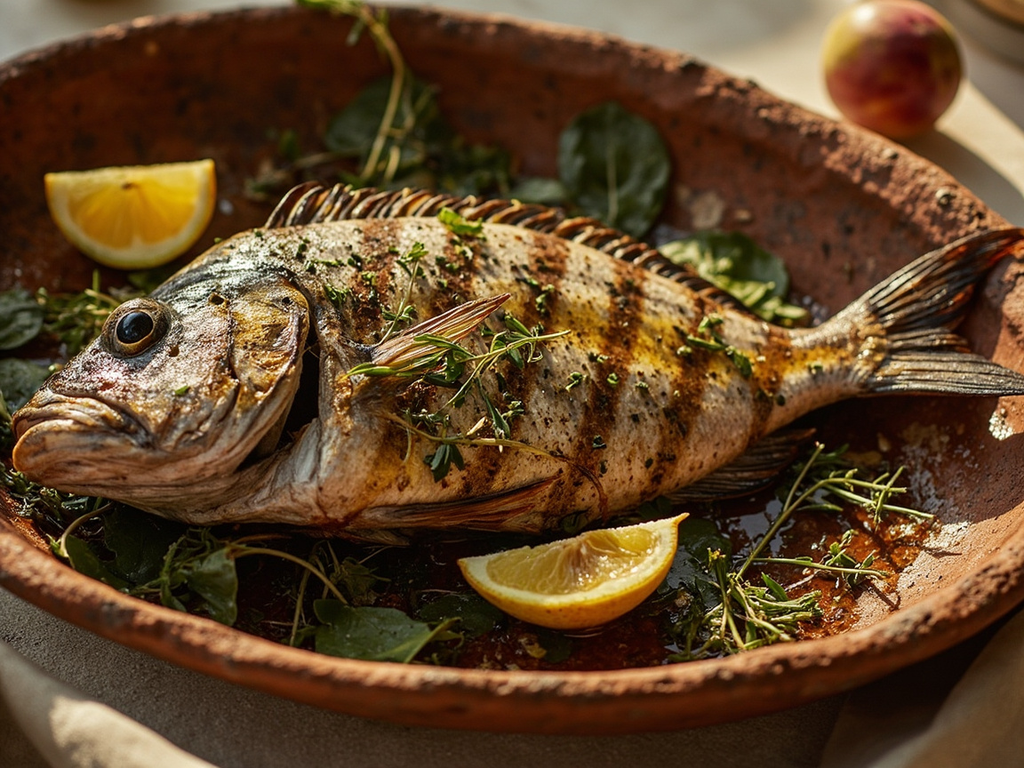
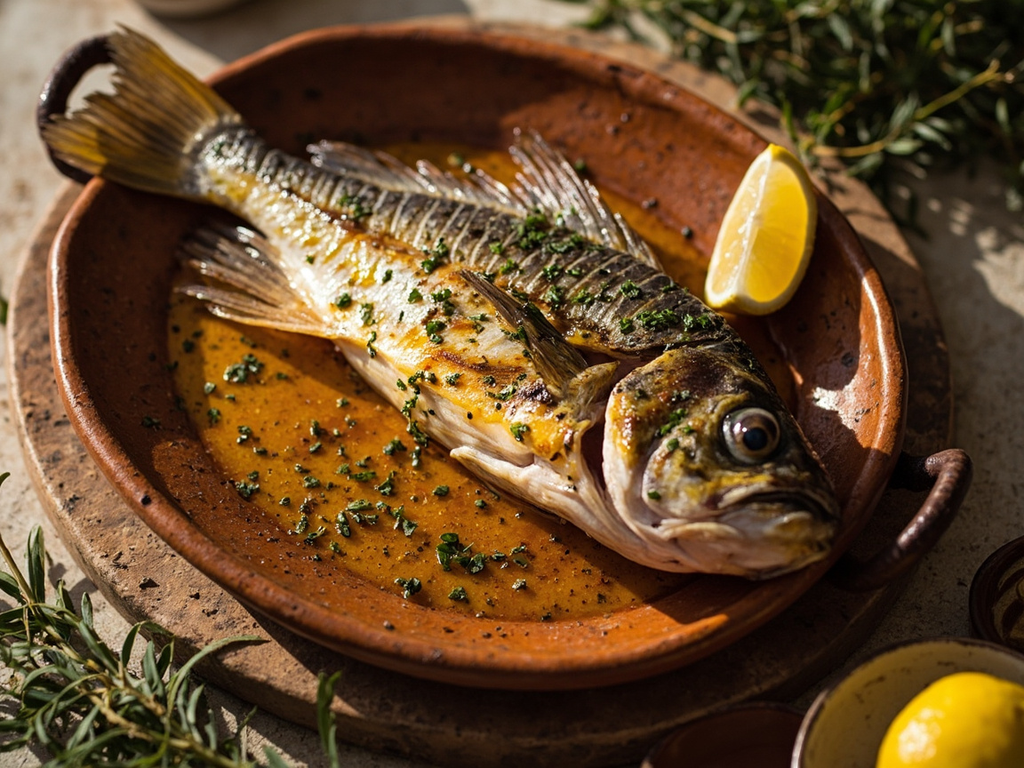
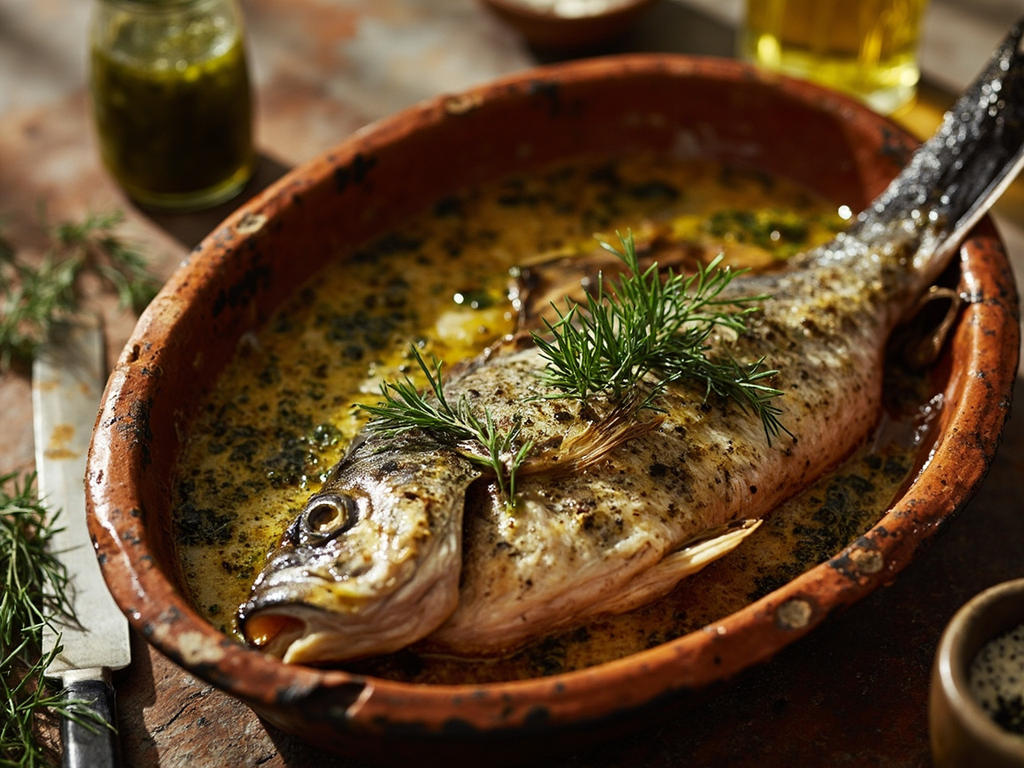
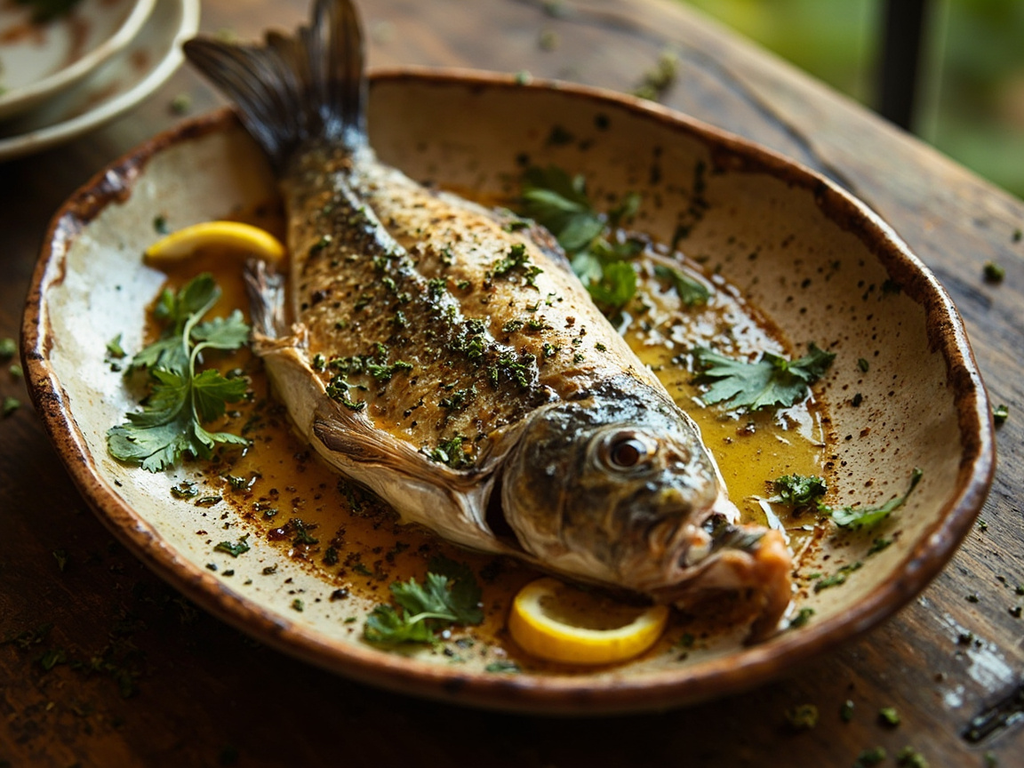
A whole grilled fish, dressed with gáron, oil, and a splash of wine vinegar, perfumed with herbs. The ópson par excellence: what is eaten "with" the barley flatbread to transform an ordinary meal into a feast.
In the morning, I would go down to the port to see what the sea had yielded, for a fish is judged by its clear eye and firm flesh — set the right principles, the result follows. I had it grilled whole over the coals, without torturing it: the flame cooks, it must not devour. Then a few drops of gáron, a little oil, a hint of vinegar, and oregano from the garden. My guests at the Mouseîon said this dish was worth a well-drawn figure: nothing too much, nothing missing.
- •Fresh sea fish (sea bream, red mullet) — one fine fish (heart of the dish)
- •Gáron (fish brine) — a few drops (umami seasoning)
- •Olive oil — a generous drizzle (fat)
- •Wine vinegar — a splash (acidity)
- •Oregano, fresh coriander — to taste (herbs)
Alexandrian Port Fish with Gáron
A whole grilled fish, dressed with gáron, oil, and a splash of wine vinegar, perfumed with herbs. The ópson par excellence: what is eaten "with" the barley flatbread to transform an ordinary meal into a feast.
Why this dish? Alexandria is a sea city: its port brings fresh fish every morning, a choice dish for a careful meal or for guests. For a man settled near the Library, a fine grilled fish with gáron was the festive dish par excellence.
In the morning, I would go down to the port to see what the sea had yielded, for a fish is judged by its clear eye and firm flesh — set the right principles, the result follows. I had it grilled whole over the coals, without torturing it: the flame cooks, it must not devour. Then a few drops of gáron, a little oil, a hint of vinegar, and oregano from the garden. My guests at the Mouseîon said this dish was worth a well-drawn figure: nothing too much, nothing missing.
Ingredients (period version)
- Fresh sea fish (sea bream, red mullet) — one fine fish (heart of the dish)
- Gáron (fish brine) — a few drops (umami seasoning)
- Olive oil — a generous drizzle (fat)
- Wine vinegar — a splash (acidity)
- Oregano, fresh coriander — to taste (herbs)
Ingredients
- Sea bream or sea bass, gutted — 1 piece (400–600 g) (heart of the dish)
- Fish sauce (nuoc-mâm or colatura, as substitute for gáron) — 1 tsp (umami)
- Extra virgin olive oil — 3 tbsp (fat)
- White wine vinegar — 1 tsp (acidity)
- Dried oregano + fresh coriander — 1 tsp + a few sprigs (herbs)
- Salt — barely (gáron already salty) (seasoning)
Method
- Gut, scale, and score the fish on both sides.
- Mix oil, fish sauce, vinegar, and oregano; brush inside and outside the fish.
- Grill for 5–7 minutes per side over hot coals or a hot griddle until the flesh is opaque.
- When serving, drizzle with the remaining sauce and sprinkle with fresh coriander.
- Serve with warm maza for dipping.
How it was made : Gáron, made from small fish fermented with salt in the sun for weeks, flavored nearly all Greek and Roman savory dishes. Fresh fish was far more prized than meat in coastal cities; Athenaeus' Deipnosophists debate it endlessly.
The contemporary twist : A touch of colatura di alici (the direct Italian heir to gáron) to sign the dish "in the ancient style" without cheating.
Sources : Athenaeus of Naucratis, The Deipnosophists · Andrew Dalby, Siren Feasts: A History of Food and Gastronomy in Greece
Euclid · Charactorium