 flip
flipFigs with Honey and Fresh Cheese from the Sympósion
Figs with Honey and Fresh Cheese from the Sympósion
Why this dish? At the sympósion, when wine flows and conversation rises, one nibbles on tragémata: figs, nuts, honey, and fresh cheese. Euclid, who taught and debated with his students at the Mouseîon, surely shared these simple sweets during evening discussions.
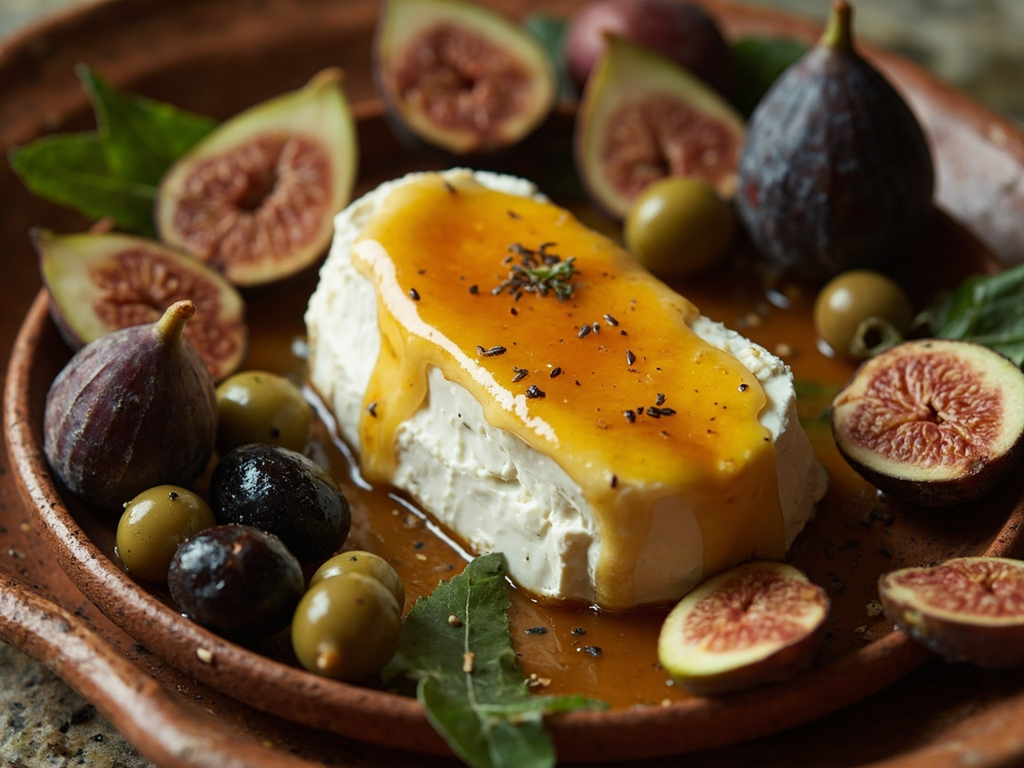
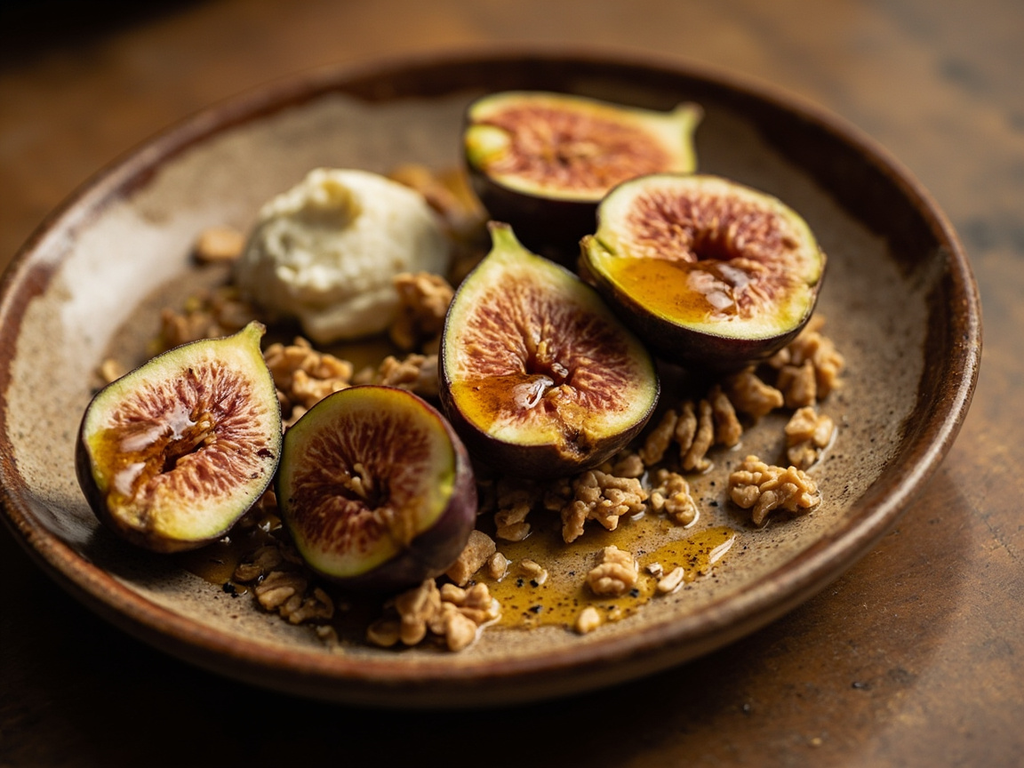
Fresh or dried figs drizzled with honey, sprinkled with crushed nuts, and accompanied by fresh cheese. The quintessential Greek sweetness — no sugar, just honey and fruit — served when the meal turns to conversation.
When the wine comes and demonstrations give way to talk, I have the figs and honey brought — sweetness loosens tongues better than reasoning. I choose well-ripened figs, split open as one opens a figure to understand it better, drizzle them with Hymettus honey and break some nuts over them. A little fresh cheese on the side, and it's done. My students stayed late; often it was around this sweet dish that a difficulty found its solution.
- •Fresh or dried figs — a bowlful (main fruit)
- •Honey (preferably from Hymettus) — generously (sweetness, coating)
- •Walnuts or almonds — a handful (crunch)
- •Fresh ewe's milk cheese — to taste (accompaniment)
- •Fresh thyme or sesame seeds — a pinch (fragrance)
Figs with Honey and Fresh Cheese from the Sympósion
Fresh or dried figs drizzled with honey, sprinkled with crushed nuts, and accompanied by fresh cheese. The quintessential Greek sweetness — no sugar, just honey and fruit — served when the meal turns to conversation.
Why this dish? At the sympósion, when wine flows and conversation rises, one nibbles on tragémata: figs, nuts, honey, and fresh cheese. Euclid, who taught and debated with his students at the Mouseîon, surely shared these simple sweets during evening discussions.
When the wine comes and demonstrations give way to talk, I have the figs and honey brought — sweetness loosens tongues better than reasoning. I choose well-ripened figs, split open as one opens a figure to understand it better, drizzle them with Hymettus honey and break some nuts over them. A little fresh cheese on the side, and it's done. My students stayed late; often it was around this sweet dish that a difficulty found its solution.
Ingredients (period version)
- Fresh or dried figs — a bowlful (main fruit)
- Honey (preferably from Hymettus) — generously (sweetness, coating)
- Walnuts or almonds — a handful (crunch)
- Fresh ewe's milk cheese — to taste (accompaniment)
- Fresh thyme or sesame seeds — a pinch (fragrance)
Ingredients
- Ripe fresh figs (or rehydrated dried figs) — 6 (main fruit)
- Fragrant honey (thyme, chestnut) — 3 tbsp (coating)
- Crushed walnuts or almonds — 50 g (crunch)
- Fresh ewe's milk cheese (like myzithra or brousse) — 150 g (accompaniment)
- Sesame seeds or fresh thyme — 1 tsp (fragrance)
Method
- Cut a cross into the figs without separating the quarters.
- Place the fresh cheese in the center of a plate, surround with the opened figs.
- Drizzle generously with warmed honey (easier to pour).
- Sprinkle with crushed nuts and sesame seeds or thyme.
- Serve immediately, to share, with a sweet wine diluted with water.
How it was made : The Greeks did not know sugar: honey was THE sweetener, and the fig, fresh or dried, was a royal fruit exported throughout the Mediterranean. Tragémata ("nibbles") ended the meal during the sympósion, around wine mixed with water.
The contemporary twist : Figs briefly broiled to caramelize the honey, arranged in a perfect circle around the cheese — a nod to the Elements.
Sources : Athenaeus of Naucratis, The Deipnosophists · Andrew Dalby, Siren Feasts: A History of Food and Gastronomy in Greece
Euclid · Charactorium