 flip
flipMaza, the Scholar's Barley Flatbread
Maza, the Scholar's Barley Flatbread
Why this dish? Maza is the daily bread of the modest and studious Greek: inexpensive, quick to make, it nourishes the scholar bent over his scrolls at the Mouseîon without weighing him down. Euclid, a man of method and measure, ate this simple staple like most Greeks of his time.
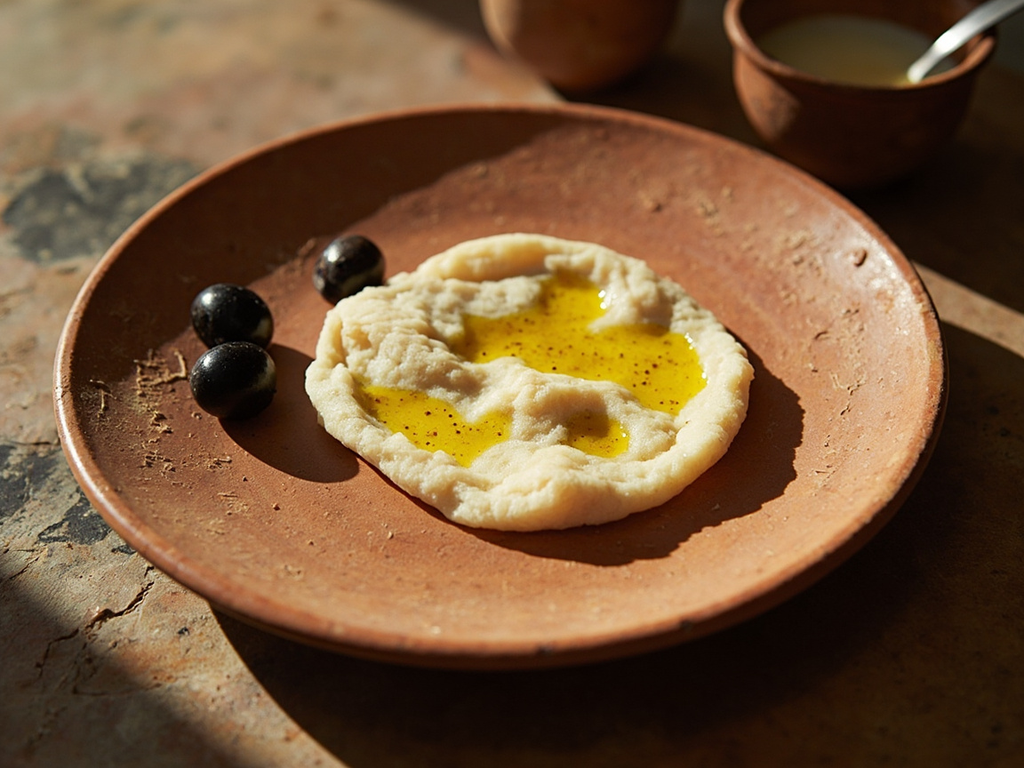
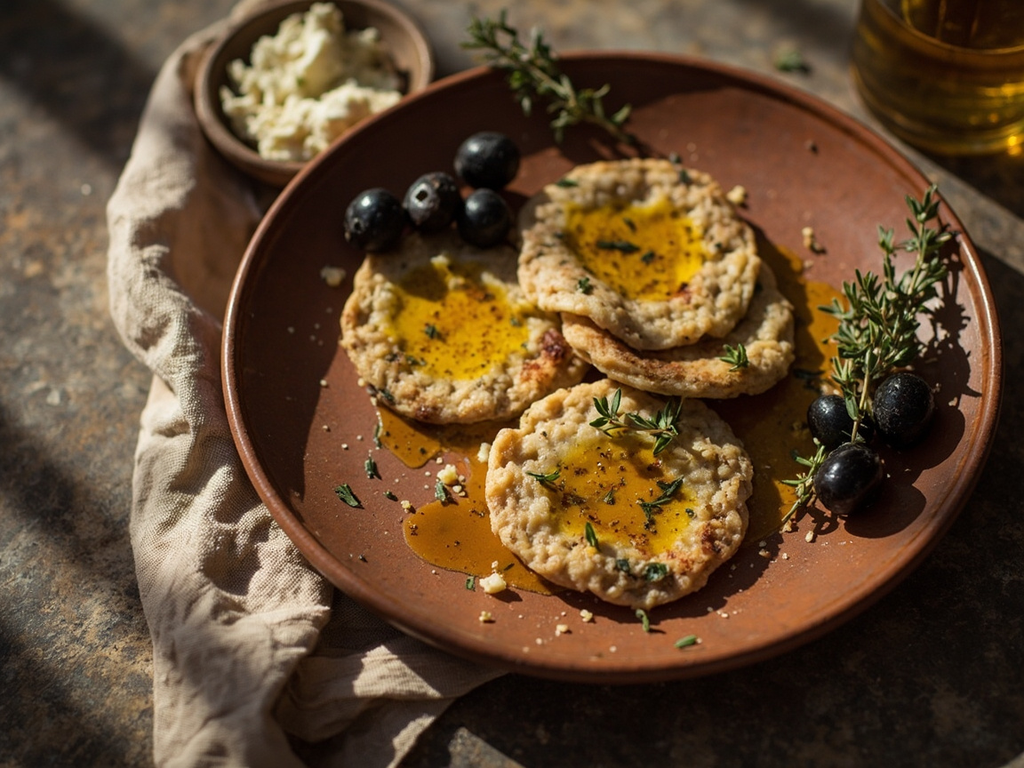
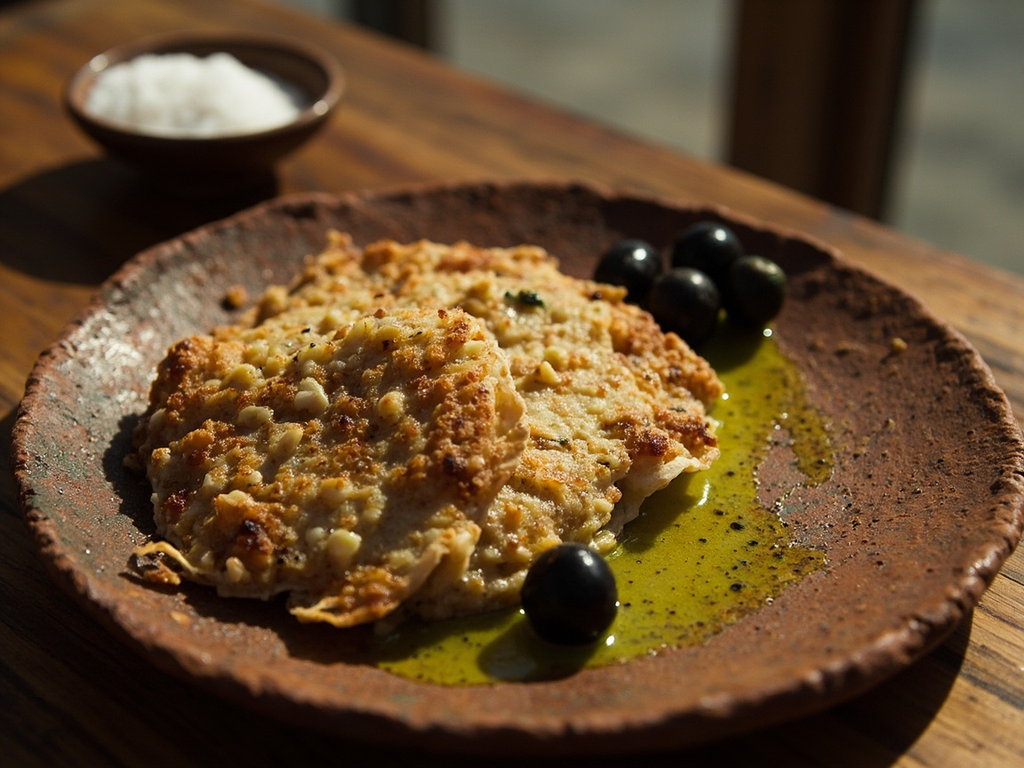
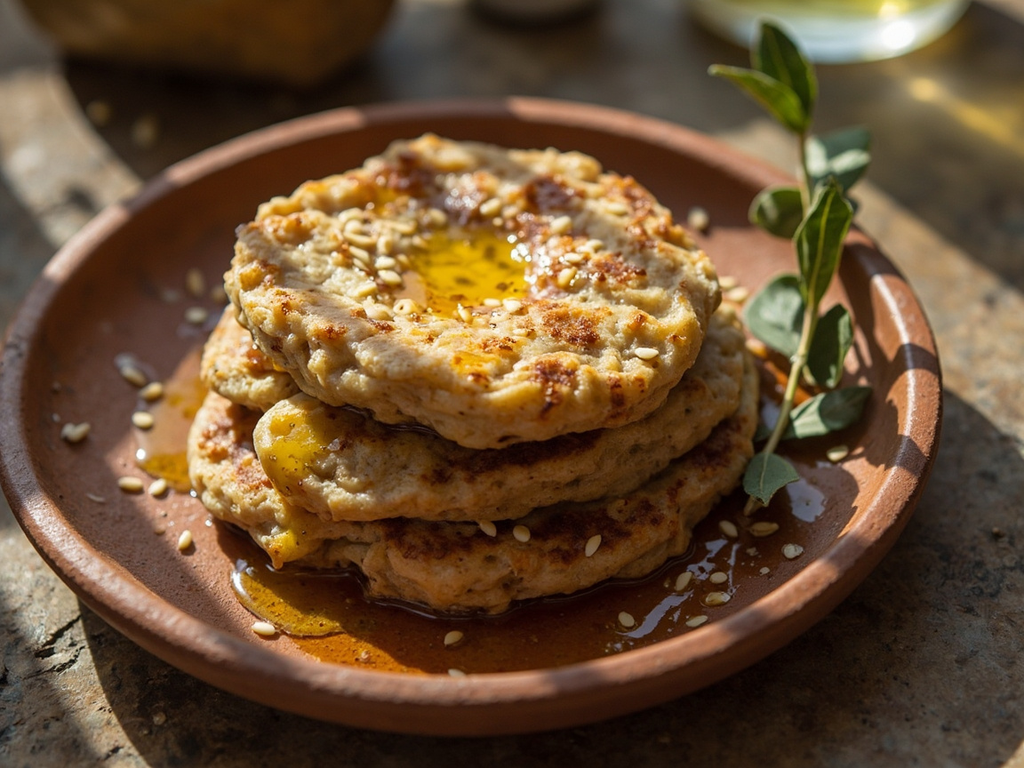
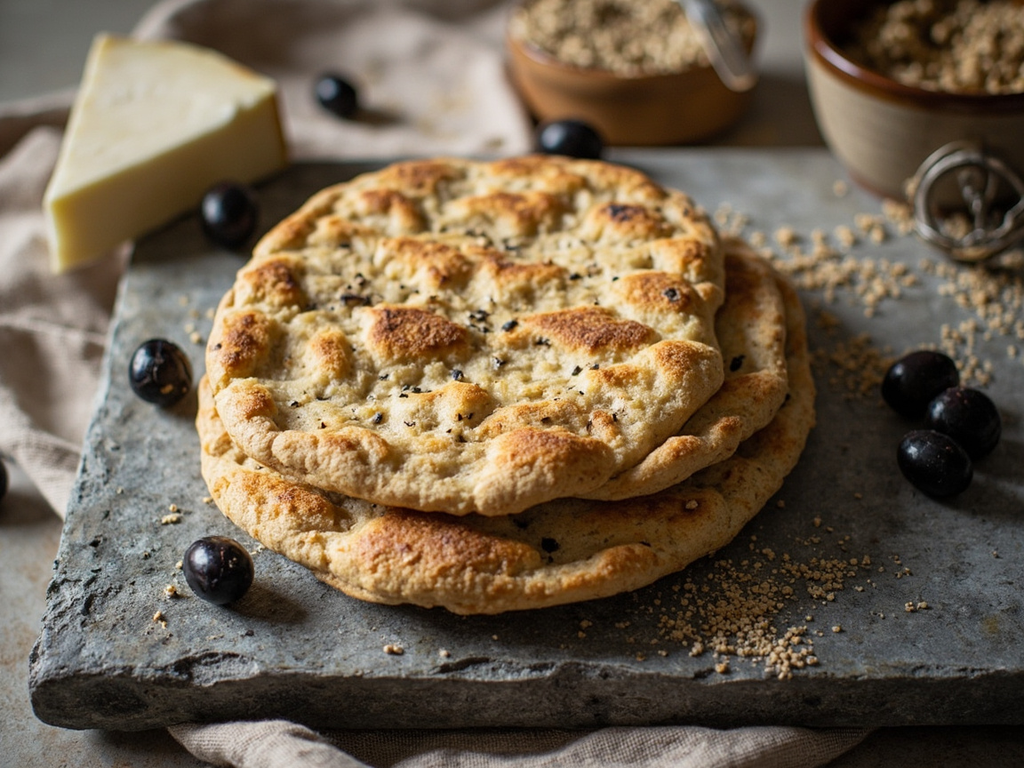
A flat, dense, rustic flatbread made from toasted barley flour kneaded with water, oil, and salt. It is broken by hand to dip into oil, diluted wine, or a sauce. It is the foundation food of every Greek table, from peasant to geometer.
Observe first the right proportion, for a flatbread is like a demonstration: remove the excess and only the necessary remains. I toast my barley until it smells nutty, grind it into flour, and mix in the water drop by drop as one traces a sure line. A dash of oil, a pinch of salt, and the hand kneads until perfect unity. In Alexandria, I would break it between two theorems, dipped in diluted wine — the mind, you see, feeds better on a sober stomach.
- •Toasted barley flour — two full handfuls (cereal base)
- •Spring water — enough to bind (binder)
- •Olive oil — a drizzle (fat, binder)
- •Sea salt — a pinch (seasoning)
Maza, the Scholar's Barley Flatbread
A flat, dense, rustic flatbread made from toasted barley flour kneaded with water, oil, and salt. It is broken by hand to dip into oil, diluted wine, or a sauce. It is the foundation food of every Greek table, from peasant to geometer.
Why this dish? Maza is the daily bread of the modest and studious Greek: inexpensive, quick to make, it nourishes the scholar bent over his scrolls at the Mouseîon without weighing him down. Euclid, a man of method and measure, ate this simple staple like most Greeks of his time.
Observe first the right proportion, for a flatbread is like a demonstration: remove the excess and only the necessary remains. I toast my barley until it smells nutty, grind it into flour, and mix in the water drop by drop as one traces a sure line. A dash of oil, a pinch of salt, and the hand kneads until perfect unity. In Alexandria, I would break it between two theorems, dipped in diluted wine — the mind, you see, feeds better on a sober stomach.
Ingredients (period version)
- Toasted barley flour — two full handfuls (cereal base)
- Spring water — enough to bind (binder)
- Olive oil — a drizzle (fat, binder)
- Sea salt — a pinch (seasoning)
Ingredients
- Barley flour — 200 g (cereal base)
- Warm water — 100–120 ml (binder)
- Extra virgin olive oil — 2 tbsp (fat)
- Salt — 1/2 tsp (seasoning)
Method
- Toast the barley flour in a dry pan over medium heat for 3–4 minutes until nutty (optional if flour is already toasted).
- Mix flour and salt, then gradually add oil and water until a soft, non-sticky, non-dry dough forms.
- Shape into flat cakes about 1 cm thick.
- Cook on a hot stone or pan for 4–5 minutes per side until golden.
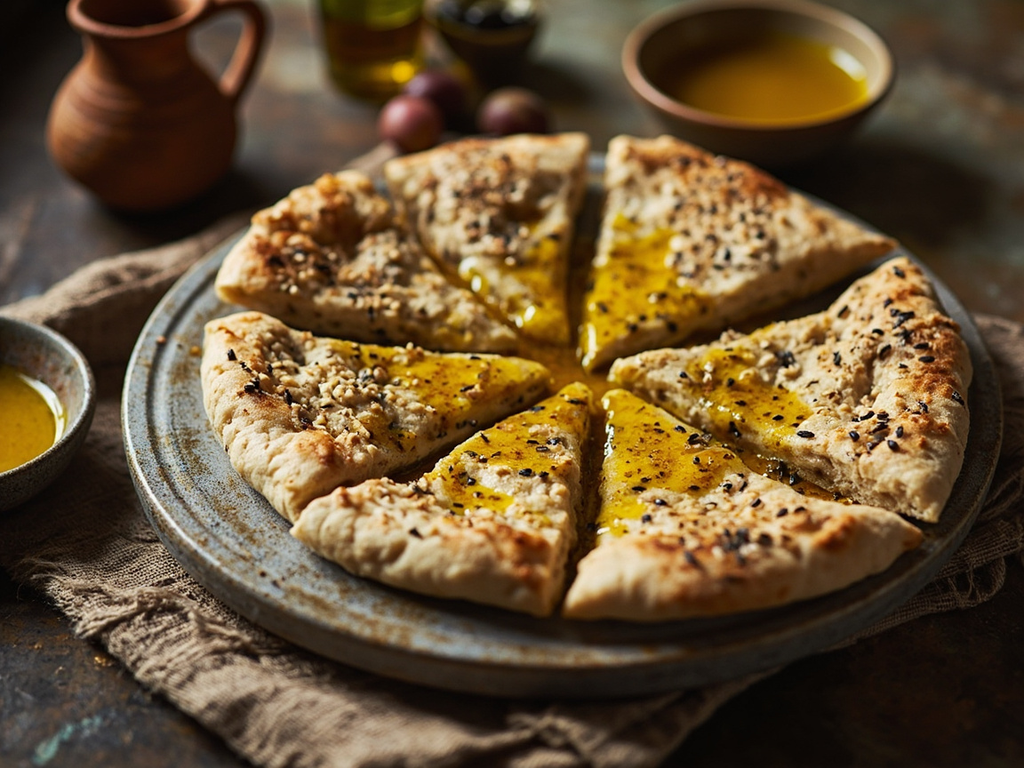
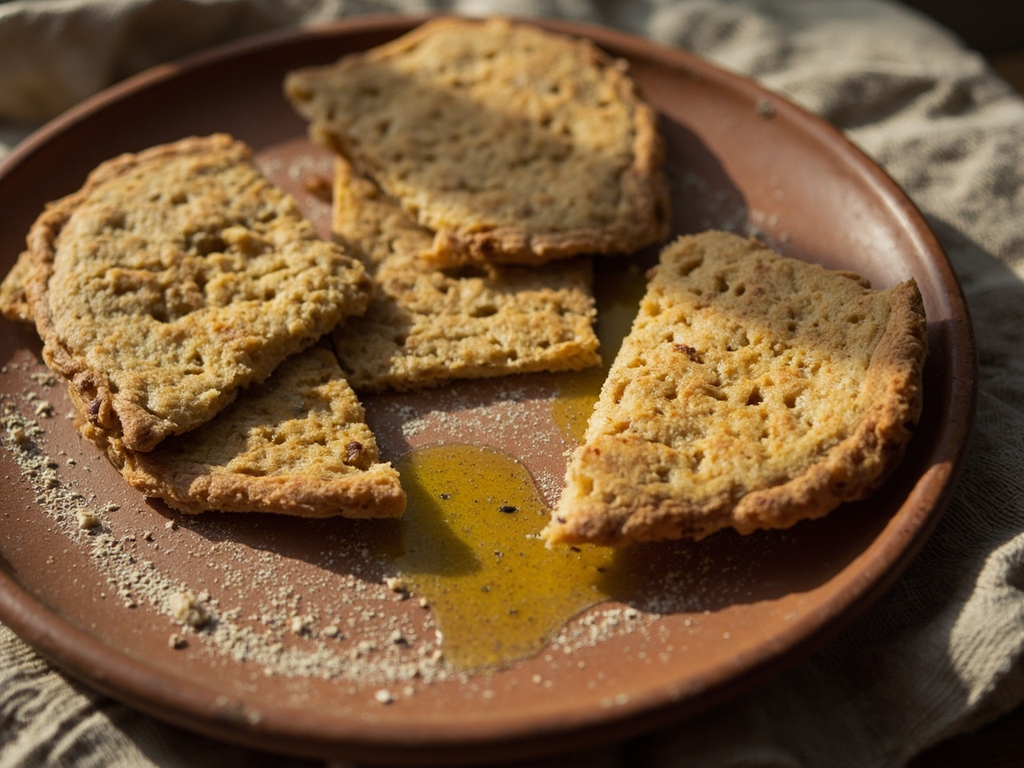
- Serve warm, break by hand, with a drizzle of oil and some wine diluted with water.
How it was made : Maza was often prepared raw, simply kneaded and eaten without cooking, or only slightly dried. Barley dominated wheat among ordinary Greeks because it grew on poor soils. Hippocrates recommended it for its "light" effect on digestion.
The contemporary twist : Served as warm dippers brushed with new olive oil and oregano, in the style of "geometer's bread".
Sources : Athenaeus of Naucratis, The Deipnosophists · Andrew Dalby, Food in the Ancient World from A to Z
Euclid · Charactorium