 Flip the card
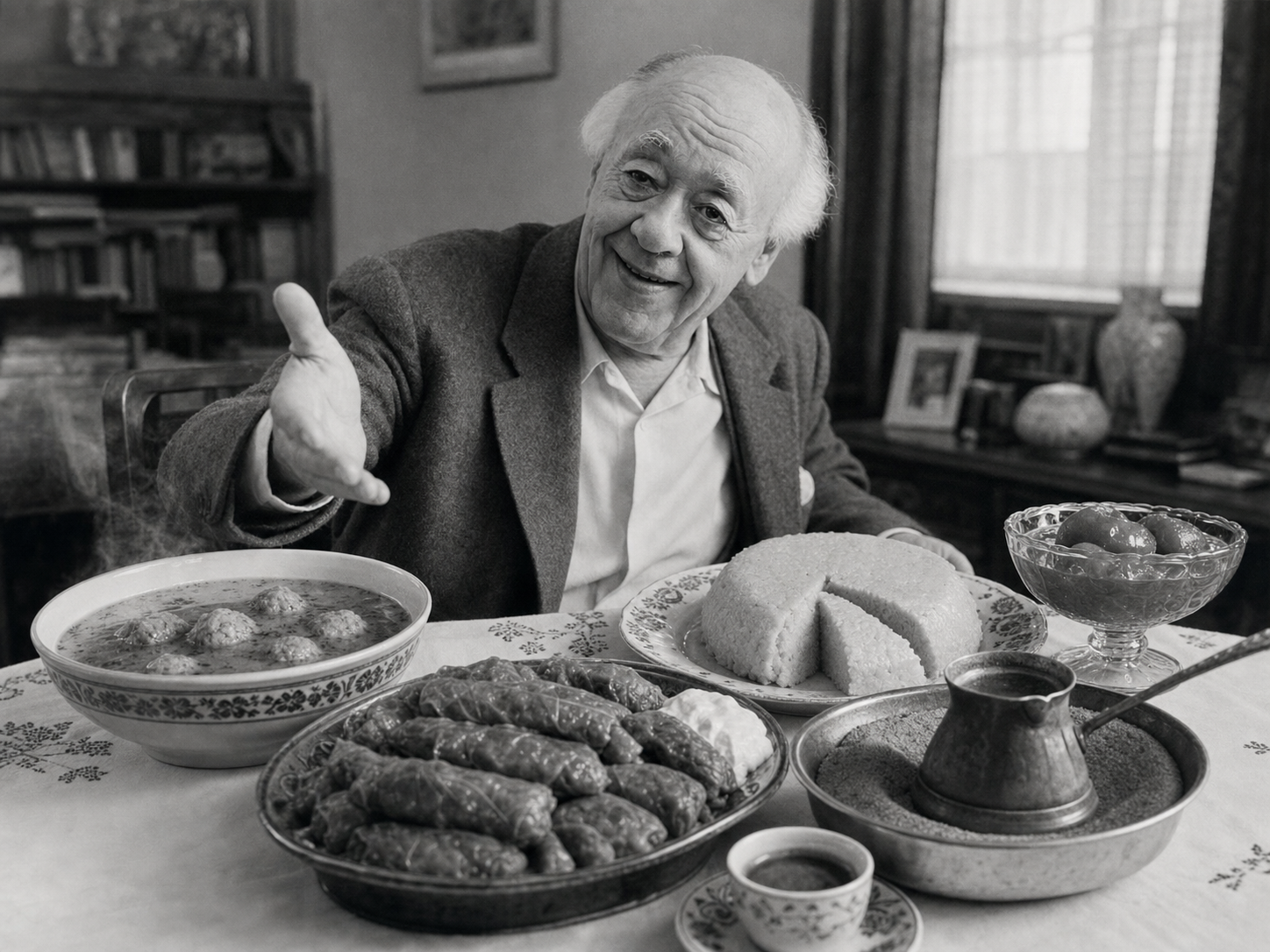
Eugène Ionesco at the table
1909 — 1994
On the menu
Masa românească — the Romanian meal of childhood, extended at the Parisian table
The traditional Romanian meal does not follow the starter/main/dessert structure. It opens with gustări (small bites and spreads), centers around a ciorbă (sour soup, the heart of the meal), continues with a felul principal often slow-cooked, and ends with sweets and coffee. For Ionesco, Franco-Romanian, this structure blends with French habits: wine at the table, coffee that never ends, conversation spilling over the dishes. The meal is less a succession than a duration — like his plays, where one lingers, repeats, and laughs at the waiting itself.
Signature : Borș — the fermented sourness that is the soul of the Romanian table
Borș is a sour liquid obtained by fermenting wheat bran (tărâțe) in water. It gives Romanian ciorbe their lively acidity, very different from vinegar or lemon. This fermented note, present throughout Ionesco's childhood cuisine, marks the Romanianness of the meal even before you taste the meat.
click to flip back
Eugène Ionesco at the table
1909 — 1994
4 period recipes
 Everyday
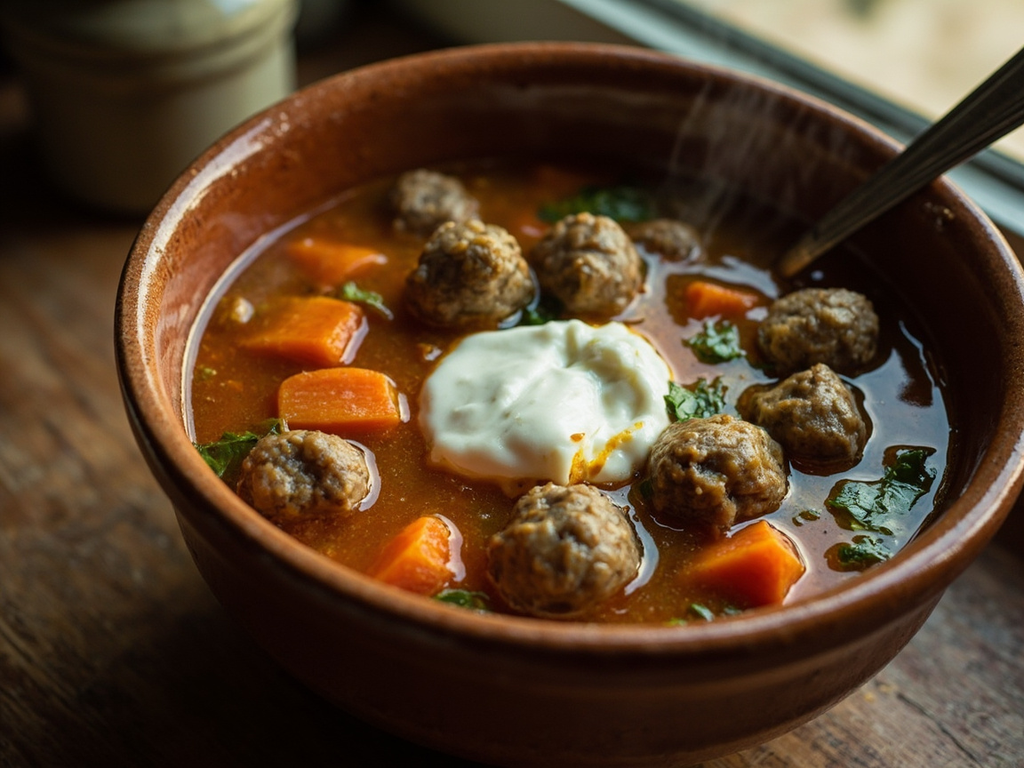
Ciorbă de perișoare (sour meatball soup)
Ciorbă — the sour soup that forms the heart of the Romanian meal, served piping hot before the main course
🍋 🧂 🍄· 1 h
View the recipe
 Festive
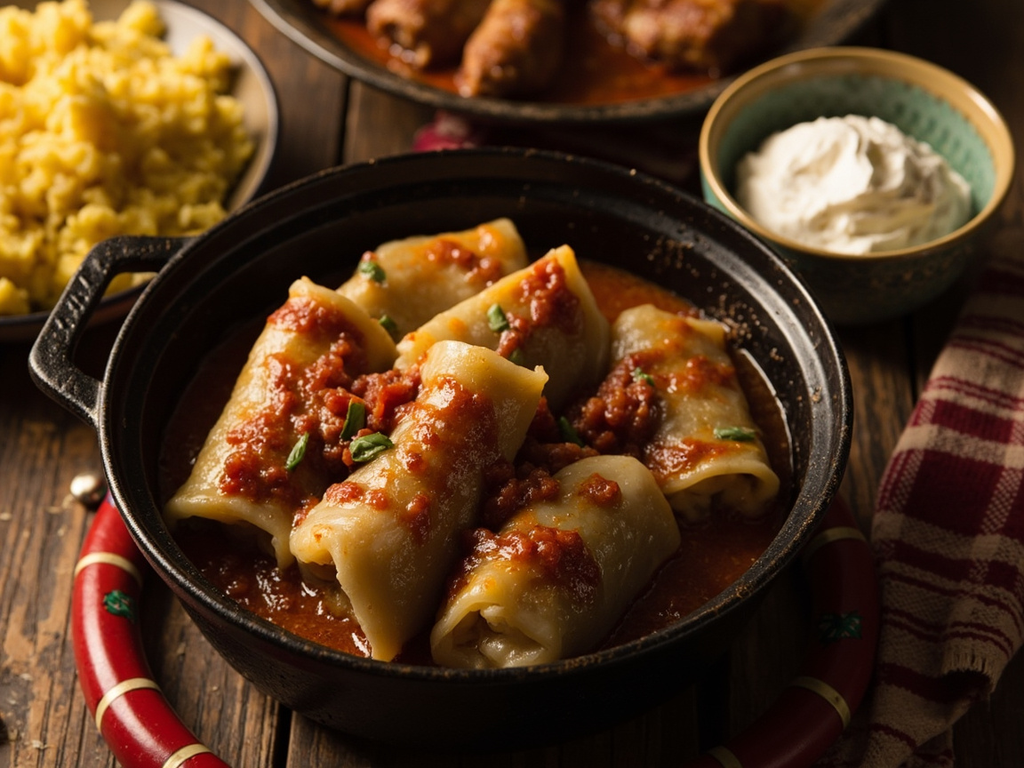
Sarmale cu mămăligă (stuffed cabbage rolls and polenta)
Felul principal de sărbătoare — the great festive slow-cooked dish that reigns at the center of the table
🧂 🫙 🍄· 3 h 30
View the recipe
 Drink
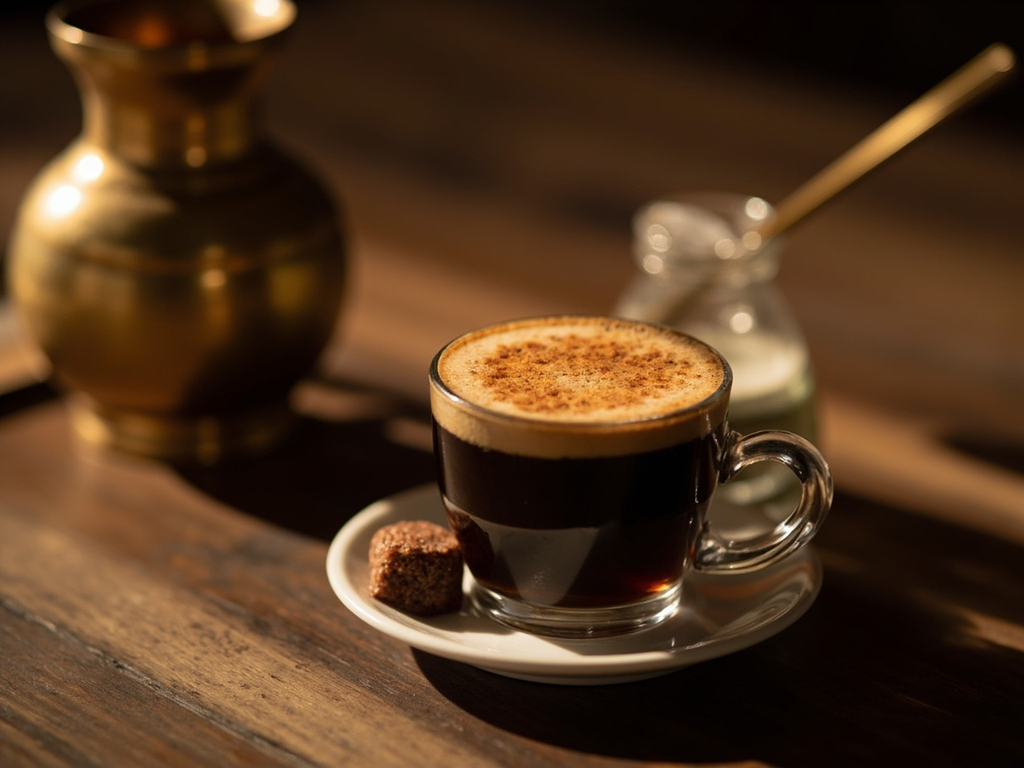
DrinkCafea la nisip (Romanian-style coffee, cooked on sand)
Cafea — the coffee that closes the meal and accompanies conversation, never rushed
☕· 10 min
View the recipe
 Preserving
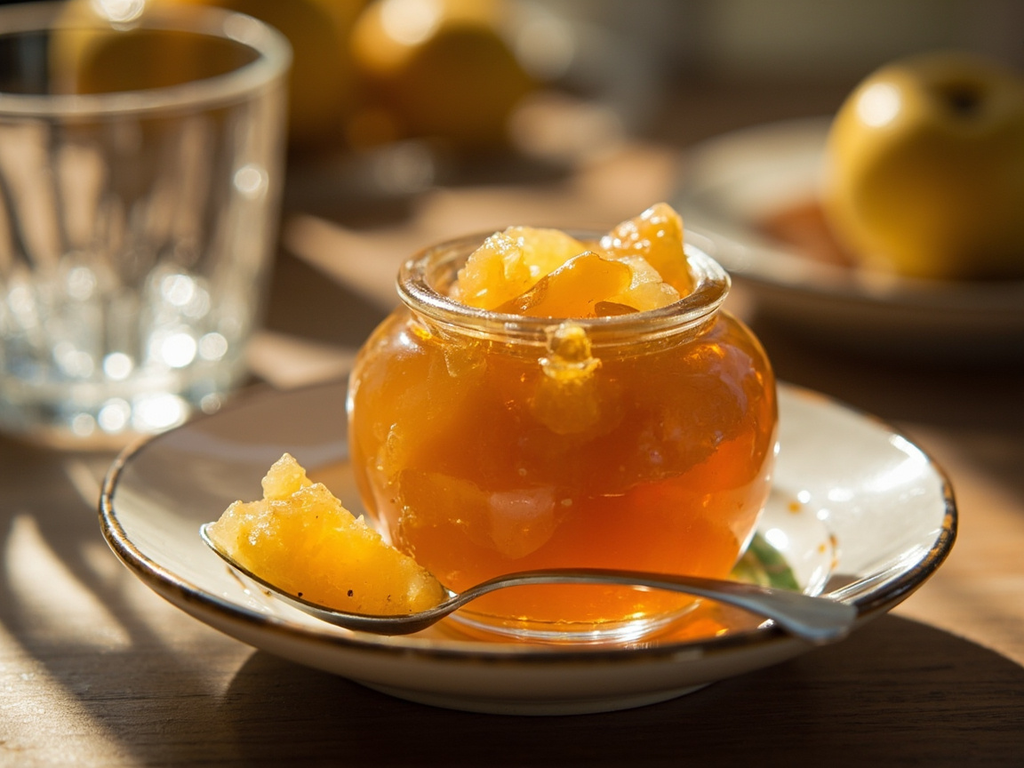
Dulceață de gutui (quince preserve in syrup)
Dulceață — the preserved sweet offered by the spoonful to visitors, with a glass of water
🍯 🍋· 1 h 15
View the recipe