 flip
flipDulceață de gutui (quince preserve in syrup)
Dulceață de gutui (quince preserve in syrup)
Why this dish? Dulceață is the Romanian gesture of hospitality par excellence: you keep a jar all year and offer it by the spoonful to anyone who comes through the door. In the culture of Ionesco's childhood, it is the house's preserved sweet — brought out for the guest, like a tender and old-fashioned little ritual of welcome.
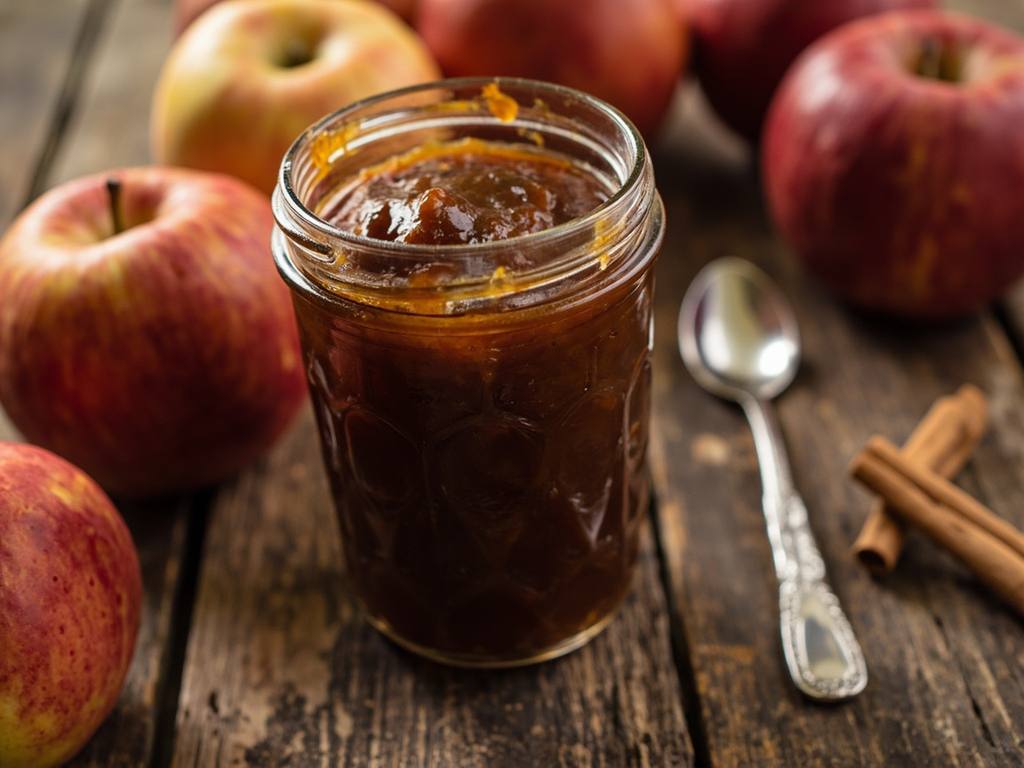
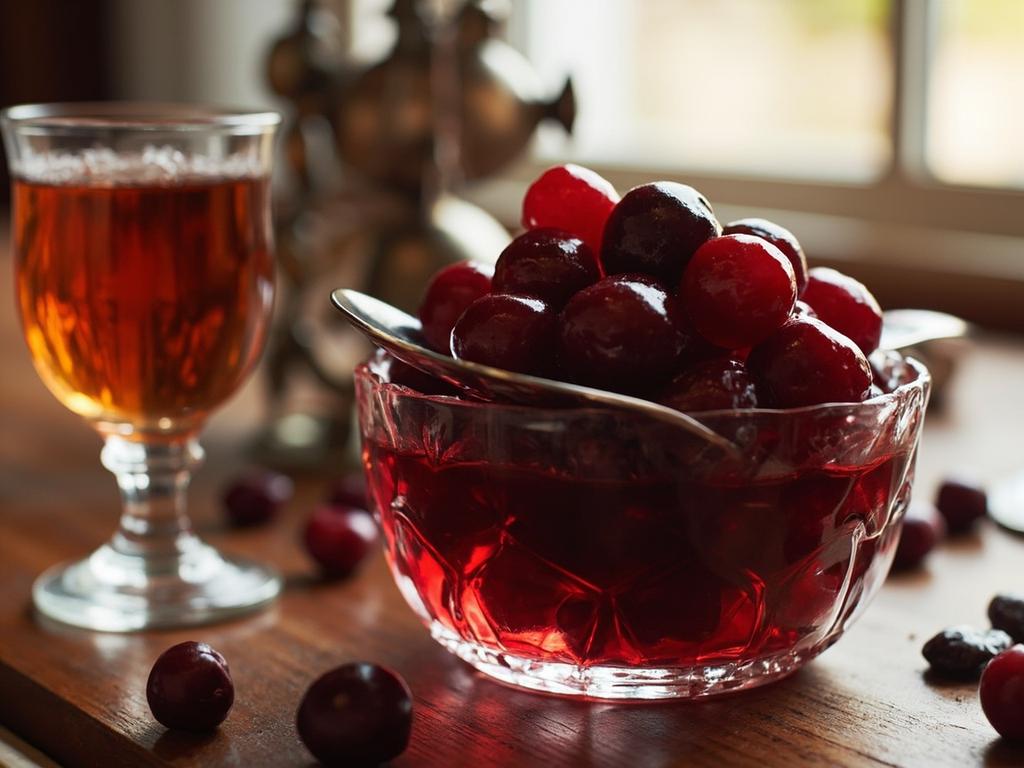
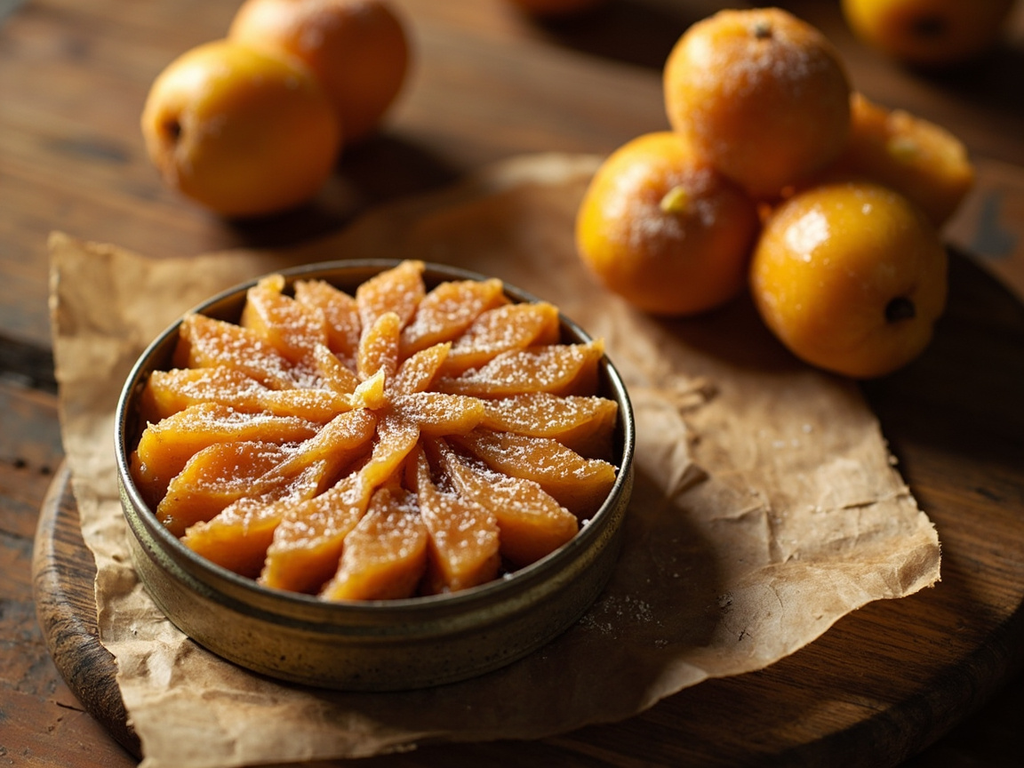
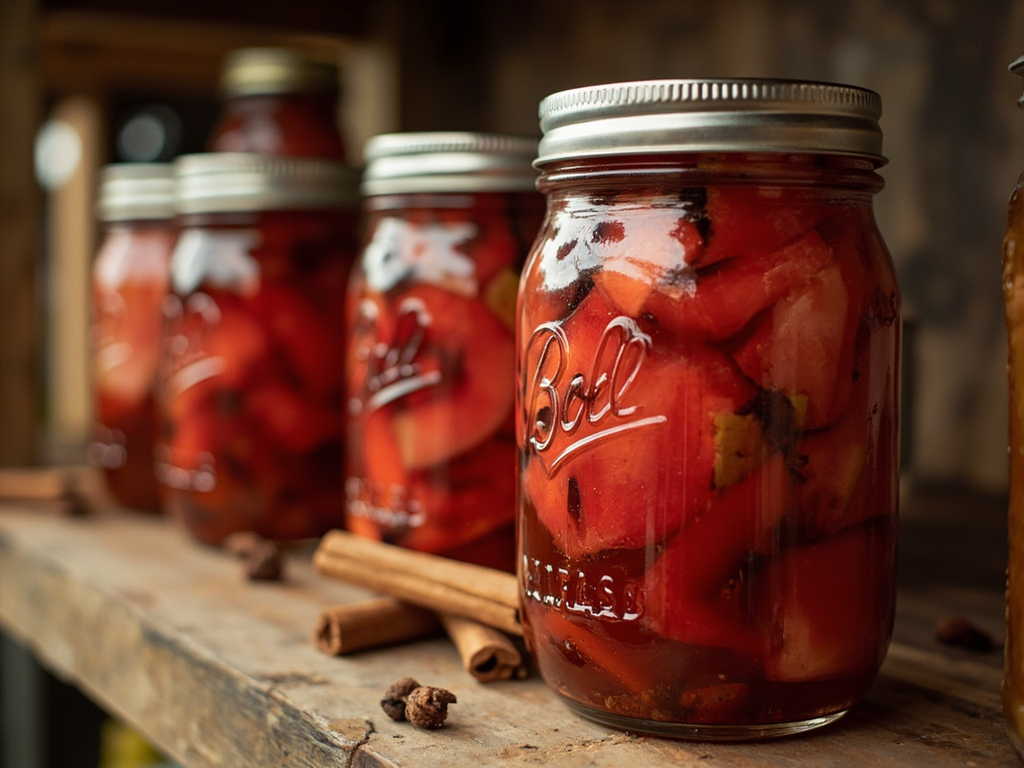
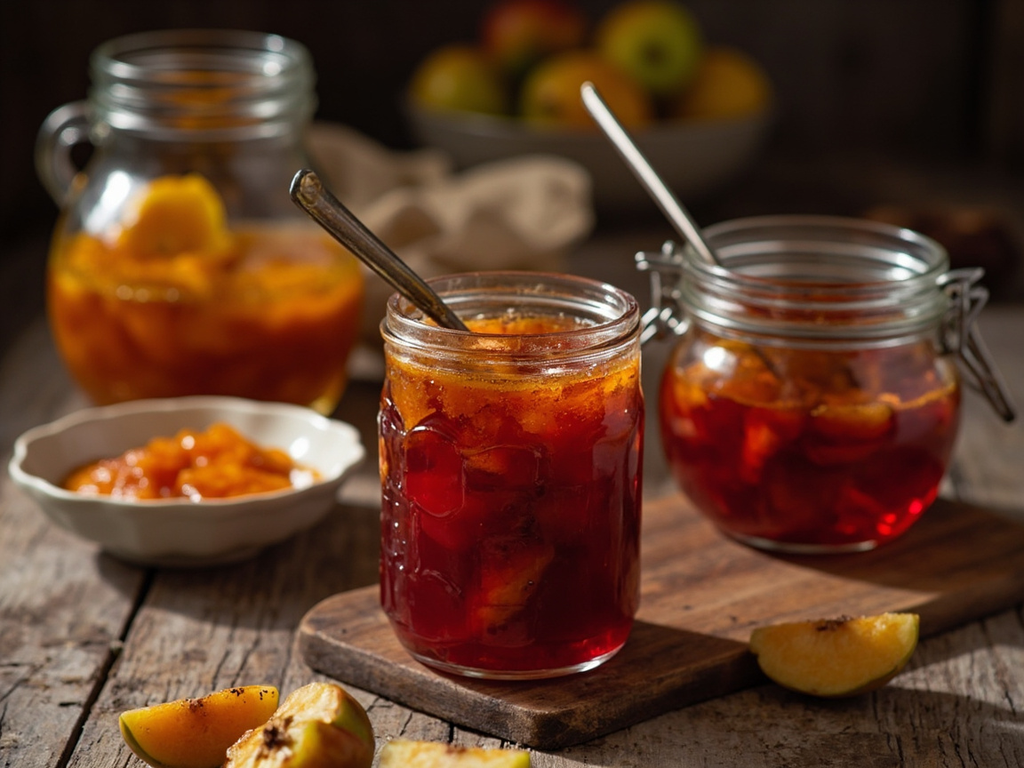
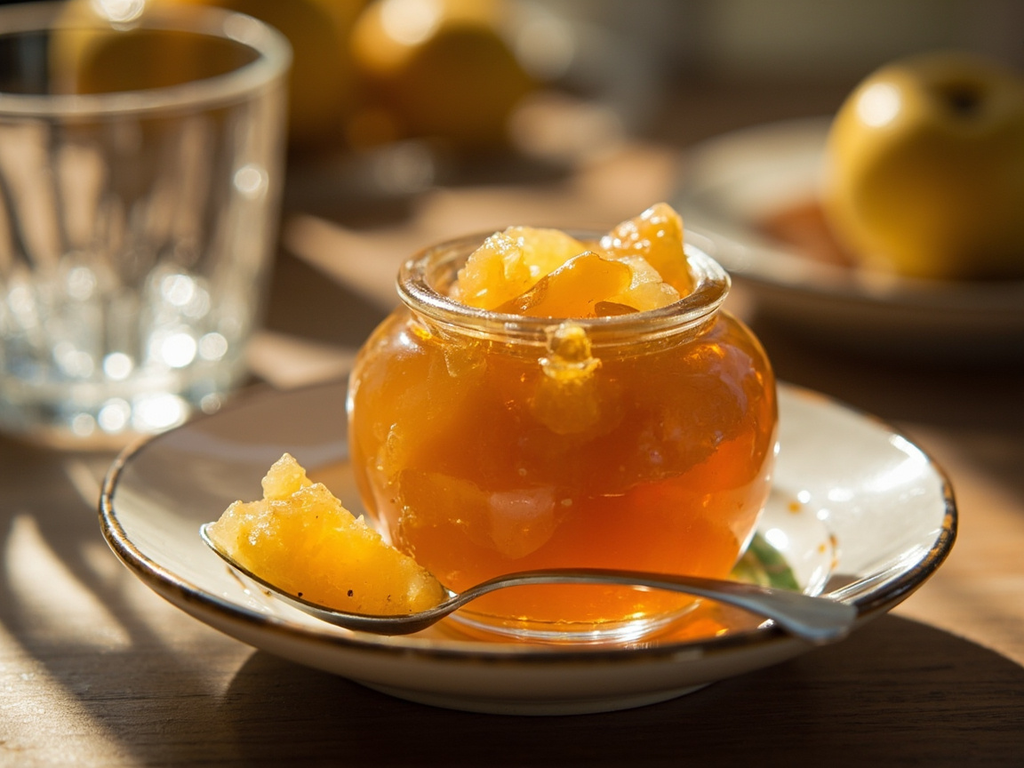
Quinces cut and candied slowly in a fragrant syrup until the pieces become translucent and amber. Preserved in a jar and enjoyed by the teaspoon, placed on a saucer, with a glass of cold water on the side.
At home, when someone pushed open the door, we did not ask if they were hungry: we brought out the jar of dulceață and a small spoon, placed on a saucer, with a glass of very cold water. That was the welcome itself, a tiny and stubborn rite. The quince, you understand, does not give in easily — hard, astringent, almost hostile — and it takes hours of patience in syrup for it to become tender and translucent like a stained-glass window. I have always thought there was a lesson in that: the roughest things end up amber, provided you insist.
- •Ripe quinces — as much as sugar (fruit)
- •Sugar — equal weight to quinces (syrup and preservation)
- •Lemon — one (prevent browning, balance)
- •Water — a little (start the syrup)
Dulceață de gutui (quince preserve in syrup)
Quinces cut and candied slowly in a fragrant syrup until the pieces become translucent and amber. Preserved in a jar and enjoyed by the teaspoon, placed on a saucer, with a glass of cold water on the side.
Why this dish? Dulceață is the Romanian gesture of hospitality par excellence: you keep a jar all year and offer it by the spoonful to anyone who comes through the door. In the culture of Ionesco's childhood, it is the house's preserved sweet — brought out for the guest, like a tender and old-fashioned little ritual of welcome.
At home, when someone pushed open the door, we did not ask if they were hungry: we brought out the jar of dulceață and a small spoon, placed on a saucer, with a glass of very cold water. That was the welcome itself, a tiny and stubborn rite. The quince, you understand, does not give in easily — hard, astringent, almost hostile — and it takes hours of patience in syrup for it to become tender and translucent like a stained-glass window. I have always thought there was a lesson in that: the roughest things end up amber, provided you insist.
Ingredients (period version)
- Ripe quinces — as much as sugar (fruit)
- Sugar — equal weight to quinces (syrup and preservation)
- Lemon — one (prevent browning, balance)
- Water — a little (start the syrup)
Ingredients
- Quinces — 1 kg (peeled, sliced or diced) (fruit)
- Sugar — 800 g (syrup and preservation)
- Lemon — 1 (juice) (anti-browning and acid balance)
- Water — 200 ml (start the syrup)
- Vanilla pod or a clove (optional) — 1 (flavor)
Method
- Peel quinces, remove cores and cut into thin slices or small dice; immediately sprinkle with lemon juice.
- Make a syrup with sugar and water, bring to a simmer.
- Add quinces (and vanilla or clove) and cook over low heat, slowly, without stirring too much, skimming if needed.
- Continue until pieces become translucent and amber and the syrup coats the spoon (45 min to 1 hour).
- Pour into sterilized jars, seal and invert; store in a cool place. Serve by the teaspoon with a glass of water.
How it was made : Dulceață were prepared at the end of summer and in autumn, when fruits abounded, to preserve them through winter in jars. Quince, rich in natural pectin, preserved beautifully and kept for months. It was both a peasant preservation technique and an object of hospitality, offered symbolically by the spoon rather than as a whole jar.
The contemporary twist : A spoonful of dulceață de gutui on fresh cheese or thick yogurt makes an instant dessert, halfway between yesterday's Romania and today's brunch.
Eugène Ionesco · Charactorium