 flip
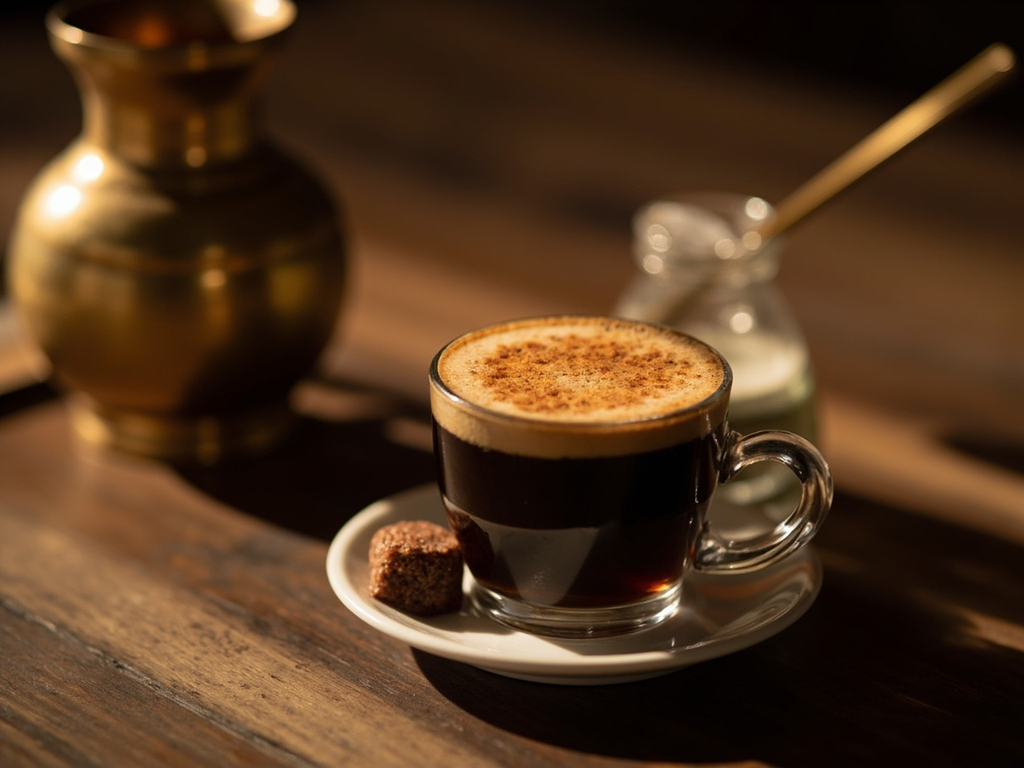
flipCafea la nisip (Romanian-style coffee, cooked on sand)
Cafea la nisip (Romanian-style coffee, cooked on sand)
Why this dish? We know Ionesco was a great coffee lover, a drink that accompanied his long writing and conversation sessions. This dense, slow-cooked coffee is that of all Danubian Europe of his youth — the cup one makes last while talking, exactly the tempo of his dialogues that stretch out.
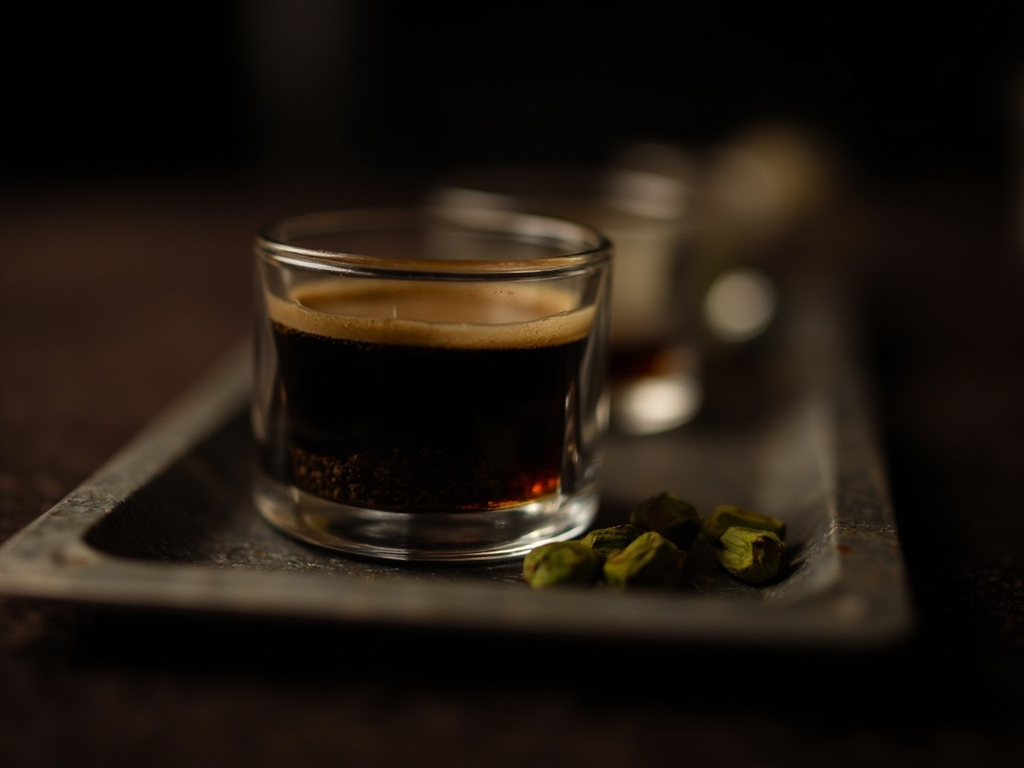
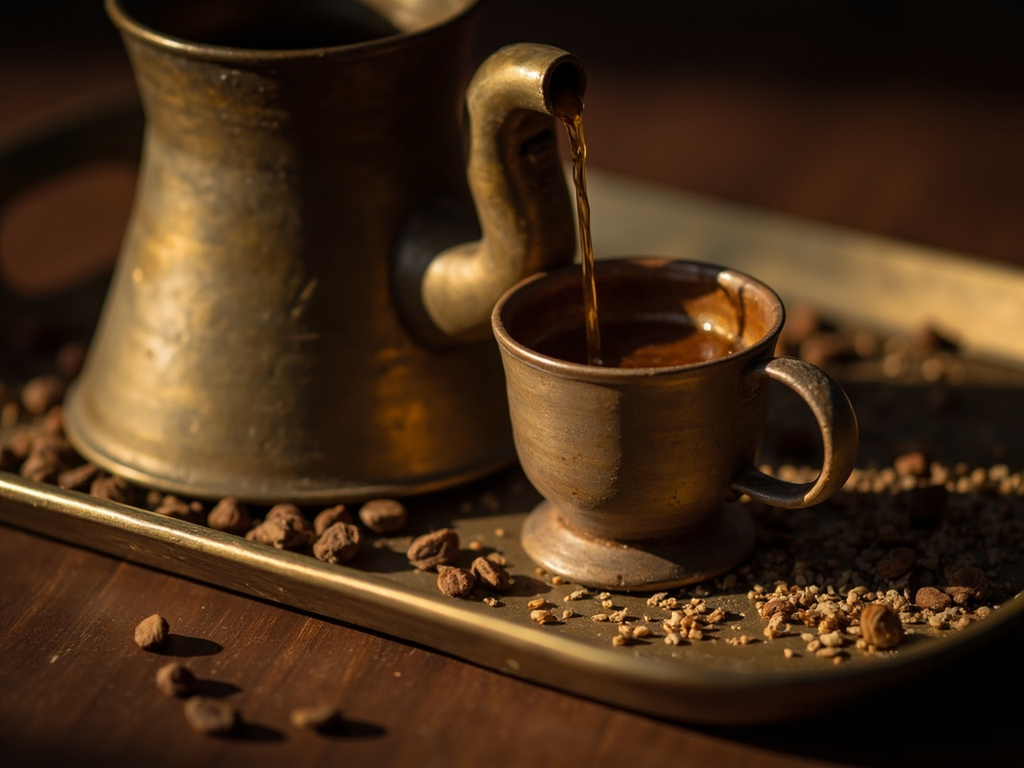
Very finely ground coffee, brought to a foam three times in a small long-handled pot. Poured grounds and all into the cup, left to settle. Intense, bitter, it is less a drink than a pretext to linger.
Coffee, you see, is my true working instrument — far more than the pen. I drank cups of it while sentences refused to come, and it was often in the grounds, at the bottom, that I thought I read the rest. You must bring it up three times, remove it just before it overflows, otherwise it gets angry and loses its foam. You let it rest, you wait for the grounds to settle — and that waiting, my dear, is already theater. A cup, a cigarette, and the absurd suddenly becomes perfectly bearable.
- •Roasted arabica coffee, very finely ground — one spoonful per small cup (base)
- •Water — one cup per person (infusion)
- •Sugar — optional, to taste (adjusted before cooking)
Cafea la nisip (Romanian-style coffee, cooked on sand)
Very finely ground coffee, brought to a foam three times in a small long-handled pot. Poured grounds and all into the cup, left to settle. Intense, bitter, it is less a drink than a pretext to linger.
Why this dish? We know Ionesco was a great coffee lover, a drink that accompanied his long writing and conversation sessions. This dense, slow-cooked coffee is that of all Danubian Europe of his youth — the cup one makes last while talking, exactly the tempo of his dialogues that stretch out.
Coffee, you see, is my true working instrument — far more than the pen. I drank cups of it while sentences refused to come, and it was often in the grounds, at the bottom, that I thought I read the rest. You must bring it up three times, remove it just before it overflows, otherwise it gets angry and loses its foam. You let it rest, you wait for the grounds to settle — and that waiting, my dear, is already theater. A cup, a cigarette, and the absurd suddenly becomes perfectly bearable.
Ingredients (period version)
- Roasted arabica coffee, very finely ground — one spoonful per small cup (base)
- Water — one cup per person (infusion)
- Sugar — optional, to taste (adjusted before cooking)
Ingredients
- Very finely ground coffee (Turkish grind) — 1 heaped tsp per cup (base)
- Cold water — 1 small cup (60 ml) per person (infusion)
- Sugar — to taste, added before cooking (optional sweetness)
Method
- In a small long-handled pot (ibric/cezve), mix cold water, finely ground coffee and sugar if desired.
- Place over low heat and heat without stirring until a brown foam rises; remove just before it boils over.
- Let it subside, return to heat, and repeat two or three times to develop the foam (caïmac).
- Pour gently into small cups, grounds and all, and let rest 1–2 minutes for the grounds to settle.
- Drink in small sips, without stirring, leaving the grounds undisturbed.
How it was made : In cafés and homes across Danubian Europe, coffee was traditionally cooked on a bed of hot sand (nisip) that distributed gentle, even heat under the ibric — hence the name cafea la nisip. This method, inherited from the Ottoman Empire, produced a thick foam and unfiltered coffee that was left to settle before drinking.
The contemporary twist : Serve each cup with a cube of Turkish delight and a glass of cold water, as in old cafés — the exact pause of an intermission.
Eugène Ionesco · Charactorium