 flip
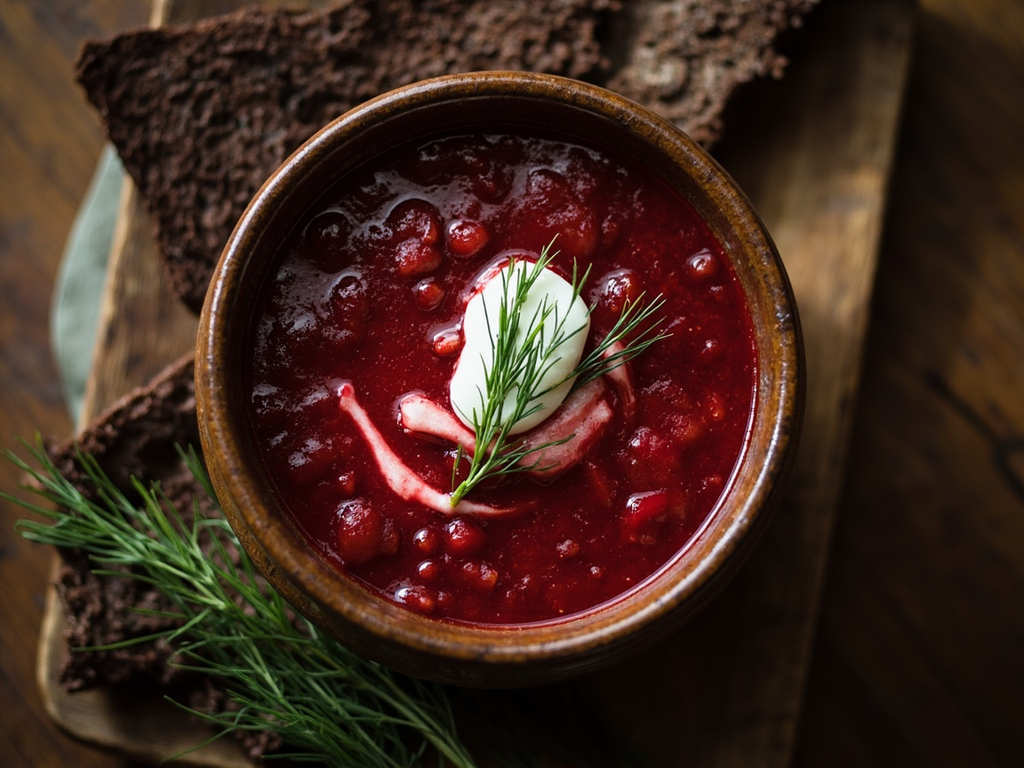
flipCiorbă de perișoare (sour meatball soup)
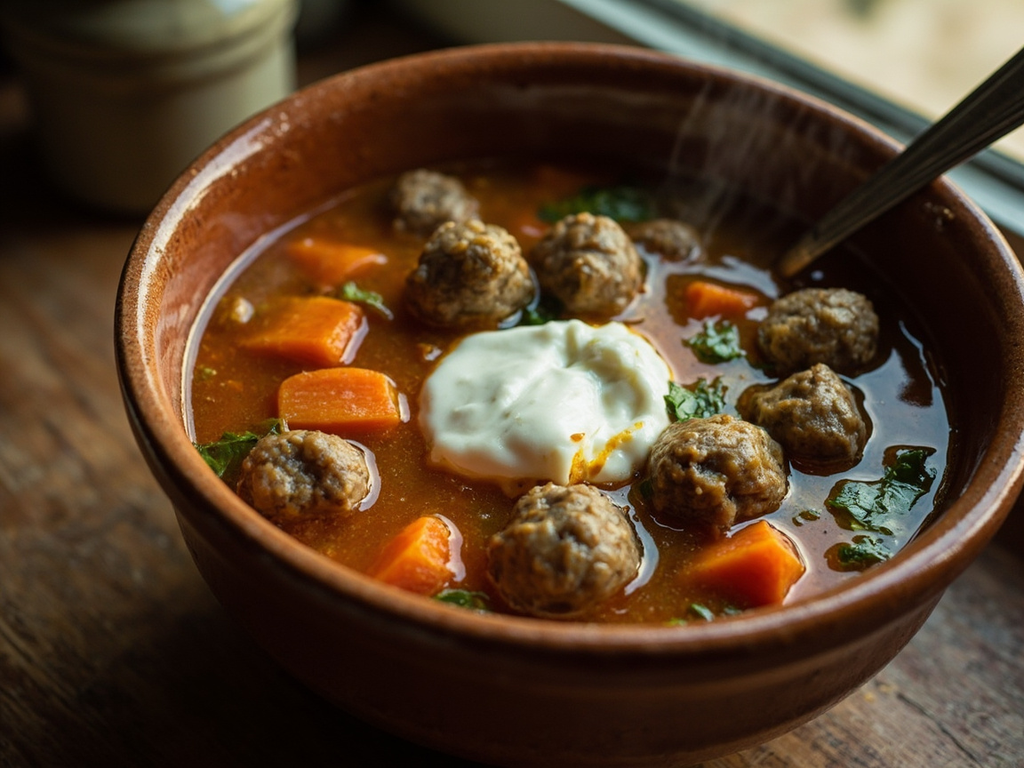
Ciorbă de perișoare (sour meatball soup)
Why this dish? Born in Slatina and raised between Romania and France, Ionesco grew up with these sour soups that are daily fare on Romanian tables. Ciorbă de perișoare, comforting and tangy, is exactly the kind of family stew whose memory he kept — the simple cooking of his childhood, before the theaters of Paris.
A soup-meal where small meatballs of pork and beef with rice cook in a vegetable broth made sour by borș. Finished with parsley and lovage, the signature herb of ciorbe. Nourishing, lively in the mouth, it is the everyday dish par excellence.
You see, I spent my childhood between two languages and two cuisines, and it is this sour soup that always takes me back to Slatina. We would drop in small meatballs, barely larger than a walnut, and the secret was not in the meat but in that fermented sourness added at the end — certainly not before, or everything would turn. My mother used to say that a ciorbă without lovage is like a line without its punchline: technically complete, but it does nothing. I ate whole bowls of it watching the rain fall, and I assure you that no absurdity in the world can resist a still-steaming soup.
- •Beef and pork mince — a good portion (meatballs)
- •Rice — a handful (binder for meatballs)
- •Carrot, onion, celeriac, parsnip — according to the market (aromatic base)
- •Borș (fermented wheat bran) — to taste, until desired sourness (acidifying agent — the signature)
- •Lovage and fresh parsley — a bunch (finishing herbs)
Ciorbă de perișoare (sour meatball soup)
A soup-meal where small meatballs of pork and beef with rice cook in a vegetable broth made sour by borș. Finished with parsley and lovage, the signature herb of ciorbe. Nourishing, lively in the mouth, it is the everyday dish par excellence.
Why this dish? Born in Slatina and raised between Romania and France, Ionesco grew up with these sour soups that are daily fare on Romanian tables. Ciorbă de perișoare, comforting and tangy, is exactly the kind of family stew whose memory he kept — the simple cooking of his childhood, before the theaters of Paris.
You see, I spent my childhood between two languages and two cuisines, and it is this sour soup that always takes me back to Slatina. We would drop in small meatballs, barely larger than a walnut, and the secret was not in the meat but in that fermented sourness added at the end — certainly not before, or everything would turn. My mother used to say that a ciorbă without lovage is like a line without its punchline: technically complete, but it does nothing. I ate whole bowls of it watching the rain fall, and I assure you that no absurdity in the world can resist a still-steaming soup.
Ingredients (period version)
- Beef and pork mince — a good portion (meatballs)
- Rice — a handful (binder for meatballs)
- Carrot, onion, celeriac, parsnip — according to the market (aromatic base)
- Borș (fermented wheat bran) — to taste, until desired sourness (acidifying agent — the signature)
- Lovage and fresh parsley — a bunch (finishing herbs)
Ingredients
- Mixed beef and pork mince — 400 g (meatballs)
- Short-grain rice — 60 g (binder for meatballs)
- Carrot — 2 (aromatic base)
- Onion — 1 large (aromatic base)
- Celeriac and parsnip — 1 small piece each (aromatic base)
- Borș (or, failing that, sauerkraut juice + lemon juice) — 200 ml borș, or to desired sourness (acidifying agent)
- Lovage (or celery leaves) and flat-leaf parsley — 1 bunch (finishing herbs)
- Egg — 1 (bind meatballs)
Method
- Dice carrot, onion, celeriac and parsnip into small cubes and sweat in a large pot with a little oil, then cover with water and simmer for 15 min.
- Mix the minced meats with raw rice, egg, salt, pepper and a little parsley; form small meatballs.
- Gently drop the meatballs into the simmering broth and cook for 20 min — the rice cooks inside and slightly thickens the soup.
- Off the boil, add borș (or sauerkraut juice + lemon) gradually, tasting: the soup should be distinctly tangy but not sharp.
- Remove from heat, add chopped lovage and parsley, cover and let infuse 5 min before serving very hot.
How it was made : In Romanian households, borș was prepared at home by fermenting wheat bran in warm water for a few days, sometimes with a cherry branch or a bread crust to start fermentation. Each family had its ongoing pot of borș, like a sourdough starter. The acidity thus came from a living fermentation, not vinegar.
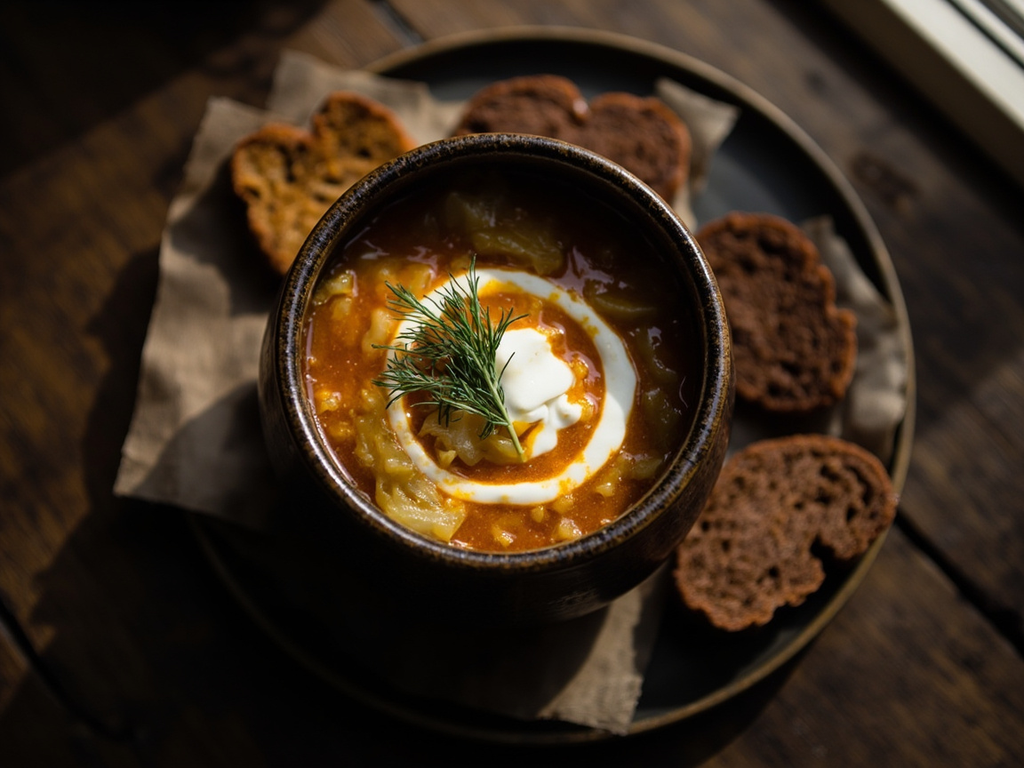
The contemporary twist : Serve the ciorbă with a spoonful of smântână (sour cream) that melts into it and softens the sourness, and a fresh green chili pepper bitten alongside, Romanian-style.
Sources : Sanda Marin, Carte de bucate (classic of Romanian cuisine)
Eugène Ionesco · Charactorium