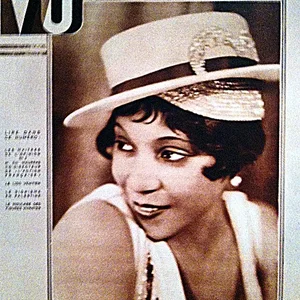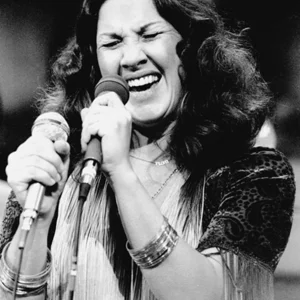

Flora Purim is a Brazilian jazz singer born in 1942 in Rio de Janeiro. A major figure in jazz fusion, she is celebrated for her remarkably wide vocal range and her pioneering role in bringing together Brazilian music and American jazz.
Flora Purim(1942 — ?)
Flora Purim
Brésil
6 min read
Frequently asked questions
Key Facts
- Born on March 6, 1942 in Rio de Janeiro, into a family of musicians
- Moved to the United States in the late 1960s, where she took part in the rise of jazz fusion
- Member of Chick Corea's band Return to Forever in the early 1970s
- Released the solo album 'Butterfly Dreams' in 1973, which established her international reputation
- Voted best jazz singer several times by Down Beat magazine during the 1970s
Works & Achievements
The first album by Chick Corea's group, where her airy voice becomes an essential color of the emerging jazz-fusion.
A cult album featuring “Spain,” on which she sings without words; one of the founding records of fusion.
Her first solo album, which reveals her talent as a singer-bandleader and her unique blend of jazz and Brazilian music.
A solo album that confirms her personal style, blending Brazilian rhythms, improvisation, and vocal effects.
She lends her voice to this album by guitarist Carlos Santana, marking the meeting of Latin rock and fusion.
A major solo album in her career, recorded after a difficult period and praised for its radiance.
A band formed with Airto Moreira that carried the fusion of jazz and Brazilian music onto the stage and onto record.
An album released at age 80, testifying to a career still vibrant more than fifty years after her debut.
Anecdotes
Flora Purim grew up in Rio de Janeiro in a house filled with music: her father, of Russian Jewish descent, played the violin, and her mother was a classical pianist. As a child, she heard Bach just as much as the samba and jazz that played on the radio. This blend of influences would later shape her unique style, straddling Brazil and America.
On Chick Corea's famous track “Spain” (album Light as a Feather, 1972), Flora Purim sings almost no lyrics: she uses her voice as an instrument, following the notes of the horns and the piano. This way of “singing without words,” known as scat or vocalese, would become one of her trademarks.
Flora Purim loved to experiment: in concert, she would plug her voice into echo devices (such as the Echoplex) to multiply it and create dreamy, drifting clouds of sound. Very few singers were doing this in the 1970s, which made her instantly recognizable.
With her husband, the percussionist Airto Moreira, she formed one of the most famous couples in jazz. The two left Brazil for the United States in the late 1960s and became true ambassadors of Brazilian rhythms to American jazz musicians.
In the mid-1970s, Flora Purim was voted “best jazz singer” several times by readers of the major American magazine DownBeat. For a Brazilian artist who had recently arrived in the United States, outranking the local stars in a national poll was a remarkable achievement.
Primary Sources
Flora Purim – vocals and percussion. The album includes the tracks “Spain,” “500 Miles High,” and “Captain Marvel.”
Flora Purim topped the “best female singer” category in the readers' poll for several years during the mid-1970s.
Her first album under her own name, recorded for the Milestone label, with the participation of Airto Moreira, George Duke, and Stanley Clarke.
She often explained that she considered her voice a full-fledged instrument, seeking to converse with the other musicians rather than simply singing lyrics.
Key Places
Birthplace of Flora Purim, where she grew up surrounded by classical music, samba, and jazz.
First major American stop for the Purim-Moreira couple in the late 1960s, at the heart of the jazz scene.
The region where she settled long-term and recorded much of her jazz-fusion catalog.
Home to the famous jazz festival where fusion artists like Flora Purim perform before an international audience.
Correctional facility where she was incarcerated in the mid-1970s on a drug-related charge, before resuming her career.
Typical Objects
An essential tool for any singer: Flora Purim uses it to project her multi-octave voice across large concert halls.

An echo-effect device she plugged into her voice to double it and create dreamy, floating atmospheres—something rare among female singers of the era.
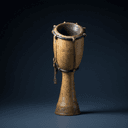
Tamborim, agogô and other small percussion instruments she plays herself on stage, a direct legacy of Rio's samba.

A traditional Brazilian musical bow, tied to capoeira, heard in the Brazilian music she introduced to jazz audiences.

The format on which her solo albums of the 1970s were released, such as “Butterfly Dreams,” flagship objects in spreading her music.
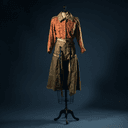
Brightly colored dresses and accessories evoking Brazil, reinforcing her image as a radiant, exotic performer on stage.
School Curriculum
Vocabulary & Tags
Key Vocabulary
Tags
Daily Life
Morning
On tour, a jazz musician's morning often begins late, after a concert that ended in the middle of the night. Flora Purim devotes this time to waking up her voice with vocal exercises and to preparing for the trip to the next city.
Afternoon
The afternoon is paced by rehearsals and sound checks in the concert hall. It is also the time for discussions with the other musicians to decide on the evening's songs and improvisations.
Evening
The evening is the heart of the job: the concert. On stage, she sings, plays percussion and converses with the band, sometimes for several hours, before audiences at festivals or jazz clubs.
Food
Her cooking remains shaped by Brazil: rice, black beans (*feijão*), tropical fruits and fish. On tour, like all traveling musicians, she often has to make do with meals taken on the road or at the hotel.
Clothing
On stage, she wears colorful, flowing outfits that evoke her native country. Around town, she adopts the casual, bohemian style of 1970s artists, blending Brazilian influences with American fashion.
Housing
After leaving Rio, she lives mainly in the United States, especially in California. Her home, shared with the musician **Airto Moreira**, is also a workplace where they rehearse and welcome other artists.