 Flip the card
Flora Tristan at the table
1803 — 1844
On the menu
The Outcast's Table: Between Ordinary Paris and the Kitchens of Arequipa
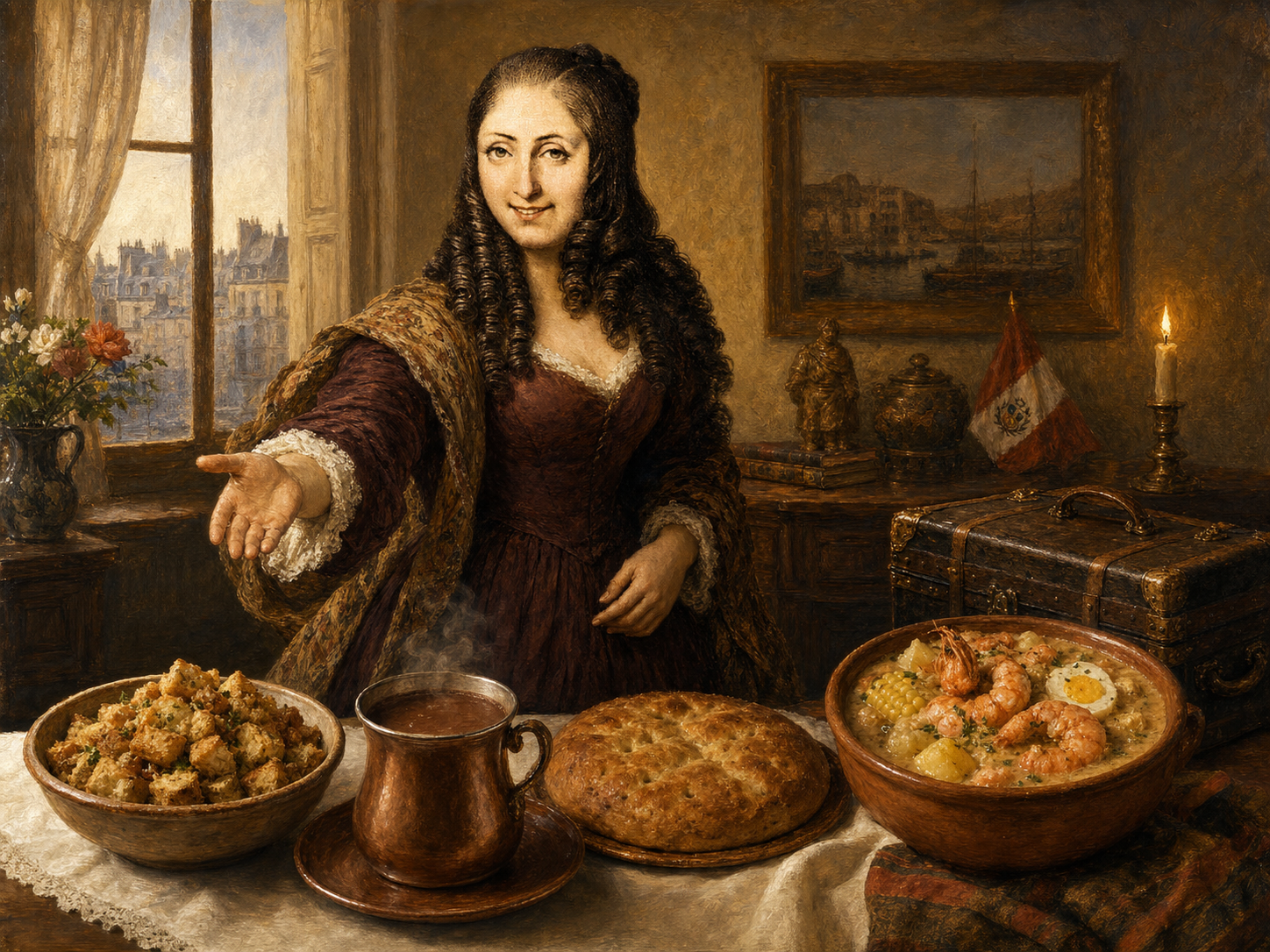
Flora Tristan's life is split between two meal structures. In Paris, it's the frugal fare of the laboring middle classes: a potage-soup that serves as the main dish, bread at all hours, and very little meat—all eaten quickly, often in a boarding house or cheap inn. At the other end of the world, during her Peregrinations in Peru, she discovers the Creole table of Arequipa, centered around a large chupe (thick soup-stew served as a festive one-dish meal) spiced with ají and Andean herbs. In between, the food of the long voyage: dry galettes that keep for months in a travel trunk. Three worlds for one woman on the move.
Signature : Peru's Ají and Cacao vs. Paris's Grey Bread
The great gustatory divide of her life: on one side, the grey frugality of the Parisian working woman (stale bread, clear broth); on the other, the colorful ardor of the Arequipa kitchens where ají chili and Peruvian cacao—the legacy of her father Mariano de Tristán—warm and perfume everything. Cacao, which she discovers in her paternal family, becomes the red thread of her mixed-race identity.
click to flip back
Flora Tristan at the table
1803 — 1844
4 period recipes
 Everyday
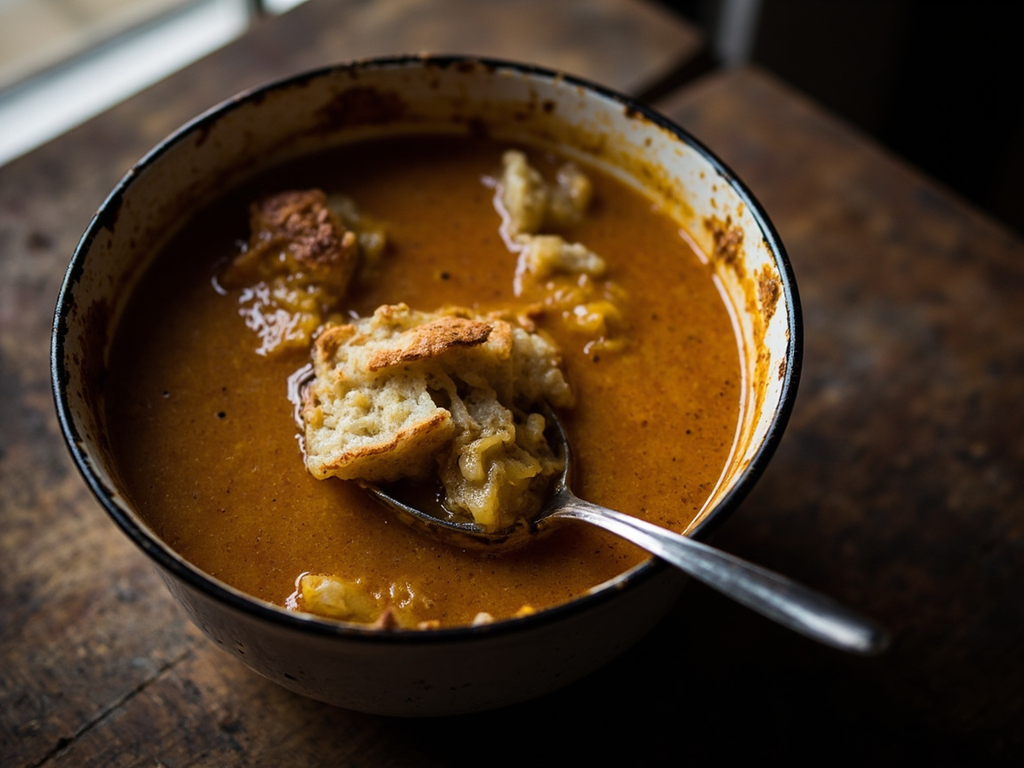
Parisian Stale Bread Panade
The base potage of the ordinary (served as a one-dish evening meal)
🧂 🍄· 20 min
View the recipe
 Drink
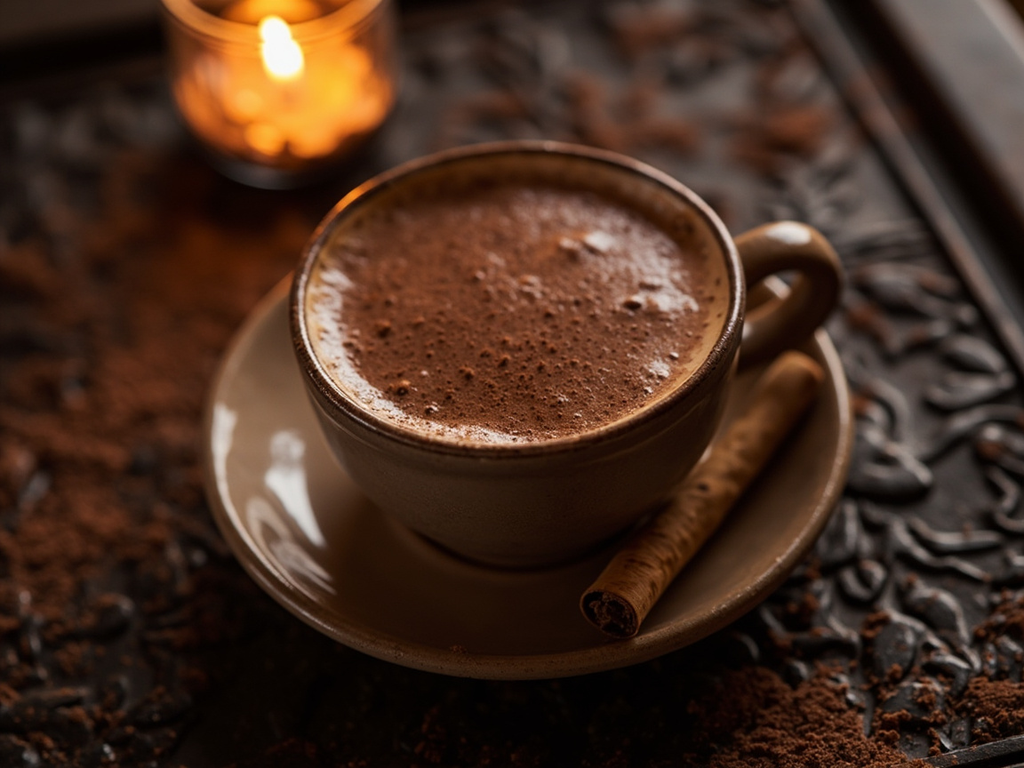
DrinkOutcast's Chocolate, Arequipa Style
The Creole morning drink (served hot, frothed with a molinillo)
☕ 🍯 🌶️· 15 min
View the recipe
 Travel
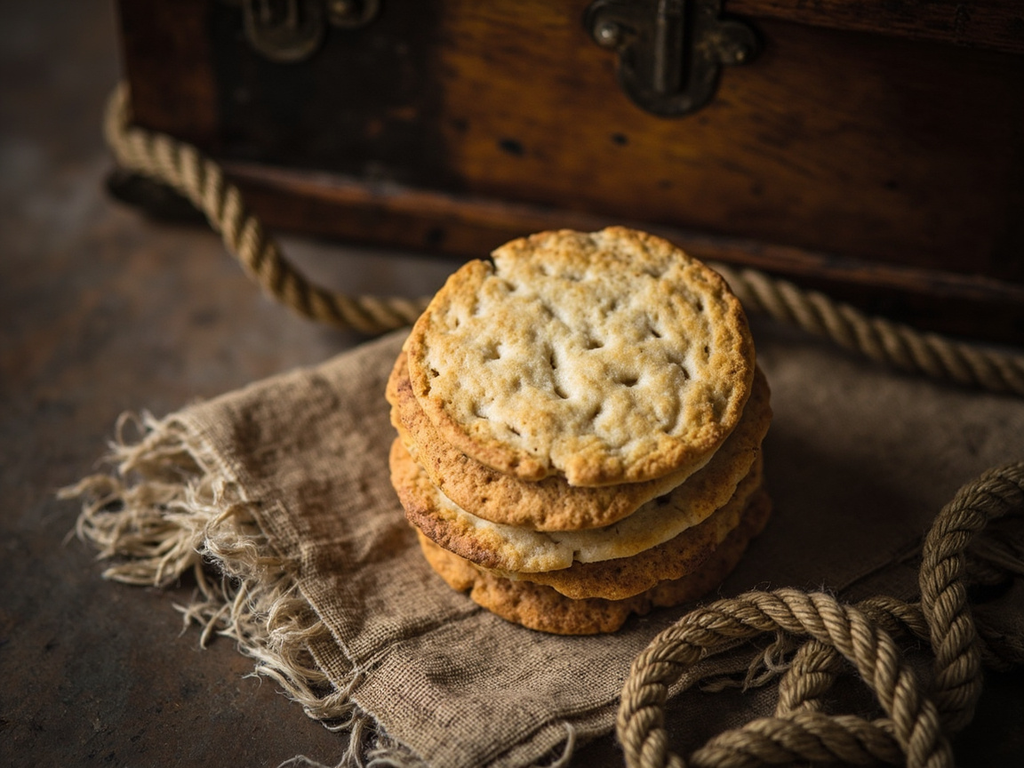
Long-Voyage Galette for the Travel Trunk
Ship's victuals (dry bread that keeps for months at sea)
🧂· 1 h 45 (including drying)
View the recipe
 Festive
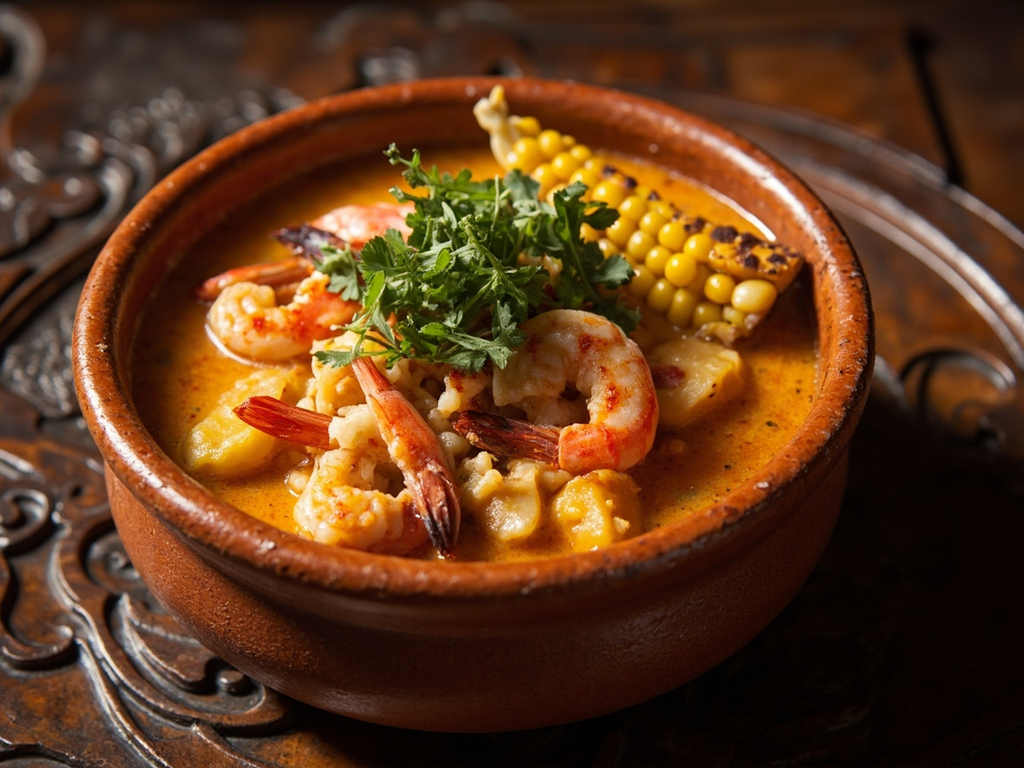
Arequipa Shrimp Chupe
The great festive chupe (thick soup-stew served as a convivial one-dish meal)
🌶️ 🍄 🍋· 45 min
View the recipe