 flip
flipOutcast's Chocolate, Arequipa Style
Outcast's Chocolate, Arequipa Style
Why this dish? Daughter of Mariano de Tristán, a Peruvian nobleman, Flora left for Arequipa in 1833 to claim her inheritance. In the family of her uncle Pío, thick, fragrant chocolate was the morning drink—a taste that connected her to her father and to that Peruvian half of herself she discovers in her Peregrinations of a Pariah.
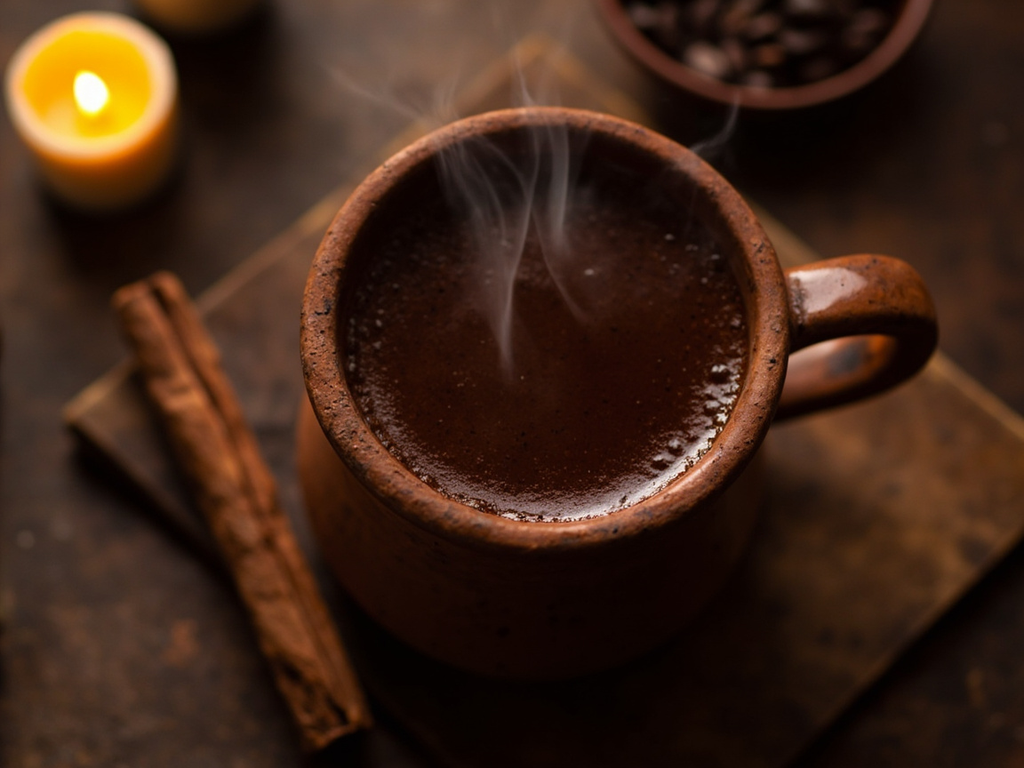
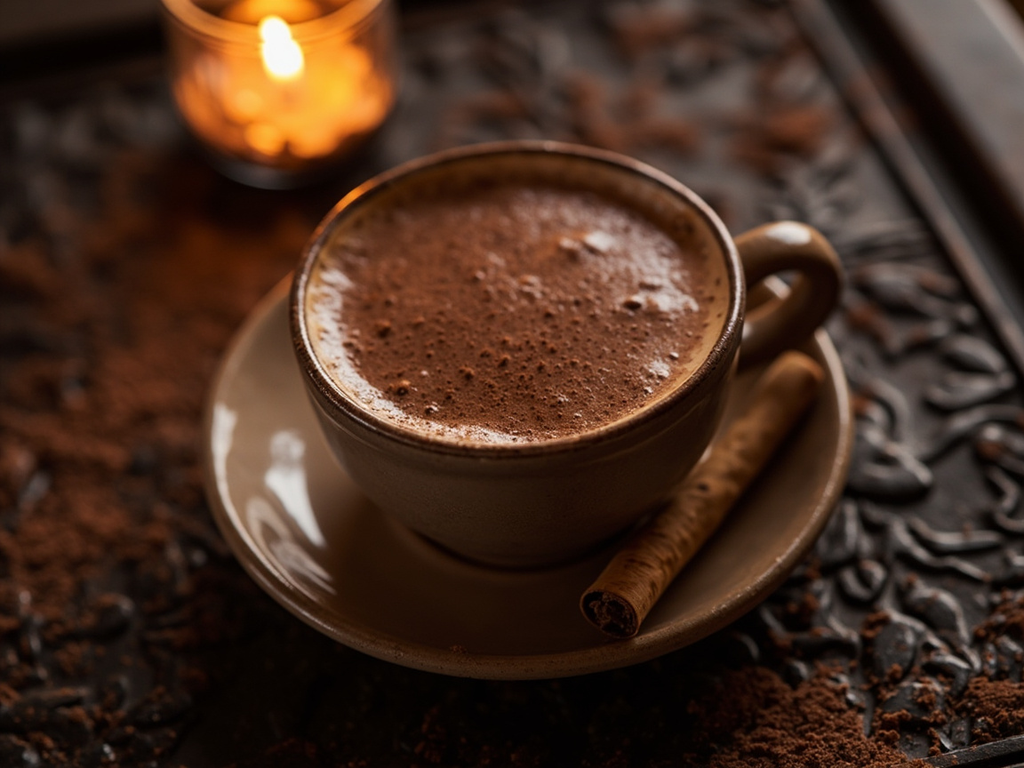
A thick hot chocolate, almost a cream, beaten until frothy, perfumed with cinnamon. A world away from the watery chocolate of Parisian cafés: here it is dense, ardent, generous like the Creole table.
When I arrived in Arequipa, a stranger yet a daughter of the land through my father, each morning they served me this chocolate beaten in a jar with a little wooden molinillo until it frothed. Ah! It was not the insipid decoction of our Paris cafés: it was a thick, burning brew, perfumed with cinnamon, that set the heart firm for the day. I tasted in it the legacy of that father I had scarcely known, and each cup told me that I too was of that land.
- •Peruvian cacao tablet — one piece (base)
- •Water or milk — one cup (liquid)
- •Sugar — to taste (sweetness)
- •Cinnamon — a stick shard (flavor)
Outcast's Chocolate, Arequipa Style
A thick hot chocolate, almost a cream, beaten until frothy, perfumed with cinnamon. A world away from the watery chocolate of Parisian cafés: here it is dense, ardent, generous like the Creole table.
Why this dish? Daughter of Mariano de Tristán, a Peruvian nobleman, Flora left for Arequipa in 1833 to claim her inheritance. In the family of her uncle Pío, thick, fragrant chocolate was the morning drink—a taste that connected her to her father and to that Peruvian half of herself she discovers in her Peregrinations of a Pariah.
When I arrived in Arequipa, a stranger yet a daughter of the land through my father, each morning they served me this chocolate beaten in a jar with a little wooden molinillo until it frothed. Ah! It was not the insipid decoction of our Paris cafés: it was a thick, burning brew, perfumed with cinnamon, that set the heart firm for the day. I tasted in it the legacy of that father I had scarcely known, and each cup told me that I too was of that land.
Ingredients (period version)
- Peruvian cacao tablet — one piece (base)
- Water or milk — one cup (liquid)
- Sugar — to taste (sweetness)
- Cinnamon — a stick shard (flavor)
Ingredients
- Dark chocolate 70% (or cacao paste) — 40 g (base)
- Whole milk — 25 cl (liquid)
- Cane sugar — 1 to 2 tsp (sweetness)
- Cinnamon stick — 1/2 stick (flavor)
Method
- Heat the milk with the cinnamon stick without boiling, let infuse 5 minutes.
- Remove the cinnamon, add the chocolate broken into pieces and the sugar.
- Whisk energetically (or blend with an immersion blender) until smooth and very frothy.
- Pour hot into a thick cup and drink immediately.
How it was made : In Peru, chocolate was beaten with a molinillo, a small wooden whisk twirled between the palms to make it froth. Cinnamon was the queen spice; chocolate was drunk thick and very sweet, a legacy of Spanish-American colonial customs.
The contemporary twist : Served in a small glass with a cloud of foam and a pinch of fleur de sel, this 'Outcast's chocolate' makes a very current Andean-inspired treat.
Sources : Flora Tristan, Pérégrinations d'une paria (1838)
Flora Tristan · Charactorium