 flip
flipParisian Stale Bread Panade
Parisian Stale Bread Panade
Why this dish? With limited means, Flora made do with frugal meals in boarding houses or inns. Panade—hard bread softened in broth—was THE dish for small Parisian budgets: nothing wasted, yesterday's bread becomes today's supper.
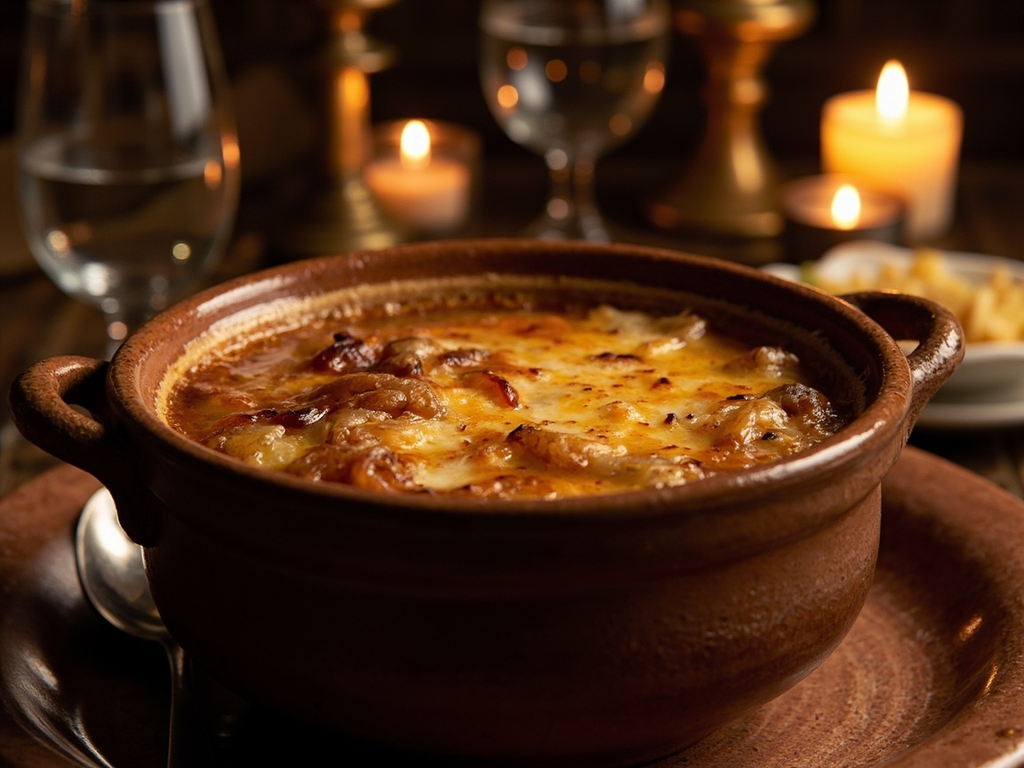
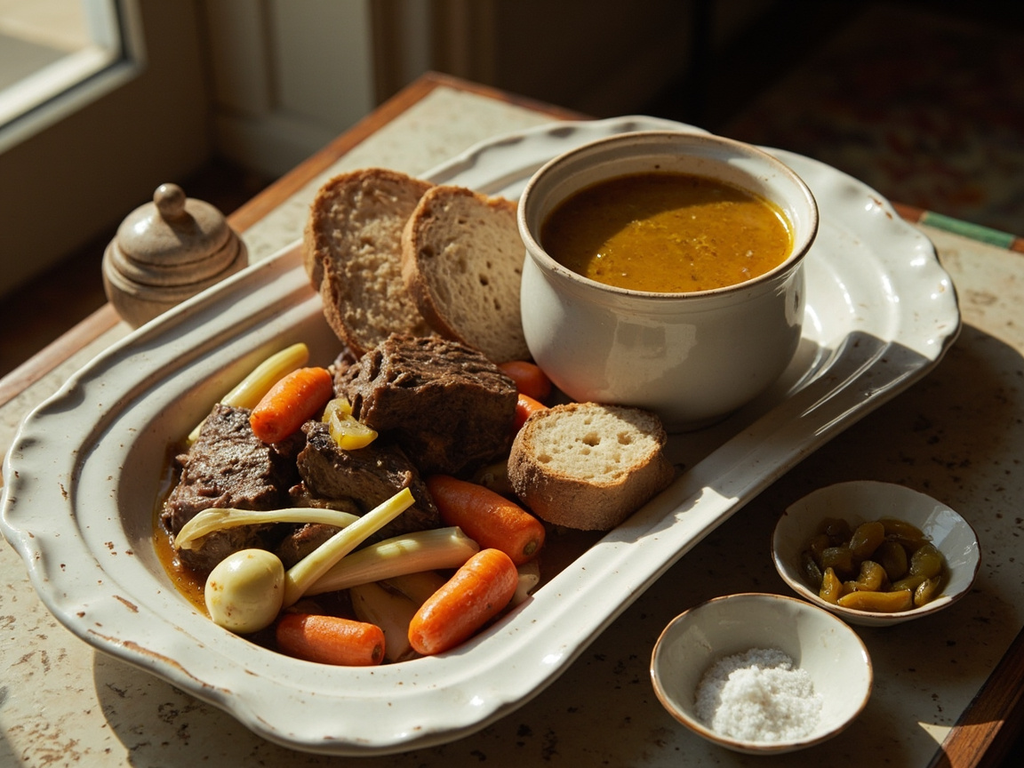
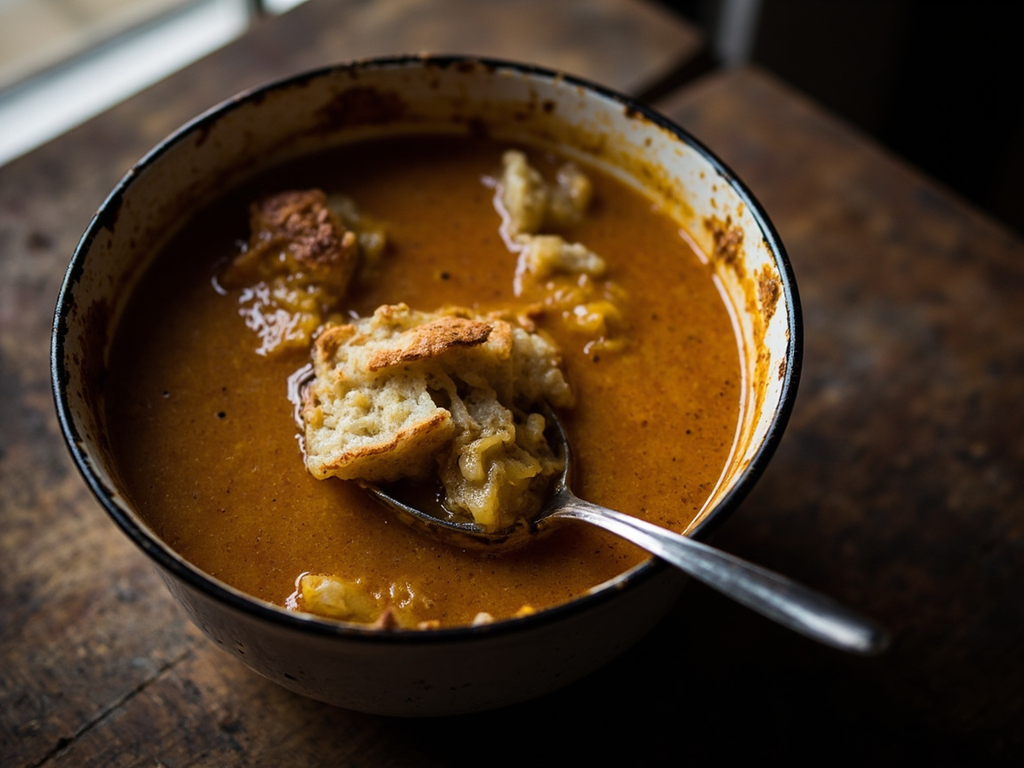
A thick, comforting soup where stale bread melts into a light broth bound with an egg and a little butter. Nourishing, almost free, it is the pillar of the frugal table.
You pity me, seeing me soak yesterday's bread in a thin broth? Undeceive yourselves. I have known boarding houses where every sou is counted, and I have learned that a stale crust, well melted in hot water and perked up with a knob of butter, is worth more than a feast taken without dignity. Break the bread small, let it swell, bind with a beaten egg yolk—and there you have a meal to stand up to hunger and the world's injustice. It is the soup of the humble, and I am not ashamed of it.
- •Stale bread — a few hard slices (nourishing base)
- •Broth or water — a large bowl (liquid)
- •Butter — a knob (richness)
- •Egg — one yolk (binder)
- •Salt — to taste (seasoning)
Parisian Stale Bread Panade
A thick, comforting soup where stale bread melts into a light broth bound with an egg and a little butter. Nourishing, almost free, it is the pillar of the frugal table.
Why this dish? With limited means, Flora made do with frugal meals in boarding houses or inns. Panade—hard bread softened in broth—was THE dish for small Parisian budgets: nothing wasted, yesterday's bread becomes today's supper.
You pity me, seeing me soak yesterday's bread in a thin broth? Undeceive yourselves. I have known boarding houses where every sou is counted, and I have learned that a stale crust, well melted in hot water and perked up with a knob of butter, is worth more than a feast taken without dignity. Break the bread small, let it swell, bind with a beaten egg yolk—and there you have a meal to stand up to hunger and the world's injustice. It is the soup of the humble, and I am not ashamed of it.
Ingredients (period version)
- Stale bread — a few hard slices (nourishing base)
- Broth or water — a large bowl (liquid)
- Butter — a knob (richness)
- Egg — one yolk (binder)
- Salt — to taste (seasoning)
Ingredients
- Stale country bread — 150 g (nourishing base)
- Vegetable or chicken broth — 75 cl (liquid)
- Butter — 20 g (richness)
- Egg yolk — 1 (binder)
- Salt, pepper — to taste (seasoning)
Method
- Break the stale bread into small pieces in a saucepan.
- Pour hot broth over it and let the bread swell for 10 minutes over very low heat, crushing with a spoon to obtain a smooth porridge.
- Add butter and salt.
- Off the heat, stir in the egg yolk, whisking vigorously to bind without cooking.
- Serve immediately, very hot, in a deep bowl.
How it was made : Panade was a classic of economy cooking in the 19th century, found in manuals like Audot's. It was made with vegetable cooking water or simple broth, sometimes enriched with an egg on Sundays. It was the supper of millions of modest Parisians.
The contemporary twist : A spoonful of grated Parmesan and a few fresh herbs transform this humble panade into a bread velouté worthy of a bistro—frugality becomes chic.
Sources : Louis-Eustache Audot, La Cuisinière de la campagne et de la ville (1818 and reprints)
Flora Tristan · Charactorium