 flip
flipLong-Voyage Galette for the Travel Trunk
Long-Voyage Galette for the Travel Trunk
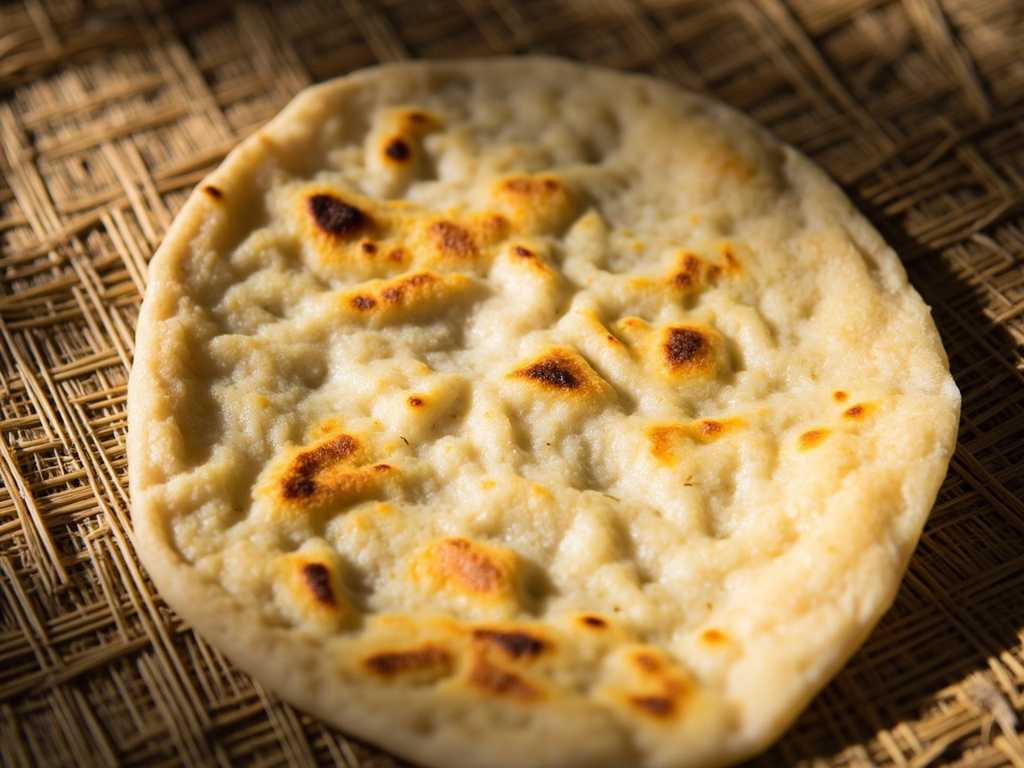
Why this dish? In 1833, Flora embarked at Le Havre for a journey of several months to Peru, by sea. Her travel trunk and passport are among her typical objects. On board, only preserved food was eaten: hardtack, a hard, dry galette, was the food of sailors and long-distance passengers.
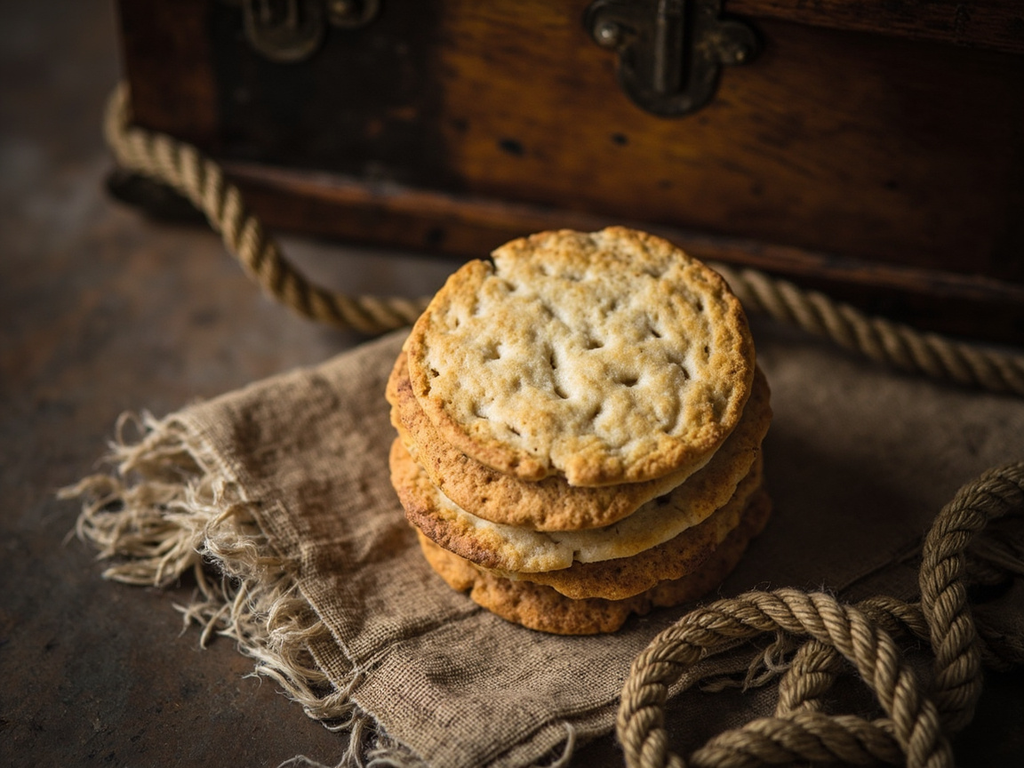
A flat, dense, very dry galette, baked twice to drive out all moisture. Tasteless but indestructible: soaked in soup or coffee, it softens and nourishes where nothing else keeps.
You who have never crossed the Atlantic shut up for months on a ship, you do not know the worth of a simple sea galette. No fresh bread on board, I tell you! Only these discs hard as stone that I stored in my trunk and had to soak long in soup so as not to break my teeth. It was ugly, it was dry, but it sustained the body when the pitching sea stole even the taste for life. I chewed many a galette dreaming of the land I no longer saw.
- •Wheat flour — two measures (base)
- •Water — as needed (binder)
- •Salt — a pinch (preservation and taste)
Long-Voyage Galette for the Travel Trunk
A flat, dense, very dry galette, baked twice to drive out all moisture. Tasteless but indestructible: soaked in soup or coffee, it softens and nourishes where nothing else keeps.
Why this dish? In 1833, Flora embarked at Le Havre for a journey of several months to Peru, by sea. Her travel trunk and passport are among her typical objects. On board, only preserved food was eaten: hardtack, a hard, dry galette, was the food of sailors and long-distance passengers.
You who have never crossed the Atlantic shut up for months on a ship, you do not know the worth of a simple sea galette. No fresh bread on board, I tell you! Only these discs hard as stone that I stored in my trunk and had to soak long in soup so as not to break my teeth. It was ugly, it was dry, but it sustained the body when the pitching sea stole even the taste for life. I chewed many a galette dreaming of the land I no longer saw.
Ingredients (period version)
- Wheat flour — two measures (base)
- Water — as needed (binder)
- Salt — a pinch (preservation and taste)
Ingredients
- Wheat flour (T65 or semi-wholemeal) — 250 g (base)
- Water — 100 to 110 ml (binder)
- Salt — 5 g (preservation and taste)
Method
- Mix flour and salt, add water little by little to form a very firm, dry dough (it should be difficult to knead).
- Roll out to 7-8 mm thickness and cut into discs; prick all over with a fork.
- Bake at medium heat (180°C) for 25-30 minutes until pale golden.
- Lower the oven to 110°C and let the galettes dry for another hour, door ajar, to make them hard and durable.
- Let cool completely; store away from humidity. Soak in soup or hot drink before eating.
How it was made : Hardtack (biscuit de mer) was the staple of shipboard food: flour, water, salt, no leavening, baked then long-dried to last months. Hard to break, it was systematically soaked. It was the obligatory companion of every long-distance passenger in the 19th century.
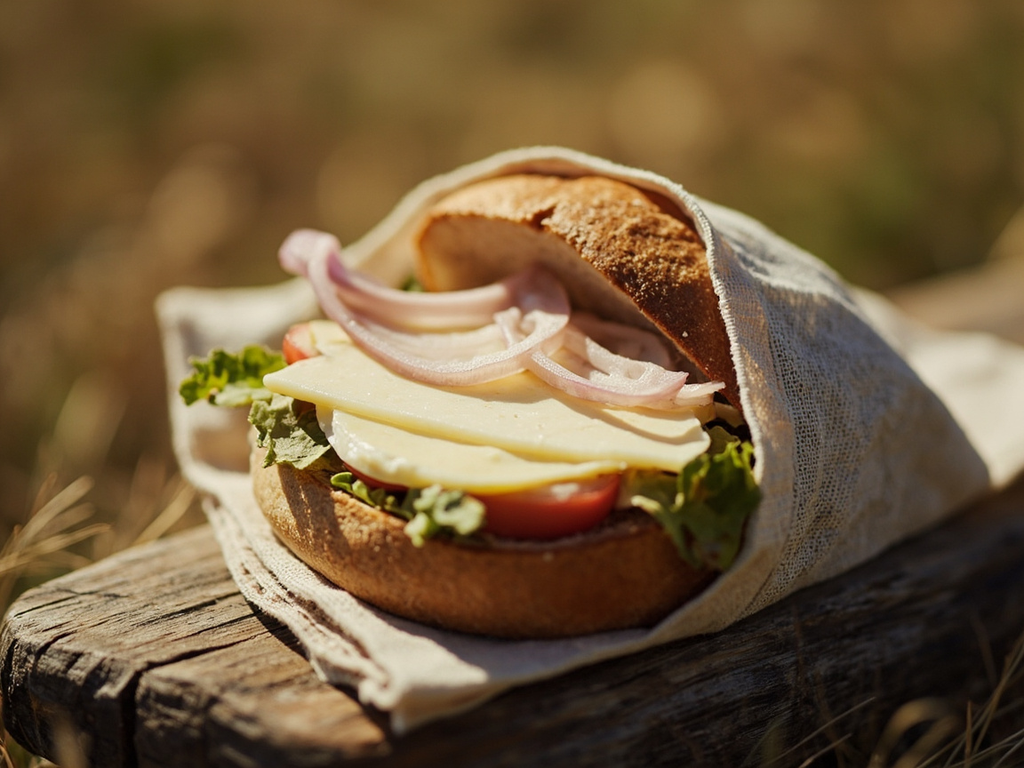
The contemporary twist : Sprinkled with seeds and served warm with fresh cheese, this austere galette reinvents itself as a rustic cracker—a nod to 'travel rations' turned hiking snack.
Sources : Flora Tristan, Pérégrinations d'une paria (1838)
Flora Tristan · Charactorium