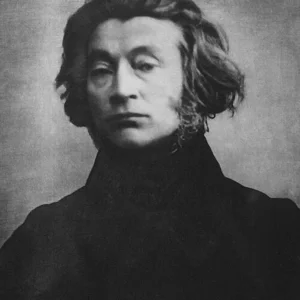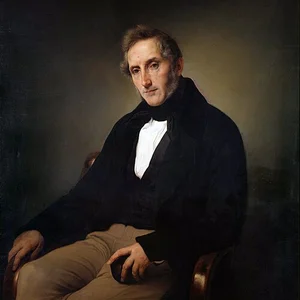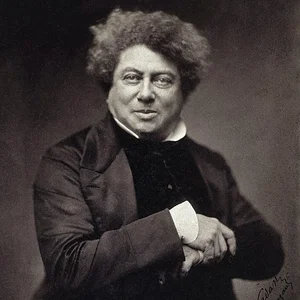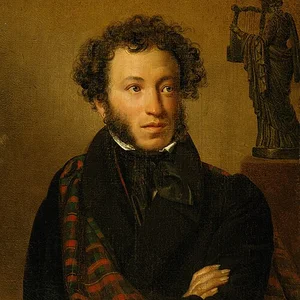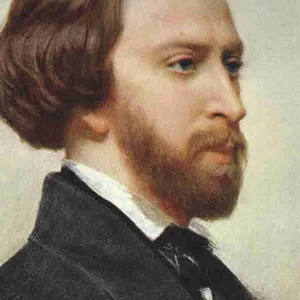

The Brothers Grimm were two German writers of the 19th century, famous for collecting and publishing traditional folk tales. Their collections, most notably "Kinder- und Hausmärchen" (Children's and Household Tales), include stories that have become timeless classics such as Snow White and Hansel and Gretel.
Brothers Grimm(1785 — 1863)
The Brothers Grimm
royaume de Prusse, Confédération germanique
6 min read
Frequently asked questions
Key Facts
- 1812: Publication of the first volume of "Kinder- und Hausmärchen" (Children's and Household Tales)
- 1815: Publication of the second volume, expanded with new tales
- Collected and transcribed more than 200 German folk tales
- Their tales gradually became the foundation of European children's literature
- Major influence on the scholarly study of folklore and oral traditions
Works & Achievements
Collection of more than 200 folk tales collected and published in seven successive editions. A founding work of European folklore, translated into more than 160 languages.
Compilation of Germanic legends in two volumes, a complement to the fairy tales, drawing from oral traditions and medieval chronicles.
Major work by Jacob Grimm that lays the foundations of Germanic philology and formulates Grimm's Law on consonant shifts.
A monumental historical dictionary of the German language, begun by the two brothers and completed only in 1961 by other scholars.
Jacob Grimm's study of the beliefs, deities, and superstitions of ancient Germanic peoples, a reference work in comparative mythology.
Jacob Grimm's work tracing the evolution of the German language from its origins, linking linguistics with the history of the Germanic peoples.
Anecdotes
The Brothers Grimm are not the authors of the tales attributed to them: they collected them by interviewing storytellers, most notably Dorothea Viehmann, a Hessian peasant woman who passed down dozens of stories to them. They would visit her with a notebook and meticulously record each tale.
Jacob and Wilhelm were so close that they shared the same desk and sometimes the same bed for years. Even after Wilhelm's marriage in 1825, Jacob continued to live under the same roof as the couple, and the three got along perfectly.
In 1837, the two brothers were among the 'Göttingen Seven', a group of seven professors who publicly protested against the King of Hanover, who had abolished the liberal constitution. They were dismissed from the university, and Jacob was even banished from the kingdom within three days.
The first edition of Children's and Household Tales (1812) was not intended for children at all: it contained violent passages and sexual references. It was Wilhelm who, through successive editions, softened the stories to make them accessible to a young audience.
The Brothers Grimm undertook a titanic project: the Deutsches Wörterbuch, a historical dictionary of the German language. Begun in 1838, it was not completed until 1961 — more than a century after their deaths — by successive generations of linguists.
Primary Sources
We have sought to capture these tales in their utmost purity. No detail has been added, embellished, or altered, for we would have feared to inflate stories already so rich by their own nature.
Language is the faithful mirror of a people; by studying its ancient forms, we rediscover the thought and soul of our ancestors.
We cannot, in good conscience, recognize the abolition of the fundamental law as legally valid. We still consider ourselves bound by the oath we swore to that constitution.
Wilhelm and I work side by side every day. What one begins, the other continues. We are so united in our research that it is sometimes difficult to distinguish what belongs to each of us.
Key Places
Birthplace of the two brothers, in Hesse. It is here that Jacob and Wilhelm spent their early childhood before moving to Steinau.
City where the brothers lived and worked for nearly thirty years as librarians. It is here that they collected the majority of their tales.
The brothers served as professors there from 1830 to 1837, before being dismissed for their political protest against the King of Hanover.
The last city of residence of the Brothers Grimm, invited by the King of Prussia Frederick William IV. They worked there on the Deutsches Wörterbuch until their deaths.
Small town in Hesse where the Grimms grew up. The family home is today a museum dedicated to their memory.
Typical Objects
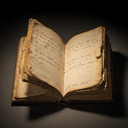
The brothers meticulously noted down oral tales in notebooks during their meetings with storytellers from Hesse.
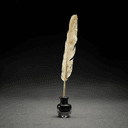
Daily writing instruments, essential to their work of drafting, correspondence, and philological research.
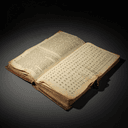
The index cards and loose sheets of the Deutsches Wörterbuch covered their desk, sorted by alphabetical entries in a monumental undertaking.
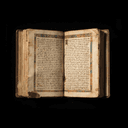
Jacob and Wilhelm regularly consulted texts in Old High German and Middle High German for their linguistic research.

The brothers often worked late into the evening by lamplight, rereading and correcting successive editions of their tales.
📷 CC BY-SA 3.0 · Wikimedia Commons ↗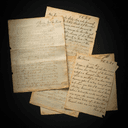
They maintained a vast epistolary network with linguists, folklorists, and writers from across Europe, such as Achim von Arnim and Clemens Brentano.
School Curriculum
Vocabulary & Tags
Key Vocabulary
Tags
Mouvement
Daily Life
Morning
The Brothers Grimm rose early, often as early as six o'clock. After a frugal breakfast of bread, butter, and coffee, they made their way to their shared study to begin their research or writing work. Jacob, the earlier riser, often began writing before Wilhelm joined him.
Afternoon
The afternoon was devoted to the library, where they worked as librarians in Kassel, or to teaching when they held professorships in Göttingen and later Berlin. They sometimes received visitors — storytellers or learned colleagues — and exchanged views on their ongoing research.
Evening
In the evenings, the brothers often continued their work by the light of an oil lamp, rereading manuscripts or correcting proofs. Wilhelm, whose health was more fragile, sometimes retired earlier. Family evenings, after Wilhelm's marriage, were punctuated by readings aloud.
Food
The Grimms' diet was that of the modest German bourgeoisie of the 19th century: rye bread, soups, potatoes, boiled or roasted meat, cold cuts, and cheeses. They drank coffee in the morning and sometimes beer in the evening. Their table remained simple and without luxury.
Clothing
The brothers wore the typical attire of German academics of their era: dark frock coat, waistcoat, white high-collared shirt, and tied cravat. Jacob was known for his austere yet neat appearance, while Wilhelm adopted a slightly more relaxed style.
Housing
In Kassel, the brothers shared a modest lodging not far from the library where they worked. In Berlin, they occupied a more comfortable apartment provided by the Academy of Sciences. Their interior was dominated by books, stacked from floor to ceiling in every available room.
Historical Timeline
Period Vocabulary
Visual Style
Un style visuel mêlant l'esthétique romantique allemande et l'univers des gravures de livres anciens, entre cabinet d'érudits et forêts enchantées de Hesse.
Sound Ambience
L'ambiance feutrée d'un cabinet d'étude allemand du début du XIXe siècle, entre le grattement des plumes, le froissement des pages et les bruits discrets d'une petite ville de Hesse.
Liens externes & ressources
Références
Œuvres
Kinder- und Hausmärchen (Contes de l'enfance et du foyer)
1812-1857
Deutsche Sagen (Légendes allemandes)
1816-1818
Deutsche Grammatik (Grammaire allemande)
1819-1837
Deutsches Wörterbuch (Dictionnaire allemand)
1838-1861
Deutsche Mythologie (Mythologie allemande)
1835
Geschichte der deutschen Sprache (Histoire de la langue allemande)
1848