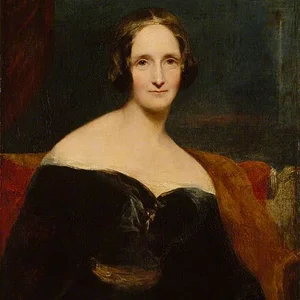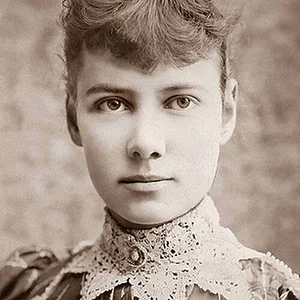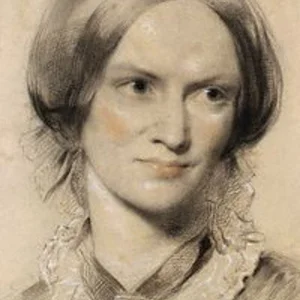

Charlotte Brontë was a 19th-century British novelist, author of Jane Eyre (1847), a masterpiece of Victorian literature. The daughter of a clergyman in Yorkshire, she published under a male pseudonym (Currer Bell) to gain acceptance in the literary world. Her work powerfully explores the feminine condition, independence, and passion.
Charlotte Brontë(1816 — 1855)
Charlotte Brontë
Royaume-Uni de Grande-Bretagne et d'Irlande
8 min read
Frequently asked questions
Famous Quotes
« I am no bird; and no net ensnares me: I am a free human being with an independent will.»
« Women are supposed to be very calm generally: but women feel just as men feel.»
Key Facts
- Born in 1816 in Thornton (Yorkshire), into an Anglican clergyman's family
- Publication of Jane Eyre in 1847 under the male pseudonym Currer Bell — an immediate success
- Shared her creative life with her sisters Emily (Wuthering Heights) and Anne (Agnes Grey)
- Revealed her female identity to her publisher in 1848, breaking the literary conventions of the time
- Died in 1855 at the age of 38, shortly after her marriage to Arthur Bell Nicholls
Works & Achievements
Charlotte Brontë's landmark novel published under the pseudonym Currer Bell. The story of an independent orphan who refuses to sacrifice her moral integrity, it revolutionised the Victorian novel through the power of its first-person voice.
A social and feminist novel set in Yorkshire during the Luddite revolts of 1812. Charlotte explores the plight of women without means and the injustices of the nascent industrial revolution.
A largely autobiographical novel inspired by her stay in Brussels. Considered by many critics to be her most accomplished work, it offers a psychological portrait of remarkable depth.
Charlotte's first novel, rejected by several publishers during her lifetime. Published after her death, it depicts the stay of an Englishman in Brussels and foreshadows the themes of Villette.
A joint collection by the three Brontë sisters, published at their own expense. Little noticed at the time, it marks the first public act of their literary commitment and bears witness to their poetic ambitions.
Anecdotes
Charlotte Brontë and her sisters Emily and Anne published a collection of poems in 1846 under male pseudonyms: Currer, Ellis, and Acton Bell. They feared that their sex would harm the reception of their works, as women authors were rarely taken seriously in the Victorian era.
When Charlotte sent the manuscript of Jane Eyre to publisher George Smith in 1847, he read it in one sitting over a single day, so captivated was he. The novel was published six weeks later and immediately became a resounding success.
Charlotte was the only one of the six Brontë children to survive beyond the age of 38. She endured the successive losses of her brother Branwell, then Emily, then Anne in less than a year (1848–1849) — a devastating ordeal she faced while continuing to write nonetheless.
During a trip to London in 1849, Charlotte revealed her identity to her publisher: the mysterious Currer Bell was in fact a quietly reserved small woman living in a Yorkshire parsonage. The revelation astonished London's literary circles, who had imagined her quite differently.
Charlotte died in March 1855, a few months pregnant, at only 38 years old. Her husband Arthur Bell Nicholls, whom she had married less than a year earlier, was devastated by the loss. Her father Patrick outlived her by six years, having buried all of his children.
Primary Sources
I am no bird; and no net ensnares me: I am a free human being with an independent will.
I wish you did not think me a woman. I wish all reviewers believed 'Currer Bell' to be a man; they would be more just to him.
My sister Emily first declined. The details of her illness are deep-branded in my memory, but to dwell on them, either in thought or narrative, is not in my power.
The world can understand well enough the process of perishing for want of food: perhaps few persons can enter into or follow out that of going mad from solitary confinement.
I had not, and could not have, that intense attachment which would make me willing to die for him; and, if ever I marry, it must be in that light of adoration that I will regard my husband.
Key Places
Family home of the Brontës, now a museum. It was in this austere house facing the cemetery that Charlotte wrote almost all of her work, surrounded by her sisters.
The wild, windswept landscape surrounding Haworth that directly inspired the settings of Jane Eyre and Wuthering Heights. Charlotte and her sisters walked there daily.
Charlotte stayed here in 1842–1843 to study French and German. She fell in love with her teacher Constantin Héger, an unrequited love that inspired the novels Villette and The Professor.
The publishing house that published Jane Eyre, Shirley, and Villette. Charlotte met her editor George Smith there during her rare trips to London, discovering to her astonishment the literary circles of the capital.
Typical Objects

Charlotte wrote with a goose quill in small notebooks, often at night by candlelight. Her handwriting was so fine that she had to wear glasses from adolescence.

From childhood, Charlotte filled tiny hand-sewn notebooks with fantastical stories about the imaginary kingdom of Angria, which she co-invented with her brother Branwell.

The Brontë sisters received careful musical instruction; the piano was a central feature of the parsonage and of the bourgeois female sociability of the Victorian era.

Like all Victorian women, Charlotte observed strict mourning after the deaths of her loved ones, dressed in black for long periods — an attire that reflected the rigid social codes of her time.

As the son of an Anglican clergyman, the Brontë family lived by the rhythm of Protestant faith. The Bible was the central book of the household and a constant source of literary inspiration for Charlotte.

Charlotte collected botanical specimens during her walks across the Haworth moors. These wild and melancholic landscapes deeply permeate the atmosphere of her novels.
School Curriculum
Vocabulary & Tags
Key Vocabulary
Tags
Daily Life
Morning
Charlotte rose early, often before her sisters, and came downstairs to the ground floor of the parsonage to light the fire. She devoted her mornings to correspondence and reading, but also to household tasks that the family could only partly delegate to a servant.
Afternoon
The afternoon was time for writing, often by the parlour fireside with her sisters, each working in silence on her own manuscript. Walks across the moors were a daily ritual in all weathers, the three sisters discussing their respective plots as they walked.
Evening
In the evenings, the sisters gathered to read aloud what they had written during the day and offer one another criticism. This informal literary workshop ritual was one of the sources of their shared creative stimulation, until the successive deaths of the two younger sisters.
Food
The Brontë table was simple and frugal: oat porridge in the morning, boiled or roasted meat at midday with vegetables from the garden, bread and cheese in the evening. Tea was a sacred constant of the day, in keeping with English tradition.
Clothing
Charlotte wore dark woollen dresses with white collars, cinched at the waist by a corset in the Victorian fashion. Her preferred shades were greys, blacks, and browns — colours of Protestant austerity and the mourning she so often had cause to wear.
Housing
The Haworth parsonage was a two-storey stone house, functional and scarcely comfortable, perpetually cold despite its fireplaces. It stood against the wall of the parish churchyard, whose emanations were considered by some to be an aggravating factor in the pulmonary diseases that devastated the family.
Historical Timeline
Period Vocabulary
Visual Style
Esthétique gothique victorienne austère : landes brumeuses du Yorkshire aux tons violets et bruns, intérieurs de pierre éclairés à la bougie, palette sombre rehaussée de reflets ambrés et d'une touche de cramoisi.
Sound Ambience
L'univers sonore de Charlotte Brontë mêle le silence austère du presbytère de Haworth aux vents puissants des landes du Yorkshire, ponctués du grattement de la plume sur le papier et du crépitement du feu de charbon.
Liens externes & ressources
Références
Œuvres
Villette
1853
Le Professeur (The Professor)
1857 (posthume)
Poems by Currer, Ellis and Acton Bell
1846