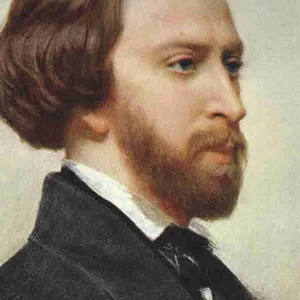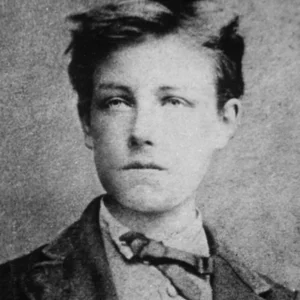
Portrait de Arthur Rimbaud

Arthur Rimbaud

Arthur Rimbaud

1854 — 1891

France

LiteraturePoète(sse)Explorateur/trice19th Century19th century (1854–1891), modern and contemporary period

French poet of the 19th century (1854–1891), Rimbaud is a major figure of modern and visionary poetry. He revolutionized poetry through formal innovation and exploration of the unconscious, before abandoning literature at the age of 20 to live as an adventurer in Africa.

Émotions disponibles (6)

N

Neutre

par défaut

I

Inspiré

P

Pensif

S

Surpris

T

Triste

F

Fier

Famous Quotes

« I is another »
« The Poet makes himself a seer by a long, prodigious, and rational disordering of all the senses »
« Love must be reinvented »

Key Facts

  • 1870: Composition of the Cahier de Douai, a collection containing his first major poems
  • 1871: Meeting with Paul Verlaine in Paris and participation in the Parisian literary scene
  • 1873: Publication of A Season in Hell, a poetic autobiography
  • 1874–1875: Composition of Illuminations, visionary prose poems
  • 1891: Death in Marseille after a decade of commercial ventures and exploration in Africa

Works & Achievements

Le Bateau ivre (1871)

A hundred-line poem written at age 16, describing a hallucinatory sea voyage. A masterpiece of virtuosity that impressed Verlaine and the Parisian poets.

Une saison en enfer (1873)

The only work published by Rimbaud during his lifetime, this autobiographical prose collection is a tormented exploration of the human condition and poetic failure.

Illuminations (1874 (published in 1886))

A collection of prose poems and free verse of radical modernity. Published by Verlaine without Rimbaud's consent, it influenced all of 20th-century poetry.

Voyelles (1871)

A celebrated sonnet that associates a color and set of images with each vowel. This poem embodies Rimbaud's synaesthetic and visionary approach.

Le Dormeur du val (1870)

A sonnet written at age 16 during the Franco-Prussian War, depicting a young soldier asleep in nature, whose final lines reveal he is dead. One of the most studied poems in secondary school.

Ma Bohème (1870)

An autobiographical sonnet evoking the teenager's wanderings along the roads. A joyful, free-spirited poem celebrating vagrancy and poetic inspiration.

Lettre du voyant (15 May 1871)

A manifesto letter addressed to Paul Demeny in which Rimbaud sets out his theory of the poet as seer. This text is considered one of the great manifestos of modern poetry.

Anecdotes

At 15, Rimbaud ran away from Charleville to reach Paris by train, but was arrested at the Gare du Nord for not having paid his ticket. He was sent to the Mazas prison before his teacher Georges Izambard came to collect him. This escape was the first of a long series.

During a dinner organized by the Parnassian poets in Paris in 1871, the young Rimbaud, invited by Verlaine, shocked the gathering with his provocative behavior. He punctuated each verse read aloud by the guests with a resounding 'Shit!', scandalizing the established poets.

Rimbaud composed 'The Drunken Boat', a hundred-line poem describing a hallucinated sea voyage, at a time when he had never yet seen the ocean. He was 16 years old and living in Charleville, in the Ardennes, far from any sea. This poem was his calling card to introduce himself to the Parisian poets.

After abandoning poetry around the age of 20, Rimbaud led the life of an adventurer and became a trader in coffee and hides in Harar, Ethiopia. He was completely unaware that his early works were becoming famous in France. Verlaine had published his poems believing him to be dead.

In February 1891, Rimbaud developed a tumor in his right knee in Harar. He had to be carried on a stretcher by porters for twelve days to the port of Zeila, in atrocious suffering. He had his leg amputated in Marseille and died a few months later at the age of 37.

Primary Sources

Letter of the Seer to Paul Demeny (15 mai 1871)
I say one must be a seer, make oneself a seer. The Poet makes himself a seer through a long, immense and reasoned derangement of all the senses. All forms of love, of suffering, of madness.
A Season in Hell — Farewell (1873)
I! I who called myself a magus or an angel, exempt from all morality, I am returned to the earth, with a duty to seek, and rough reality to embrace!
Letter to his family from Harar (15 janvier 1885)
I am very bored, always; I have never even known anyone who was as bored as I am. And then, is it not wretched, this existence without family, without intellectual occupation?
The Drunken Boat (excerpt) (1871)
As I was floating down impassive Rivers, / I no longer felt myself guided by haulers: / Screaming Redskins had taken them as targets, / Having nailed them naked to colored posts.

Key Places

Charleville-Mézières

Rimbaud's birthplace in the Ardennes, which he scornfully called "Charlestown". He grew up there, wrote his first poems, and ran away from it several times.

Paris, Latin Quarter

Rimbaud frequented literary circles there from 1871 onwards. He met Verlaine and the Parnassian poets, living in complete bohemian fashion.

Brussels

It was in a Brussels hotel, in July 1873, that Verlaine fired two revolver shots at Rimbaud, wounding him in the wrist. This episode brought their tumultuous relationship to an end.

Harar, Ethiopia

Rimbaud settled there as a trader from 1880 onwards. He spent about ten years there, trading coffee and hides, far removed from any literary activity.

Hôpital de la Conception, Marseille

Rimbaud had his right leg amputated there in May 1891 and died on 10 November 1891, aged 37, attended by his sister Isabelle.

Roche, Ardennes

The family farm where Rimbaud wrote A Season in Hell during the summer of 1873. It was in this isolated farmhouse that he composed his most autobiographical work.

Typical Objects

School notebook

Rimbaud wrote his poems in school notebooks, filling them with dense, tight handwriting. Several of his manuscripts have come down to us in this humble form.

Soles of wind

Verlaine nicknamed Rimbaud "the man with soles of wind" because of his incessant running away and his love of walking. Rimbaud would cover dozens of kilometres on foot.

Travel trunk

During his African years, Rimbaud transported his goods and belongings in trunks. His correspondence meticulously details the items he ordered from Ethiopia.

Merchant's scale

In Harar, Rimbaud weighed the coffee and hides he bought and resold. He kept rigorous accounts of his commercial transactions.

Camera

Rimbaud had a camera sent to him in Harar and took self-portraits and documentary photographs. These are the only known photographs of him as an adult.

Clay pipe

A common object in the Parisian cafés and literary circles Rimbaud frequented as a teenager. The pipe was a typical accessory of the bohemian poets of the era.

School Curriculum

Cycle 4 (5e-3e)FrançaisLa poésie du Baccalauréat français : analyse de textes rimbaldiens
LycéeFrançaisLa poésie du Baccalauréat français : analyse de textes rimbaldiens
LycéeFrançaisPoésie visionnaire et modernité (Cycle 4, Lycée)
LycéeFrançaisInnovations formelles du XIXe siècle : vers libre et prose poétique
LycéeFrançaisSymbolisme et exploration de l'inconscient
LycéeFrançaisRelation entre vie et œuvre : engagement poétique et déchirement existentiel
LycéeFrançaisL'alchimie du verbe et la correspondance entre les sens

Vocabulary & Tags

Key Vocabulary

free verseprose poetrysymbolismpoetic visionalchemy of the worddisordering of the sensesillumination (in the poetic sense)literary modernity

Tags

Arthur RimbaudExplorateurvers libreprose poétiquevoyance poétiquealchimie du verbedérèglement des sensillumination (au sens poétique)modernité littéraireXIXe siècle (1854-1891), période moderne et contemporaine

Daily Life

Morning

In Charleville, the young Rimbaud rose early to go to school, where he was a brilliant student who swept up all the prizes. During his Parisian escapades, he often slept at the homes of poet friends or on benches, wandering the streets at dawn. In Harar, he would rise at first light to oversee his commercial affairs and write his correspondence.

Afternoon

As a teenager, Rimbaud spent his afternoons at the Charleville public library, devouring the works of the Parnassians and Baudelaire. In Paris, he frequented the literary cafés of the Latin Quarter with Verlaine. In Harar, he devoted his days to trade — weighing coffee, negotiating prices, and organizing merchant caravans.

Evening

During his Parisian youth, Rimbaud frequented smoky cafés and literary dinners where he read his poems and provoked fellow guests. He often wrote at night, in a state of creative exaltation. In Ethiopia, evenings were quiet: he kept his accounts, wrote long letters to his family, and went to bed early, complaining of boredom.

Food

In Charleville, his diet was that of a modest Ardennes family: soup, bread, garden vegetables, and occasional meat. During his bohemian life in Paris, Rimbaud ate little and irregularly, living in great poverty. In Harar, he adopted a local diet based on injera flatbread, Ethiopian coffee, and dried meat.

Clothing

As a teenager, Rimbaud wore clothes that were too short because he grew quickly and his austere mother was not quick to replenish his wardrobe. In Paris, he adopted a disheveled bohemian style — long hair and rumpled clothes. In Africa, he dressed in light white cotton garments suited to the climate, with a wide belt to carry his money.

Housing

The family home in Charleville, run by his authoritarian mother, was an austere and rigid interior. In Paris, Rimbaud had no fixed address: he slept at Verlaine's, at friends' homes, or in miserable lodging houses. In Harar, he occupied a stone house in the old fortified city, which he described as modest but functional for his trade.

Historical Timeline

1854Naissance d'Arthur Rimbaud à Charleville, dans les Ardennes.
1857Publication des Fleurs du mal de Baudelaire, qui influencera profondément Rimbaud.
1860Le père de Rimbaud, capitaine d'infanterie, quitte définitivement le foyer familial.
1870Début de la guerre franco-prussienne ; Charleville est occupée par les Prussiens.
1871La Commune de Paris : insurrection populaire qui marque profondément le jeune Rimbaud.
1871Rimbaud écrit la Lettre du voyant et rencontre Verlaine à Paris.
1872Rimbaud et Verlaine voyagent ensemble en Belgique et à Londres.
1873Verlaine tire sur Rimbaud à Bruxelles ; publication d'Une saison en enfer.
1874Rimbaud achève les Illuminations, son dernier recueil poétique majeur.
1875Dernière rencontre entre Rimbaud et Verlaine, à Stuttgart. Rimbaud abandonne la littérature.
1880Rimbaud s'installe à Harar, en Éthiopie, comme négociant.
1886Verlaine publie les Illuminations à Paris, sans l'accord de Rimbaud.
1891Mort de Rimbaud à Marseille, à l'âge de 37 ans, d'un cancer généralisé.

Period Vocabulary

ParnassePoetic movement of the second half of the 19th century advocating art for art's sake and formal perfection. Rimbaud drew inspiration from it before radically surpassing it.
VoyantIn Rimbaud's theory, the poet who attains a superior vision of reality through the 'derangement of all the senses.' A central concept of his poetics.
BohèmeThe free and marginal lifestyle of artists and poets of the 19th century, on the fringes of bourgeois society. Rimbaud embodies it perfectly through his escapes and rejection of conventions.
AbsintheA plant-based alcoholic drink, very popular in the literary cafés of the 19th century. Nicknamed 'the green fairy,' it was consumed by Rimbaud and the poets of his era.
Free verseA poetic form that breaks free from the classical rules of meter and rhyme. Rimbaud's Illuminations is among the first major works to explore this formal freedom.
MerchantA trader who buys and resells goods in bulk. This is the profession Rimbaud practiced in Africa, trading coffee, hides, and various commodities.
Furnished roomA furnished room or lodging rented by the day or week, often modest. Rimbaud stayed in squalid furnished rooms during his time in Paris.
SonnetA fourteen-line poem organized into two quatrains and two tercets. A classical form that Rimbaud mastered perfectly before transgressing it, as in Vowels.
CommuneThe insurrectional government that ruled Paris from March 18 to May 28, 1871. This revolutionary episode fired the young Rimbaud's enthusiasm, who saw it as a liberating uprising.
Trading postA European commercial outpost established in Africa or Asia for trading local goods. Rimbaud frequented these establishments in the Horn of Africa.

Gallery

Rimbaud by Reginald Gray

Rimbaud by Reginald Gray

Henri Fantin-Latour (1836-1904) Hoek van de tafel (1872) Musée d'Orsay 22-8-2017 17-21-00

Henri Fantin-Latour (1836-1904) Hoek van de tafel (1872) Musée d'Orsay 22-8-2017 17-21-00

Henri-Fantin-Latour-By-the-Table

Henri-Fantin-Latour-By-the-Table

Léon Weissberg portrait de Rimbaud

Léon Weissberg portrait de Rimbaud

Portrait d'Arthur Rimbaud 1923 Armand Coussens

Portrait d'Arthur Rimbaud 1923 Armand Coussens

Roche-FR-08-homme de fer aux semelles de vent-13

Roche-FR-08-homme de fer aux semelles de vent-13

Méry-FR-08-épouvantail rimbaldoïdal-03

Méry-FR-08-épouvantail rimbaldoïdal-03

Méry-FR-08-épouvantail rimbaldoïdal-02

Méry-FR-08-épouvantail rimbaldoïdal-02

Roche-FR-08-silhouette à Arthur-01

Roche-FR-08-silhouette à Arthur-01

Immeuble de Heug - 2019-04-27 - 01

Immeuble de Heug - 2019-04-27 - 01

Visual Style

Un style visuel intense et rebelle, oscillant entre les brumes vertes des Ardennes et les ocres brûlés de l'Éthiopie, avec des textures d'encre et une qualité brute évoquant la modernité radicale de Rimbaud.

#2C3E3A
#8B6914
#C4622D
#4A5568
#D4A574
AI Prompt
A bold, rebellious visual style inspired by French Symbolist art and late 19th-century bohemian culture. Moody atmospheric lighting with dramatic contrasts between shadow and golden lamplight. The palette shifts between the grey-green misty landscapes of the Ardennes — foggy rivers, rain-soaked cobblestones, dark forests — and the ochre-burnt sienna tones of Ethiopian highlands and Harar's walled city. Ink splatter textures and handwritten manuscript elements. Portraits with an intense, defiant gaze reminiscent of Étienne Carjat's famous 1871 photograph. Art Nouveau and early Impressionist influences, with a raw, unfinished quality reflecting Rimbaud's radical modernity.

Sound Ambience

L'univers sonore de Rimbaud oscille entre la tranquillité provinciale de Charleville — cloches, rivière, plume grattant le papier — et l'effervescence exotique de Harar avec ses marchés, ses appels à la prière et ses vents secs d'Afrique.

AI Prompt
A layered soundscape blending two worlds: first, the cobblestone streets of a small French provincial town in the 1870s — distant church bells from a Gothic cathedral, horse hooves on stone, the murmur of a river (the Meuse), creaking wooden shutters, the scratch of a pen nib on paper in a quiet room. Then shifting to the sounds of East Africa in the 1880s — the call to prayer echoing over Harar's ancient walls, braying donkeys, the chatter of a bustling market with merchants weighing coffee beans, the clink of metal scales, dry wind over arid plains, and distant drums from the Ethiopian highlands.

Portrait Source

Wikimedia Commons — domaine public — Étienne Carjat — 1872