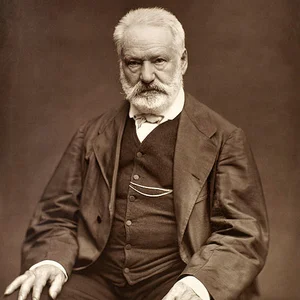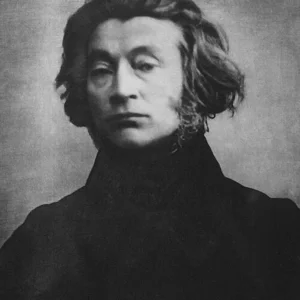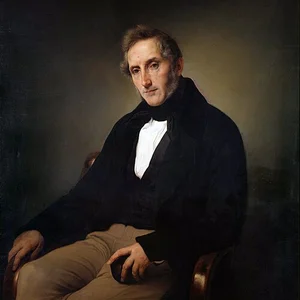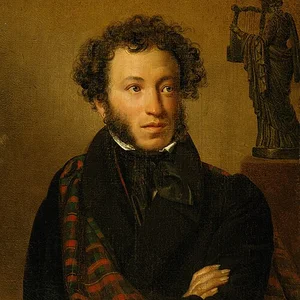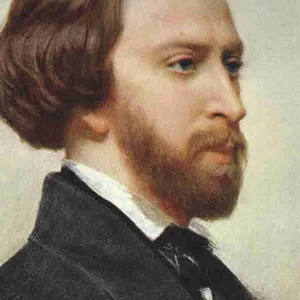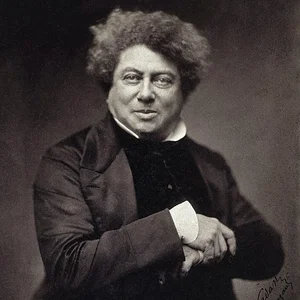

French writer and playwright (1802–1870), author of adventure novels and popular serialized fiction. Father of Alexandre Dumas fils, he is considered a master of the historical and adventure novel in the 19th century.
Alexandre Dumas(1802 — 1870)
Alexandre Dumas
France
8 min read
Frequently asked questions
Famous Quotes
« All for one, and one for all.»
« Happiness is a floating island that always disappears just when we think we are about to reach it.»
Key Facts
- 1844: serialized publication of 'The Three Musketeers', which became a popular success
- 1844–1846: writing of 'The Count of Monte Cristo', one of his masterpieces of adventure fiction
- 1830s–1840s: period of great literary productivity, with dozens of plays and novels
- 1870: died on December 5 in Puys, Normandy
- Pioneer of the serialized novel, which left a lasting mark on 19th-century French literature
Works & Achievements
A serialized adventure and revenge novel, one of the major works of French literature. The story of Edmond Dantès, unjustly imprisoned, who escapes and takes revenge on his enemies, remains an essential classic studied in middle and high school.
A historical adventure novel featuring d'Artagnan and his companions during the reign of Louis XIII. This founding work of the swashbuckling novel is a staple of youth literature and is part of the school curriculum.
A historical novel set in the 16th century during the St. Bartholomew's Day Massacre. Dumas interweaves fiction and real history, creating a dramatic fresco of the intrigues of the French royal court.
A sequel to The Three Musketeers and Twenty Years After, this serialized novel continues the adventures of the musketeers as they age, blending fiction with the historical context of the Fronde.
A sentimental novel inspired by a true story, made famous in particular by its theatrical adaptation. The work explores themes of passionate love and social sacrifice in Parisian high society.
A direct sequel to The Three Musketeers, this novel follows the heroes' adventures two decades later, during the Fronde. It deepens the characters and unfolds a complex political intrigue.
A historical drama that marked the beginning of Dumas's literary success, regarded as the first major play of French Romanticism. The play revolutionized theatre by rejecting classical rules.
A historical novel set during the French Revolution and the fall of the monarchy. Dumas weaves the fictional destinies of characters together with the real events of this major period.
Anecdotes
Alexandre Dumas was born in Villers-Cotterêts in 1802, the son of a general of the French Revolution. His father, Count Alexandre Davy de la Pailleterie, was a colorful figure who had a relationship with a Black woman in Saint-Domingue, which fascinated young Alexandre. This mixed heritage, unusual in France at the time, deeply marked his life and shaped his values of equality.
Dumas wrote 'The Three Musketeers' initially as a serial in a newspaper in 1844. This novel, recounting the adventures of d'Artagnan and his companions, became so popular that readers flocked daily to find out what happened next, which allowed Dumas to become a true celebrity and to expand it into a complete novel.
Alexandre Dumas took part in the Revolution of 1830 by barricading the doors of the Théâtre-Français where he worked. Passionate about political events, he actively engaged during this period of upheaval in France, demonstrating that writers of his era were not isolated from major historical events.
Dumas traveled extensively and visited many countries to enrich his knowledge and fuel his imagination. He journeyed notably to Switzerland, Italy, and North Africa — trips he described in fascinating accounts and from which he drew heavily for his adventure novels.
In 1846, Dumas built an extravagant château called the Château de Monte-Cristo with the proceeds of his extraordinary literary success. This château became a symbol of his material success but also of his excessive spending, as despite his immense income, Dumas lived constantly in debt due to his lavish lifestyle.
Primary Sources
Fortunately for him, he slept the sleep of the innocent. The next morning, at nine o'clock, he awoke, fresh and alert. The jailer brought his breakfast.
About eighteen years ago, there was a feast day, that is to say a Sunday, when all the lords great and small of Gascony were gathered at the castle of Montsalvat.
The novel must present history with its colors, its true passions, its real interests and its living characters, not as the historian dryly sets it out with dates and facts.
It was during the Terror that this bloody drama unfolded, where love and duty clashed with the political passions of that terrible era.
I seek to paint the era rather than history, to breathe life into those characters whom the chroniclers have done no more than name.
Key Places
Alexandre Dumas's birthplace (1802). It is in this small town in the Aisne department that the writer was born, son of General Thomas-Alexandre Dumas.
Venue for his successful stage plays such as "Henri III et sa cour" (1829). This Parisian theatre established Dumas as a major playwright.
An extravagant residence built by Dumas with his literary fortune. This house reflects the author's financial success and remains emblematic of his prosperous years.
The setting for many of his adventure novels and the heart of his active Parisian life. Dumas frequented Parisian literary salons and took part in the cultural life of the capital.
Travel destinations that inspired his historical novels, notably Venetian and Roman adventures. These countries serve as a recurring backdrop for his serialised fiction.
The Parisian cemetery where Alexandre Dumas was laid to rest after his death in 1870. His grave remains an important site of remembrance for 19th-century French literature.
Typical Objects

The primary writing instrument of the 19th century, used by Dumas to compose his many novels and plays. A symbol of his prolific and productive writing activity.
An indispensable accessory on any 19th-century writer's desk, holding the black ink used to compose Dumas's manuscripts and those of his literary contemporaries.
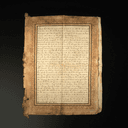
Dumas was an extremely prolific writer, producing voluminous manuscripts for his serialized novels. These handwritten pages formed the basis for publication as installments in newspapers.
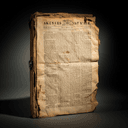
A popular 19th-century periodical publication in which novels appeared in episodes. Dumas's works, such as The Count of Monte Cristo, were published in this form before being compiled into volumes.

Dumas was also a gifted playwright. The period costumes used in plays inspired by his works reflect his interest in the historical novel and adventure.

Dumas's historical novels featured court intrigues and royal adventures. Luxury editions of his works were prestigious objects of the century, often richly bound.

An iconic symbol of the adventures narrated by Dumas, particularly associated with his masterpiece The Three Musketeers. The sword represents the action, honor, and panache of Dumas's heroes.

An elegant 19th-century accessory, a symbol of Dumas's social standing and literary success. It also represents the time consumed by the intensive writing and composition of his many works.
📷 CC BY-SA 3.0 · Wikimedia Commons ↗School Curriculum
Vocabulary & Tags
Key Vocabulary
Tags
Concept
Mouvement
Daily Life
Morning
Alexandre Dumas generally rose late, after a night devoted to writing or Parisian entertainment. He had a light breakfast of coffee and bread, often while re-reading his manuscripts or receiving visitors. By late morning, he would immerse himself in his work as a prolific writer, sometimes dictating his texts to secretaries.
Afternoon
The afternoon was devoted to varied activities: meetings with his publishers, collaborators, or literary friends in fashionable Parisian cafés. Dumas frequented literary salons and theaters, constantly seeking inspiration for his serialized novels. He might also attend rehearsals of his plays or oversee adaptations of his novels.
Evening
Dumas's evenings were marked by an intense social life: society dinners, theatrical performances, or high-society receptions in Parisian aristocratic and bourgeois circles. He was known for his charisma and eloquence, drawing writers, actors, and figures from the arts world around him. Late at night, he would often return to his desk to continue his writing.
Food
As a man of the enriched Parisian bourgeoisie, Dumas enjoyed refined cuisine: roasted meats, fish, fresh fruits and vegetables, cheeses, a variety of breads, and fine wines. He particularly appreciated hearty meals and gourmet dishes at society dinners. Coffee and pure water were his main daily beverages.
Clothing
Dumas dressed with the characteristic elegance of the 19th-century male bourgeoisie: black or dark grey suit, waistcoat, cravat or bow tie, and top hat in society. He was known for his polished appearance and proud bearing, befitting his standing as a prosperous and respected writer. His attire reflected his high social status and his membership in prestigious Parisian literary circles.
Housing
Dumas resided in apartments or private mansions in bourgeois Paris, notably in the Marais district and its surroundings. His interiors were furnished with elegant furniture, books, manuscripts, and mementos from his many travels. He also owned the famous Château de Monte-Cristo, built at Marly-le-Roy, a symbol of his literary success and considerable fortune.
Historical Timeline
Period Vocabulary
Visual Style
Un style romantique et théâtral du XIXe siècle, mêlant technique d'illustration classique avec l'éclairage dramatique des peintures romantiques. L'ambiance évoque les aventures épiques, les duels héroïques et les intrigues historiques propres à l'univers de Dumas, avec une palette dorée et somptueuse.
Sound Ambience
Une ambiance immersive du Paris littéraire du XIXe siècle, mêlant les sons intimes du travail d'écriture aux bruits urbains époque de la capitale, créant une atmosphère romantique et dramatique propre à l'univers créatif d'Alexandre Dumas.
Liens externes & ressources
Références
Œuvres
Le Comte de Monte-Cristo
1844-1846
Les Trois Mousquetaires
1844
La Reine Margot
1845
Le Vicomte de Bragelonne: Les Dernières Aventures des Mousquetaires
1847-1850
La Dame aux Camélias
1848
Vingt Ans après
1845
Henry III et sa cour
1829