 Flip the card
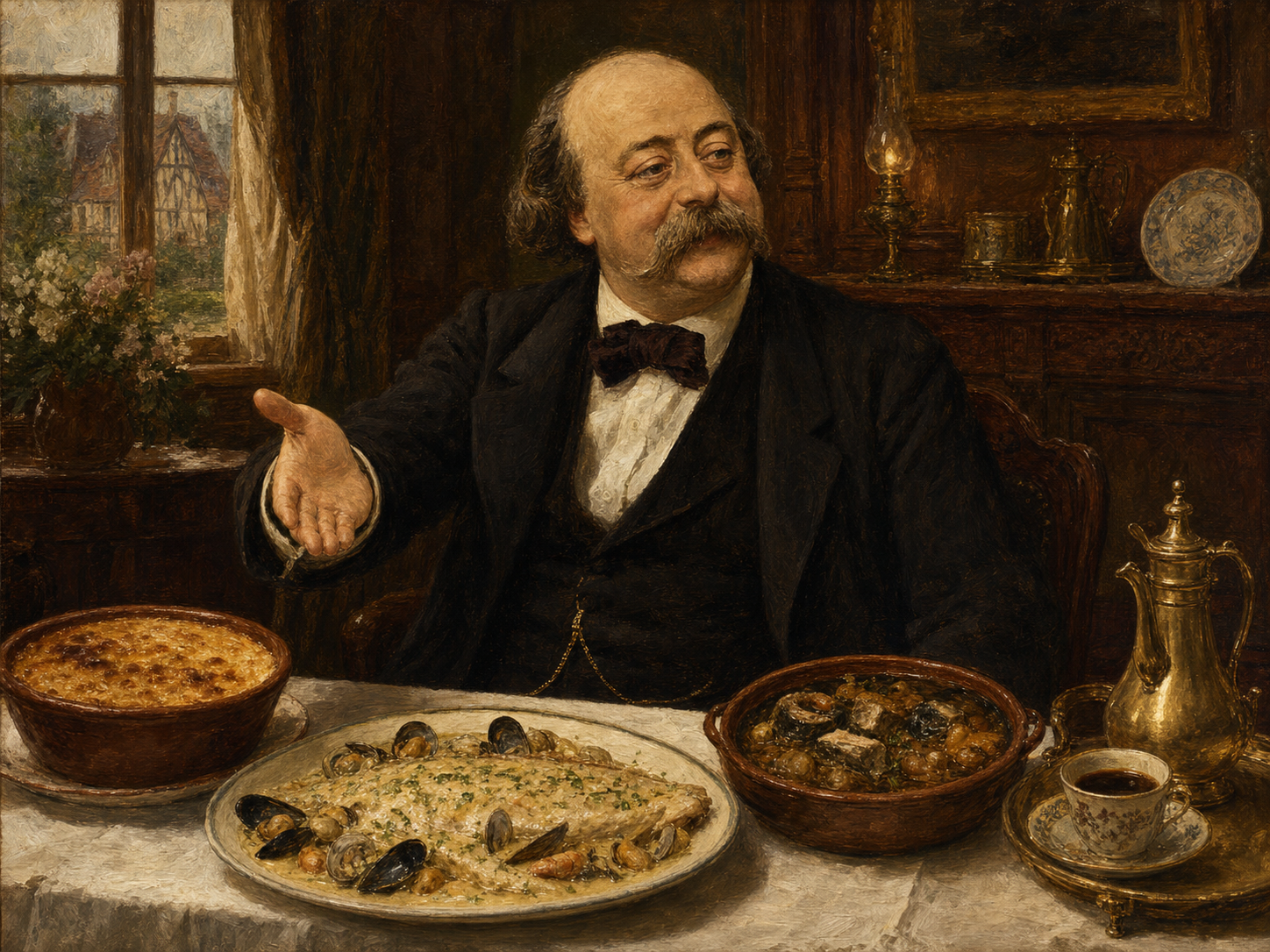
Gustave Flaubert at the table
1821 — 1880
On the menu
The French-style service of a bourgeois Norman dinner
In the 19th century, the table of the provincial bourgeoisie and Parisian restaurants was not limited to the trio of starter-main course-dessert: it unfolded in several "services" brought together — the soup, the relevés (large fish or meat dishes), the fricots and everyday household dishes, then the sweet entremets. At Croisset, Flaubert kept a generous, rich Norman table; in Paris, at Magny or Brébant, he moved into the realm of the carefully prepared relevé of literary dinners. Added to this were drinks brought back from the Orient and preserved sweets that were cooked in large quantities to last several days.
Signature : The Norman trinity: cream, butter and apple
Flaubert's cuisine breathes the Normandy of the Hôtel-Dieu in Rouen and Croisset: thick cream, farm butter and apple (as fruit, cider, or eau-de-vie) bind almost all the dishes. It is the opulent fat of the Pays de Caux, that of a man who, as he wrote, loved to "wallow" in sensations as much as in sentences.
click to flip back
Gustave Flaubert at the table
1821 — 1880
4 period recipes
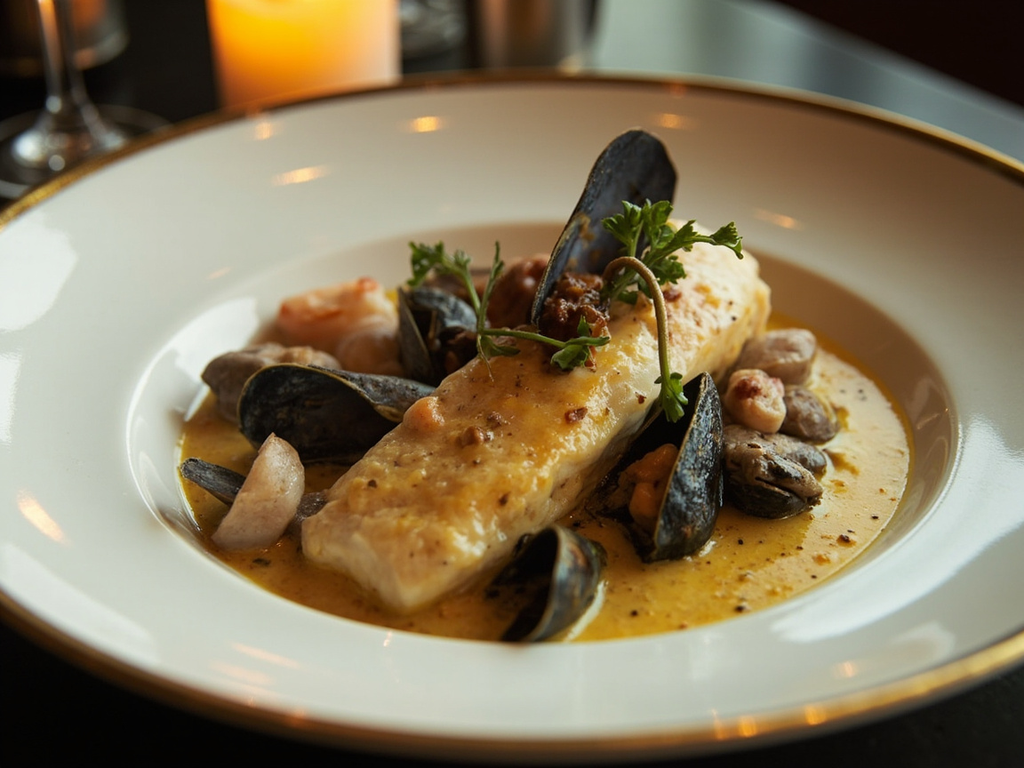 Festive
Sole à la normande for literary dinners
Fish relevé
🧂 🍄· 1 h 15
View the recipe
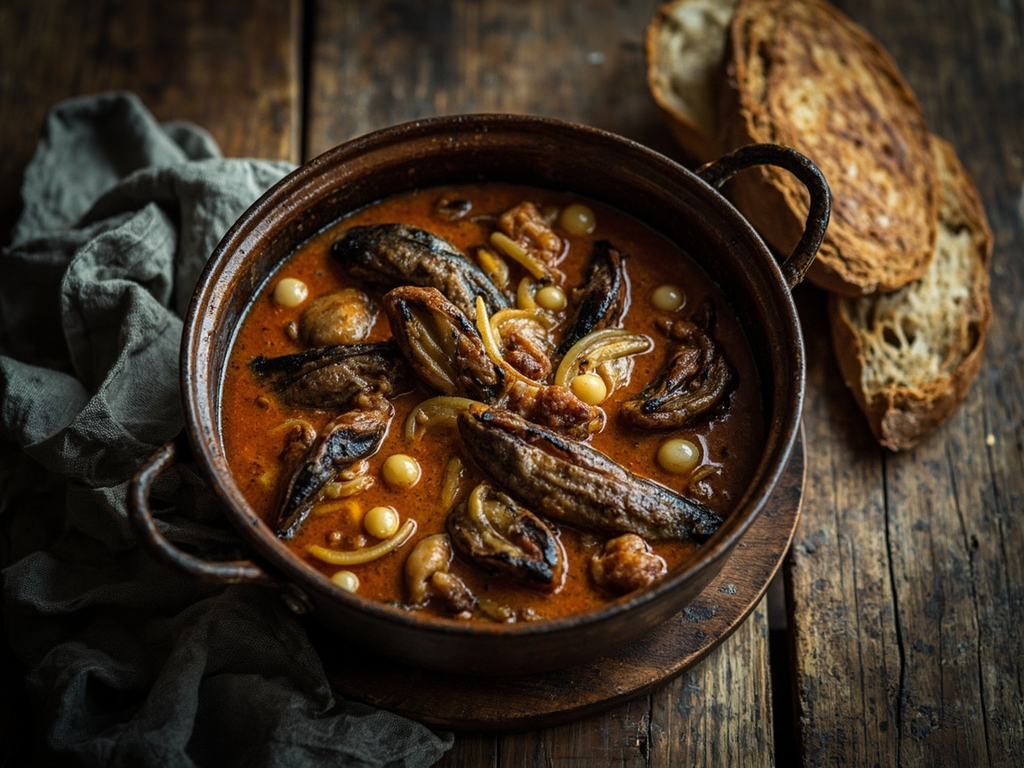 Everyday
Seine eel matelote
Household dish (everyday fricot)
🧂 🍋 🍄· 50 min
View the recipe
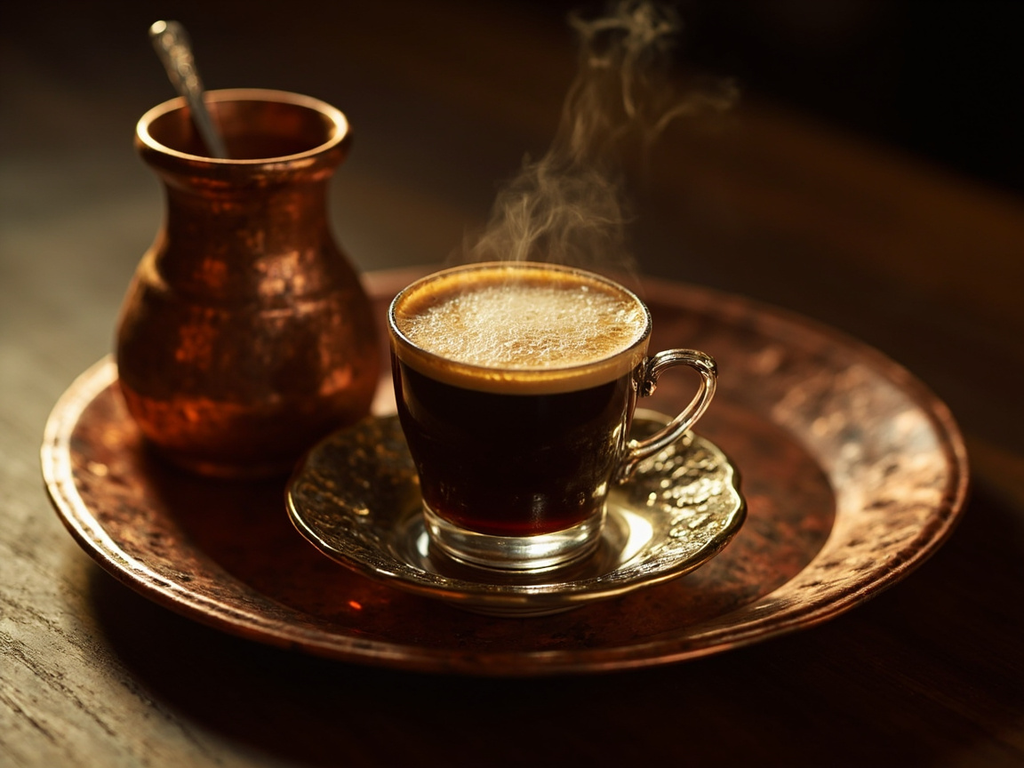 Drink
DrinkCoffee à la mode d'Orient, brought back from Egypt
Travel drink
☕· 10 min
View the recipe
 Preserving
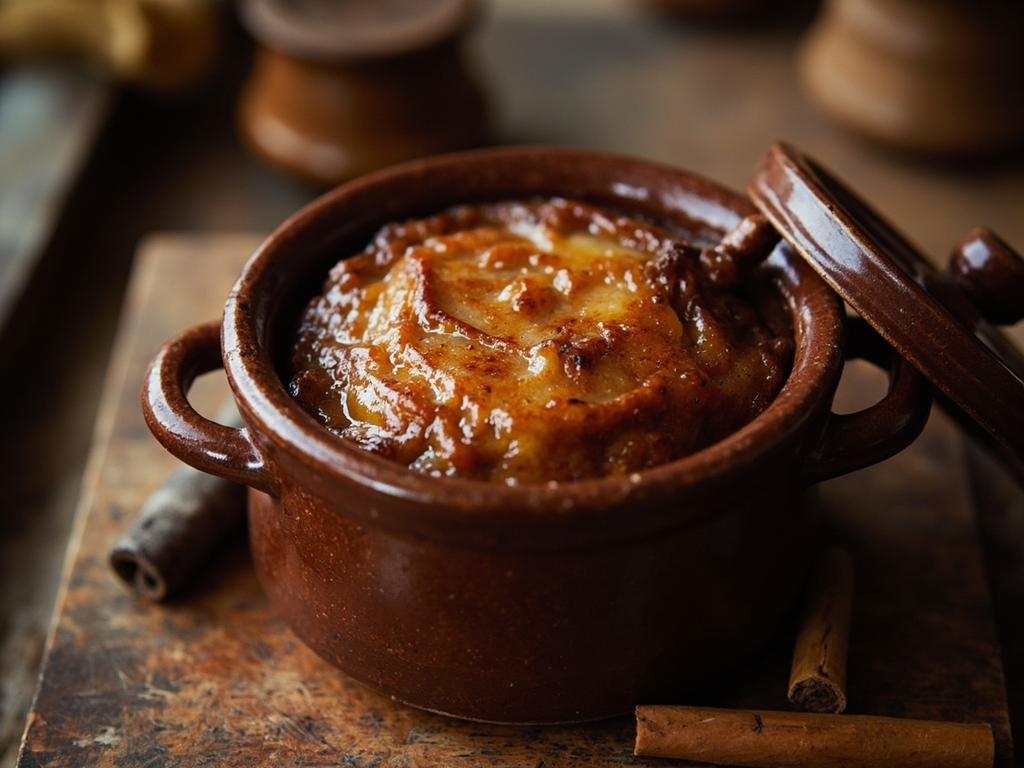
Teurgoule de Normandie
Preserved sweet (entremets baked in the bread oven)
🍯 🌶️· 6 h (slow cooking)
View the recipe