 flip
flipCoffee à la mode d'Orient, brought back from Egypt
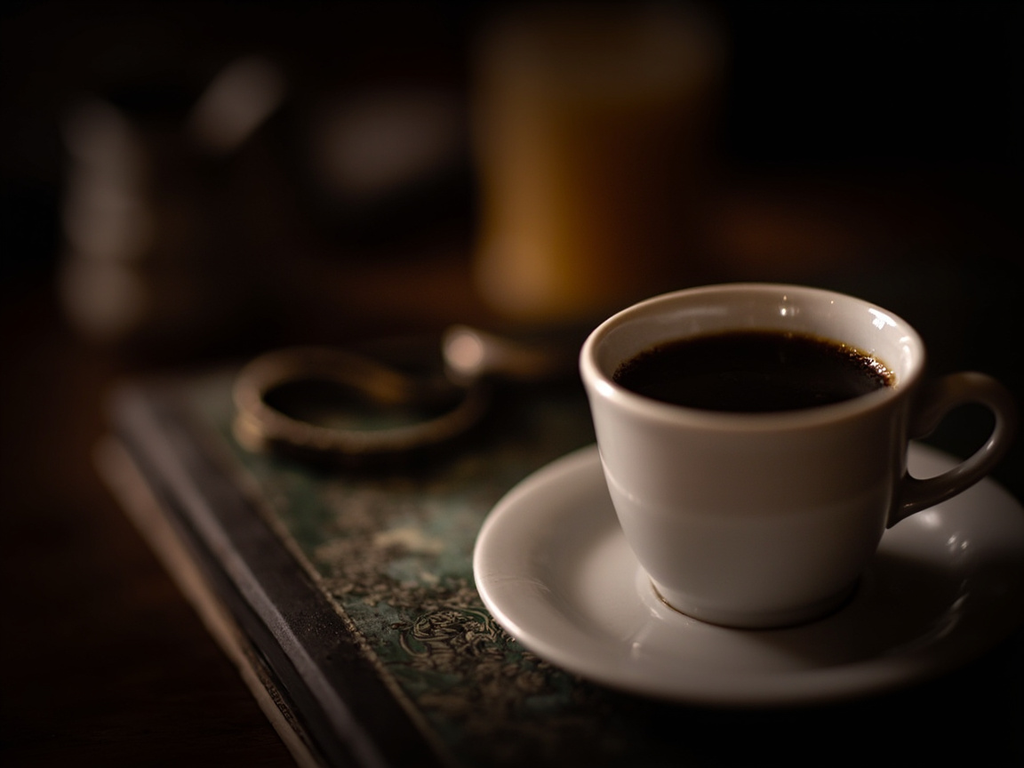
Coffee à la mode d'Orient, brought back from Egypt
Why this dish? In 1849-1850, Flaubert traveled through Egypt and the Nile Valley with Maxime Du Camp. There he smoked his oriental clay pipe — which he would bring back among his fetish objects — and tasted the thick coffees of Cairo's cafés. This journey marked him for life; black, strong coffee in the Oriental manner is a liquid memory of it.
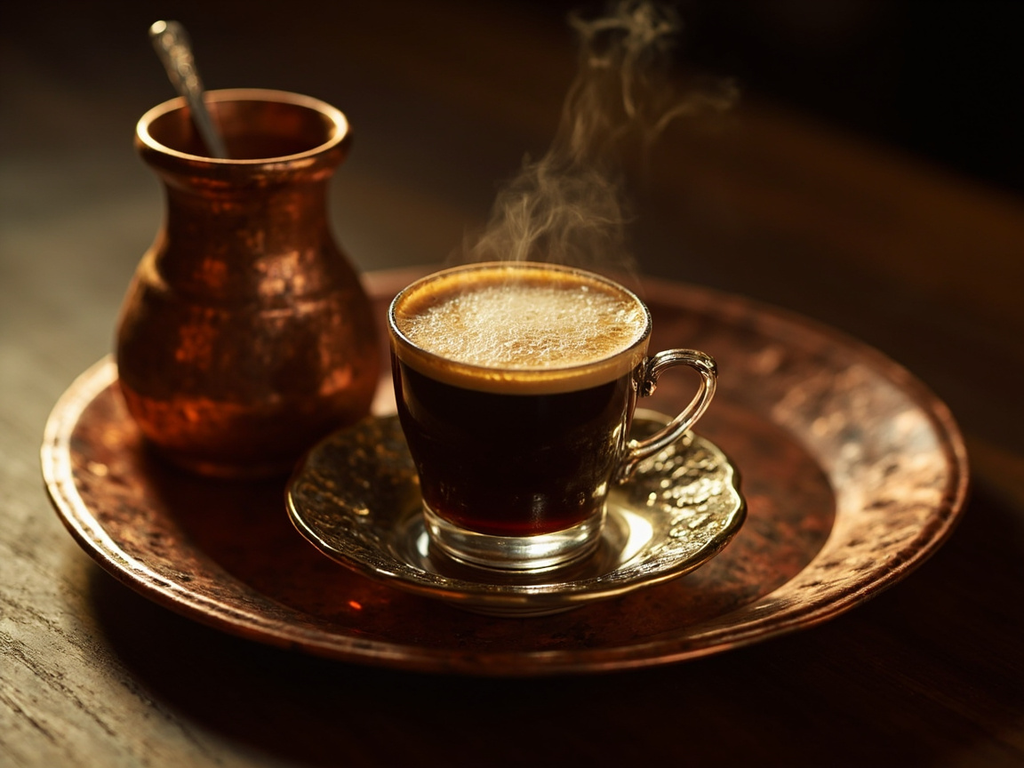
A very finely ground coffee, boiled in a small long-handled pot with its sugar, sometimes perfumed with a hint of cardamom, and served unfiltered in tiny cups. The contemplative drink of his Egyptian hours.
The Orient! You cannot imagine what that word stirs in me. In Cairo, squatting on a mat, my clay pipe to my lips, I drank this coffee black as ink and thick as syrup, which they handed you burning hot in thimble-sized cups. You must not filter or press it: you let it rise three times over the embers, you wait for the grounds to settle at the bottom, and you drink it in small sips while watching the river. I kept its taste all my life, as one keeps a happy fever.
- •Very finely ground coffee — one heaped spoonful per cup (base)
- •Water — one small cup per person (infusion)
- •Sugar — to taste (sweetness)
- •Cardamom — one crushed seed (perfume (optional))
Coffee à la mode d'Orient, brought back from Egypt
A very finely ground coffee, boiled in a small long-handled pot with its sugar, sometimes perfumed with a hint of cardamom, and served unfiltered in tiny cups. The contemplative drink of his Egyptian hours.
Why this dish? In 1849-1850, Flaubert traveled through Egypt and the Nile Valley with Maxime Du Camp. There he smoked his oriental clay pipe — which he would bring back among his fetish objects — and tasted the thick coffees of Cairo's cafés. This journey marked him for life; black, strong coffee in the Oriental manner is a liquid memory of it.
The Orient! You cannot imagine what that word stirs in me. In Cairo, squatting on a mat, my clay pipe to my lips, I drank this coffee black as ink and thick as syrup, which they handed you burning hot in thimble-sized cups. You must not filter or press it: you let it rise three times over the embers, you wait for the grounds to settle at the bottom, and you drink it in small sips while watching the river. I kept its taste all my life, as one keeps a happy fever.
Ingredients (period version)
- Very finely ground coffee — one heaped spoonful per cup (base)
- Water — one small cup per person (infusion)
- Sugar — to taste (sweetness)
- Cardamom — one crushed seed (perfume (optional))
Ingredients
- Coffee ground to a very fine powder — 1 heaped teaspoon per cup (base)
- Cold water — 1 small cup (60 ml) per person (infusion)
- Sugar — to taste (1/2 to 1 teaspoon) (sweetness)
- Green cardamom — 1 crushed pod (optional) (perfume)
Method
- In a small saucepan (or cezve), mix the water, coffee, sugar and cardamom cold.
- Heat very gently without stirring once foam forms.
- When the foam rises, remove from heat, let it subside, then briefly return to heat — repeat two or three times.
- Pour gently into small cups, allowing the foam to crown the coffee.
- Let the grounds settle for a minute before drinking, without stirring.
How it was made : Coffee prepared in the Oriental style — ground to an impalpable powder, boiled with its sugar in a copper cezve and served unfiltered — was, in the 19th century, inseparable from the imaginary of travel to the Orient shared by so many French writers and painters. It was sometimes perfumed with cardamom or orange blossom water.
The contemporary twist : Serve it in a tiny cup placed on a hammered copper tray, with a Turkish delight and a cinnamon stick — a Cairo interlude at the end of the meal.
Sources : Gustave Flaubert, Voyage en Égypte (carnets, 1849-1850) · Maxime Du Camp, Le Nil. Égypte et Nubie (1854)
Gustave Flaubert · Charactorium