 flip
flipTeurgoule de Normandie
Teurgoule de Normandie
Why this dish? Born and raised in Rouen, son of the chief surgeon of the Hôtel-Dieu, Flaubert grew up at the heart of Normandy, whose teurgoule is the sweet emblem. This cinnamon rice pudding, baked for hours in the bread oven and keeping for several days, was the sweet treat made in a large earthenware dish for market days and holidays in the Pays de Caux.
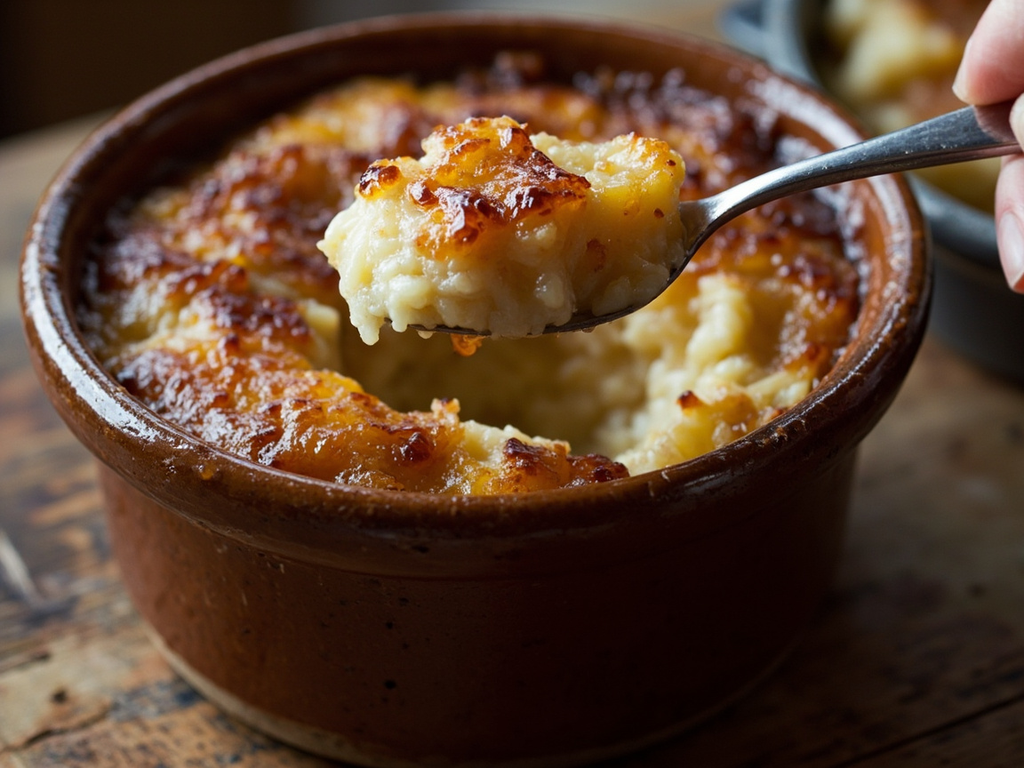
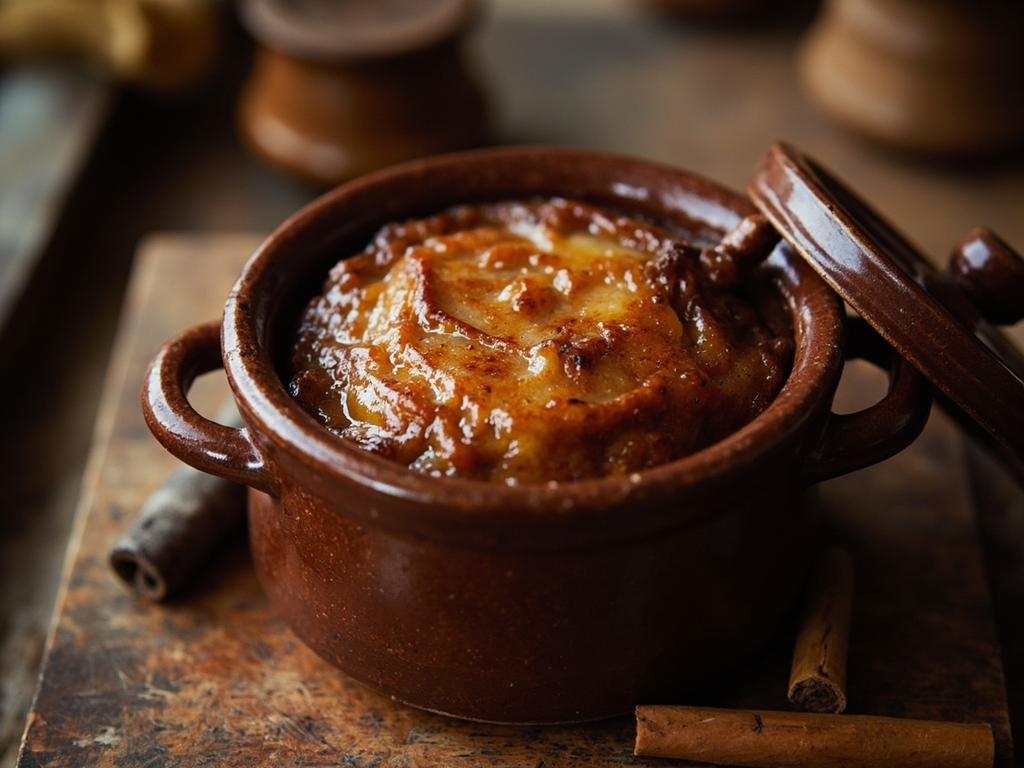
Rice, whole milk, sugar and plenty of cinnamon, simmered very slowly in the oven until a thick brown skin forms. A deep, fragrant peasant entremets that keeps and is eaten warm or cold.
Ah, teurgoule! That is the Normandy of my childhood, the one that smells of milk and cinnamon. We would fill a large earthenware dish and take it to the baker's, and it would cook there, gently, for hours, while we went about our business. A brown, wrinkled skin would form on top, which the children fought over — I was one of them. It keeps for several days without losing anything, on the contrary: cold, the next day, it is even better. Patience and slowness: that is the whole secret, in cooking as in literature.
- •Rice — two handfuls (base)
- •Whole milk — several pints (liquid)
- •Sugar — a good bowl (sweetness)
- •Cinnamon — generously (signature perfume)
- •Pinch of salt — one (seasoning)
Teurgoule de Normandie
Rice, whole milk, sugar and plenty of cinnamon, simmered very slowly in the oven until a thick brown skin forms. A deep, fragrant peasant entremets that keeps and is eaten warm or cold.
Why this dish? Born and raised in Rouen, son of the chief surgeon of the Hôtel-Dieu, Flaubert grew up at the heart of Normandy, whose teurgoule is the sweet emblem. This cinnamon rice pudding, baked for hours in the bread oven and keeping for several days, was the sweet treat made in a large earthenware dish for market days and holidays in the Pays de Caux.
Ah, teurgoule! That is the Normandy of my childhood, the one that smells of milk and cinnamon. We would fill a large earthenware dish and take it to the baker's, and it would cook there, gently, for hours, while we went about our business. A brown, wrinkled skin would form on top, which the children fought over — I was one of them. It keeps for several days without losing anything, on the contrary: cold, the next day, it is even better. Patience and slowness: that is the whole secret, in cooking as in literature.
Ingredients (period version)
- Rice — two handfuls (base)
- Whole milk — several pints (liquid)
- Sugar — a good bowl (sweetness)
- Cinnamon — generously (signature perfume)
- Pinch of salt — one (seasoning)
Ingredients
- Round rice — 100 g (base)
- Whole milk — 2 litres (liquid)
- Sugar — 150 g (sweetness)
- Ground cinnamon — 1 to 2 teaspoons (signature perfume)
- Salt — 1 pinch (seasoning)
Method
- Mix the rice, sugar, cinnamon and salt in a deep earthenware dish.
- Pour the cold whole milk over it and stir.
- Bake in a very slow oven (150 °C) for 5 to 6 hours, without stirring.
- Let the famous brown skin form on the surface; the rice should melt into a thickened, caramelized milk.
- Serve warm or cold, directly from the dish.
How it was made : Teurgoule has been attested in Normandy since the 18th century; cinnamon (and rice) arrived through the port of Honfleur. It was cooked all night in the village bread oven after the bread was baked, in a large earthenware dish, making it a collective, long-keeping preparation, perfect for fairs and fast days.
The contemporary twist : Serve it in individual pots with a shard of cinnamon tuile stuck into it, and remind that the brown crust — the "skin" — is the most coveted part.
Sources : Confrérie des Gastronomes de la Teurgoule de Normandie · Traditions culinaires du pays d'Auge et du pays de Caux, XVIIIe-XIXe siècles
Gustave Flaubert · Charactorium