 flip
flipSeine eel matelote
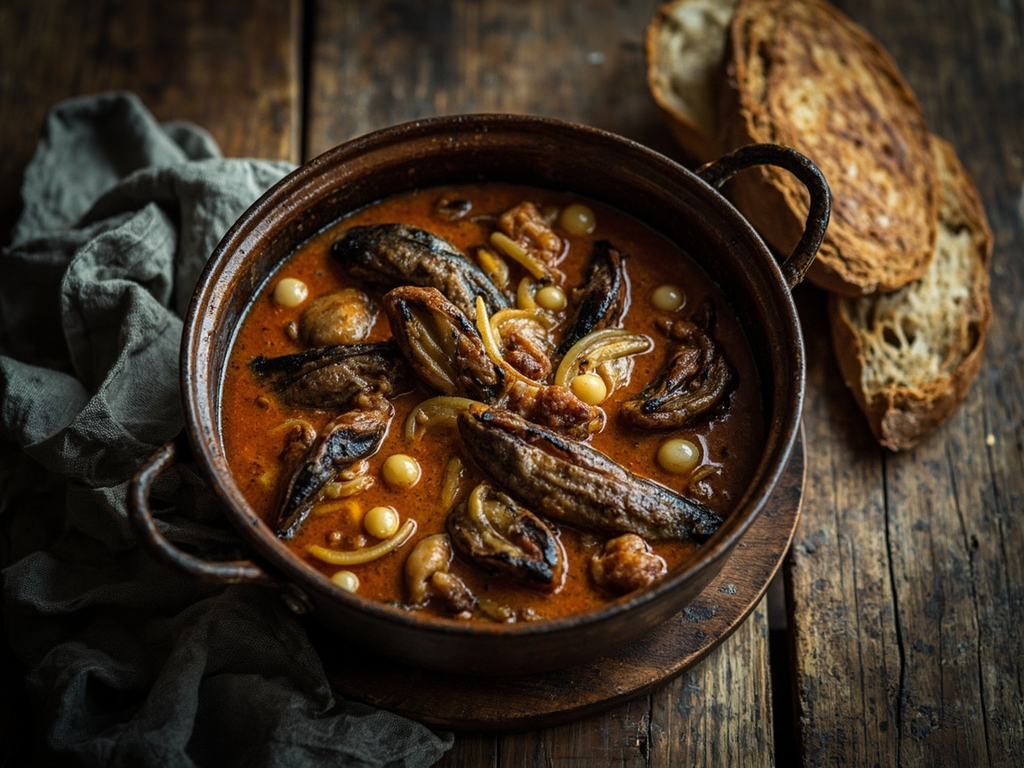
Seine eel matelote
Why this dish? Croisset, Flaubert's house, overlooked the Seine, where boats passed that he would watch working for hours. River eel, simmered in a matelote with wine or cider, was the ordinary fricot of the Norman Seine banks — the everyday cooking of a man who lived there, secluded, writing.
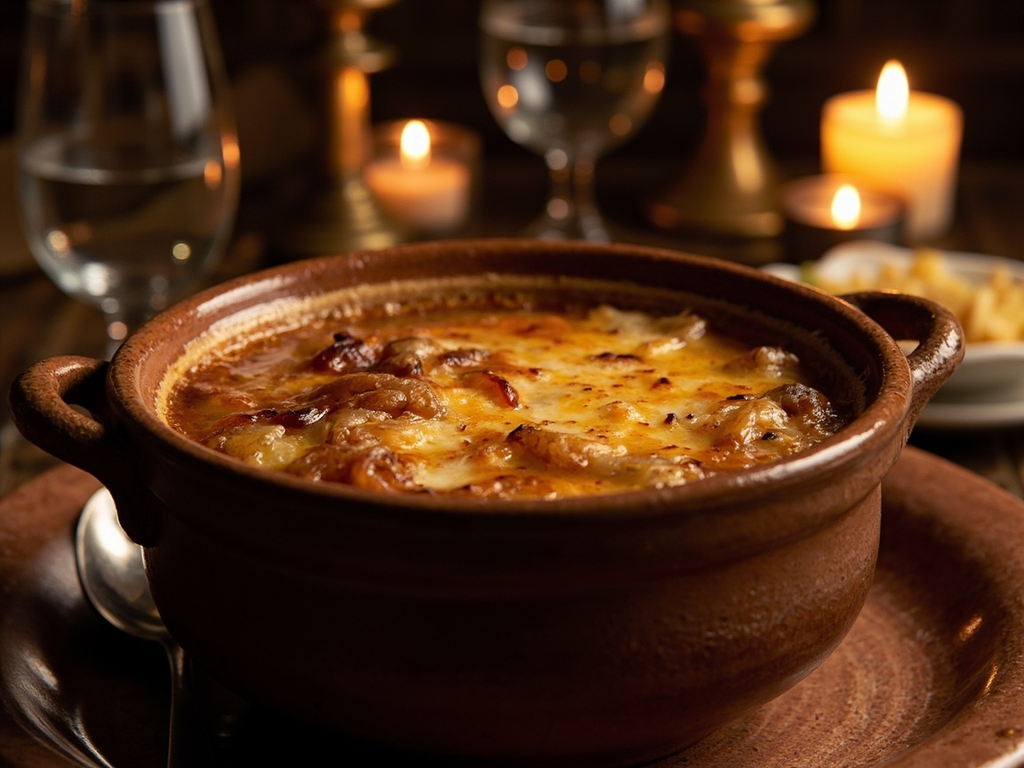
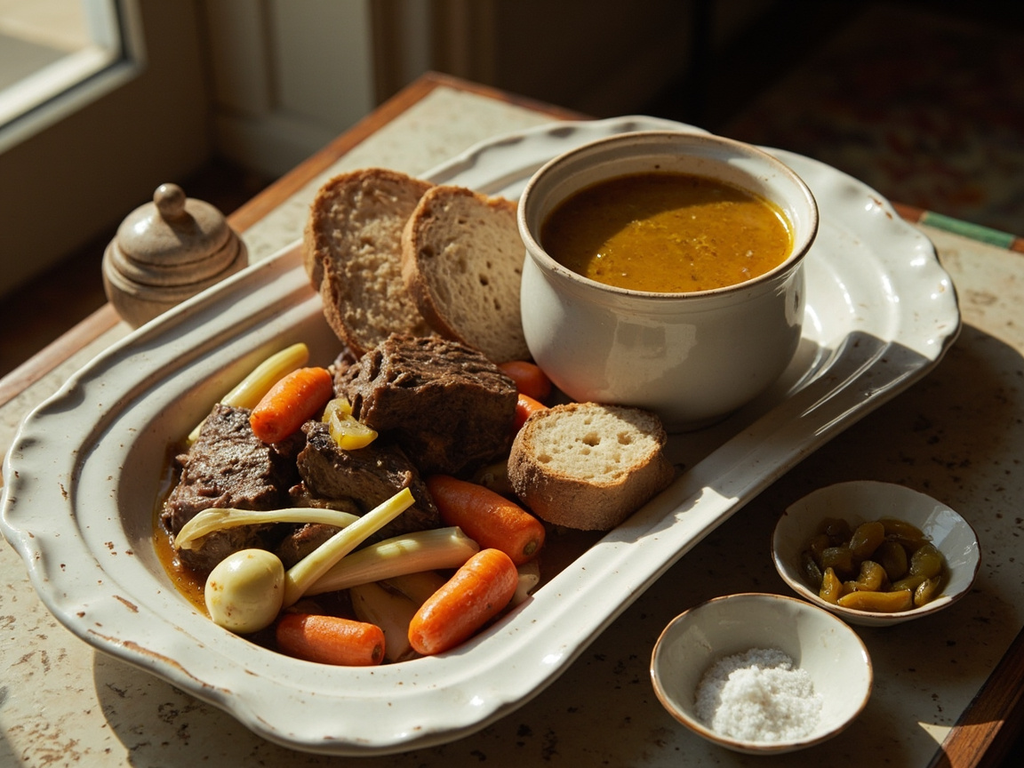
Pieces of eel simmered in a base of cider or red wine, with small onions, lardons and mushrooms, all bound with butter. A hearty riverbank stew, simple and profound.
From my window at Croisset, I saw the Seine carrying its boats and its eels; they brought me fresh ones, fat and fine. I am not ashamed to admit it: I loved to eat, and heavily. This matelote, we let it simmer on low heat, the onions melted, the cider reduced until it coated the spoon. This is not a drawing-room dish; it is a hermit's working dish — the one you wolf down alone, in the evening, when the sentence won't come and at least your belly does not betray you.
- •Seine eel — one fine piece (base)
- •Cider or local red wine — one bottle (cooking base)
- •Small onions — a dozen (garnish)
- •Belly bacon — a piece (fat and flavor)
- •Mushrooms — a handful (garnish)
- •Butter and flour — enough (binding)
- •Bouquet garni — thyme, bay leaf (aromatics)
Seine eel matelote
Pieces of eel simmered in a base of cider or red wine, with small onions, lardons and mushrooms, all bound with butter. A hearty riverbank stew, simple and profound.
Why this dish? Croisset, Flaubert's house, overlooked the Seine, where boats passed that he would watch working for hours. River eel, simmered in a matelote with wine or cider, was the ordinary fricot of the Norman Seine banks — the everyday cooking of a man who lived there, secluded, writing.
From my window at Croisset, I saw the Seine carrying its boats and its eels; they brought me fresh ones, fat and fine. I am not ashamed to admit it: I loved to eat, and heavily. This matelote, we let it simmer on low heat, the onions melted, the cider reduced until it coated the spoon. This is not a drawing-room dish; it is a hermit's working dish — the one you wolf down alone, in the evening, when the sentence won't come and at least your belly does not betray you.
Ingredients (period version)
- Seine eel — one fine piece (base)
- Cider or local red wine — one bottle (cooking base)
- Small onions — a dozen (garnish)
- Belly bacon — a piece (fat and flavor)
- Mushrooms — a handful (garnish)
- Butter and flour — enough (binding)
- Bouquet garni — thyme, bay leaf (aromatics)
Ingredients
- Eel (or firm mackerel fillets as substitute) — 800 g (base)
- Dry cider (or red wine) — 50 cl (cooking base)
- Pearl onions — 200 g (garnish)
- Smoked lardons — 120 g (fat and flavor)
- Button mushrooms — 200 g (garnish)
- Butter — 50 g (binding)
- Flour — 1 tablespoon (binding)
- Thyme, bay leaf, garlic — 1 bouquet (aromatics)
Method
- Brown the lardons, pearl onions and mushrooms in butter; set aside.
- Sear the eel pieces, sprinkle with flour and stir.
- Deglaze with cider (or wine), add the bouquet garni and garlic, season with salt.
- Simmer covered for 25 to 30 minutes over very low heat.
- Return the garnish, reduce until the sauce coats a spoon, adjust seasoning and serve with country bread.
How it was made : The matelote is the quintessential river fish stew in 19th-century France; each valley has its own. In Normandy it is often made with cider, elsewhere with red wine. It was a popular, domestic dish, simmered long to tenderize fatty flesh like eel.
The contemporary twist : Replace the eel, now threatened and protected, with a firm, sustainable fish, and serve the matelote in a small cast-iron pot with a slice of grilled bread rubbed with demi-salt butter.
Sources : Urbain Dubois, La Cuisine de tous les pays (1868) · Traditions culinaires des bords de Seine normands, XIXe siècle
Gustave Flaubert · Charactorium