 Flip the card
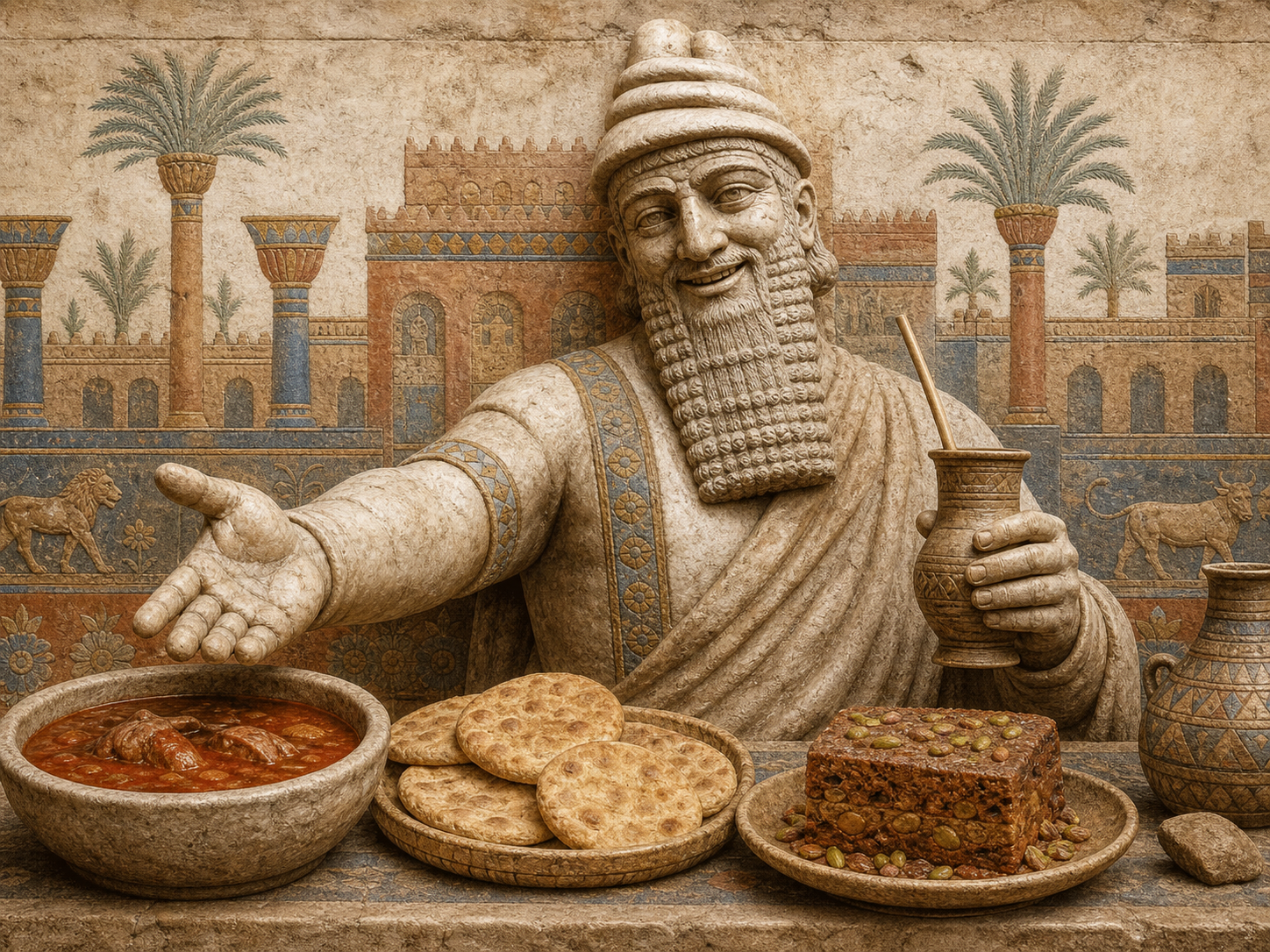
Hammurabi at the table
1809 av. J.-C. — 1749 av. J.-C.
On the menu
The Mesopotamian naptanu: akalu, sikaru, and tu7
In Babylon, the meal revolves around an unchanging foundation — barley bread (akalu) and beer (sikaru) — to which are added, depending on rank, slow-cooked broths (tu7 / ummaru) of meat or fish, seasoned with the aromatic trinity of onion, garlic, and leek. Date sweets (mersu) close banquets or feed the gods. No starter-main-dessert: you dip the bread in the broth, drink the beer through a straw, and sweet and savory sit side by side on the same royal table.
Signature : The alliaceous trinity and siqqu
Paleo-Babylonian cuisine as revealed by the Yale tablets is built on crushed onion, garlic, and leek, supported by siqqu — a fermented condiment of fish or locusts, a distant ancestor of garum — which brings umami depth to almost every broth.
click to flip back
Hammurabi at the table
1809 av. J.-C. — 1749 av. J.-C.
5 period recipes
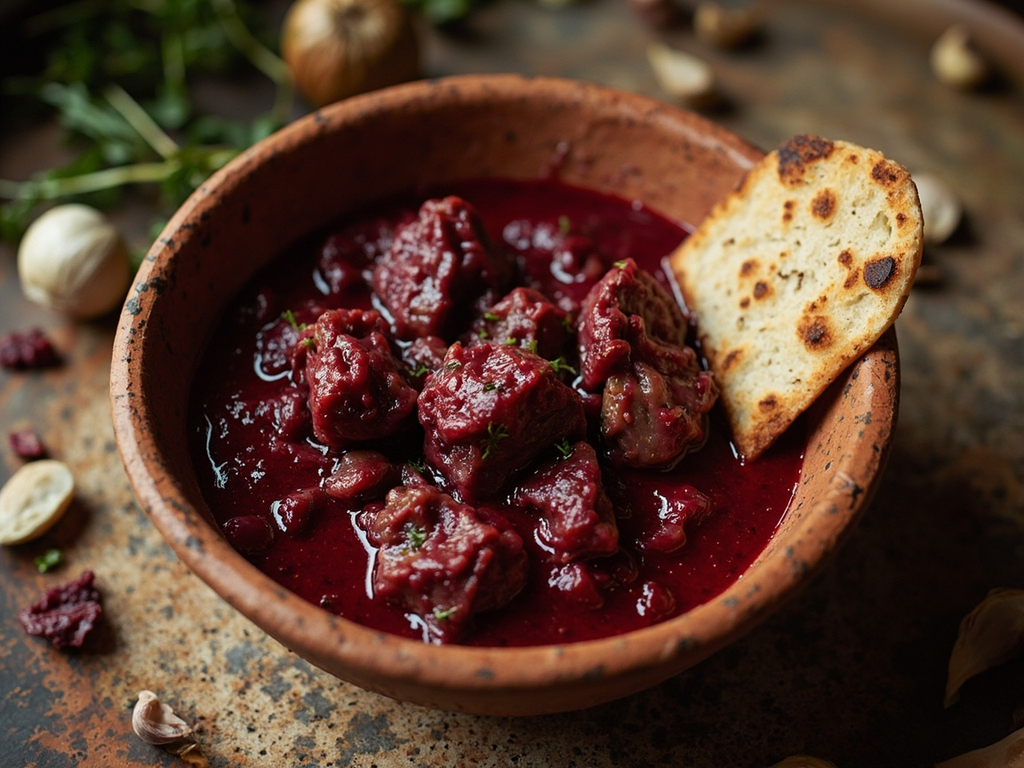 Festive
Tuḥʾu, the red lamb broth of the king
tu7 (slow-cooked banquet broth)
🧂 🍄 🫙· 2 h
View the recipe
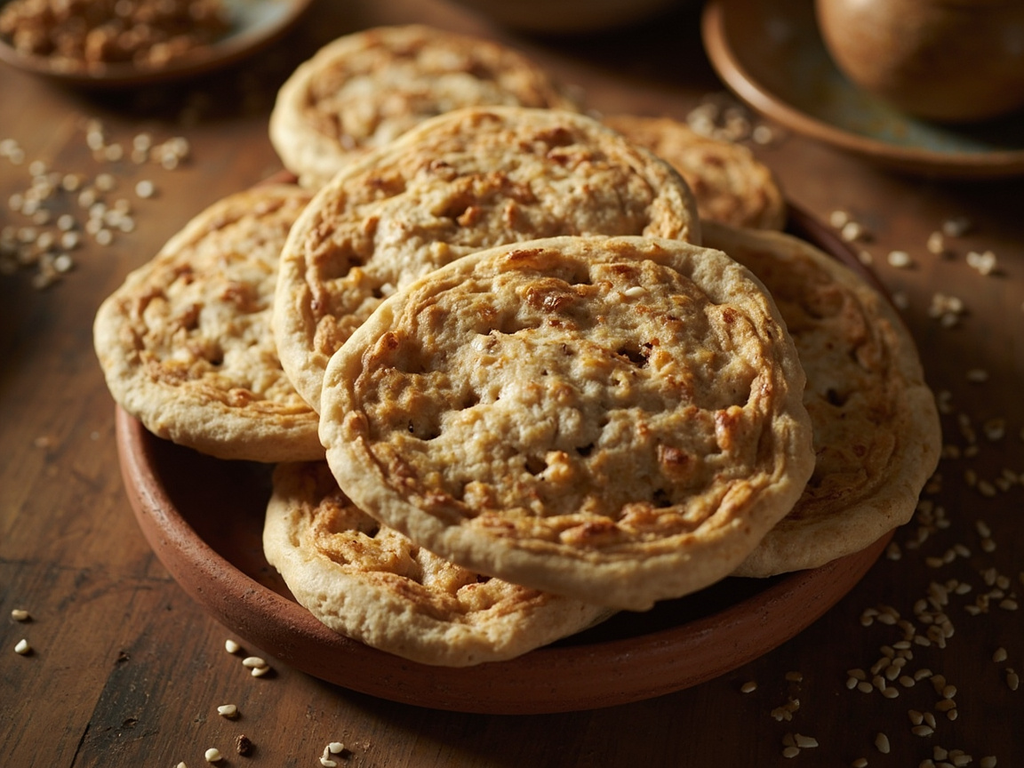 Everyday
Akalu, the daily barley flatbread
akalu (foundation bread of the meal)
🧂· 45 min
View the recipe
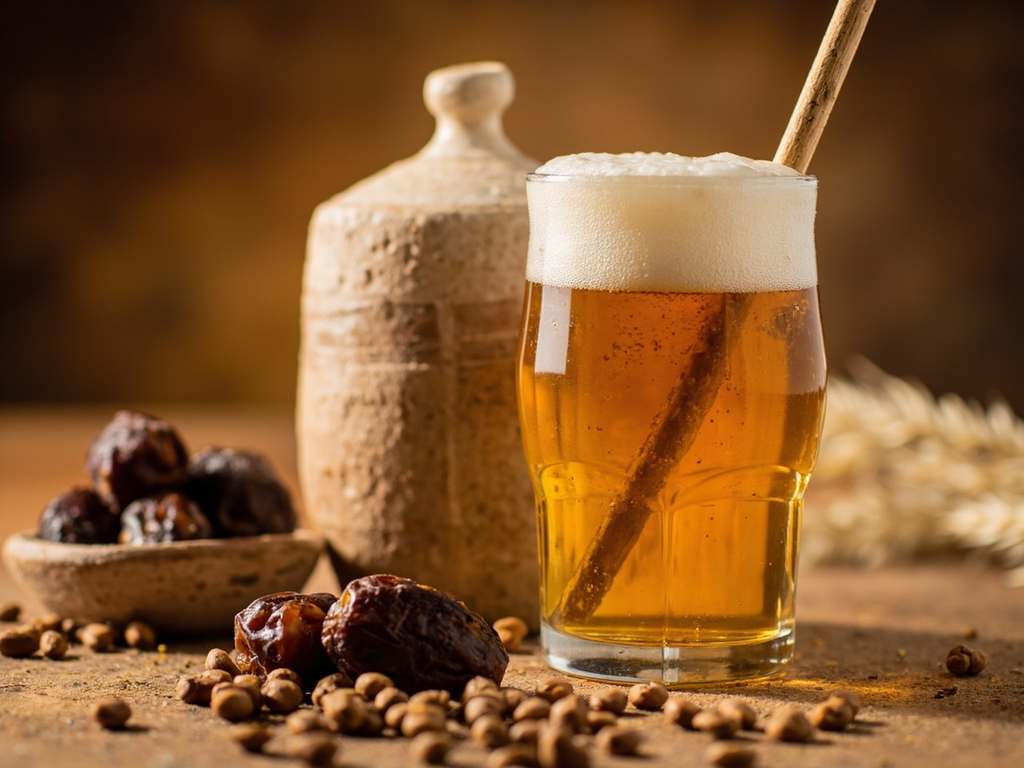 Drink
DrinkSikaru, barley beer with a straw
sikaru (foundation drink of the meal)
🍋 🫙· 1 h 30 (plus fermentation)
View the recipe
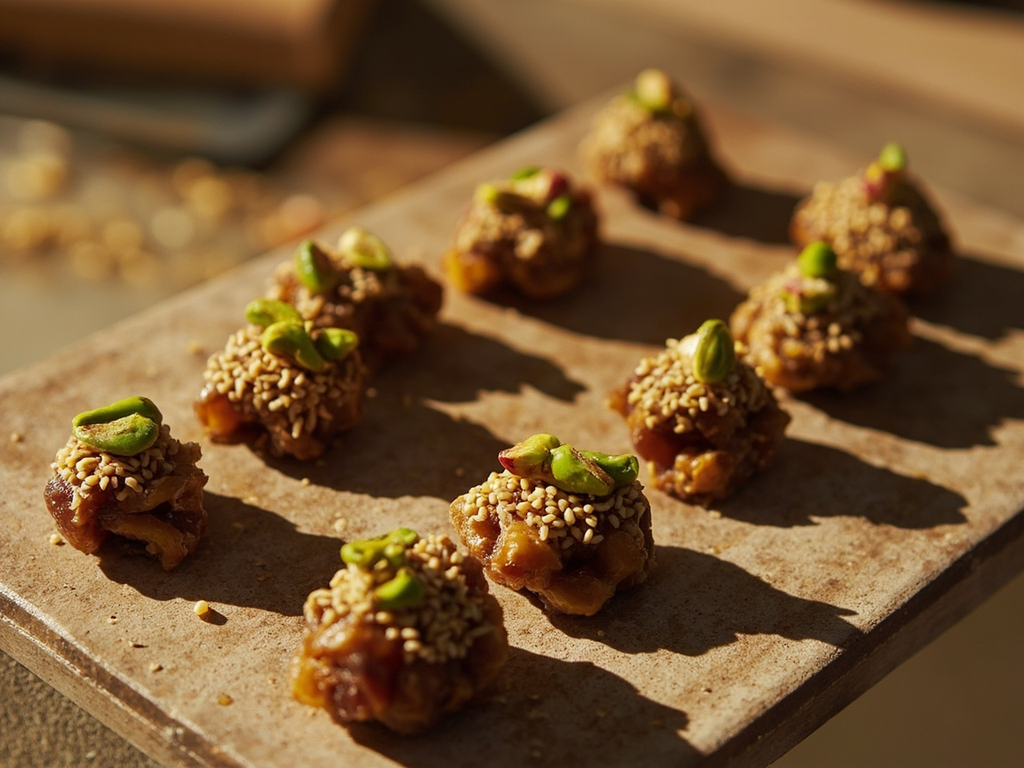 Offering
Mersu, date and pistachio confection
mersu (banquet sweet and temple offering)
🍯· 30 min
View the recipe
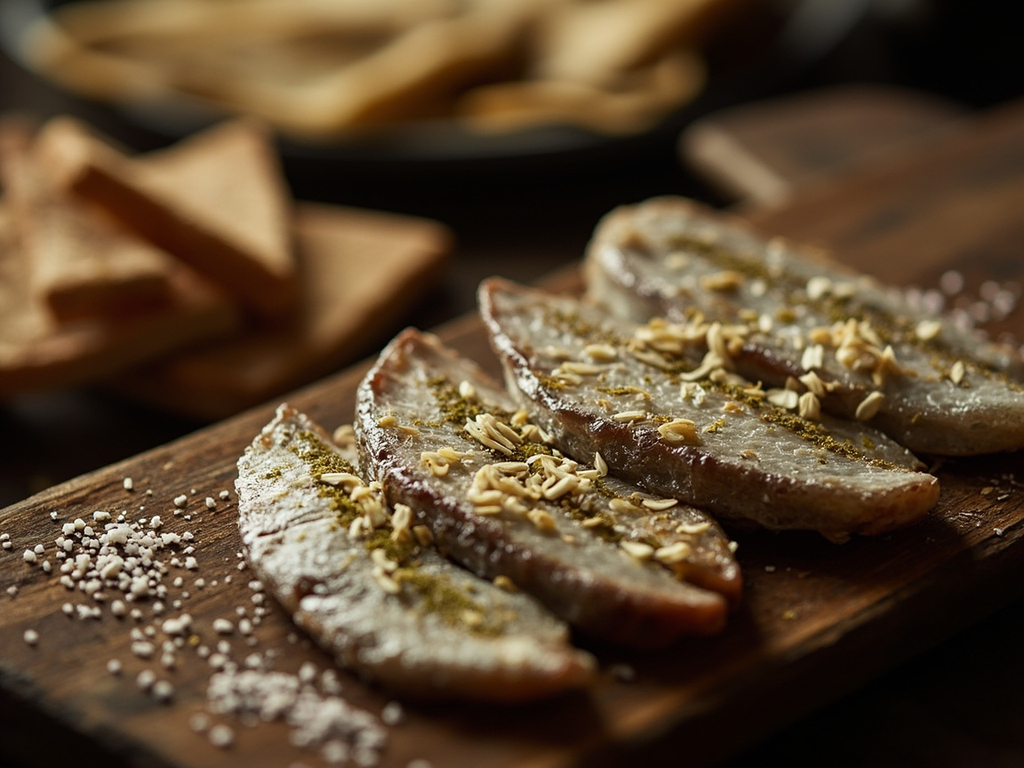 Preserving
Nûnu wablu, salted dried river fish
storage provision (to be soaked and crumbled into broth or bread)
🧂 🍄· 30 min (+ 3 days drying)
View the recipe