 flip
flipMersu, date and pistachio confection
Mersu, date and pistachio confection
Why this dish? Mersu is attested in Mesopotamian texts as a festive sweet and an offering placed before the gods. In Babylon, Hammurabi's capital dedicated to Marduk, these date sweets honored the deities in the Esagil temple — without reproducing a sacred rite here, but inspired by this attested practice.
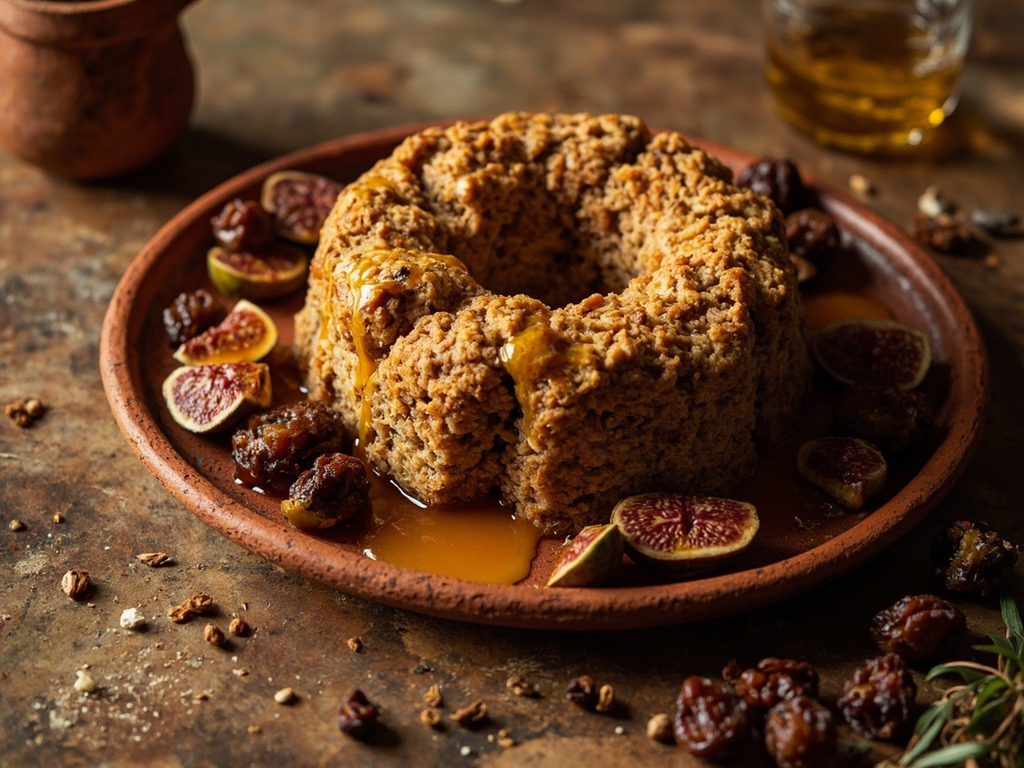
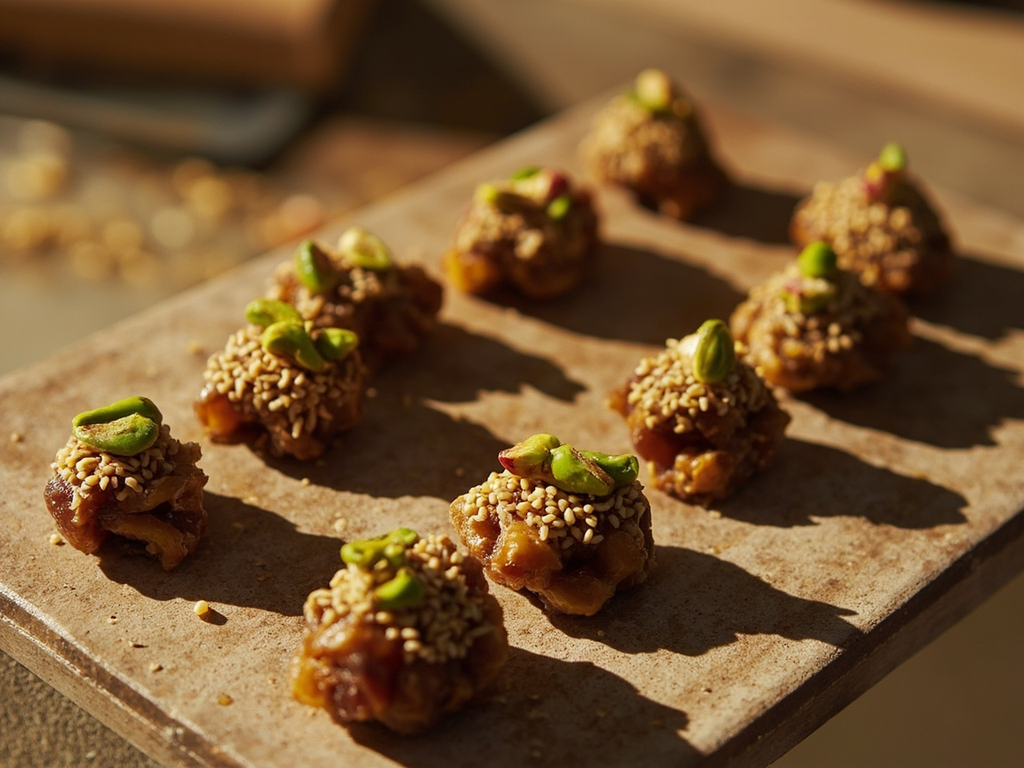
A dense confection of crushed dates and pistachios, perfumed, shaped into small balls or a flat cake — the 'sweet' of Mesopotamia, where cane sugar did not yet exist.
When offerings were carried before Marduk, in the Esagil whose walls I raised, the mersu was placed on the altars like a prayer. The dates from my palm groves were crushed with the warmth of the hand until they became honey, and green pistachio and almond were mixed in. Believe a king who has fasted much for his gods: nothing sweetens the favor of heaven better than a bite of dates. Take one — what the gods approved, man may well savor.
- •Dates — a full basket (sweet base)
- •Pistachios — a handful (crunchy garnish)
- •Almonds or walnuts — a handful (garnish)
- •Sesame seeds — a little (flavor)
- •Fig water or honey — a dash (binder and flavor)
Mersu, date and pistachio confection
A dense confection of crushed dates and pistachios, perfumed, shaped into small balls or a flat cake — the 'sweet' of Mesopotamia, where cane sugar did not yet exist.
Why this dish? Mersu is attested in Mesopotamian texts as a festive sweet and an offering placed before the gods. In Babylon, Hammurabi's capital dedicated to Marduk, these date sweets honored the deities in the Esagil temple — without reproducing a sacred rite here, but inspired by this attested practice.
When offerings were carried before Marduk, in the Esagil whose walls I raised, the mersu was placed on the altars like a prayer. The dates from my palm groves were crushed with the warmth of the hand until they became honey, and green pistachio and almond were mixed in. Believe a king who has fasted much for his gods: nothing sweetens the favor of heaven better than a bite of dates. Take one — what the gods approved, man may well savor.
Ingredients (period version)
- Dates — a full basket (sweet base)
- Pistachios — a handful (crunchy garnish)
- Almonds or walnuts — a handful (garnish)
- Sesame seeds — a little (flavor)
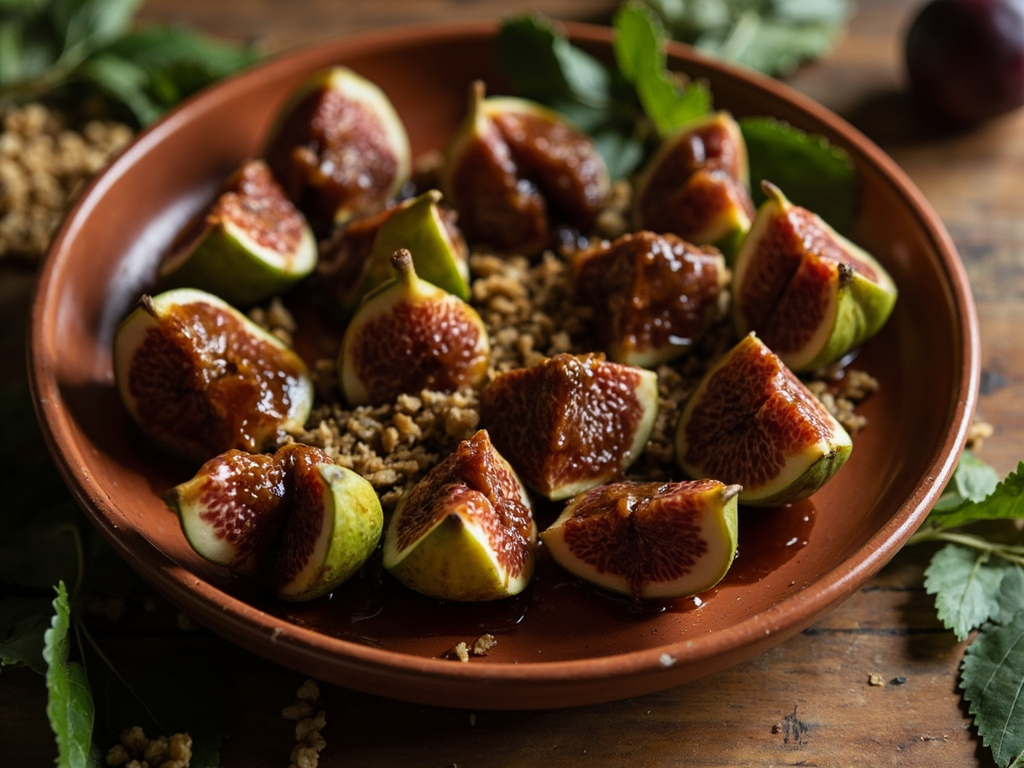
- Fig water or honey — a dash (binder and flavor)
Ingredients
- Soft pitted dates — 300 g (sweet base)
- Unsalted pistachios — 60 g (crunchy garnish)
- Blanched almonds — 50 g (garnish)
- Toasted sesame seeds — 2 tbsp (flavor)
- Honey — 1 tbsp (binder)
- Orange blossom water (optional) — a few drops (flavor)
Method
- Mash the dates into a thick paste, by hand or in a food processor, with the honey.
- Coarsely chop the pistachios and almonds, reserve a little for decoration.
- Fold the chopped nuts and sesame into the date paste.
- Shape into small balls or press into a flat cake, press a pistachio on top of each.
- Chill for 30 minutes to firm up before serving.
How it was made : Without cane sugar (unknown in ancient Mesopotamia), sweetness came from dates and honey. Mersu, mentioned in ration and offering lists, could take the form of a paste, a cake, or balls depending on the occasion.
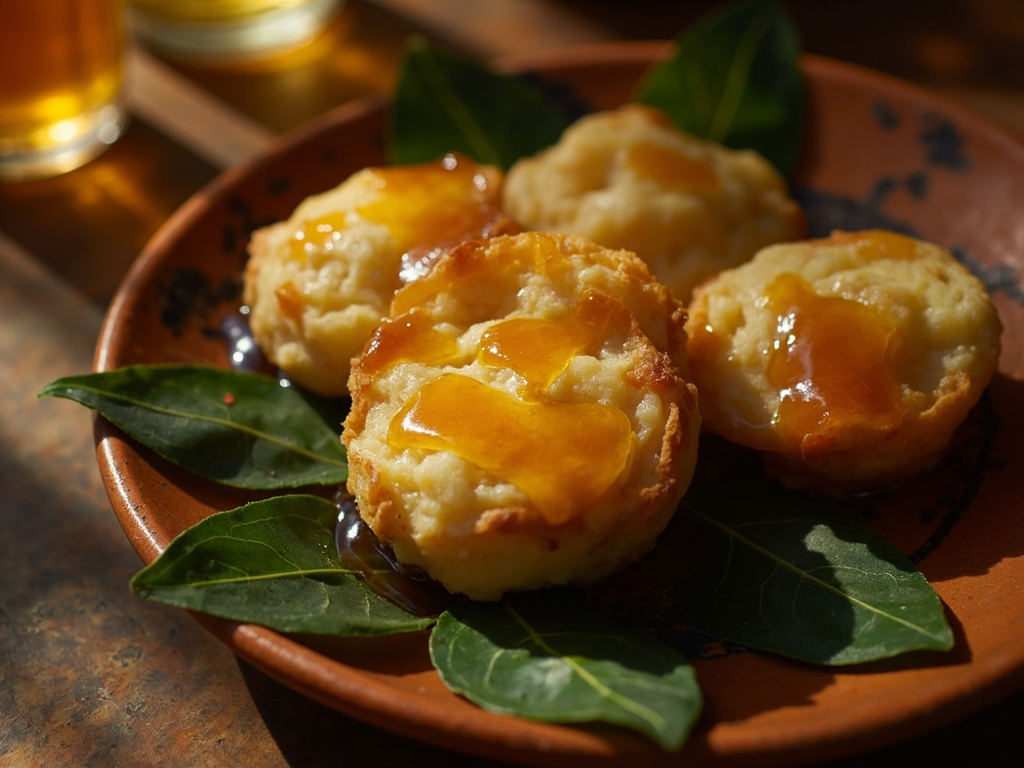
The contemporary twist : Rolled in golden sesame and presented on a palm leaf, like offerings placed at the foot of a stele.
Sources : Jean Bottéro, La plus vieille cuisine du monde, 2002 · Paleo-Babylonian administrative texts (offering and ration lists)
Hammurabi · Charactorium