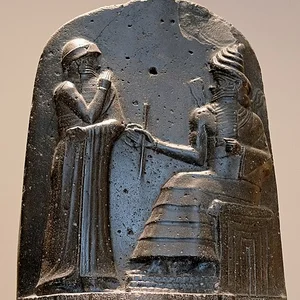

Sixth king of Babylon (1792–1750 BC), Hammurabi transformed a small kingdom into a regional empire. He is best known for promulgating the Code of Hammurabi, one of the oldest written compilations of laws in history.
Hammurabi(1809 av. J.-C. — 1749 av. J.-C.)
Hammurabi
Babylonie
7 min read
Frequently asked questions
Key Facts
- 1792–1750 BC: Hammurabi's reign as king of Babylon
- c. 1750 BC: promulgation of the Code of Hammurabi, comprising 282 laws engraved on a stone stele
- Territorial expansion of the kingdom of Babylon and creation of a unified Mesopotamian empire
- Introduction of the principle 'an eye for an eye, a tooth for a tooth' (lex talionis) into the legal system
- Centralization of political and administrative power around a strengthened capital
Works & Achievements
Compilation of 282 legal articles covering civil, criminal, and commercial law. It is one of the oldest and most complete collections of written laws, foundational to the history of law.
Hammurabi had an extensive network of canals dug and maintained, including the canal "Hammurabi-is-the-abundance-of-the-people", vital for agriculture and the prosperity of his kingdom.
Hammurabi undertook major construction and restoration work on the sanctuaries of Babylon, asserting the religious preeminence of the city and the god Marduk.
Through a series of military and diplomatic campaigns, Hammurabi brought almost all of Mesopotamia under his authority, from Mari in the north to Ur in the south.
A corpus of letters addressed to his governors, attesting to a centralized and meticulous management of the empire, covering justice, irrigation, taxation, and military affairs.
Anecdotes
Hammurabi maintained an extensive correspondence with his provincial governors. Clay tablets that have been found show that he personally attended to administrative details, such as settling disputes over fields or ordering the dredging of irrigation canals.
The Code of Hammurabi was engraved on a black diorite stele more than two meters tall. At the top, a relief depicts Hammurabi standing before Shamash, the god of the sun and justice, who is handing him the insignia of power. This visual staging was intended to confer divine legitimacy upon the laws.
The stele of the Code of Hammurabi was discovered in 1901–1902 at Susa, in present-day Iran, by a French archaeological mission led by Jacques de Morgan. It had been carried off as war spoils by an Elamite king in the 12th century BC. It is now on display at the Louvre Museum.
Hammurabi was a skilled diplomat who knew how to play alliances among the major powers of his era. He first allied himself with the kingdom of Mari and its king Zimri-Lim, before turning against him and destroying the city of Mari around 1761 BC, once his own position was sufficiently consolidated.
The Code of Hammurabi contains 282 articles covering a wide range of subjects: theft, craftsmen's wages, divorce, medicine, and construction. One article stipulates that if a house collapses and kills its occupant, the mason who built it shall be put to death — a very strict principle of professional liability.
Primary Sources
If a man has put out the eye of a free man, his eye shall be put out. If a man has broken the bone of a free man, his bone shall be broken. If a man has put out the eye of a subordinate or broken the bone of a subordinate, he shall pay one mina of silver.
When the sublime Anu, king of the Anunnaki, and Enlil, lord of heaven and earth, entrusted Marduk with the governance of all mankind, they named Babylon with his sublime name and made it mighty in the four regions of the world.
Concerning the Damanu canal about which you wrote to me: have this canal dredged so that the fields may receive water. This work must be completed within the current month.
I am Hammurabi, the king of justice, to whom Shamash has granted truth. My words are chosen, my deeds have no equal. Let the future king observe the words of justice that I have inscribed on my stele.
Key Places
Capital of Hammurabi's kingdom, located on the Euphrates. He made it the political and religious center of a vast empire, erecting temples and palaces there.
Powerful city-state on the middle Euphrates, first an ally then conquered and destroyed by Hammurabi around 1761 BC. The royal archives of Mari yielded thousands of tablets shedding light on this period.
Important Sumerian city in southern Mesopotamia, whose conquest in 1763 BC allowed Hammurabi to unify Lower Mesopotamia.
Ancient capital of Elam (present-day Iran) where the stele of Hammurabi's Code was discovered in 1901–1902, having been carried off as a war trophy in the 12th century BC.
Great temple dedicated to the god Marduk, tutelary deity of Babylon. Hammurabi likely placed the stele of his code there and strengthened the cult of Marduk as the supreme god.
Typical Objects

A monumental black stone support on which the Code of Hammurabi was engraved in cuneiform script. Standing 2.25 meters tall, it was intended for public display.

The everyday writing medium in Mesopotamia, used for royal correspondence, contracts, and administrative texts. Hammurabi dictated hundreds of them to his scribes.

A reed stem cut at a bevel used by scribes to press cuneiform signs into fresh clay. An essential tool of Babylonian administration.

A small engraved cylinder rolled across clay to imprint an authentication mark. Hammurabi's royal seal validated decrees and official correspondence.

A symbolic weapon of Mesopotamian royal power. Depictions show Babylonian kings holding this mace as an emblem of their military authority.

A figurine placed in temples to represent the devotee in perpetual prayer before the gods. Hammurabi had them placed in the sanctuaries of his empire.
School Curriculum
Vocabulary & Tags
Key Vocabulary
Tags
Lieu
Daily Life
Morning
Hammurabi rose at dawn in his apartments in the royal palace of Babylon, built from mud bricks. After ritual ablutions and a prayer addressed to Shamash, god of justice, he would take a light meal of barley flatbreads and dates. He then received his advisors and governors to handle urgent affairs of the empire.
Afternoon
The afternoon was devoted to royal audiences and the settlement of disputes. Hammurabi listened to the complaints of his subjects and administered justice in person, drawing on the principles of his code of laws. He also dictated his correspondence to his scribes, sending detailed instructions to his provincial governors on the management of canals, harvests, and garrisons.
Evening
In the evening, the king sometimes took part in banquets where barley beer was served in cups, accompanied by grilled meats. Musicians played the lyre and tambourine. Hammurabi might also retire to consult the priest-diviners who interpreted omens in the entrails of sacrificed animals, a common practice for guiding royal decisions.
Food
The diet in Babylon was based on barley, transformed into bread, flatbreads, and beer — the daily beverage of all social classes. The king also consumed mutton, fish from the Tigris and Euphrates, dates, onions, garlic, and sesame. Honey and fruits such as figs and pomegranates rounded out the royal meals.
Clothing
Hammurabi wore a long robe of finely woven wool, draped over the left shoulder in the Babylonian fashion. A cylindrical royal cap topped his head, and he wore a long, carefully curled beard, a sign of royal dignity. For ceremonies, he donned garments adorned with fringes and could wear jewelry in gold and lapis lazuli.
Housing
The royal palace of Babylon was a vast complex of mud and fired bricks, organized around inner courtyards. The thick walls protected against the intense heat. Floors were sometimes coated with bitumen for waterproofing. The palace included audience halls, archives housing clay tablets, storerooms, and private quarters with interior gardens.
Historical Timeline
Period Vocabulary
Visual Style
Un style visuel inspiré des bas-reliefs babyloniens et des sceaux-cylindres, avec des tons ocre et dorés de brique cuite, rehaussés de bleu lapis-lazuli, évoquant la monumentalité de l'art mésopotamien.
Sound Ambience
L'ambiance sonore du palais de Babylone au temps de Hammurabi, entre le murmure des scribes gravant l'argile, les échos du temple de Marduk et les bruits lointains du marché.
Liens externes & ressources
Références
Œuvres
Code de Hammurabi
vers 1750 av. J.-C.
Réseau de canaux d'irrigation
1792-1750 av. J.-C.
Restauration de l'Esagil et des temples de Babylone
vers 1780-1750 av. J.-C.
Unification de la Mésopotamie
vers 1764-1755 av. J.-C.
Correspondance royale administrative
1792-1750 av. J.-C.
Rechercher
See also
Related Characters
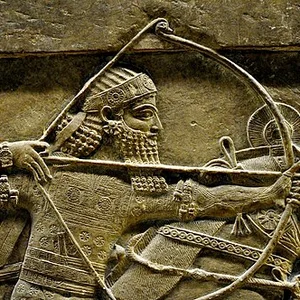
Ashurbanipal
684 av. J.-C. — 630 av. J.-C.
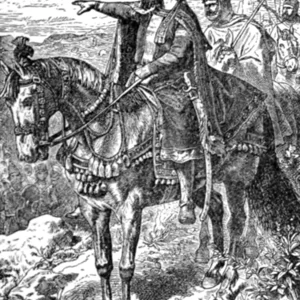
Cyrus II
599 av. J.-C. — 529 av. J.-C.
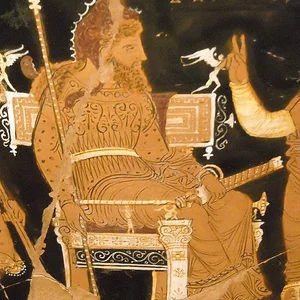
Darius I
549 av. J.-C. — 485 av. J.-C.
Nebuchadnezzar II
641 av. J.-C. — 561 av. J.-C.

Sammu-ramat (Semiramis)
Sargon of Akkad
2350 av. J.-C. — 2300 av. J.-C.