 flip
flipAkalu, the daily barley flatbread
Akalu, the daily barley flatbread
Why this dish? Barley was the king grain of Hammurabi's Babylonia: his Code fixes wages and rents in measures of barley. This flatbread was the bread of everyone, from laborer to king, the base of every meal.
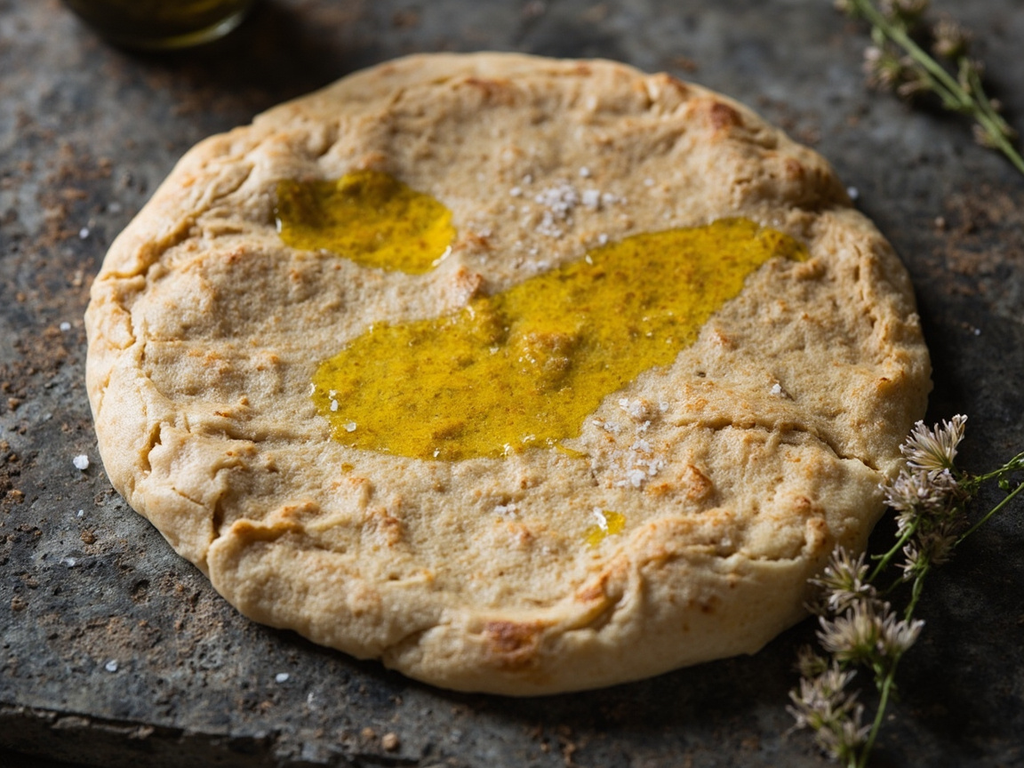
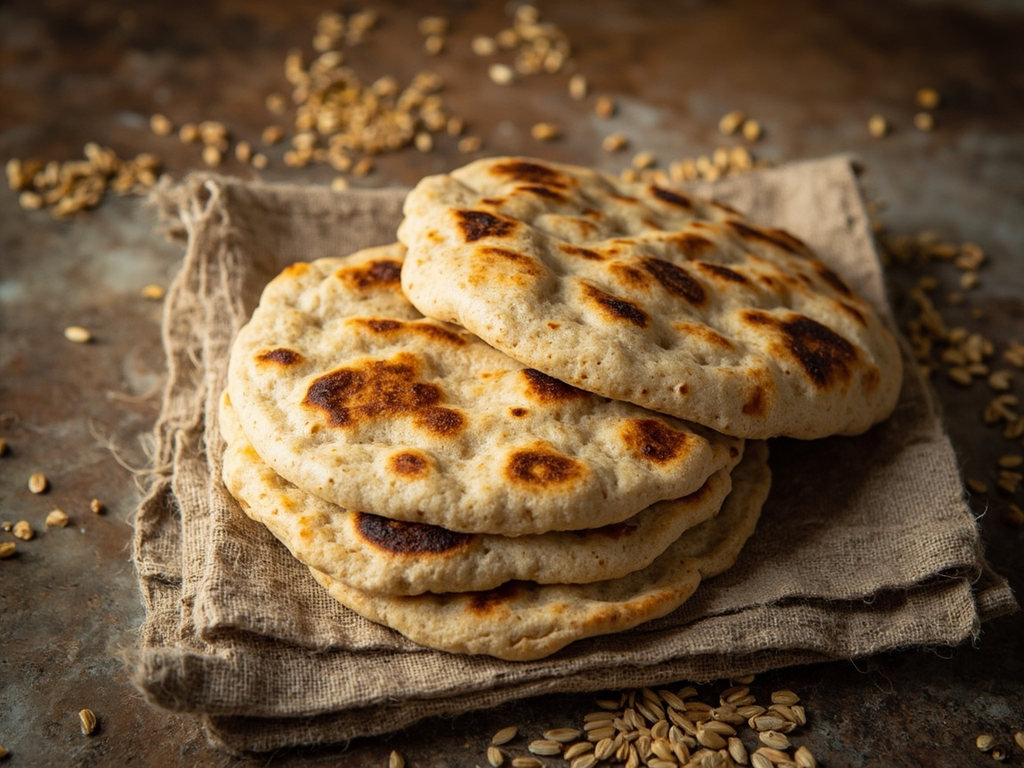
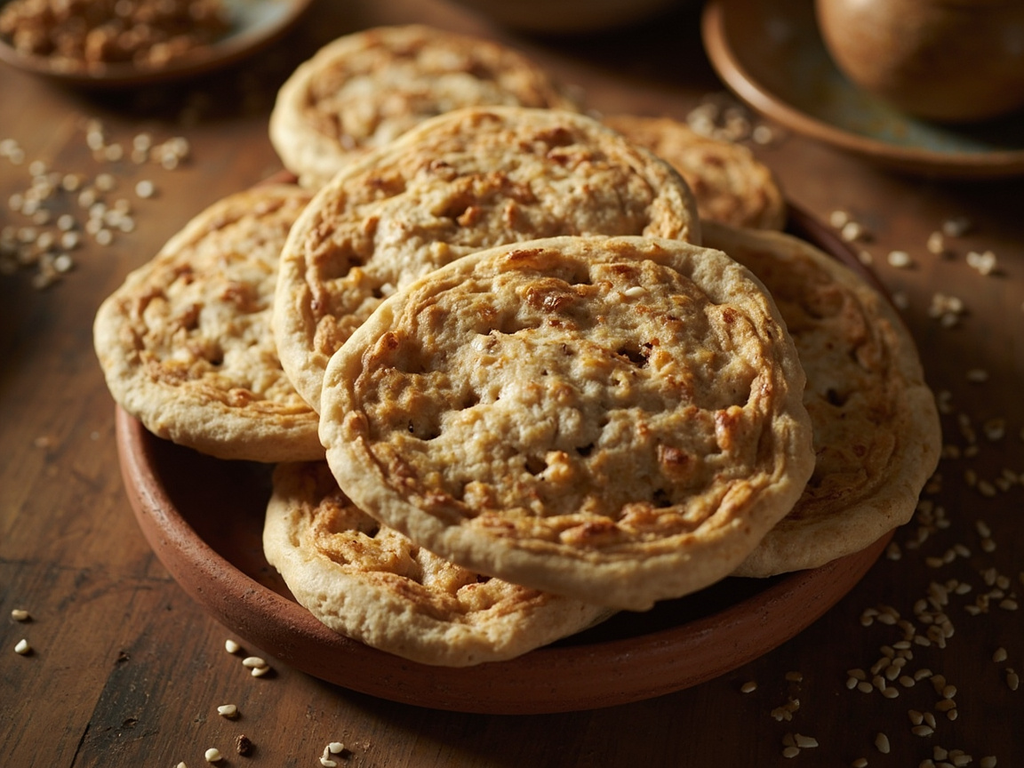
A dense, rustic barley flatbread, baked on the hot wall of a clay oven, to be broken and dipped into broth or beer.
Listen, you who will read my stele: in Babylon, barley is the law. I fixed in my Code the gur of barley as one fixes the weight of a life, for without bread there is neither soldier, nor scribe, nor temple. My maidservant kneaded the barley flour at dawn, slapped the flatbread against the hot oven, and the bread swelled before Shamash was high. Break off a piece, dip it in the broth: that is the gesture of every Babylonian, from the humblest to your king.
- •Barley flour — two measures (base grain)
- •Water — as needed (binding)
- •Salt — a pinch (seasoning)
- •Sourdough starter from the day before — a piece (optional) (light fermentation)
Akalu, the daily barley flatbread
A dense, rustic barley flatbread, baked on the hot wall of a clay oven, to be broken and dipped into broth or beer.
Why this dish? Barley was the king grain of Hammurabi's Babylonia: his Code fixes wages and rents in measures of barley. This flatbread was the bread of everyone, from laborer to king, the base of every meal.
Listen, you who will read my stele: in Babylon, barley is the law. I fixed in my Code the gur of barley as one fixes the weight of a life, for without bread there is neither soldier, nor scribe, nor temple. My maidservant kneaded the barley flour at dawn, slapped the flatbread against the hot oven, and the bread swelled before Shamash was high. Break off a piece, dip it in the broth: that is the gesture of every Babylonian, from the humblest to your king.
Ingredients (period version)
- Barley flour — two measures (base grain)
- Water — as needed (binding)
- Salt — a pinch (seasoning)
- Sourdough starter from the day before — a piece (optional) (light fermentation)
Ingredients
- Barley flour — 250 g (base grain)
- Wheat flour (for structure) — 50 g (elasticity)
- Warm water — 180 ml (binding)
- Salt — 1 tsp (seasoning)
- Sourdough starter or yeast — 1 tbsp starter (optional) (light fermentation)
Method
- Mix the flours and salt, gradually add the water until a supple dough forms.
- Knead for 5 minutes, let rest for 30 min (longer with starter).
- Divide into balls, roll out into thin flatbreads.
- Cook 3–4 minutes per side on a very hot griddle or cast-iron pan, until golden blisters appear.
- Keep warm under a cloth and serve with the broth.
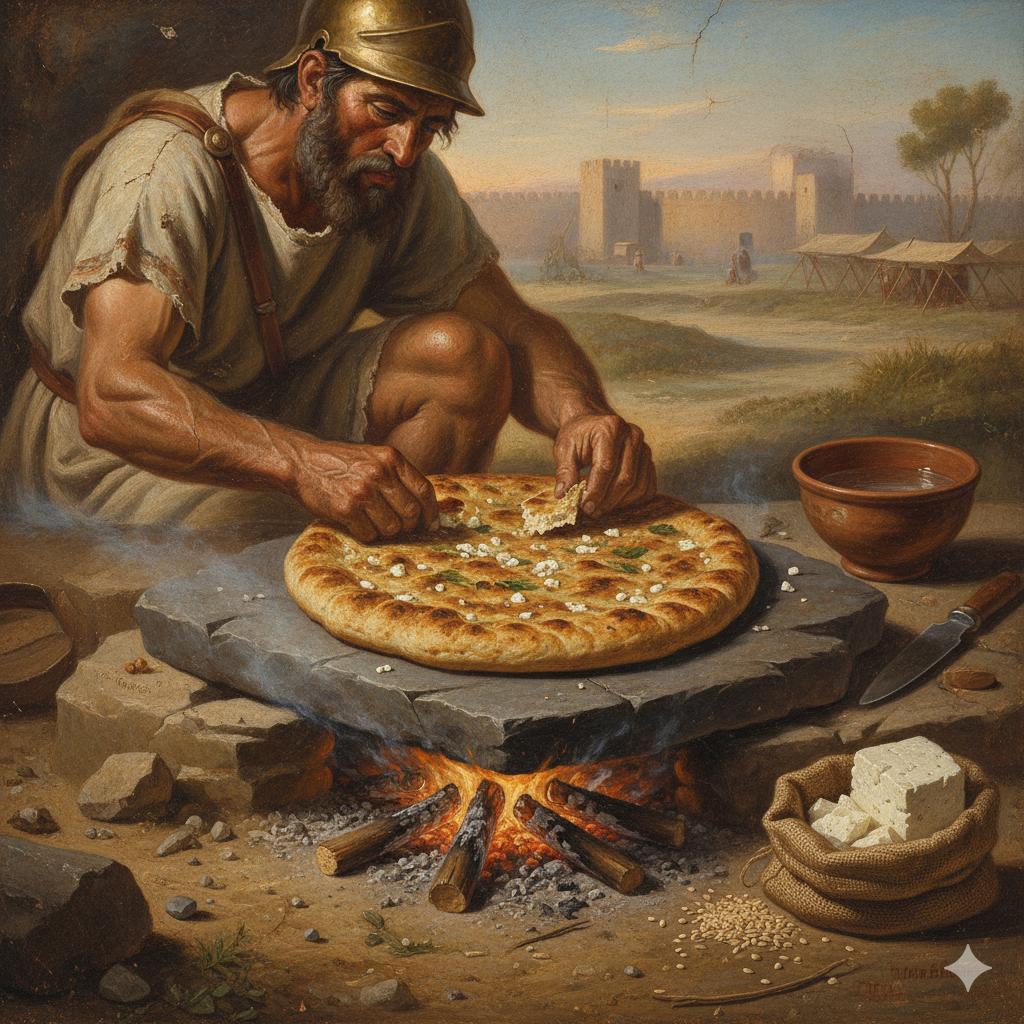
How it was made : These breads were baked against the inner wall of a clay oven (tinûru, ancestor of the tandoor), or on hot stones. Barley flour gives a flatter, denser bread than wheat, with a slightly bitter-nutty flavor.
The contemporary twist : Sprinkle with toasted sesame seeds before cooking, as a nod to the sesame oil prized by the Mesopotamians.
Sources : Jean Bottéro, La plus vieille cuisine du monde, 2002 · Code of Hammurabi (provisions on barley, §§ 51, 121)
Hammurabi · Charactorium