 flip
flipNûnu wablu, salted dried river fish
Nûnu wablu, salted dried river fish
Why this dish? The Tigris and Euphrates, between which Hammurabi's kingdom lay, teemed with fish, an essential food of Babylon. Salted and dried, it kept for months — a precious resource for the palace granaries, caravans, and the king's military campaigns.
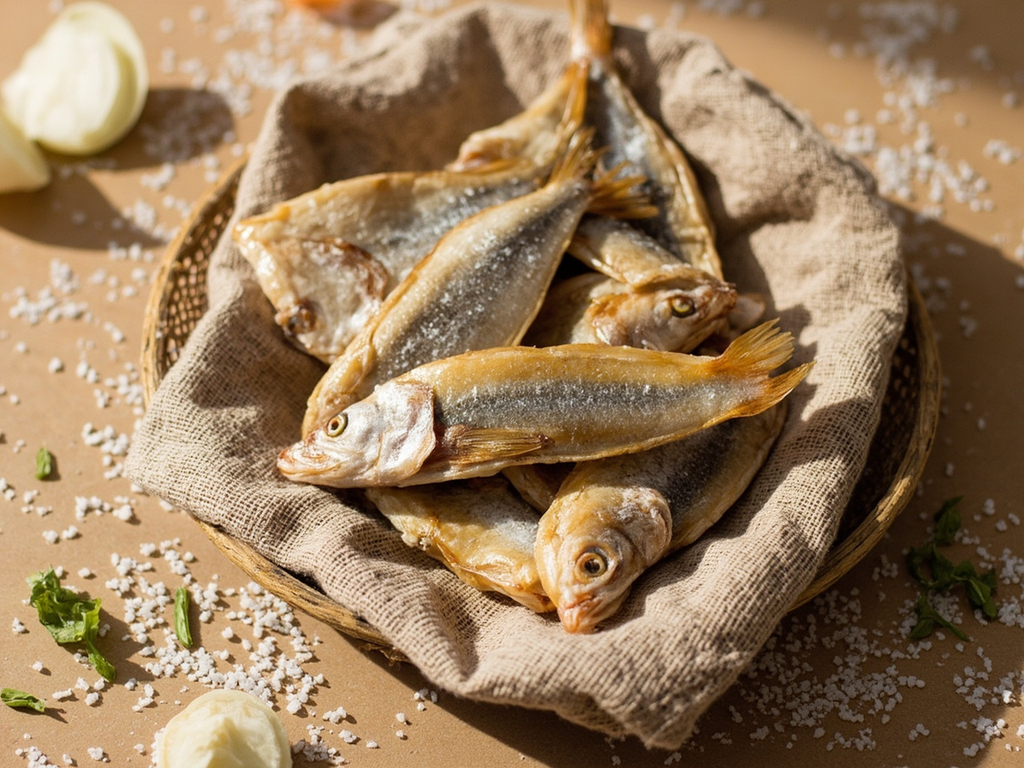
River fish fillets rubbed with salt and dried, to be rehydrated then crumbled into a broth or eaten with bread. Salty, deeply umami, made to last.
The Tigris and the Euphrates are the two breasts of my kingdom, and their fish feed my armies on the march. When no fire can be lit, the fish is rubbed with salt until it becomes firm like dried clay, and hung in the river wind. My scribes carried it in their sacks, my soldiers chewed it on the roads to Larsa and Mari. Soak it in water, crumble it on your bread: this is how a people passes through the seasons without ever going hungry.
- •River fish (carp, catfish) — several (product to preserve)
- •Salt — in abundance (preserving agent)
- •Wind and sun — several days (drying)
Nûnu wablu, salted dried river fish
River fish fillets rubbed with salt and dried, to be rehydrated then crumbled into a broth or eaten with bread. Salty, deeply umami, made to last.
Why this dish? The Tigris and Euphrates, between which Hammurabi's kingdom lay, teemed with fish, an essential food of Babylon. Salted and dried, it kept for months — a precious resource for the palace granaries, caravans, and the king's military campaigns.
The Tigris and the Euphrates are the two breasts of my kingdom, and their fish feed my armies on the march. When no fire can be lit, the fish is rubbed with salt until it becomes firm like dried clay, and hung in the river wind. My scribes carried it in their sacks, my soldiers chewed it on the roads to Larsa and Mari. Soak it in water, crumble it on your bread: this is how a people passes through the seasons without ever going hungry.
Ingredients (period version)
- River fish (carp, catfish) — several (product to preserve)
- Salt — in abundance (preserving agent)
- Wind and sun — several days (drying)
Ingredients
- Fillets of carp, trout or mackerel — 4 fillets (product to preserve)
- Coarse salt — 300 g (preserving agent)
- Crushed coriander seeds — 1 tbsp (flavor (optional))
Method
- Bury the fillets in the coarse salt mixed with coriander, skin side down, in a dish.
- Let them purge in the refrigerator for 24–36 hours, pouring off the released liquid.
- Rinse quickly, pat dry, and hang in a cool, ventilated place (or in the refrigerator on a rack) for 2–3 days, until the flesh is firm.
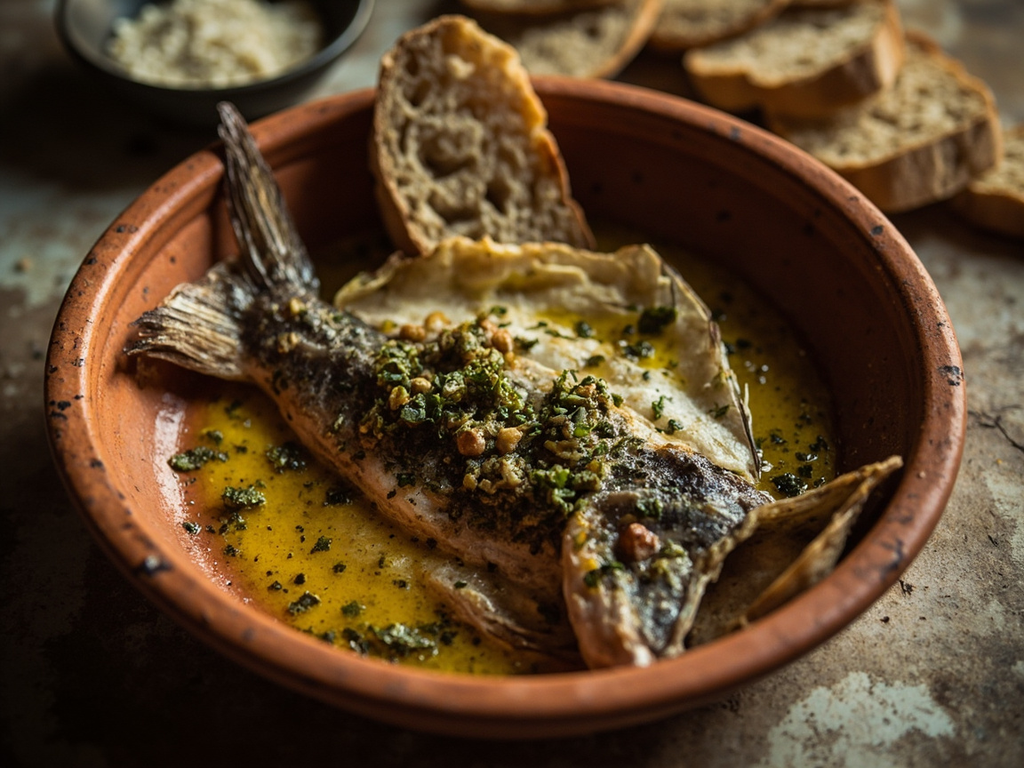
- To serve: desalt for 1 hour in water, then crumble into a hot broth, or slice thinly onto barley bread.
- Store cool, wrapped in a cloth.
How it was made : Without refrigeration, salting and sun-drying were the major Mesopotamian preservation techniques, applied to fish as well as dates. Dried fish appears abundantly in Sumerian and Babylonian economic texts.
The contemporary twist : Crumbled over barley bread with a drizzle of sesame oil and a few rings of sweet onion: a retro-futuristic 'Babylonian tartare'.
Sources : Jean Bottéro, La plus vieille cuisine du monde, 2002 · Sumerian and Paleo-Babylonian economic texts (dried fish rations)
Hammurabi · Charactorium