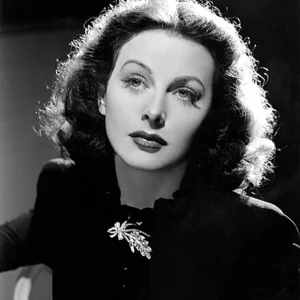

Austrian-born American actress, producer, and scientist
Hedy Lamarr(1914 — 2000)
Hedy Lamarr
Autriche, États-Unis
8 min read
Frequently asked questions
Key Facts
- Née Hedwig Eva Maria Kiesler à Vienne en 1914, elle devient actrice à Hollywood dans les années 1930-1940 sous le nom de Hedy Lamarr
- En 1942, elle co-invente avec le compositeur George Antheil un système de guidage de torpilles par étalement de spectre, ancêtre du Wi-Fi et du Bluetooth
- Elle obtient un brevet américain pour cette invention (brevet n°2 292 387) pendant la Seconde Guerre mondiale
- Sa technologie de saut de fréquence est adoptée par la marine américaine dans les années 1960 et sert de base aux communications sans fil modernes
- Elle reçoit en 1997 le Electronic Frontier Foundation Pioneer Award pour sa contribution à l'informatique et aux télécommunications
Works & Achievements
Co-invented with George Antheil, this frequency-hopping system forms the theoretical basis of Wi-Fi, Bluetooth, and CDMA. It is Hedy Lamarr's most influential work, even though its significance was not recognized until half a century after it was filed.
Her first major Hollywood role, alongside Charles Boyer, earned her immediate international recognition. This film definitively launched the Hedy Lamarr myth around the world.
Directed by Cecil B. DeMille, this biblical epic was a colossal commercial triumph. Hedy Lamarr portrayed Delilah with a dramatic intensity that remained etched in Hollywood's collective memory.
A Czechoslovak film by Gustav Machatý that caused a worldwide scandal. Although she regretted it for the rest of her life, the film brought her early notoriety that attracted the attention of American producers.
Memoirs in which Hedy Lamarr describes her life with a candor rare for the time. She immediately disowned the book, claiming the publishers had betrayed her confidences, and filed a lawsuit.
An adventure film starring Clark Gable and Spencer Tracy, which was one of the year's biggest box-office successes. It marks the peak of Hedy Lamarr's Hollywood career.
Anecdotes
In 1942, in the midst of World War II, Hedy Lamarr and composer George Antheil filed a patent for a 'frequency hopping' system designed to guide torpedoes without the enemy being able to jam the signal. The US Navy rejected the patent, deeming the idea too far-fetched. She never received any financial compensation for this invention.
Before fleeing Europe, Hedy Lamarr had married Friedrich Mandl, a wealthy Austrian arms dealer who worked with the Nazis and Italian fascists. She was unwillingly present at secret military meetings where she absorbed technical knowledge about guidance systems — knowledge she would later turn against the Axis.
In 1997, when she was 82 years old and had been forgotten by the general public, the Electronic Frontier Foundation presented her with the Pioneer Award for her foundational contribution to wireless technologies. It is one of the rare cases where a 20th-century patent directly gave rise to billions of dollars' worth of modern technologies (Wi-Fi, Bluetooth, GPS) without its inventor ever benefiting from it.
MGM, the major Hollywood studio that had her under contract in the 1940s, saw her as nothing more than a pretty face. Louis B. Mayer called her 'the most beautiful woman in the world' but refused to let her play complex roles. Tired of being confined to seductress parts, she turned increasingly to her invention work in her personal workshop.
In 1966, Hedy Lamarr published a controversial autobiography titled *Ecstasy and Me* in which she recounted her life with a candor that shocked Hollywood. She immediately regretted its publication, claiming that the editors had distorted her words, and attempted to have its distribution banned through legal action.
Primary Sources
A system is described for secret communication... the carrier frequency of the transmitter is caused to change or shift at intervals. The particular sequence of frequencies employed constitutes a code which, without knowledge of the code, renders the transmissions non-interceptable.
I have not been loved enough. That is certain. And what I have not found in real life, I have sought in the images on the screen.
It's about time.
Any girl can be glamorous. All you have to do is stand still and look stupid.
Letters exchanged between Lamarr and Antheil documenting the conceptual development of frequency hopping, drawing an analogy with the synchronized operation of player piano rolls.
Key Places
Birthplace of Hedwig Kiesler, steeped in the intellectual and artistic culture of interwar Central Europe. It was here that she developed her first passions for theater and the sciences.
The residence of her first husband Friedrich Mandl, where she was kept under constant surveillance and attended business meetings with Nazi and fascist officials, unwittingly accumulating knowledge about weaponry.
The Hollywood studio where Hedy Lamarr filmed her greatest American successes (Algiers, Samson and Delilah). It was here that her international fame was built, and where the contradiction between the glamorous actress and the inventor took shape.
The institution where patent no. 2,292,387 was filed on August 11, 1942 — the official act consecrating Hedy Lamarr as an inventor, even though its significance would not be recognized until decades later.
The city where Hedy Lamarr spent her final years in relative obscurity, before passing away in January 2000. It was there that she received visits from journalists who helped reintroduce her technological contribution to the general public.
Typical Objects

George Antheil, a specialist in synchronized player pianos, gave Hedy Lamarr the idea of encoding frequency hops like the perforations on a piano roll. This ordinary object is the origin of the central technical metaphor in the 1942 patent.

Hedy Lamarr's invention aimed to make these devices undetectable by the enemy, by hopping the signal across 88 different frequencies. It is the concrete object that the patent sought to revolutionize.

The frequency-hopping system was designed to guide radio-controlled torpedoes without German submarines being able to jam their trajectory. This is the direct military context of the invention.

A symbol of her double life: glamorous actress under Hollywood's spotlights by day, inventor working in her workshop by night. The clapperboard illustrates the tension between Hedy Lamarr's public image and her intellectual reality.

Hedy Lamarr had set up a drafting table in her Hollywood villa and would record her invention ideas between film shoots. During the war, she also contributed to imagining an effervescent tablet to replace Coca-Cola.

An anachronistic but symbolic object: Wi-Fi technology (IEEE 802.11) and Bluetooth rely directly on the frequency-hopping principle patented by Hedy Lamarr in 1942. Every modern phone call owes her a technological debt.
School Curriculum
Vocabulary & Tags
Key Vocabulary
Daily Life
Morning
Hedy Lamarr rose early, before shoots that sometimes began at six in the morning at MGM studios. She had a light breakfast at her Beverly Hills villa, read newspapers in several languages (English, German, French), and followed reports on the war in Europe with particular attention.
Afternoon
Filming afternoons alternated with makeup and hair sessions that lasted several hours. Between takes, she had developed the habit of scribbling technical sketches in notebooks, imagining improvements to everyday objects — she notably obtained a patent for a new type of traffic light.
Evening
In the evenings, after the obligatory Hollywood society dinners, Hedy Lamarr would return to the workshop she had set up in her villa and work late on her inventions. During World War II, she refused to attend gala parties, preferring to participate in war bond drives where she reportedly raised several million dollars per evening, according to the press.
Food
Her diet was influenced by the Viennese habits of her childhood — strong black coffee in the morning, a light lunch often consisting of salads and white meats. Conscious of the aesthetic constraints imposed by Hollywood, she watched what she ate without depriving herself of the formal dinners with producers.
Clothing
On set, she wore the sumptuous outfits designed by MGM's costume department — sequined evening gowns, oriental veils for exotic roles, elegant suits for contemporary scenes. In everyday life, she adopted a more understated style, preferring well-tailored city clothes in the New York fashion rather than Californian extravagance.
Housing
She lived in a Mediterranean-style Hollywood villa in Beverly Hills, furnished with taste but without ostentation. The most distinctive feature of her home was the drafting table and workbench she had installed in a room dedicated to her inventions — a strictly personal space in an otherwise socially open household.
Historical Timeline
Period Vocabulary
Visual Style
Le contraste visuel entre le glamour Technicolor d'Hollywood des années 1940 et l'esthétique froide et technique des brevets militaires en sépia, incarnant la double identité de Hedy Lamarr.
Sound Ambience
Un mélange de glamour hollywoodien et d'atmosphère d'atelier scientifique de guerre : studios de cinéma bruissants des années 1940, équipements radio militaires, et réminiscences viennoises.
Liens externes & ressources
Références
Œuvres
Brevet n° 2 292 387 — « Secret Communication System »
11 août 1942
Samson et Dalila (Samson and Delilah)
1949
Ecstasy and Me: My Life as a Woman — autobiographie
1966
See also
Related Characters

James Cameron
1954 — ?
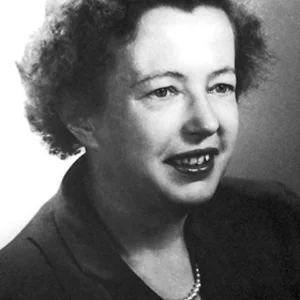
Maria Goeppert Mayer
1906 — 1972

Auguste Lumière
1862 — 1954
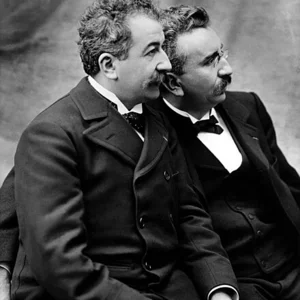
Lumière Brothers
1862/1864 — 1954/1948
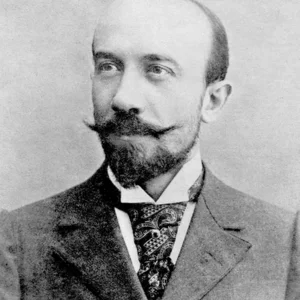
Georges Méliès
1861 — 1938

Louis Lumière
1864 — 1948