 Flip the card
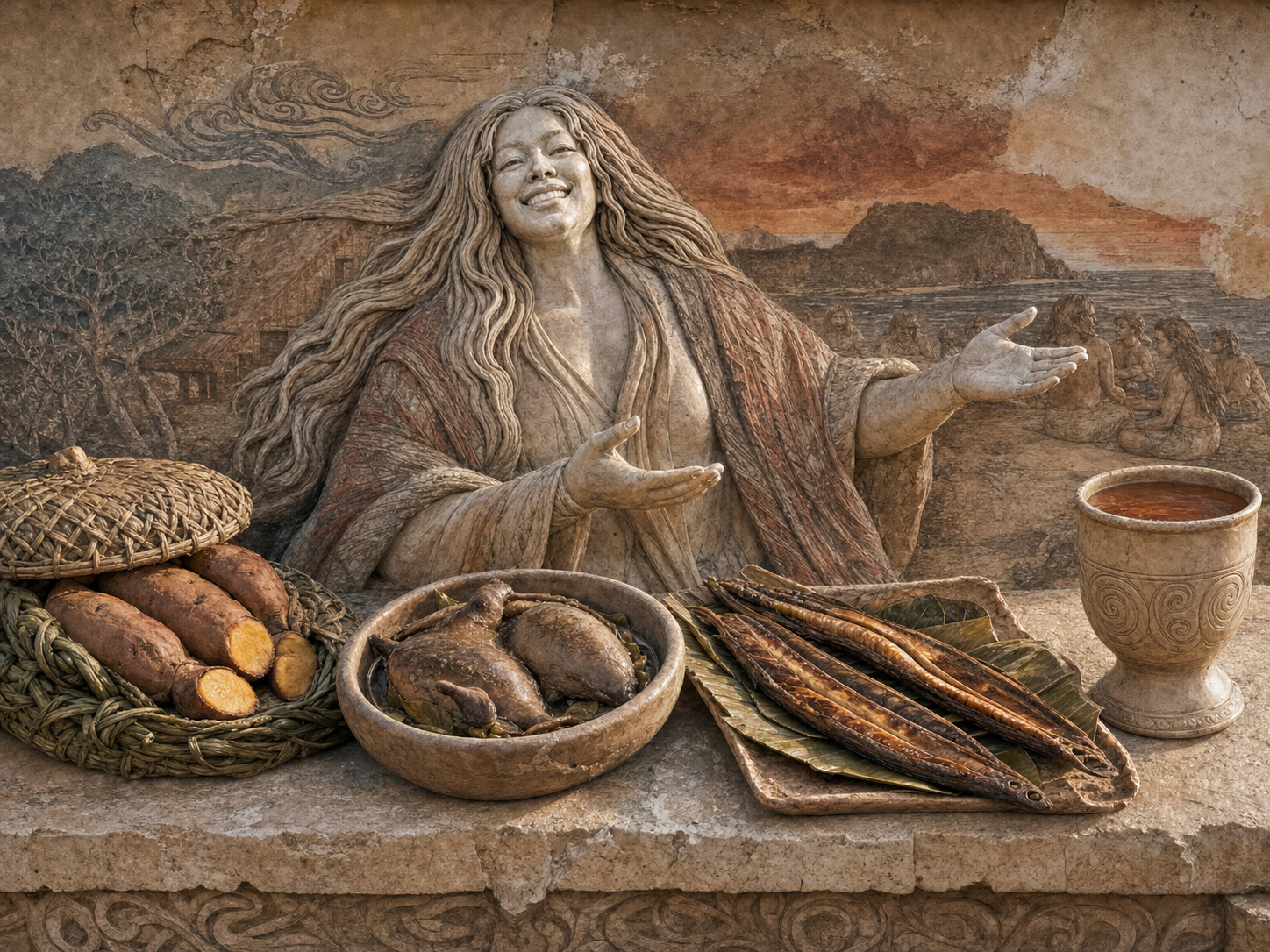
Hine-nui-te-pō at the table
On the menu
Te kai a te umu — the sharing of the earth oven
Among pre-contact Māori, a meal has no starter, main course, or dessert. Everything cooks together in the umu (or hāngī), a pit oven dug into the ground where red-hot stones produce slow steam; roots, birds, fish, and ferns are layered on the stones, covered with leaves and earth, and left to cook. Then people eat with their hands, sitting together, according to rank and the rules of tapu: certain foods, certain hands, certain fires are sacred and separate from noa (ordinary) things. The hākari, the great feast, marks deaths, alliances, and seasons.
Signature : The umu (hāngī) — stone-steaming
The iconic technique: no pot, no oil, but volcanic stones heated in a pit, sprinkled with water, which steam foods wrapped in leaves. It is the oven of the earth itself — the same into which, according to myth, the living return when they enter Te Pō.
click to flip back
Hine-nui-te-pō at the table
5 period recipes
 Offering
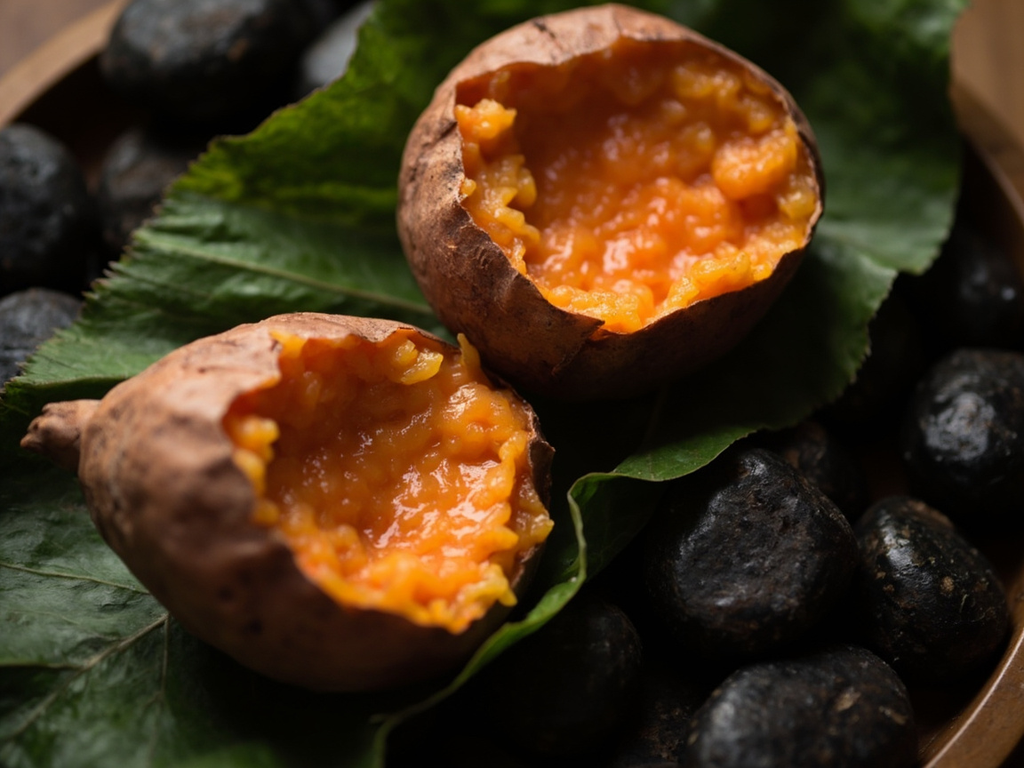
Kūmara o te umu — kūmara from the earth oven
Kai tapu — offering food placed at the threshold of Te Pō
🍯 🍄· 1 h
View the recipe
 Preserving
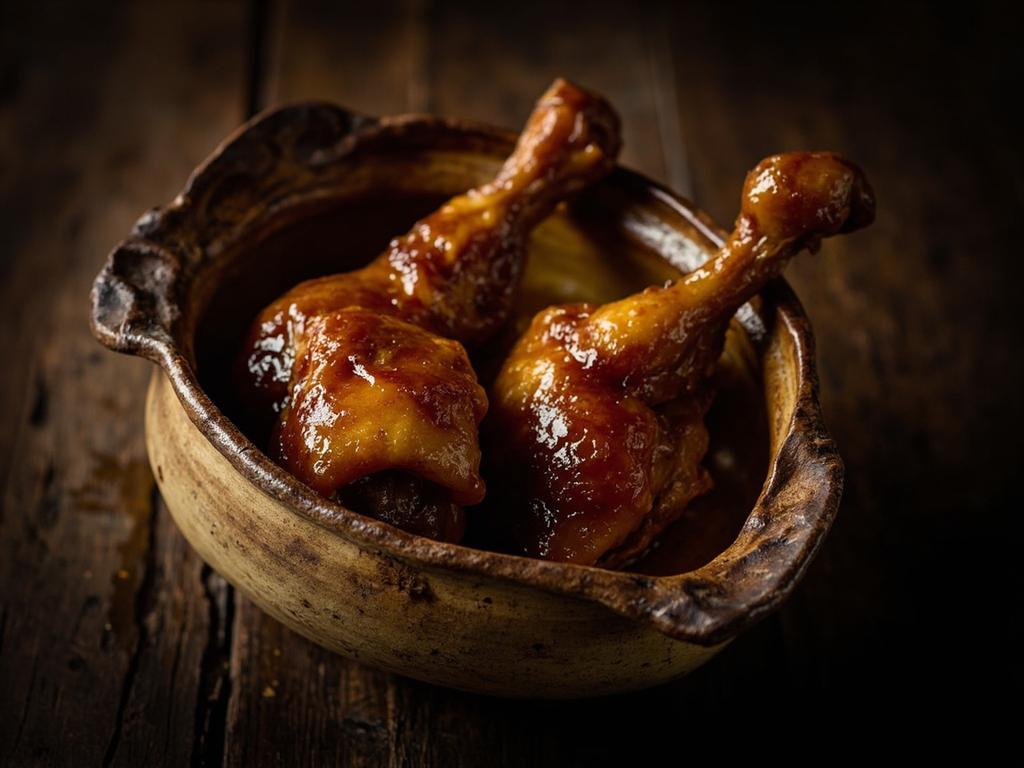
Huahua kererū — forest pigeons preserved in their own fat
Kai rongoa o te takurua — winter feast reserve and for hākari
🧂 🍄· 3 h (+ salting overnight)
View the recipe
 Everyday
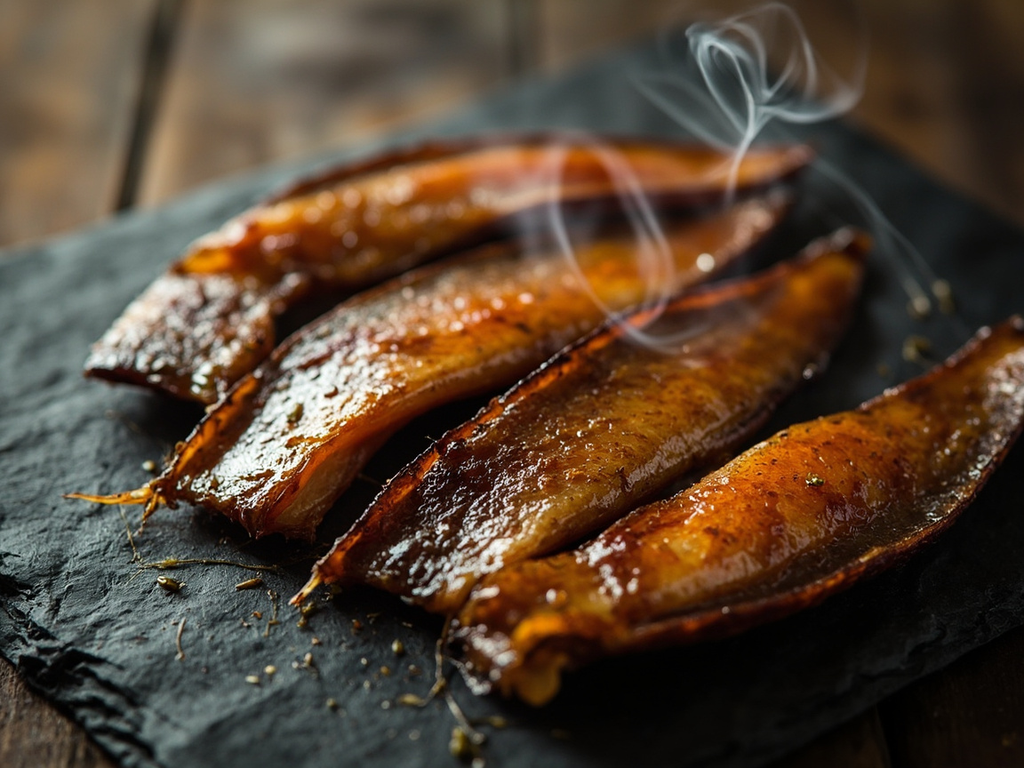
Tuna pāwhara — split and smoked eel
Kai o ia rā — everyday food, taken from the river
🧂 🍄· 1 h 30 (+ brining)
View the recipe
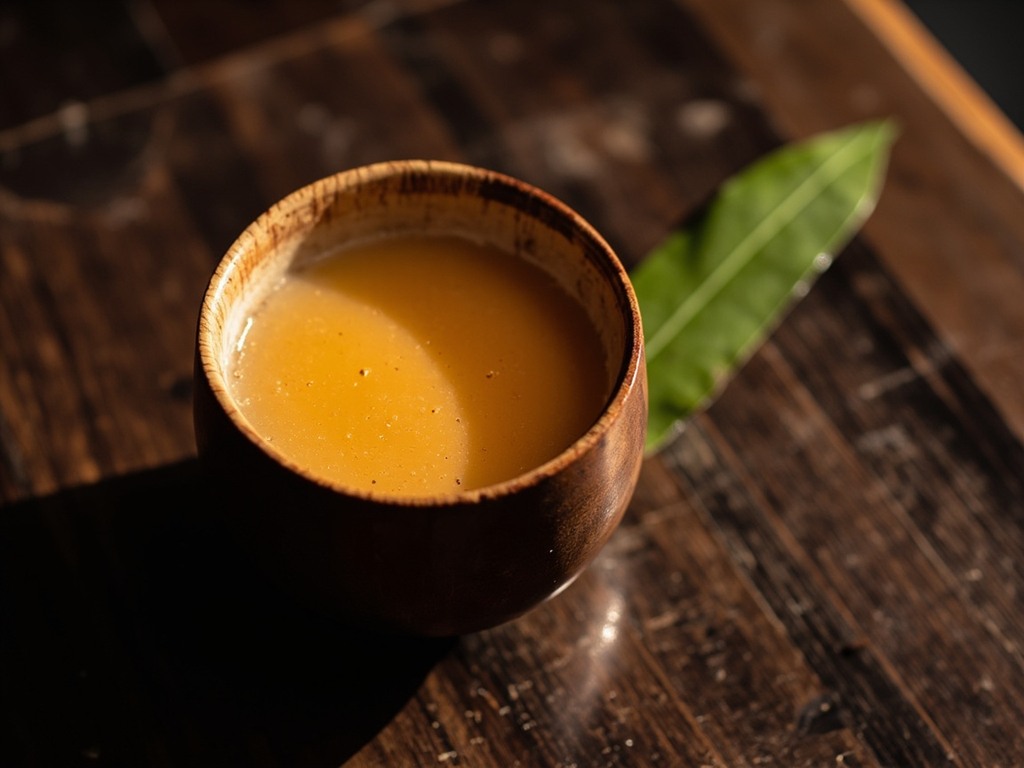 Drink
DrinkWai reka o te tī kōuka — sweet drink from cabbage tree root
Inu reka — sweet beverage drawn from the root, rare sweetness before bees' honey
🍯· 20 min
View the recipe
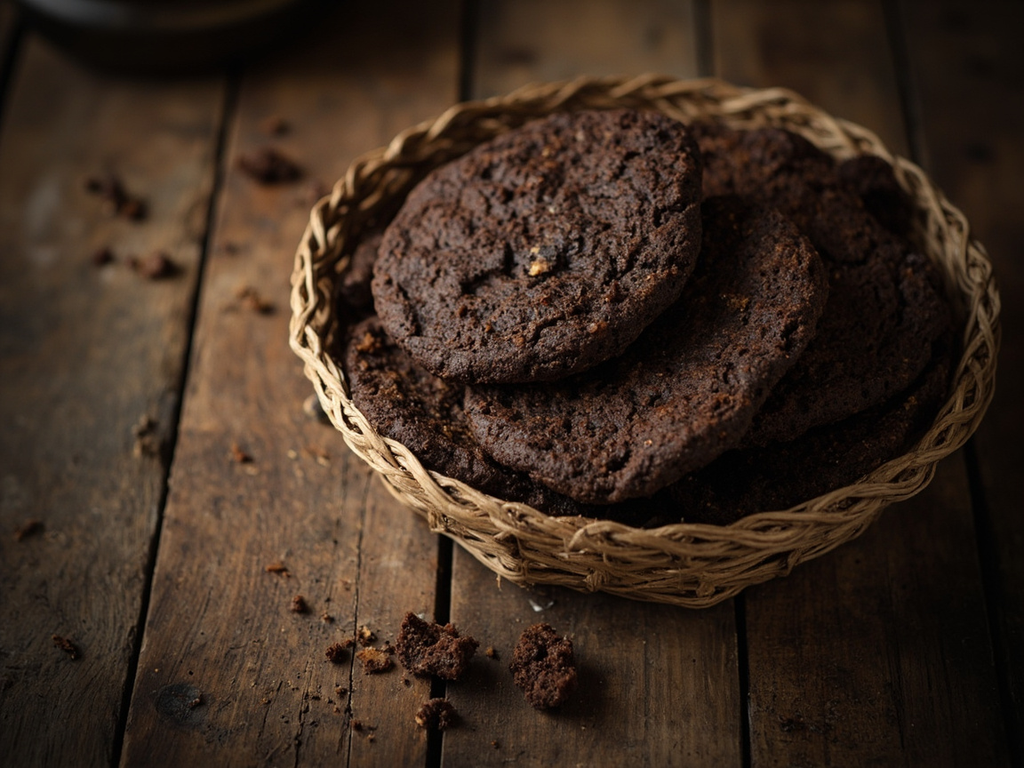 Travel
Keke hīnau — hīnau berry cakes
Kai haere — travel provision, carried on long journeys
☕ 🍯· 40 min
View the recipe