 flip
flipKūmara o te umu — kūmara from the earth oven
Kūmara o te umu — kūmara from the earth oven
Why this dish? The kūmara, a sweet root, was the Māori staple food and the first offered to spirits during funeral rites. At Hine-nui-te-pō, guardian of the dead, tubers cooked in the earth oven were symbolically placed at the threshold of the underworld to accompany the soul descending to her.
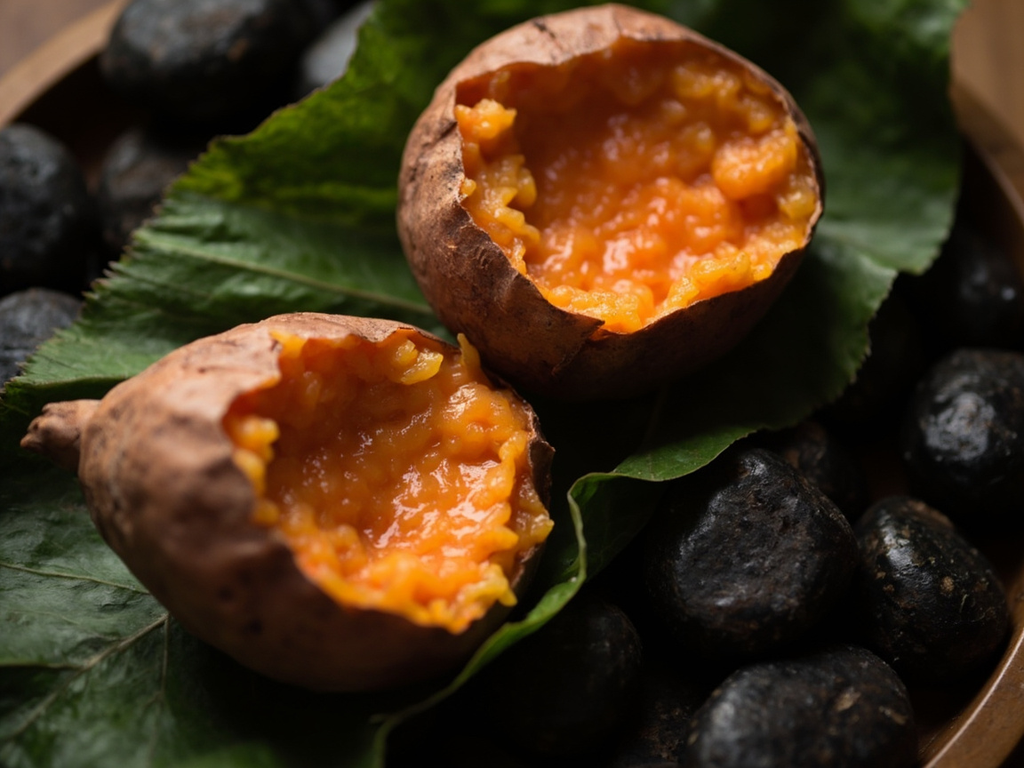
Kūmara steamed on hot stones until tender and caramelized, served on a fresh leaf as a gift. Sweet, earthy, comforting — the food entrusted to the one who watches over the departed.
Approach, you who still breathe. When one of your kin crosses the threshold of Te Pō and descends to me, the living place on the leaf these sweet roots, the kūmara that Rongo made grow. They lay them on the burning stones of the umu, cover them with earth, and the steam makes them soft as sleep. I am not hungry as you are hungry — I feed on the hau, the breath of things — but this gift soothes me, for it says the living remember. Eat also: what nourishes the dead first rejoices the living.
- •Kūmara (Polynesian sweet potato) — an armful of tubers (base root, sweetness)
- •Volcanic stones — a bed of stones (heat source for the umu)
- •Fresh leaves (rangiora, harakeke) — enough to cover (wrapping and steam)
- •Water — a few gourds (steam on the stones)
Kūmara o te umu — kūmara from the earth oven
Kūmara steamed on hot stones until tender and caramelized, served on a fresh leaf as a gift. Sweet, earthy, comforting — the food entrusted to the one who watches over the departed.
Why this dish? The kūmara, a sweet root, was the Māori staple food and the first offered to spirits during funeral rites. At Hine-nui-te-pō, guardian of the dead, tubers cooked in the earth oven were symbolically placed at the threshold of the underworld to accompany the soul descending to her.
Approach, you who still breathe. When one of your kin crosses the threshold of Te Pō and descends to me, the living place on the leaf these sweet roots, the kūmara that Rongo made grow. They lay them on the burning stones of the umu, cover them with earth, and the steam makes them soft as sleep. I am not hungry as you are hungry — I feed on the hau, the breath of things — but this gift soothes me, for it says the living remember. Eat also: what nourishes the dead first rejoices the living.
Ingredients (period version)
- Kūmara (Polynesian sweet potato) — an armful of tubers (base root, sweetness)
- Volcanic stones — a bed of stones (heat source for the umu)
- Fresh leaves (rangiora, harakeke) — enough to cover (wrapping and steam)
- Water — a few gourds (steam on the stones)
Ingredients
- Orange or white sweet potatoes — 1 kg (base root)
- Water — 100 ml (steam)
- Sea salt — 1 pinch (light seasoning)
- Banana leaves or baking paper — 2-3 leaves (wrapping for steaming)
Method
- Wash the sweet potatoes without peeling, leave them whole.
- Wrap them in banana leaves (or baking paper) with a splash of water, to recreate the umu steam.
- Place in a covered pot or steamer basket over low heat, 45 to 60 minutes, until a skewer goes through with no resistance.
- Let rest wrapped for 10 minutes: the steam finishes cooking and concentrates the sugar.
- Open, peel if desired, sprinkle with a pinch of salt, and serve on a fresh leaf.
How it was made : The kūmara was brought to Aotearoa by Polynesian ancestors well before 1492: it is one of the few foods of American origin attested in the pre-Columbian Pacific, stored in storage pits (rua kūmara) to last the winter. It was cooked in the umu, never boiled. Its harvest was surrounded by rituals and karakia (incantations).
The contemporary twist : Serve the kūmara split open, caramelized flesh facing up, on a large green leaf with a simple pinch of smoked salt: the earth oven fits on a plate.
Sources : Elsdon Best, Maori Agriculture (1925) · Te Ara — The Encyclopedia of New Zealand, « Kai (food) »
Hine-nui-te-pō · Charactorium