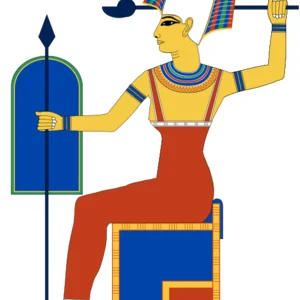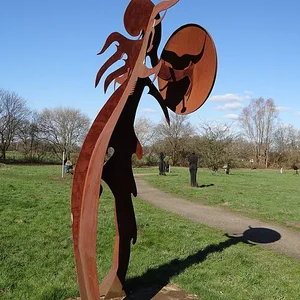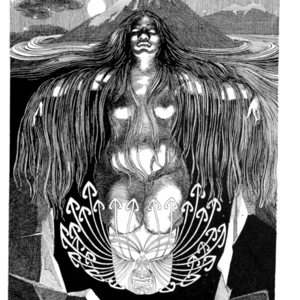

Māori goddess of death and guardian of the underworld (Te Pō), according to Polynesian oral traditions. Daughter of Tāne, she rules over the realm of the dead and receives the souls of the departed. Her myth illustrates the fundamental life-death cycle in Māori cosmology.
Hine-nui-te-pō
Hine-nui-te-pō
8 min read
Frequently asked questions
Key Facts
- According to Māori oral tradition, Hine-nui-te-pō was born under the name Hine-tītama, daughter of Tāne and Hine-ahuone (the first woman fashioned from clay)
- Upon learning that she had married her own father, Tāne, she descended into the underworld and became the goddess of death
- Her myth is central to the episode of the demigod Māui's death: he attempted to pass through her body to conquer immortality and was killed in the attempt
- She symbolizes the transition between light (Te Ao) and darkness (Te Pō) in Māori cosmology
- Her stories are transmitted exclusively through oral tradition; the earliest European transcriptions date from the 19th century
Works & Achievements
A foundational story explaining why humans are mortal. Māui attempts to pass through the body of the sleeping goddess to conquer immortality but fails, sealing humanity's mortal fate.
Sacred genealogy tracing the transformation of Hine-tītama into the goddess of death. Passed down in the whare wānanga as a key to understanding the life-death cycle in Māori cosmology.
Ritual formulas recited by tohunga to ease the soul's passage to Hine-nui-te-pō. These karakia are still practiced during contemporary tangihanga (Māori funeral ceremonies).
Poetic and musical compositions sung during funeral vigils to mourn the deceased and entrust them to the care of Hine-nui-te-pō. Each iwi holds its own waiata passed down from generation to generation.
Female figures with wide-open mouths, pounamu eyes, and protective gestures, interpreted as evocative of Hine-nui-te-pō in Māori meeting houses (wharenui).
Anecdotes
Hine-nui-te-pō was not always the goddess of death. She was first Hine-tītama, a radiant young woman born of the union of Tāne, god of the forests. When she discovered that her father was also her husband, overwhelmed with shame, she fled to the underworld Te Pō and transformed into the guardian of the dead, declaring: "Let me go and prepare the dwelling place for our children."
The cultural hero Māui once attempted to conquer death in order to grant immortality to all humans. He crept at night into the body of the sleeping Hine-nui-te-pō, intending to emerge through her mouth and thereby reverse the cycle of life. But a small bird — the pīwakawaka, the fantail — burst out laughing, waking the goddess, who crushed Māui between her obsidian-toothed thighs. From that day on, death has remained inevitable for every living creature.
Hine-nui-te-pō has eyes of pounamu (green jade), teeth of volcanic glass, and hair as red as the light of the setting sun. This terrifying appearance is not only a symbol of danger: for the Māori, it also represents the wild and powerful beauty of nature, which gives and takes life according to its own laws.
In Māori cosmology, dying is not a punishment but a homecoming. Hine-nui-te-pō welcomes each soul (wairua) with care into Te Pō, the world of night and ancestors. Traditional Māori funerals (tangihanga) honor this journey: loved ones weep and sing to guide the departed to her, via the headland of Te Reinga, where the spirit dives down into the underworld.
Primary Sources
Ko Māui i haere ki a Hine-nui-te-pō... ka kite ia i a ia e moe ana, ā, ko ōna niho he tūāhu, ko ōna aro he māwhatu kōhatu.
Maui now transformed himself into the likeness of a serpent... he crept towards the goddess of death, Hine-nui-te-po, who lay sleeping; but the little fantail bird laughed, and the goddess awoke.
Hine-nui-te-po is the personified form of death... she rules over Te Reinga, the place whither the spirits of the dead descend, and she receives them into her keeping.
Nō Tāne ia, nō Tāne anō tōna tāne — i ohorere ia, ka rere ki Te Pō, ka huri ko Hine-nui-te-pō.
She descended to the tenth realm of the underworld, and there became the guardian of all who follow the path of night. Her domain is without end, as the night itself.
Key Places
A sacred site where, according to Māori tradition, the souls of the dead leap into the sea to enter Te Pō, the underworld governed by Hine-nui-te-pō. An ancient pōhutukawa tree marks the departure point to the afterlife.
The mythological place of origin of Polynesian and Māori peoples, from which the ancestors came and to which souls return after death. Hine-nui-te-pō is connected to it as the guardian of the final return.
A geothermal region of Aotearoa, home to many iwi and a center for the oral transmission of traditions within the whare wānanga. Its geysers and volcanic landscapes are associated with the subterranean forces of Te Pō.
Traditional esoteric schools where tohunga orally transmitted whakapapa and cosmological myths, including those of Hine-nui-te-pō. Such places existed within every Māori community.
Typical Objects
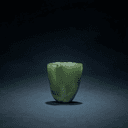
A sacred stone from New Zealand, symbolizing mana (spiritual power) and ancestral connection. The eyes of Hine-nui-te-pō are described as made of pounamu, representing death's eternal gaze upon the living.
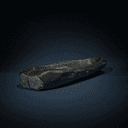
Shards of volcanic glass that the goddess wears as teeth, according to traditional accounts. This detail conveys both the inescapable sharpness of death and the volcanic nature of the Māori land.
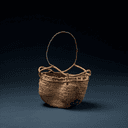
A sacred container used in Māori rituals to carry the bones of the deceased during the hahunga (secondary exhumation). A symbol of passage and the protection of souls on their journey to Te Pō.
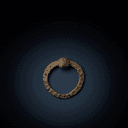
A carved comb worn in the hair during ceremonies. In the myth, the red hair of Hine-nui-te-pō is associated with the colors of dusk — the moment of transition between the world of the living and the realm of the dead.
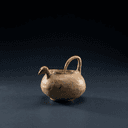
A carved wooden territorial marker planted on graves or at the boundaries of sacred areas (tapu). It represents the link between the world of the living and the domain of Hine-nui-te-pō.
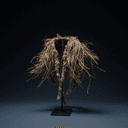
A traditional ceremonial garment woven from flax and adorned with feathers. Chiefs and tohunga (priests) wore such cloaks during funeral rites to honor the passage of the deceased into Hine's care.
School Curriculum
Vocabulary & Tags
Key Vocabulary
Tags
Daily Life
Morning
Hine-nui-te-pō reigns over Te Pō, the world of perpetual night, where there is no distinction between day or morning. At the dawn of the living world, she receives the souls who have just completed their journey from Te Reinga. She welcomes them with solemn care, recognizing them as her own children returning to her.
Afternoon
At the heart of Te Pō, the goddess presides over the order of the underworld, watching over the countless wairua (spirits) entrusted to her. She maintains the balance between the world of the dead and that of the living, ensuring that the cosmic cycle is never broken. No soul may cross her boundaries without her consent.
Evening
At sunset — a moment she embodies in her very nature, for her name evokes the great night — Hine-nui-te-pō manifests in the red and black hues of twilight. This is the hour when the boundaries between worlds grow thin, and when tohunga recite karakia to honor her power.
Food
As a mythological deity, Hine-nui-te-pō does not eat as humans do. She sustains herself on the vital energy of the souls that come to her and on the hau (life force) of the world. In oral traditions, food offerings — cooked root vegetables, dried fish — were symbolically presented to her during funeral rituals.
Clothing
The goddess is described as wearing garments woven from flax (harakeke) into dark kakahu, adorned with black feathers and shells. Her ornaments include pounamu (greenstone jade) pendants and obsidian shards. Her tā moko (sacred tattoo) covers her face in spirals symbolizing eternity and the cycle of life.
Housing
Hine-nui-te-pō dwells in Te Pō, the underworld reaching ten levels deep according to some traditions. Her domain is described as vast, dark, and warm, crossed by invisible rivers and forests. Its entrance is guarded by mythical beings, and there she receives souls in a wharenui (meeting house) of cosmic proportions.
Historical Timeline
Period Vocabulary
Visual Style
Style inspiré de la sculpture whakairo māorie et d'une esthétique mythologique sombre : une déesse majestueuse et terrifiante, ornée de jade et d'obsidienne, baignée des lumières volcaniques de l'au-delà.
Sound Ambience
Ambiance nocturne et ancestrale d'une forêt māorie, mêlant le silence profond de Te Pō au son de l'océan et aux appels rituels des tohunga guidant les âmes vers la déesse de la mort.
Liens externes & ressources
Références
Œuvres
Mythe de Māui et Hine-nui-te-pō — tradition orale māorie
transmis depuis le Xe siècle environ
Whakapapa de Hine-tītama / Hine-nui-te-pō
tradition orale, fixée par écrit vers 1849
Karakia (prières et incantations) pour les mourants
tradition continue depuis le peuplement d'Aotearoa
Waiata tangi (chants funèbres)
tradition orale vivante
Représentations sculptées dans la statuaire whakairo
à partir du XIVe siècle