Ichijū-issai (一汁一菜) — the shōjin monastic meal
At the table of a Pure Land monk, neither meat nor fish is served, but the austere elegance of shōjin ryōri: a bowl of rice or porridge, a soup, and a seasonal side dish (ko, the "support"). Everything is counted, nothing is wasted: the meal itself is a prayer. Sweets and drink appear only on offering days (ohigan, anniversaries of Amida) when what the earth has given is placed on the altar.
Signature : Kōji and sesame — umami without blood
Deprived of meat and fish by precept, the monk draws all depth of flavor from fermentation (kōji of miso, amazake) and the rich fat of ground sesame. These two gestures — letting rice sweeten on its own, crushing the seed into cream — are the backbone of this cuisine of renunciation that never renounced flavor.
Hōnen at the table
1133 — 1212
5 period recipes
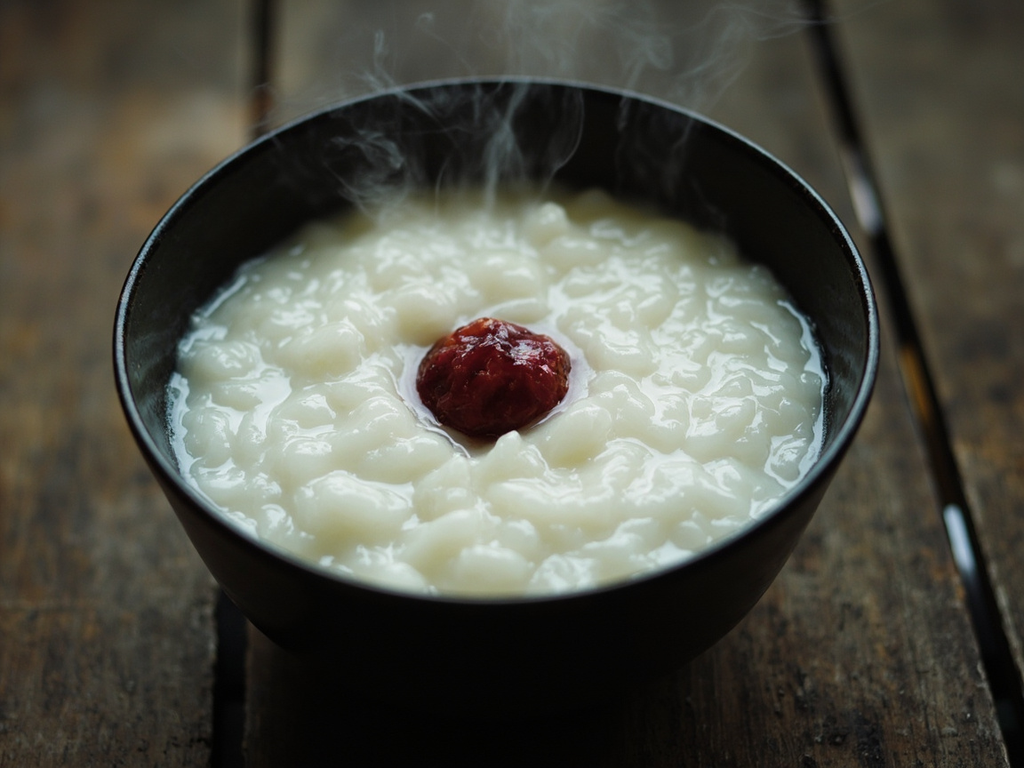 Everyday
Okayu — morning rice porridge
Shu (主) — the rice foundation of the ichijū-issai meal
🍄 🧂· 55 min
View the recipe
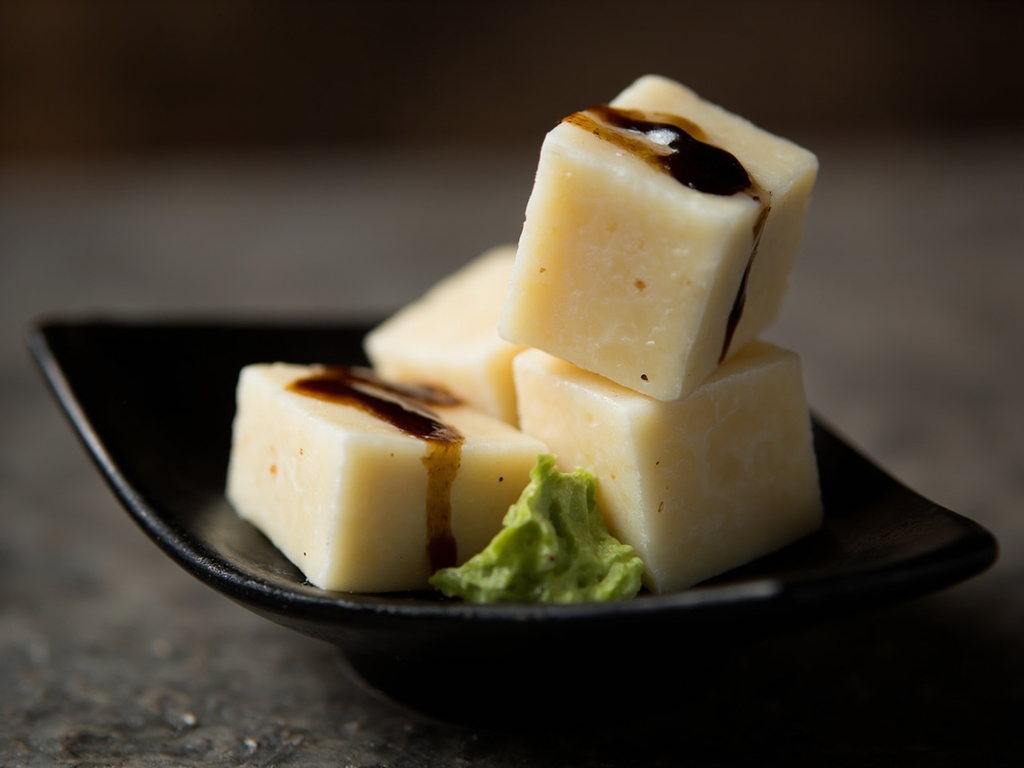 Festive
Goma-dōfu — sesame "tofu" with kuzu
Ko (香) — the refined side dish for ceremonial days
🍄 ☕· 30 min + 2 h setting
View the recipe
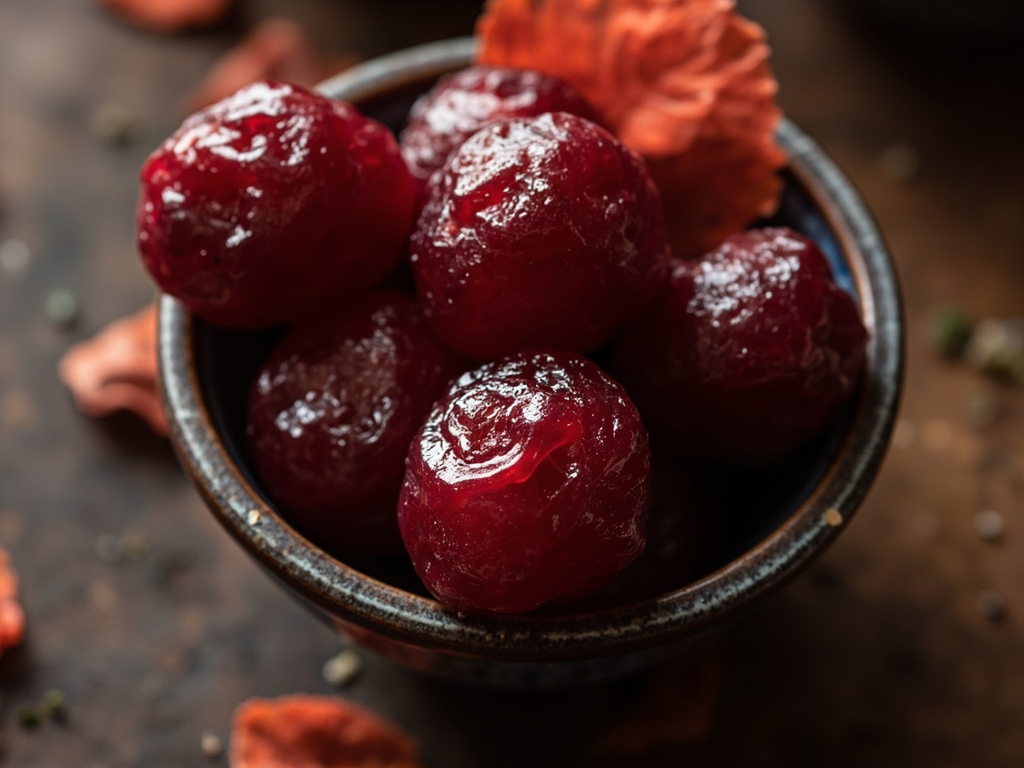 Preserving
Umeboshi — salted plums with shiso
Tsukemono (漬物) — the sour preserve that wakes up the rice
🍋 🧂 🫙· Preparation 1 h, maturation 6 to 8 weeks
View the recipe
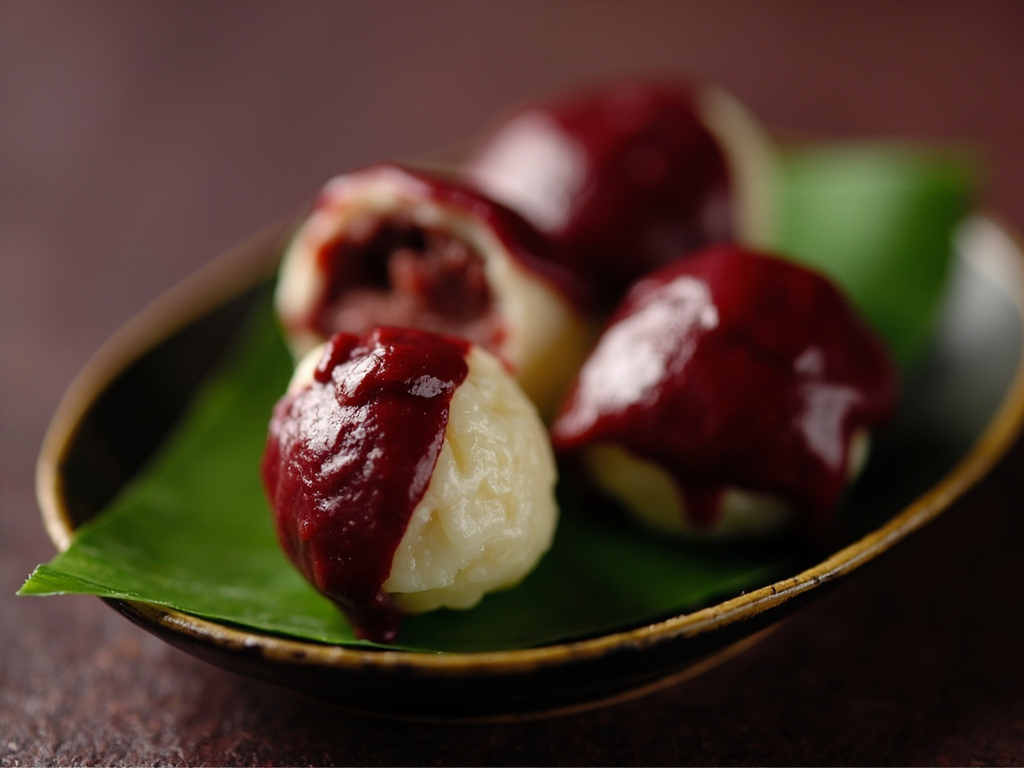 Offering
Botamochi — glutinous rice wrapped in azuki bean
Kashi d'ohigan (彼岸) — the offering sweet of Buddhist equinoxes
🍯· 1 h 45
View the recipe
 Drink
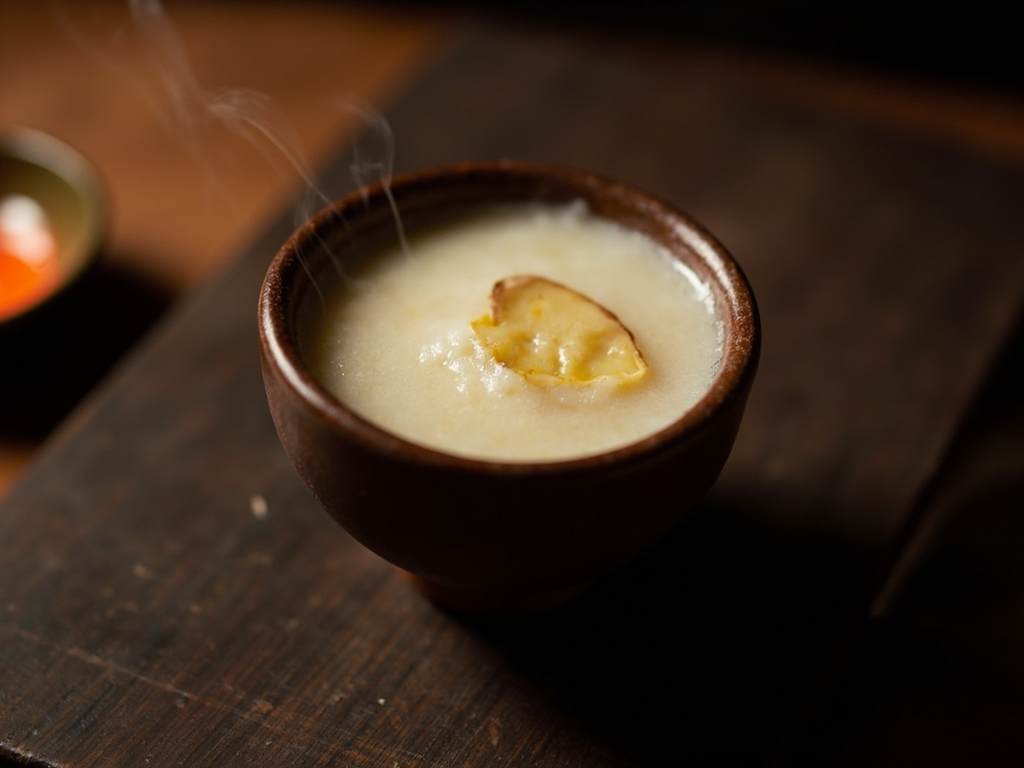
DrinkAmazake — fermented rice drink with kōji
Nomimono d'offrande (飲物) — the sweet, warm drink of prayer vigils
🍯 🫙· Preparation 15 min + fermentation 8 to 10 h
View the recipe