 flip
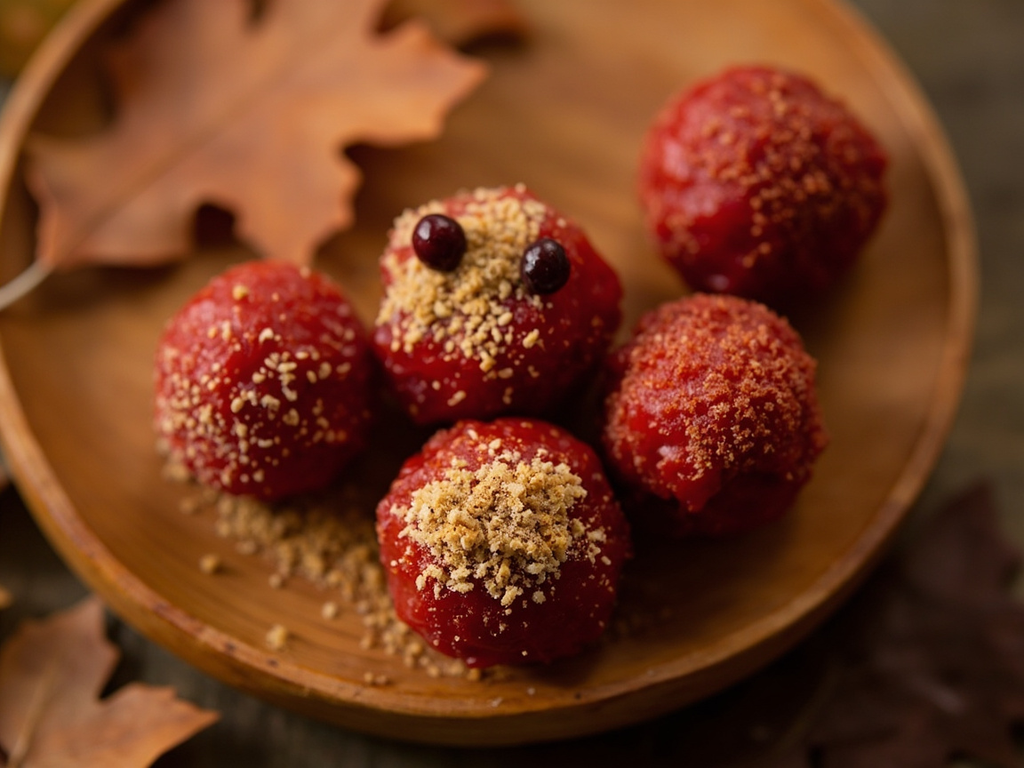
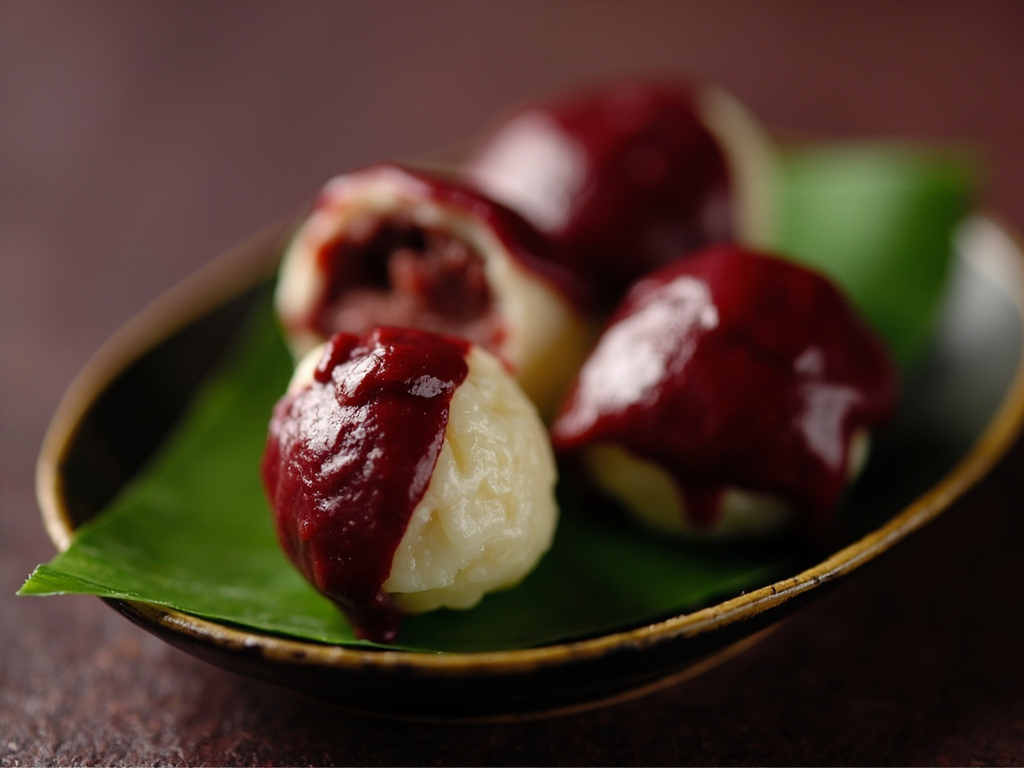
flipBotamochi — glutinous rice wrapped in azuki bean
Botamochi — glutinous rice wrapped in azuki bean
Why this dish? At the equinoxes (ohigan), devotees place on the Buddha altar rice balls rolled in azuki paste, whose red color wards off evil. For Hōnen, who wanted salvation offered to the humblest, this sweet shared by villagers — and not reserved for nobles — said it all: the grace of Amida, like botamochi, is for everyone.
A ball of half-pounded glutinous rice, wrapped in barely sweetened azuki paste. Dark red, dense, comforting: the cake of the dead that is offered and shared on holy days.
On the days when day and night are equal, we prepare this for the Buddhas and for our departed. I pound the rice halfway — neither whole grain nor paste, like man between this world and the Pure Land — then I roll it in the red bean, for this color, they say, drives away shadows. Sugar is rare and dear, so I let the bean give its sweetness by itself, barely enhanced. Offer some first to the altar, reciting the Name; what remains, share without counting — grace is not kept for oneself.
- •Glutinous rice (mochigome) — one bowl (core of the dumpling)
- •Azuki beans — two bowls (red coating)
- •Brown sugar (or amazake / a little honey) — very little, a precious commodity (sweetness)
- •Salt — a pinch (enhances the paste)
Botamochi — glutinous rice wrapped in azuki bean
A ball of half-pounded glutinous rice, wrapped in barely sweetened azuki paste. Dark red, dense, comforting: the cake of the dead that is offered and shared on holy days.
Why this dish? At the equinoxes (ohigan), devotees place on the Buddha altar rice balls rolled in azuki paste, whose red color wards off evil. For Hōnen, who wanted salvation offered to the humblest, this sweet shared by villagers — and not reserved for nobles — said it all: the grace of Amida, like botamochi, is for everyone.
On the days when day and night are equal, we prepare this for the Buddhas and for our departed. I pound the rice halfway — neither whole grain nor paste, like man between this world and the Pure Land — then I roll it in the red bean, for this color, they say, drives away shadows. Sugar is rare and dear, so I let the bean give its sweetness by itself, barely enhanced. Offer some first to the altar, reciting the Name; what remains, share without counting — grace is not kept for oneself.
Ingredients (period version)
- Glutinous rice (mochigome) — one bowl (core of the dumpling)
- Azuki beans — two bowls (red coating)
- Brown sugar (or amazake / a little honey) — very little, a precious commodity (sweetness)
- Salt — a pinch (enhances the paste)
Ingredients
- Glutinous rice (mochigome) — 200 g (core of the dumpling)
- Dried azuki beans — 200 g (coating paste)
- Sugar (brown cane sugar) — 120 g (sweetness (reduce for period authenticity))
- Salt — 1 pinch (balance)
Method
- Cook the glutinous rice (soaked 4 hours) by steaming or boiling until tender.
- Pound it coarsely with a pestle: it should remain half-grainy (hangoroshi).
- Shape into oval dumplings with wet hands.
- For the azuki: cook the beans in water until completely tender (1 to 1.5 hours), discard the first water to remove bitterness.
- Mash, add sugar and a pinch of salt, dry over low heat while stirring until a thick paste (an).
- Wrap each rice dumpling in a layer of warm azuki paste. Serve the same day.
How it was made : Sweetened rice with azuki has long been associated with Japanese Buddhist worship and ancestral offerings; its red color was believed to ward off misfortune. In the 12th century, sugar remained a luxury import (used almost exclusively for medicine): ancient versions were much less sweet than modern wagashi, with sweetness coming mainly from the bean itself.
The contemporary twist : Rolled in kinako (toasted soybean flour) instead of paste, for a lighter bite, tea-house counter style.
Hōnen · Charactorium