 flip
flipOkayu — morning rice porridge
Okayu — morning rice porridge
Why this dish? On Mount Hiei and later at Yoshimizu, a monk's day began before dawn with a bowl of clear porridge, eaten in silence before the first nembutsu recitations. Poor, warm, economical with a little rice: exactly the food of a man who preached a salvation "accessible to all."
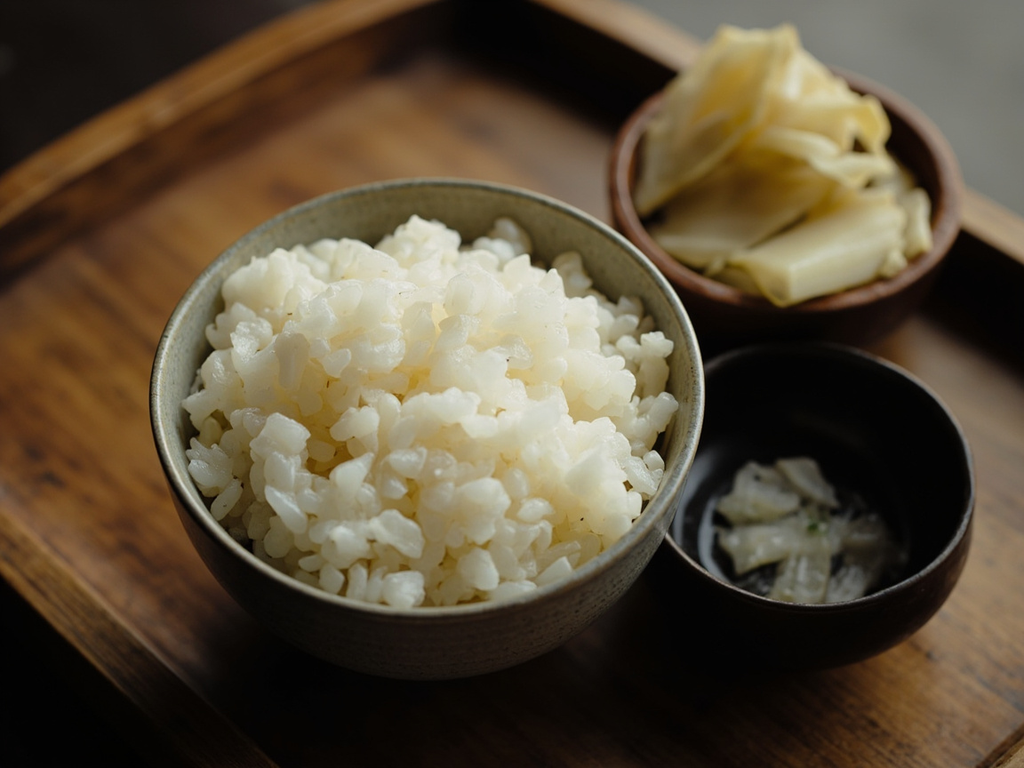
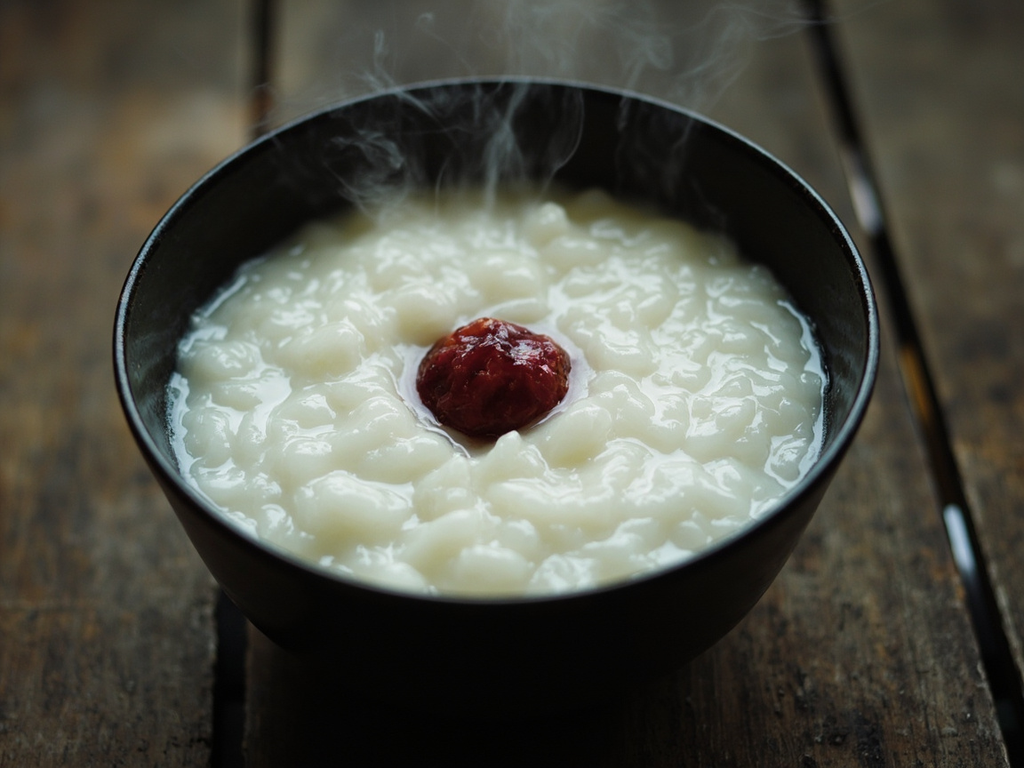
Rice slowly simmered in plenty of water until it becomes a silky porridge, barely seasoned with a salted plum. It is the breakfast of the poor and the monk alike, the belly filled without weighing on the world.
Approach, and do not fear the simplicity of this bowl. Before the sky lightens over Hiei, I let a handful of rice swell in plenty of water, over a fire barely kept alive — for patience is already a devotion. A single salted plum in the hollow, and it is enough: Amida did not ask us to gorge ourselves, only to invoke Him with a straight heart. Eat slowly, reciting the Name within yourself, and you will see that a little rice suffices to keep a man standing all day.
- •White rice — a small handful per bowl (staple grain)
- •Spring water — in abundance (7 to 8 times the rice) (cooking liquid)
- •Salted plum (umeboshi) — 1 per bowl (seasoning, preservation)
Okayu — morning rice porridge
Rice slowly simmered in plenty of water until it becomes a silky porridge, barely seasoned with a salted plum. It is the breakfast of the poor and the monk alike, the belly filled without weighing on the world.
Why this dish? On Mount Hiei and later at Yoshimizu, a monk's day began before dawn with a bowl of clear porridge, eaten in silence before the first nembutsu recitations. Poor, warm, economical with a little rice: exactly the food of a man who preached a salvation "accessible to all."
Approach, and do not fear the simplicity of this bowl. Before the sky lightens over Hiei, I let a handful of rice swell in plenty of water, over a fire barely kept alive — for patience is already a devotion. A single salted plum in the hollow, and it is enough: Amida did not ask us to gorge ourselves, only to invoke Him with a straight heart. Eat slowly, reciting the Name within yourself, and you will see that a little rice suffices to keep a man standing all day.
Ingredients (period version)
- White rice — a small handful per bowl (staple grain)
- Spring water — in abundance (7 to 8 times the rice) (cooking liquid)
- Salted plum (umeboshi) — 1 per bowl (seasoning, preservation)
Ingredients
- Short-grain rice (Japanese or risotto rice) — 100 g (staple grain)
- Water — 800 ml (cooking liquid)
- Umeboshi (salted plum) — 2 (tangy garnish)
- Salt — 1 pinch (seasoning)
Method
- Rinse the rice in cold water until it runs almost clear.
- Put rice and water in a pot, bring to a simmer.
- Reduce heat to lowest, cover partially, and let simmer for 40 to 50 minutes without stirring vigorously, until thick and pearly porridge.
- Season with a pinch of salt, pour into bowls, place an umeboshi in the center.
- Serve piping hot, to be eaten in silence.
How it was made : Kayu is attested very early in Japanese monasteries: it stretched a meager ration of rice (a precious commodity, often owed as tax) into a warm, nourishing meal. Monks took it at dawn, before services, in a discipline of silence and non-waste.
The contemporary twist : A pinch of toasted sesame furikake and a few strips of nori on top: the same dawn porridge, Sunday comfort version.
Hōnen · Charactorium