 flip
flipGoma-dōfu — sesame "tofu" with kuzu
Goma-dōfu — sesame "tofu" with kuzu
Why this dish? Shōjin ryōri had to nourish men deprived of flesh: ground sesame brought the fat and satiety denied by fish. Served on ceremony days at the temple, this creamy dish embodies Hōnen's ideal — humble but dignified food, offered to all without distinction of rank.
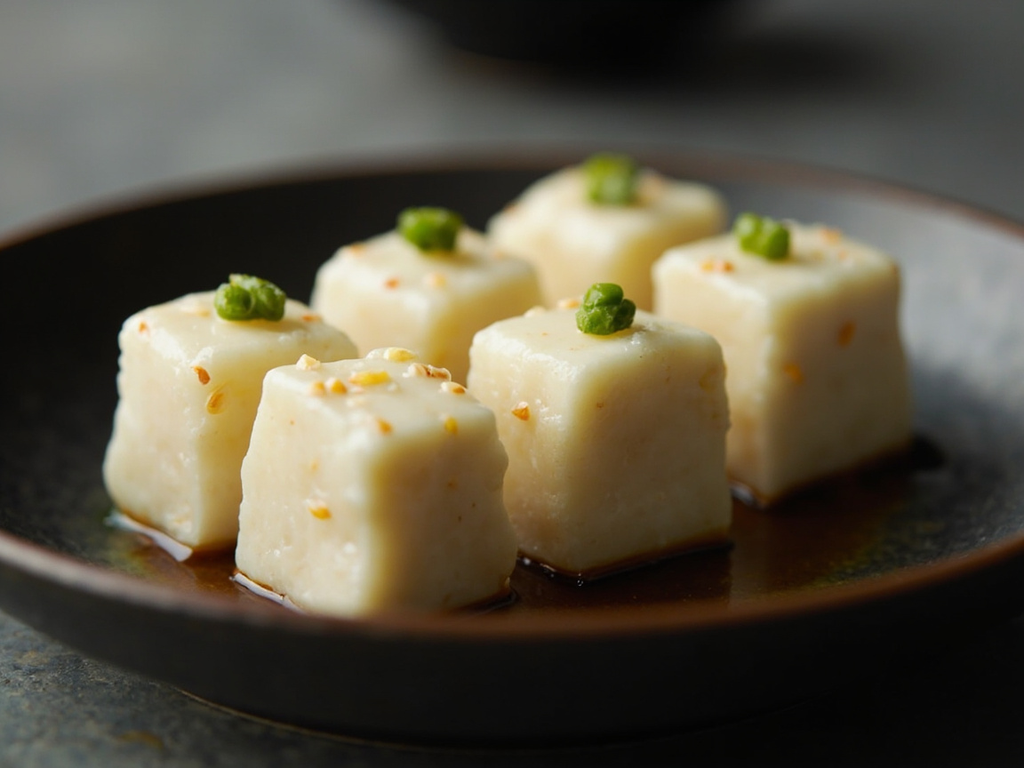
A sesame cream bound with kuzu starch, set like a firm, silky flan, both cool and rich. A monk's luxury: zero animal products, yet the mouth is full.
See how the humble seed can satisfy! I grind the toasted sesame on the stone until it yields its oil, then I marry it to kuzu drawn from the mountain and I stir, stir over low heat without ever stopping — for he who drops the spoon gets lumps, and he who drops the Name loses himself. Let it set in the cool. You will find no sacrificed beast therein, and yet your belly will be content: that is my way of saying one can be sated without shedding blood.
- •Toasted white sesame — one bowl (fat, flavor)
- •Kuzu starch (kudzu) — half a bowl (binder, setting agent)
- •Spring water — in proportion (dilution)
- •Salt — a pinch (seasoning)
Goma-dōfu — sesame "tofu" with kuzu
A sesame cream bound with kuzu starch, set like a firm, silky flan, both cool and rich. A monk's luxury: zero animal products, yet the mouth is full.
Why this dish? Shōjin ryōri had to nourish men deprived of flesh: ground sesame brought the fat and satiety denied by fish. Served on ceremony days at the temple, this creamy dish embodies Hōnen's ideal — humble but dignified food, offered to all without distinction of rank.
See how the humble seed can satisfy! I grind the toasted sesame on the stone until it yields its oil, then I marry it to kuzu drawn from the mountain and I stir, stir over low heat without ever stopping — for he who drops the spoon gets lumps, and he who drops the Name loses himself. Let it set in the cool. You will find no sacrificed beast therein, and yet your belly will be content: that is my way of saying one can be sated without shedding blood.
Ingredients (period version)
- Toasted white sesame — one bowl (fat, flavor)
- Kuzu starch (kudzu) — half a bowl (binder, setting agent)
- Spring water — in proportion (dilution)
- Salt — a pinch (seasoning)
Ingredients
- White sesame paste (or 80 g ground toasted sesame) — 100 g (fat, flavor)
- Kuzu starch (or arrowroot starch) — 50 g (binder)
- Water — 450 ml (dilution)
- Salt — 1 pinch (seasoning)
- Tamari, fresh wasabi — a few drops / a dab (serving)
Method
- Dissolve the kuzu starch in cold water completely.
- Add sesame paste and salt, whisk into a smooth cream.
- Pour into a saucepan and heat over medium-low heat, stirring WITHOUT STOPPING with a spatula.
- Continue for 8 to 12 minutes: the mixture thickens, becomes translucent and glossy, and pulls away from the sides.
- Pour into a moistened mold, smooth the top, let cool then refrigerate for 2 hours until firmly set.
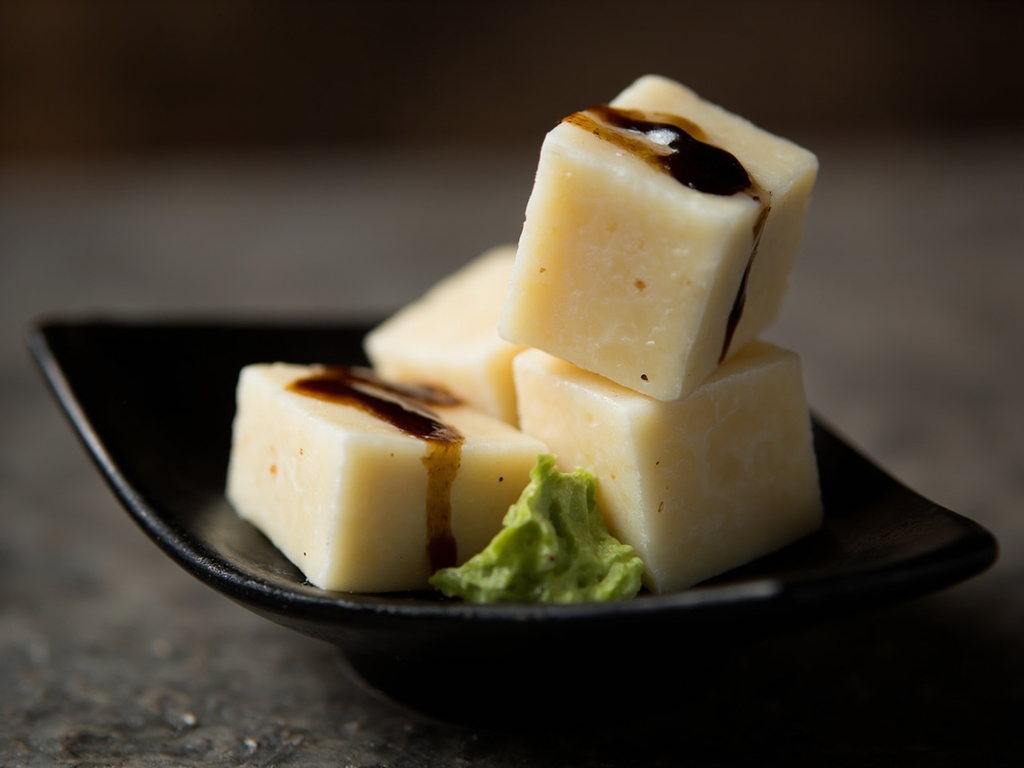
- Unmold, cut into cubes, serve cold with a drop of tamari and a dab of wasabi.
How it was made : Goma-dōfu belongs to the shōjin ryōri repertoire that took shape in major Japanese temples during the Kamakura period. Lacking animal protein, monks exploited sesame (rich and fatty) and kuzu (a binder from a wild root), grinding them for a long time by hand on a suribachi.
The contemporary twist : Plated as a neat cube on a slate, topped with a line of tamari reduction and a black sesame flower: a "temple chic" amuse-bouche in a plant-based menu.
Hōnen · Charactorium