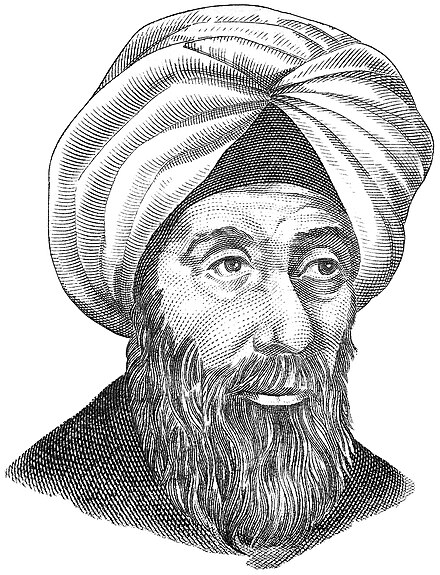
Ibn al-Haytham
Alhazen
965 — 1039
Califat fatimide, Égypte antique
Arab mathematician, optician, and astronomer
Émotions disponibles (6)
Neutre
par défaut
Inspiré
Pensif
Surpris
Triste
Fier
Key Facts
Works & Achievements
Masterwork in seven volumes covering vision, light, mirrors, and refraction. Translated into Latin in the 12th century, it became the major optical reference of medieval Europe and the Renaissance.
A short treatise complementary to the Kitab al-Manazir in which Ibn al-Haytham explores in greater depth the nature of light and its spherical propagation from luminous sources.
A methodical critique of the Ptolemaic astronomical model, in which Ibn al-Haytham demands that any model conform to observations and physical logic, anticipating the Copernican revolution.
A camera obscura demonstration that the shape of sunlight during a partial eclipse is a crescent, thereby proving the rectilinear propagation of light.
A study of converging lenses and the concentration of sunlight. Ibn al-Haytham lays out the theoretical foundations that would eventually lead to the manufacture of magnifying glasses and spectacles.
A cosmological work aimed at making the model of celestial spheres physically coherent, with a lasting influence on Arab and medieval European astronomy.
Anecdotes
To avoid carrying out a hydraulic engineering project on the Nile that he had rashly promised to the Fatimid caliph Al-Hakim, Ibn al-Haytham feigned madness for several years. He remained under house arrest until the caliph's death in 1021, then regained his freedom and resumed his research.
Ibn al-Haytham was one of the first scholars to use a camera obscura to observe solar eclipses without damaging his eyes. He precisely described how light enters through a small aperture and projects an inverted image onto the opposite wall, thereby laying the foundations of modern photography.
Unlike the Greeks, who believed the eye emitted light rays toward objects, Ibn al-Haytham demonstrated through experiment that it is light that travels from objects into the eye. This conceptual revolution, supported by rigorous experimentation, overturned a thousand years of beliefs inherited from Euclid and Ptolemy.
His major work, the Kitab al-Manazir, was translated into Latin under the title De Aspectibus in the 12th century and directly influenced scholars such as Roger Bacon, Kepler, and Leonardo da Vinci. Ibn al-Haytham is thus regarded as the father of modern optics, several centuries before the European scientific revolution.
Ibn al-Haytham insisted on the necessity of repeating experiments and questioning authorities, even the Ancients. This intellectual stance, unusual for his era, led him to be frequently compared to Galileo and Francis Bacon, even though he preceded them by several centuries.
Primary Sources
Light travels in straight lines from luminous bodies; it enters the eye and this is how vision is accomplished. The eye projects nothing toward objects.
All light, whether it comes from the sun, the moon, or a fire, spreads spherically from its source and can be studied through experiment and geometric demonstration.
Through the experiment of the camera obscura, one observes that light from the partially eclipsed sun produces a crescent-shaped image on the surface, conforming to the actual shape of the eclipse.
It is not fitting for a philosopher to trust an ancient author without examination; he must subject his claims to the test of reason and experience.
Key Places
Ibn al-Haytham's birthplace, a major commercial and intellectual center of the Abbasid Empire in the 10th century, where he received his early training in philosophy and mathematics.
The Abbasid capital and hub of the translation of Greek works into Arabic. Ibn al-Haytham spent time there and gained access to the texts of Euclid and Ptolemy, which he would later critically examine.
The city where Ibn al-Haytham spent most of his adult life, wrote the Kitab al-Manazir, and worked at the Dar al-Hikma under the Fatimid Caliphate.
The river for which Ibn al-Haytham proposed a flood regulation project to Caliph Al-Hakim. After realizing the technical impossibility of the project, he feigned madness to avoid execution.
Typical Objects
A box or darkened room pierced with a small hole allowing light to enter and project an inverted image. Ibn al-Haytham made it the central tool of his demonstrations on the rectilinear propagation of light.
A reflective instrument used by Ibn al-Haytham to study the properties of curved mirrors. His work on reflection and refraction influenced the construction of the first telescopes.
Ibn al-Haytham studied the refraction of light through transparent objects and described how a light ray changes direction when passing from one medium to another.
An astronomical instrument used to measure the altitude of celestial bodies. Ibn al-Haytham used it in his celestial observations and calculations on the height of Earth's atmosphere.
A writing medium on which Ibn al-Haytham recorded his experiments and geometric demonstrations. His more than two hundred treatises bear witness to a considerable intellectual output.
Ibn al-Haytham used water and glass as transparent media to precisely measure refraction angles and verify his laws on the behavior of light.
School Curriculum
Daily Life
Morning
Ibn al-Haytham rose before dawn for the Fajr prayer, then devoted the early morning hours to reviewing and correcting the treatises he had written the day before. He began the day with a light meal before heading to his workshop, where light and instruments awaited him.
Afternoon
The afternoon was dedicated to practical experiments: adjusting his camera obscura, measuring angles of refraction using containers of water or glass, and recording the results as geometric demonstrations. He occasionally received students or fellow scholars with whom he debated the errors of the Ancients.
Evening
In the evening, by the light of an oil lamp, Ibn al-Haytham wrote his treatises in classical Arabic, structuring his reasoning into propositions and proofs in the Euclidean manner. He would withdraw for the Isha prayer before retiring to sleep in the guest quarters of the Dar al-Hikma.
Food
His diet followed the Islamic norms of his time: flatbread, legumes (lentils, chickpeas), cooked vegetables, seasonal fruits (dates, figs, pomegranates), and mutton during feast days. He drank fresh water and herbal infusions, wine being forbidden. Scholars at the Dar al-Hikma benefited from meals provided by the Fatimid court.
Clothing
Ibn al-Haytham wore a long djellaba in cotton or light wool depending on the season, topped with a burnous on cool Cairo nights. His white turban signaled his status as a learned man and a pious believer. During experiments, he wore a simple apron to protect his clothes from inks and oils.
Housing
During his long period of house arrest, Ibn al-Haytham lodged in a room within a Cairo residence made available by the caliphate, organized around an interior courtyard with a fountain. He had a workroom that could be made completely dark for his optical experiments, and a library space for his scrolls and codices.
Historical Timeline
Period Vocabulary
Gallery

Cosmos, a sketch of a physical description of the universe

The complete photographer,

Living pictures : their history, photo-production and practical working, with a digest of British patents and annotated bibliography

Memoirs of the life of Nicholas Poussin

Visual illusions, their causes, characteristics and applications

Ibn al-Haytham
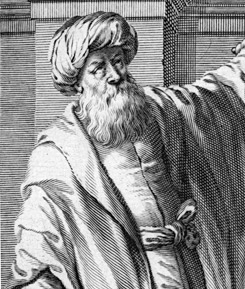
Hazan
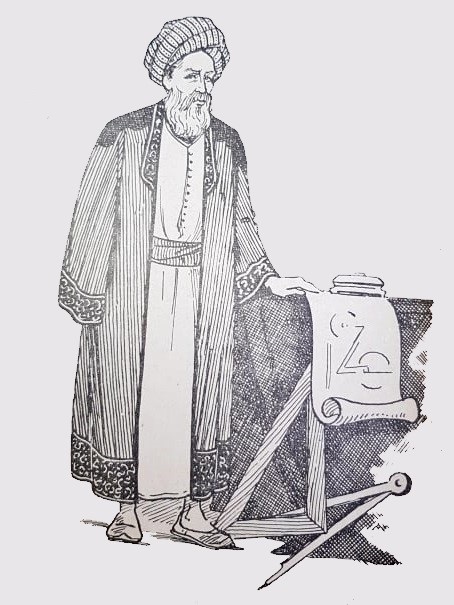
Ibn al-Haytham

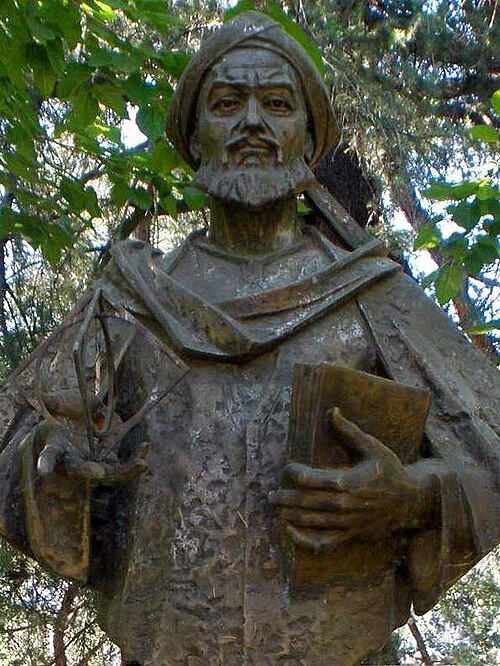
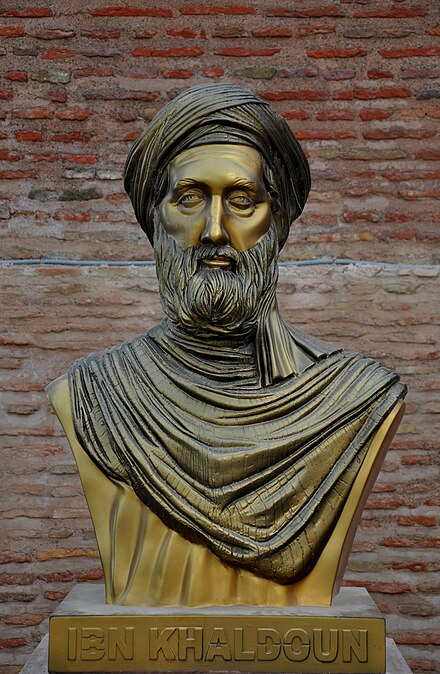
Ibn Al-Haytham portrait

ImageVI’s - the software that collects the vegetation indices you need - user manual
Visual Style
Style enluminure islamique médiévale, palettes or et lapis-lazuli, avec diagrammes géométriques de rayons lumineux et décors d'arabesques typiques de l'art fatimide du XIe siècle.
AI Prompt
Illustration in the style of medieval Islamic manuscript illumination, gold and lapis lazuli pigments, intricate geometric arabesques as borders. A scholar in a white turban and ochre robe bends over a dark room, a ray of light entering through a small hole and projecting an inverted image. Geometric diagrams of light rays, mirrors and prisms drawn with precise compass lines in ink. Rich deep blues and warm golds, warm candlelight illuminating parchment pages. Detailed architectural arches of a Cairo palace, ornamental tilework, the Nile visible through an arched window.
Sound Ambience
Ambiance sonore du Caire fatimide au XIe siècle : appel à la prière, fontaines de cour intérieure, bruits de souk et atmosphère studieuse d'un laboratoire d'optique artisanal.
AI Prompt
Medieval Islamic city soundscape, Cairo in the 11th century. Sounds of a scholar's study: quill scratching on parchment, oil lamp flickering, distant call to prayer from a minaret echoing across rooftops. Courtyard fountain trickling, merchants in the souk calling out, camels and horses passing on dusty streets. Occasional clinking of glass vessels and metal instruments in a laboratory. Wind through palm trees, muezzin chanting, children reciting Quran in a nearby madrasa. The quiet concentration of a man who measures light, counts angles, and writes by lamplight.
Portrait Source
Wikimedia Commons
Aller plus loin
Références
Œuvres
Kitab al-Manazir (Livre de l'optique)
vers 1011-1021
Maqala fi al-daw' (Traité sur la lumière)
début XIe siècle
Al-Shukuk ala Batlamyus (Doutes sur Ptolémée)
vers 1025
Maqala fi surat al-kusuf (Traité sur la forme des éclipses)
vers 1020
Maqala fi al-kura al-muharriqa (Traité sur la sphère ardente)
vers 1010-1020
Maqala fi hay'at al-alam (Traité sur la configuration du monde)
vers 1015