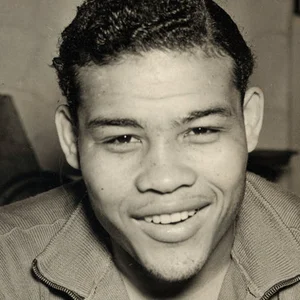

Joe Louis was an American boxer, world heavyweight champion from 1937 to 1949. Nicknamed the “Brown Bomber,” he defended his title a record number of times and became a major figure in African American emancipation.
Joe Louis(1914 — 1981)
Joe Louis
États-Unis
6 min read
Frequently asked questions
Famous Quotes
« He can run, but he can't hide.»
Key Facts
- Born on May 13, 1914, in Lafayette, Alabama.
- Became world heavyweight champion in 1937 by defeating James Braddock.
- Defeated Max Schmeling by knockout in the first round on June 22, 1938, a fight with strong symbolic significance against Nazi Germany.
- Holds the record for the longest reign as heavyweight champion (1937-1949) with 25 title defenses.
- Died on April 12, 1981, in Las Vegas.
Works & Achievements
First African American world heavyweight champion since Jack Johnson. The culmination of his meteoric rise.
A first-round knockout victory that became a worldwide symbol of democracy standing up to Nazism. One of the most famous fights in history.
Record number of successful heavyweight title defenses, never matched since. A testament to his exceptional dominance.
Donated his fight purses to the U.S. Army and Navy relief funds. A patriotic commitment praised nationwide.
The longest reign in heavyweight history, retiring as the undefeated titleholder. A longevity never surpassed.
An account of his life published with Edna and Art Rust Jr. A firsthand testimony of his career and his struggles.
Anecdotes
In 1936, Joe Louis suffered the only significant defeat of his early career against the German Max Schmeling, knocked out in the 12th round. Nazi propaganda seized upon it to tout “Aryan” superiority, turning the rematch into a worldwide political stake.
On June 22, 1938, during their second bout at Yankee Stadium before 70,000 spectators, Joe Louis demolished Schmeling in 2 minutes and 4 seconds in the first round. Millions of Americans, Black and White, listened on the radio: the victory became a symbol of democracy against Nazism.
During World War II, Louis enlisted in the U.S. Army and donated the purses from several fights to military relief funds. To an officer who doubted the cause, he is said to have replied: “We'll win because we're on God's side.”
Louis held his world heavyweight title for nearly 12 years (1937-1949) and defended it 25 times, an all-time record. His easy opponents were humorously nicknamed the “Bum of the Month Club.”
After his career, buried in tax debt to the U.S. government, Joe Louis had to return to boxing and then become a wrestler and a casino greeter in Las Vegas, illustrating the precarious situation of Black champions of his era.
Primary Sources
“We'll win because we're on God's side.”
Louis destroyed Schmeling in a single round, ending the bout in two minutes and four seconds.
A first-person account of his rise, the fights against Schmeling, and his post-career financial troubles.
Key Places
Rural town in the segregated South where Joe Louis was born into a family of sharecroppers. The cradle of a childhood marked by poverty.
Industrial city where the family settled and where Louis learned to box in local clubs. The place of his amateur and professional debut.
Legendary stadium where he crushed Max Schmeling in one round in 1938 before 70,000 spectators. The stage for one of the most political fights in sports history.
Stadium where Joe Louis won the world heavyweight title by beating James J. Braddock in 1937. The site of his coronation.
Military burial ground where he was laid to rest in 1981 by special presidential waiver from Ronald Reagan, in tribute to his service. A rare honor for a sports figure.
Liens externes & ressources
Références
Œuvres
Conquête du titre mondial des poids lourds (vs James J. Braddock)
1937
Revanche victorieuse contre Max Schmeling
1938
Record de 25 défenses de titre
1937-1949
Combats de bienfaisance pour l'effort de guerre
1942
Règne ininterrompu de champion (près de 12 ans)
1937-1949
Autobiographie « Joe Louis: My Life »
1978