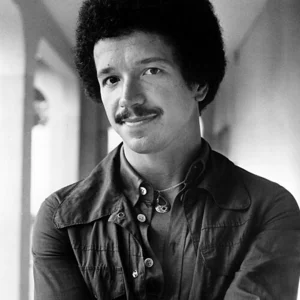

Keith Jarrett is an American jazz pianist and composer born in 1945. Famous for his fully improvised solo concerts, he created the Köln Concert (1975), one of the best-selling solo piano albums in history.
Keith Jarrett(1945 — ?)
Keith Jarrett
États-Unis
6 min read
Frequently asked questions
Key Facts
- Born on May 8, 1945, in Allentown, Pennsylvania; a child prodigy on the piano.
- Member of Charles Lloyd's group in the late 1960s, then of Miles Davis's electric bands (1970-1971).
- Recorded the Köln Concert in 1975, an improvised solo piano album that became a huge international success.
- Founded the Standards Trio in 1983 with Gary Peacock and Jack DeJohnette, which reinterpreted jazz standards for more than 30 years.
- Stricken with chronic fatigue syndrome in the 1990s, then suffered a stroke in 2018 that ended his career as a concert performer.
Works & Achievements
First solo piano studio album, foreshadowing the path of the great improvisations to come.
Landmark album by the European quartet with Jan Garbarek, a model of the “ECM sound.”
A complete solo improvisation that became the best-selling solo piano album in history.
An imposing box set gathering five solo concerts given in Japan, a pinnacle of total improvisation.
A hugely popular album by the European quartet, with a luminous and accessible melody.
First record by the trio with Peacock and DeJohnette, devoted to reworking jazz standards.
Classical recordings on piano and harpsichord, showing his grounding in Baroque music.
An intimate album recorded at home during his convalescence, of great emotional restraint.
Anecdotes
On January 24, 1975, at the Cologne Opera House, the piano meant for Keith Jarrett never arrived: he was handed a small Bösendorfer rehearsal piano, out of tune in the high notes, weak in the bass, with temperamental pedals. Exhausted and suffering from back pain, he nearly cancelled everything, then decided to play anyway by avoiding the instrument's faulty registers. The recording of this improvised concert would become the best-selling solo piano album in history.
It was a 17-year-old high school student, Vera Brandes, who had organized this Cologne concert: the youngest concert promoter in Germany. Without her insistence that the concert go ahead despite the poor piano, the famous “Köln Concert” would never have existed.
When he improvises, Jarrett involuntarily sings, hums, and moans as he follows his own melodies. These vocalizations, which he says he is unable to control, can be heard on almost all of his records and have given sound engineers no end of trouble.
Jarrett demands absolute silence from his audience: he has interrupted concerts to scold spectators who were coughing or taking photographs, sometimes asking people with colds to leave the hall. For him, the slightest noise can shatter the concentration needed for total improvisation.
In the early 1970s, in Miles Davis's electric band, Jarrett played the organ and the electric piano even though he hated these instruments. After that experience, he would devote most of his career to the acoustic piano, which he considers the only truly “living” instrument.
Primary Sources
I don't feel right now like I'm a pianist.
I was paralyzed. My left side is still partially paralyzed.
Jarrett has often explained that before a solo concert he strives to “empty himself” of any preconceived idea, so as to discover the music only at the moment his fingers touch the keyboard.
Key Places
Keith Jarrett's birthplace, where he revealed a prodigious talent for the piano at a very early age.
The school where the young Jarrett studied briefly before throwing himself into the New York jazz scene.
Site of the legendary improvised concert of January 24, 1975, which gave rise to the “Köln Concert.”
Home of Manfred Eicher's ECM label, which released the bulk of Jarrett's work.
City of the Rainbow Studio, where many ECM albums were recorded, including those of the European quartet.
A rural area where Jarrett lives a secluded life, on a farm with its own recording studio.
Typical Objects

The instrument of his entire life; Jarrett prefers it for its richness of tone and regards it as a “living” instrument, as opposed to electric keyboards.

The small, faulty piano forced upon him in 1975; its shortcomings shaped the highly distinctive playing of the “Köln Concert.”

An early instrument on which he recorded Johann Sebastian Bach's Goldberg Variations and The Well-Tempered Clavier.

A small keyboard with a very soft sound that he uses for the experimental album “Book of Ways” (1986).

The electric keyboard he played reluctantly in Miles Davis's band and later abandoned on principle.

The format on which his albums appear, in the clean, minimalist sleeve characteristic of the Munich label.

A support he wore for his aching back, notably on the evening of the Cologne concert when he played while exhausted.
School Curriculum
Vocabulary & Tags
Key Vocabulary
Tags
Daily Life
Morning
Jarrett leads a very secluded life on his New Jersey farm. Mornings are often devoted to keyboard work: exercises, the study of classical scores (Bach, Mozart), and the search for new musical ideas.
Afternoon
In the afternoon, he records or composes in his own home studio, named Cavelight. He pays extreme attention to the choice of instruments and to the quality of the sound capture.
Evening
On tour, his evenings are those of concerts, where he demands total silence from the audience. At home, he prefers tranquility and shuns the social life of the music world.
Food
Little is known about his diet, which he keeps private. He has spoken of the importance of a healthy lifestyle, particularly after the chronic fatigue syndrome that struck him in the late 1990s.
Clothing
In concert, he presents himself soberly, often in black or understated attire, with no taste for spectacle. At the piano in Cologne, he wore a lumbar support because of his back pain.
Housing
He lives on a rural property in New Jersey, far from the big cities, where the calm and isolation allow him to concentrate. His house contains a personal recording studio.