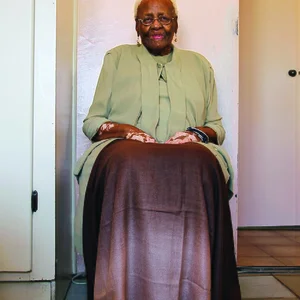
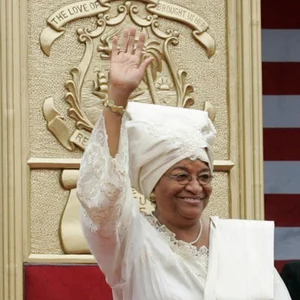
Liberian pacifist activist, she led the women's peace movement in Liberia, helping to end the second civil war in 2003. Nobel Peace Prize in 2011.
Leymah Gbowee
Leymah Roberta Gbowee
Liberia
8 min read
Frequently asked questions
Famous Quotes
« If you want peace, you need to deal with the women.»
« We were the conscience of the men who had lost their conscience.»
Key Facts
- 1972: Born in Monrovia, Liberia
- 2003: She organized the Women of Liberia Mass Action for Peace movement, rallying thousands of women to demand an end to the civil war
- 2003: The movement's pressure contributed to the signing of the Accra Peace Accord
- 2011: Nobel Peace Prize, shared with Ellen Johnson Sirleaf and Tawakkol Karman
- 2011: Publication of her autobiography 'Mighty Be Our Powers'
Works & Achievements
A nonviolent protest movement founded and led by Leymah Gbowee, which mobilized thousands of Liberian women to demand an end to the Second Civil War. It is considered one of the most effective women's peace movements in contemporary history.
As national coordinator of WIPNET in Liberia, Leymah Gbowee built her activist network and developed her method of interfaith mobilization, which served as the organizational foundation for the Mass Action for Peace movement.
Leymah Gbowee's autobiography recounting her childhood, her commitment to peace, and the behind-the-scenes story of the Liberian women's movement. Translated into many languages, it has become a landmark work on nonviolent conflict resolution.
Award jointly granted to Leymah Gbowee, Ellen Johnson Sirleaf, and Tawakkol Karman for their nonviolent struggle for peace, democracy, and equal rights for women.
A foundation established by Leymah Gbowee to support women's education and leadership across Africa, particularly in Liberia, through scholarships and training programs for young women.
Anecdotes
In 2003, Leymah Gbowee organized daily sit-ins at the Vai Town fish market in Monrovia, where hundreds of Christian and Muslim women prayed and sang together for peace. This interfaith mobilization was a revolutionary act in a country torn apart by war and communal divisions.
During the 2003 peace talks in Accra, Ghana, negotiations had been stalling for weeks. Leymah Gbowee and her companions physically blocked the doors of the meeting hall, preventing the delegates from leaving. She threatened to strip publicly — a gesture considered a grave curse in West African tradition — thereby forcing the negotiators back to the table, talks that ultimately led to the peace agreement.
Inspired by Aristophanes' ancient Greek play *Lysistrata*, Leymah Gbowee organized a sex strike among Liberian women to pressure for peace. Although its direct impact is difficult to measure, this symbolic action drew international attention to the struggle of Liberian women and became one of the most iconic gestures of the movement.
After the end of the civil war in 2003, Leymah Gbowee continued her commitment by supporting women traumatized by the violence of the conflict. She trained in social work and community reconciliation, convinced that lasting peace could only be built by healing the individuals wounded by war.
In 2011, Leymah Gbowee received the Nobel Peace Prize in Oslo, alongside Liberian President Ellen Johnson Sirleaf and Yemeni activist Tawakkol Karman. In her speech, she declared that true peace demands justice and equality for women — a conviction that had guided her entire struggle since the years of war.
Primary Sources
Leymah Gbowee describes how, in 2003, ordinary women — mothers, market vendors, refugees — joined forces to compel armed men to make peace, and how female solidarity can transform the course of a war.
Gbowee declares that the marginalization of women in peace processes is a fundamental source of instability, and calls for their systematic inclusion in all conflict-resolution negotiations.
Document signed on August 18, 2003 by the Liberian warring parties — the Taylor government, LURD, and MODEL — ending the second civil war, following pressure exerted in particular by the women's movement coordinated by Gbowee.
This documentary film traces, through archival footage and firsthand testimonies, how Leymah Gbowee and the women of the Mass Action for Peace movement organized their nonviolent resistance and influenced the Accra negotiations.
Leymah Gbowee testified about the violence suffered by women during both civil wars and argued that national reconciliation must fully incorporate the voices of women and survivors of sexual violence.
Key Places
This popular market in the Vai Town neighborhood of Monrovia became the daily gathering place for women of the peace movement starting in 2003. Prayer meetings and singing held there mobilized thousands of women of all faiths.
The capital of Liberia and the main stage for Leymah Gbowee's activism. Repeatedly besieged during both civil wars, the city became the center of women's nonviolent resistance, with protesters gathering in front of the presidential palace and government ministries.
Women from the movement stationed themselves in front of the presidential palace to directly confront Charles Taylor and demand that he agree to peace negotiations, defying the armed soldiers guarding the building's perimeter.
The city where inter-Liberian peace negotiations were held in 2003 under the auspices of ECOWAS. Leymah Gbowee led her most dramatic actions there, bringing women to blockade the conference hall in order to force the signing of a peace agreement.
The city where Leymah Gbowee received the Nobel Peace Prize in December 2011, at a ceremony that gave international recognition to the role of women in resolving armed conflicts.