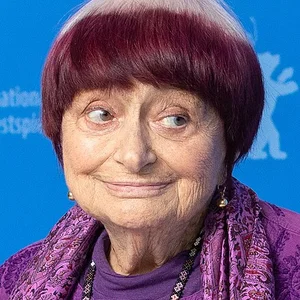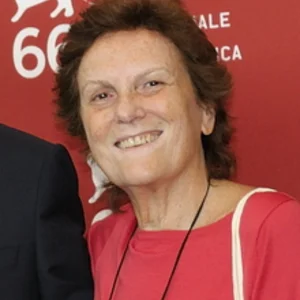

Italian director and screenwriter born in 1933. A figure of Italian auteur cinema, she is known for provocative works exploring power, memory, and Nazism, including “The Night Porter” (1974).
Liliana Cavani(1933 — ?)
Liliana Cavani
Italie
6 min read
Frequently asked questions
Key Facts
- Born on January 12, 1933 in Carpi, in Emilia-Romagna (Italy)
- Directed “The Night Porter” (Il portiere di notte) in 1974, a controversial film about a relationship between a survivor and a former SS officer
- Adapted “Beyond Good and Evil” (1977) around Nietzsche and Lou Salomé
- Staged operas in major theaters such as La Scala in Milan
- Received the Golden Lion for lifetime achievement at the Venice Film Festival in 2023
Works & Achievements
One of the first major Italian television investigations into Nazism, laying out the themes of her entire body of work.
A portrait of the scholar facing the Inquisition, a plea for freedom of thought.
A modern, defiant reworking of Sophocles's *Antigone*.
Her most famous and most controversial film, about the morbid relationship between a former SS officer and a camp survivor.
An evocation of the bonds between the philosopher Nietzsche, Lou Salomé, and Paul Rée.
An adaptation of Curzio Malaparte's novel about Naples in 1943, with Mastroianni and Burt Lancaster.
The life of Saint Francis of Assisi with Mickey Rourke, the second film she devoted to the saint.
A thriller based on Patricia Highsmith, carried by John Malkovich.
Anecdotes
Before ever picking up a camera, Liliana Cavani studied classics at the University of Bologna. This passion for Antiquity never left her: her film “The Cannibals” (1970) is a modern reworking of Sophocles' “Antigone,” in which a young woman defies the State's ban in order to bury the dead.
In the 1960s, the young Cavani directed investigative documentaries for Italian public television (RAI) on Nazism, the Resistance and Pétain. To understand the memory of the war, she interviewed survivors of the camps; one of them confided that she returned every year to the site of her imprisonment, a psychological mystery that would later inspire “The Night Porter.”
Released in 1974, “The Night Porter” caused a scandal: it depicts the troubling relationship between a former SS officer and a camp survivor who meet by chance in Vienna in 1957. In Italy, the film was seized by the courts for offending public decency before being finally cleared; it became a subject of debate the world over.
Cavani was fascinated by Saint Francis of Assisi, to whom she devoted two films more than twenty years apart: a first one in 1966 for television, then “Francesco” in 1989, in which the role of the saint was played by Hollywood star Mickey Rourke.
In 2023, at the age of 90, Liliana Cavani received the Honorary Golden Lion at the Venice Film Festival for her lifetime's work, a belated recognition of a filmmaker long regarded as provocative.
Primary Sources
Vienna, 1957: Max, a former SS officer turned hotel night porter, recognizes Lucia among the guests — a woman he had persecuted in a camp. Their past, morbid relationship resurfaces in the claustrophobic confines of the city.
An archival montage tracing the rise and fall of the Nazi regime: one of the first major documentary investigations on Italian television into the memory of the Second World War.
A television investigation giving voice to women who fought against fascism and the occupation, based on first-hand testimonies from Italian resistance fighters.
The Venice Biennale honors an independent and courageous filmmaker whose work uncompromisingly explores power, desire, and the memory of the twentieth century.
Key Places
Birthplace of Liliana Cavani, in northern Italy, where she was born in 1933.
She earned a degree in literature and classical languages here before turning to filmmaking.
Italy's national film school, where Cavani trained in directing in the late 1950s.
The public broadcaster where she made her first historical investigative documentaries.
The great opera house where Cavani directed several opera productions.
Home of the Venice International Film Festival, where she received the honorary Golden Lion in 2023.
Typical Objects

The director's working tool; in her day, films were still shot on photographic film before the arrival of digital.

Cavani is also a screenwriter: she writes or co-writes her films and covers the pages with staging notes.

For her documentaries on Nazism and the Resistance, she unearths and edits archival footage from the war.

A slate snapped at the start of each take to synchronize picture and sound on set.

The costume worn by Dirk Bogarde in “The Night Porter,” which became the film's iconic and disturbing image.

A gilded statuette in the shape of a winged lion, symbol of the Mostra, awarded to her for her lifetime achievement in 2023.

Alongside cinema, Cavani directs operas on major Italian opera stages.
School Curriculum
Vocabulary & Tags
Key Vocabulary
Daily Life
Morning
During a shoot, a director's day begins very early: reviewing the shooting schedule, scouting the sets, and consulting with the department heads (camera, sound, costumes) before the actors arrive.
Afternoon
The afternoon is spent on set directing the actors, doing take after take, and watching the framing, in constant dialogue with the director of photography.
Evening
In the evening, away from filming, Cavani works on writing her screenplays, prepares her films or her opera productions, and reads a great deal, true to her literary training.
Food
Like many northern Italians, she grew up with the cuisine of Emilia-Romagna — fresh pasta, Parmesan, cured meats — reputed to be among the richest in the peninsula.
Clothing
A filmmaker of the second half of the 20th century, she dresses simply and practically for work on set, far from the glamour of the stars she directs.
Housing
Her professional life is split between Rome, the heart of Italian cinema around Cinecittà, and the cities where she shoots films or stages her operas.
Historical Timeline
Period Vocabulary
Liens externes & ressources
Références
Œuvres
Storia del Terzo Reich (documentaire)
1962-1963
I cannibali (Les Cannibales)
1970
Al di là del bene e del male (Au-delà du bien et du mal)
1977
La pelle (La Peau)
1981